
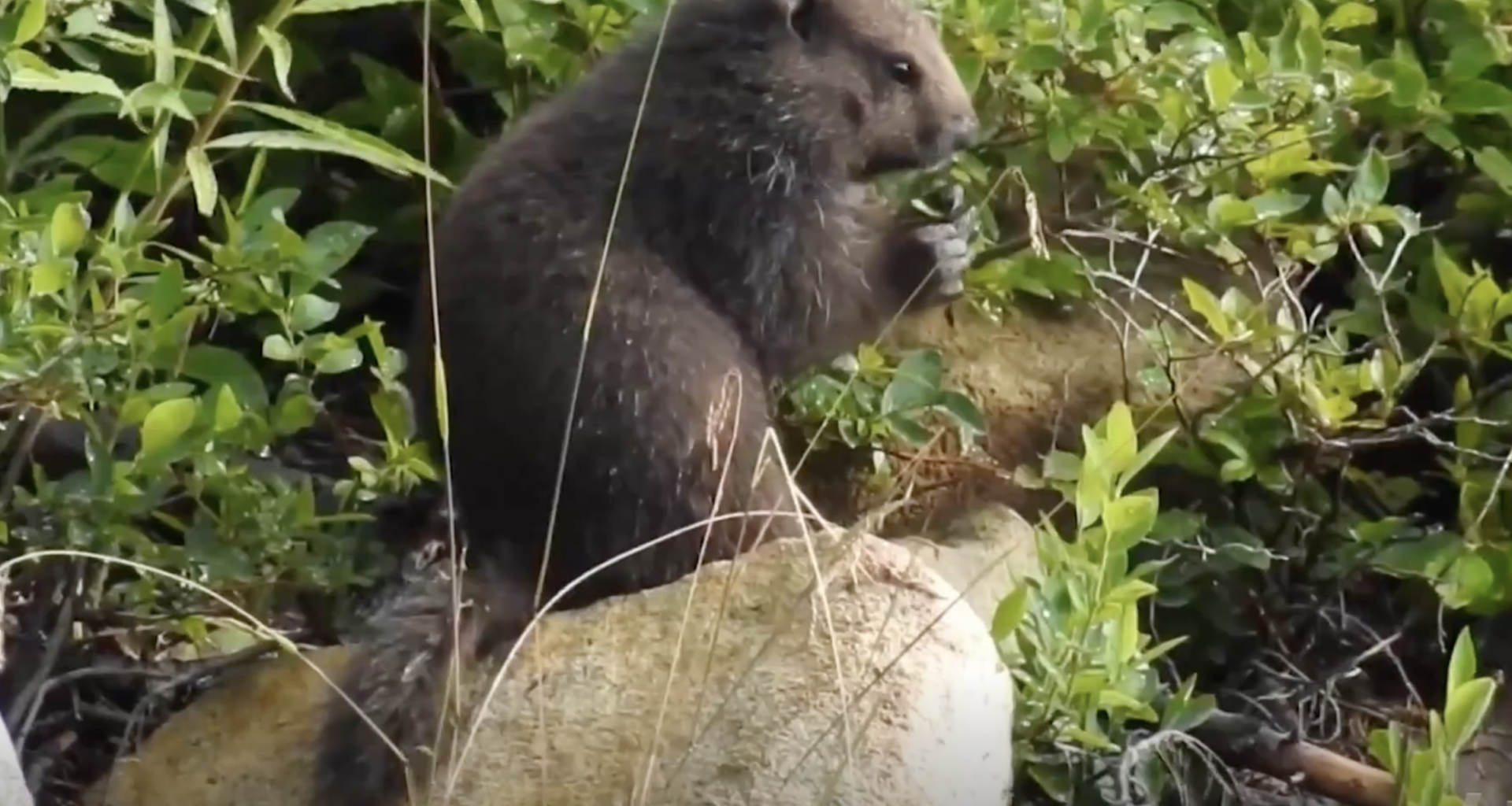
Four Vancouver Island Marmots were released on Mount Washington Tuesday, taking their first steps in the wild and another important step in their species’ recovery.
They were born in captivity a year ago and raised at the marmot recovery centre on Mount Washington, part of a three-decade-long effort to bring the species back from the brink of extinction.
In 1996, there were fewer than 100 of the animals left.
Watch below:
“At that time, the recovery foundation was formed and a number of marmots were brought into captivity to start a conservation breeding program but the wild population continued to fall until 2003 and at the end of 2003 there were fewer than 30 Vancouver Island marmots left in the wild,” said Marmot Recovery Foundation executive director Adam Taylor.
That’s why days like today are so important. By the fall last year, there were roughly 420 marmots on the island.
On this day the marmots are put in small travelling cages and taken to a ski run on the mountain then moved into a box with a burrow below.
Then a few minutes later the curious animals poke their heads out and begin to explore their new surroundings.
“You know I spend a lot of my life worrying to be honest,” said Taylor. “So we worry over winter what it’s going to be like, we worry over the summer and then we get these moments like when you release the marmots and you see them come out and you see them doing just everything they’re supposed to be and yeah it’s really gratifying.”
“Today is a huge relief getting these marmots out,” said Kevin Gourlay, field co-ordinator with the organization. “It’s been an incredible effort by many, many people to get them to this stage.”
Forty more marmots will be released in other locations on the island this summer as well.
But last winter, with its warm temperatures and lack of snow, is expected to hurt the overall marmot numbers with a survival rate of maybe only 85 per cent.
“Without that extra insulation of snow marmots that are in the burrows, they have to spend more energy sort of coping with those temperature changes and unfortunately, that’s already a really tough process and sometimes that extra energy expenditure is just enough to tip them over the edge,” added Taylor.
Climate change and their changing landscape could mean all sorts of challenges for the marmots in years to come.
“Greenery flushes up real green in the spring but then if it doesn’t get enough moisture, it’ll die off and become dead tinder and in that situation, there might be limited forage available for them,” said Gourlay.
Owen Petrovicic was one of the volunteers chosen to carry a marmot in a backpack carrying case to the release spot on the mountain.
“I knew that I wanted to carry them on my back because whenever I see these marmots on the chairlift or when I go mountain biking it’s just really cool to see them,” he said.
It’s now up to the marmots to survive their first summer of predation by other animals and then their first winter in the wild.