
Events which are misunderstood or misinterpreted in real time tend to get recalled that way in history, at least in F1.
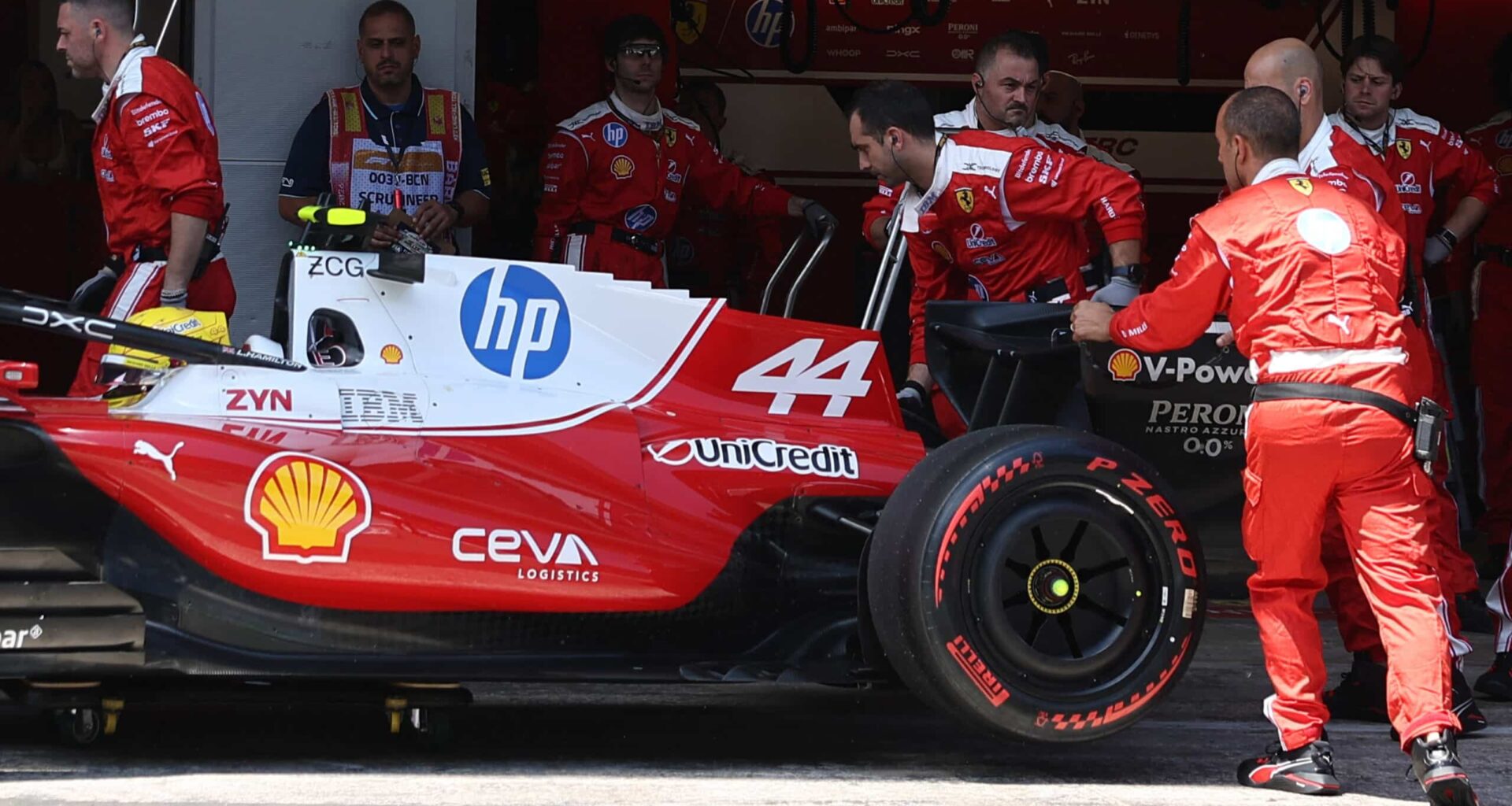
So the column this week is an attempt at addressing what seems to be developing as a misconception about the source of Ferrari’s newfound speed around Barcelona last week, which was at the heart of Lewis Hamilton’s breakthrough victory with the team.
That misconception is that the trick new rear wheel rims introduced by the team here endowed the Ferrari with superior rear tyre deg to the two Mercedes it was racing around a track which inflicts some of the highest thermal degradation seen all season.
False.
The new rims almost certainly have improved the Ferrari’s rear tyre degradation, but it did not have superior deg to the Mercs in the Barcelona race, which was not therefore the reason it beat them. It beat Mercedes through a combination of a superior race strategy, convenient safety car timing and a car, which for the first time this season, was comparably fast. Even without the safety car at the perfect time for Hamilton, he looked likely to be fighting out the victory well before the end.
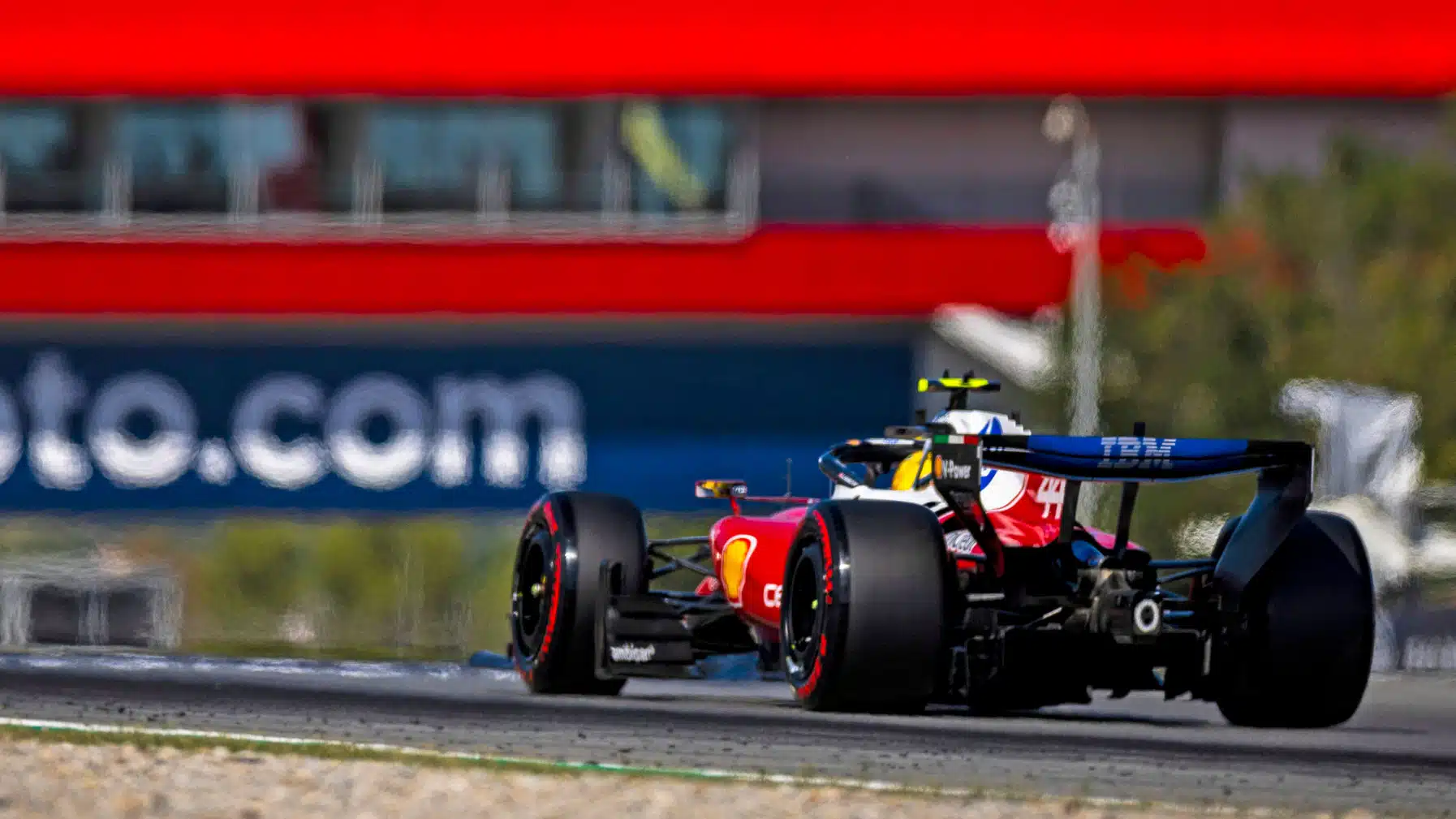
Degradation was not the main factor behind Hamilton’s win
Grand Prix Photo
On such a high-deg track, the strategy of a three-stopper (with a short initial stint on softs followed by a hard/medium/hard sequence) proved better than the Mercs’ ‘two stop with an early first stop’ (on a medium/hard/hard sequence). It meant Hamilton was on better tyres for a greater proportion of the race than either of the Mercs, which on a comparably fast car was always going to be potent.
The reasons it was comparably fast after trailing an average of 0.5sec slower in the races up to this point were almost certainly a combination of its comprehensive aero upgrade and a freer set of constraints upon how it ran its power unit now that the ADUO adjustments had been announced. Just what the mix was between those two factors – ie how much was aero, how much engine operation – will be known only by the team.
But there is absolutely no evidence that the Ferrari had better tyre deg. In fact, the numbers suggest the opposite (see below).
Forget the first stint when Hamilton was on softs and the Mercs on mediums. For stint 2, they were all on hards (with Hamilton doing just 14 laps to the respective 21 and 22 of Kimi Antonelli and George Russell).
In those second hard-tyred stints, the deg averages were as follows:
Driver
Stint 2
Avg Deg
Avg pace
Hamilton (H)
14 laps
0.199sec
1m 22.447sec
Russell (H)
22 laps
0.102sec
1m 22.747sec
Antonelli (H)
21 laps
0.124sec
1m 22.499sec
Hamilton, on his three stops, would of course have been pushing harder than the two-stopping Mercs, expecting he would have to make up the 23sec time loss for the extra pitstop. But his pace was only half-a-tenth faster than that of Antonelli and yet his deg was 60% higher. These numbers are all net of the fuel weight effect.
Hamilton’s third stint was on the medium tyre and his pace was great and the deg lower than in the Mercs’ medium-tyred first stints. But that’s to be expected on a much more rubbered-in track and a substantially reduced fuel load.