

Listen to this article
Estimated 4 minutes
The audio version of this article is generated by AI-based technology. Mispronunciations can occur. We are working with our partners to continually review and improve the results.
Prince Edward Island’s government and Maritime Electric are supporting federal plans for a “nuclear renaissance,” but a P.E.I. group would like to see more investment in renewable energy.
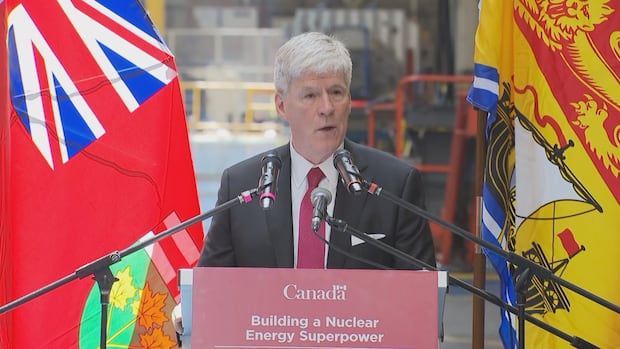
Federal Energy Minister Tim Hodgson released a new national strategy for nuclear power Monday, including plans to build up to 10 new reactors over the next 15 years, including one in New Brunswick to go along with N.B. Power’s existing plant in Point Lepreau.
Brennan McDuffee with Energy Democracy Now said the P.E.I. group would like to see some of the $100 billion earmarked for the national strategy go to a more “diverse array of energy options.”
“It’s easy for politicians to promote a one-size-fits-all, easy solution,” McDuffee said.
“Implementing things like demand-side management or smarter energy grid planning can really help reduce our energy demand, can help keep costs low for consumers and can make sure, too, that we’re investing in infrastructure and technologies that will pay off in the long term.”
WATCH | How could Canada’s plan for a ‘nuclear renaissance’ improve energy on P.E.I.?: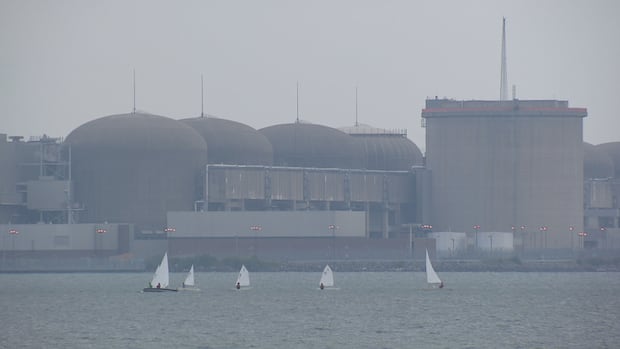
How could Canada’s plan for a ‘nuclear renaissance’ improve energy on P.E.I.?
The federal government is looking to build a nuclear reactor in New Brunswick that would generate more power for the region, including P.E.I. But one Island group says Ottawa and the provincial governments should invest more in renewables. CBC’s Taylor O’Brien has more.
The majority of P.E.I.’s electricity is purchased from New Brunswick.
There have been no conversations about the Island getting its own nuclear reactor, but energy companies around the region have urged governments to generate more power in the Maritimes.
N.B. Power has said the cost of a new nuclear is too much, and that it would only pursue more nuclear energy if it was told by the New Brunswick government to do so.
Hodgson told CBC News, however, that Ottawa would make “financial tools” available to the province and N.B. Power to lower the cost of a new reactor as part of the new national strategy.
McDuffee said Energy Democracy Now is a proponent of wind and solar energy tied to battery storage systems that would reduce P.E.I.’s reliance on power from across the Northumberland Strait.
“The technological advancements in wind and solar, the efficiency and the low-cost element of them have improved dramatically over the past 20, 10 and even five years,” he said.
“We really want to make sure that … the evolution in that technology is factored into big decisions like this, because we can get online faster, it’s generally cheaper and we can integrate it right into our energy grid here on P.E.I. so we don’t have to outsource it to New Brunswick.”
 Brennan McDuffee, community organizer with Energy Democracy Now, says the group would like to see the money go to a more ‘diverse array of energy options.’ (Taylor O’Brien/CBC)
Maritime Electric said it welcomes the federal government’s efforts to address energy capacity challenges, but that the province needs more power generation now.
“While nuclear represents a long-term capacity resource for the region, ensuring a reliable and affordable electricity system for P.E.I. will require a diverse mix of generation sources,” Maritime Electric president and CEO Jason Roberts is quoted as saying in the statement.
“Increasing energy capacity now is critical to address current supply pressures and maintain a secure and resilient electricity system for Islanders, now and into the future.”
The province said P.E.I. is “a leader in renewable energy generation” and will remain open to solutions that strengthen energy stability in the long term.
“Given the interconnected nature of our electricity systems, it is critical that Maritime provinces continue to work together on these issues,” reads a statement from the Department of Energy.
“Energy supply and reliability are regional in scope, and strong collaboration will help ensure a more reliable and secure grid.”
WATCH | Canada’s nuclear strategy includes 10 more large reactors in 15 years: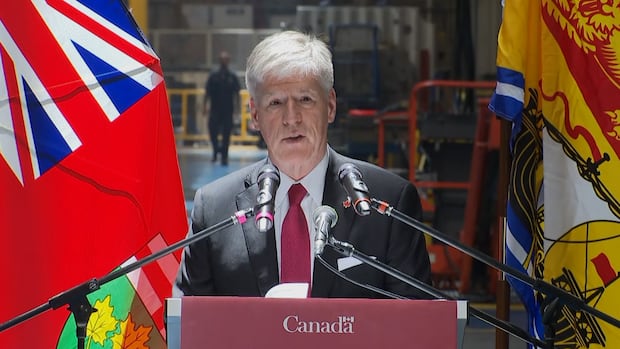
Canada’s nuclear strategy includes 10 more large reactors in 15 years
Canada’s energy minister laid out a plan for Canada to add 10 new large nuclear reactors in the next 15 years in order to double the capacity of the energy grid and reach net zero emissions by 2050.
McDuffee said nuclear energy will still require resources from other parts of the country to fuel the New Brunswick plant, something that is not the case with renewables.
“We want to make sure that if we’re going to invest $100 billion into new energy infrastructure that we’re making sure that it benefits ratepayers, that it benefits our environment and that it benefits all parties involved to the best extent that we can,” he said.
“Placing all of our eggs into one energy basket might not be the best route to go, and we want to make sure that decisions like this are made with public input and with a well-educated public who understand the different technologies available and the different paths we could take to a solution.”