

Listen to this article
Estimated 4 minutes
The audio version of this article is generated by AI-based technology. Mispronunciations can occur. We are working with our partners to continually review and improve the results.
Online backlash over asking rental prices at the Indigenous-led Sen̓áḵw development in Vancouver may reflect a disconnect between market rental prices and what renters can actually afford, experts say.
The prices — posted online by Vancouver real estate journalist Howard Chai and others — included $9,070 per month for a three-bedroom, two-bathroom unit.
Sen̓áḵw’s largest units, the 1,570-square-foot four-bedroom, four-bathroom units, were listed at $12,500 per month.
The prices have since been removed from the Sen̓áḵw website, with a spokesperson for the development telling CBC News they represented a “sample” of market rental rates, and select floor plans and prices would be live again soon.
Real estate experts say there may be a disconnect between the Sḵwx̱wú7mesh Úxwumixw (Squamish Nation) led project’s advertising and reality, with only 20 per cent of the units being set aside for affordable housing and the rest being market rental rates — with the latter increasingly unaffordable for the average renter.
Suraj Rai, a real estate agent who has posted walk-through videos of some of the units at Sen̓áḵw, also pointed to the sustained backlash against the project from some nearby residents — who went as far as filing a lawsuit to attempt to stop its construction.
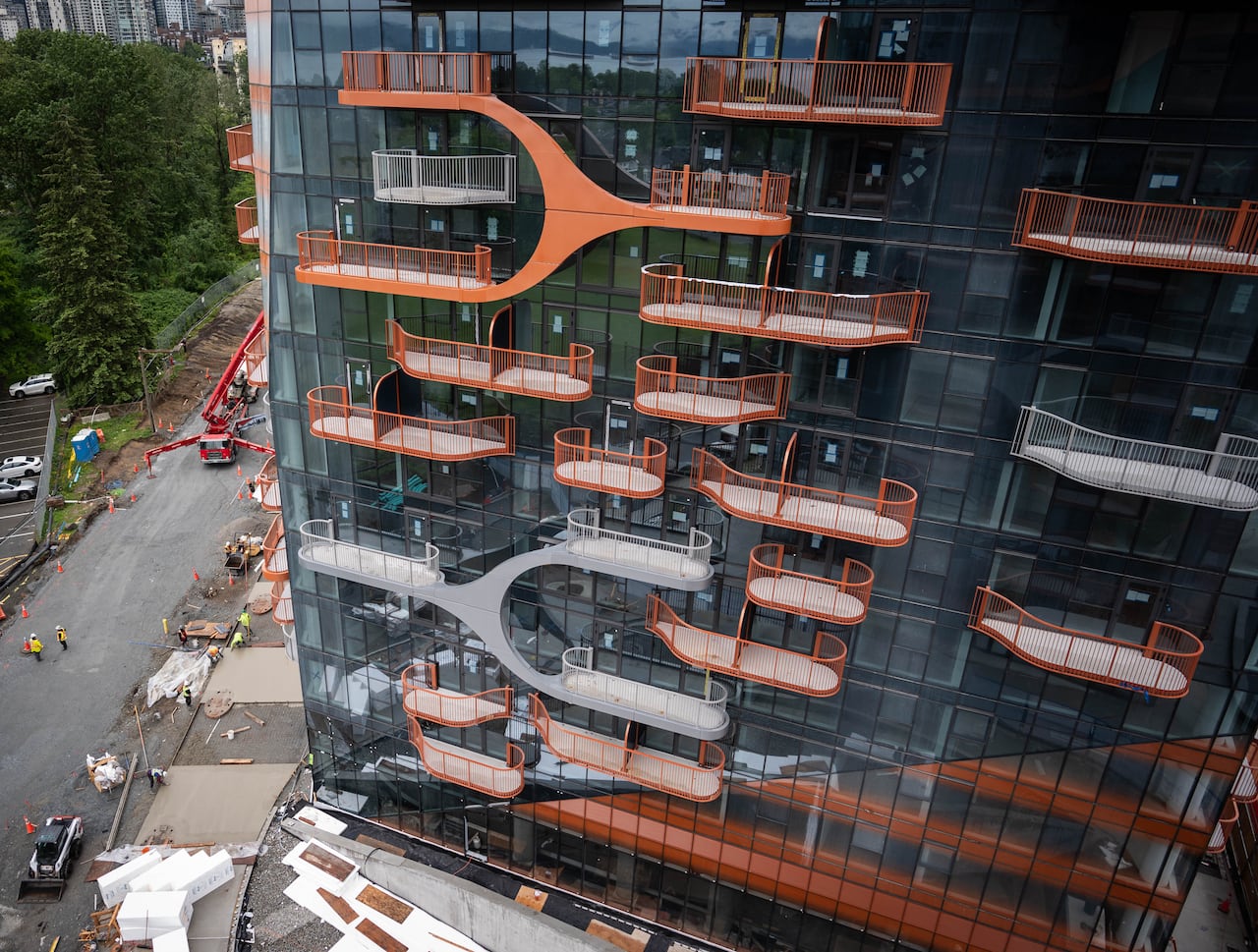 A real estate agent said that the Sen̓áḵw development was billed with affordability at its forefront. A project spokesperson told CBC News, however, that only 20 per cent of the units there have been set aside for affordable housing. (Ethan Cairns/CBC)
“Many people in [Kitsilano] weren’t happy about it, and they’ve been watching it go up, and I think the affordable housing angle was pushed on it,” he said.
“And then, when you find out that it’s not only market pricing — but what looks to be well over market pricing — that’s a lot of the where the anger comes from.”
Rai said the project likely would have to work on its rental rates to entice prospective tenants.
“The ones that … will rent are the ones with the views because the location is great, and the views are great,” he said.
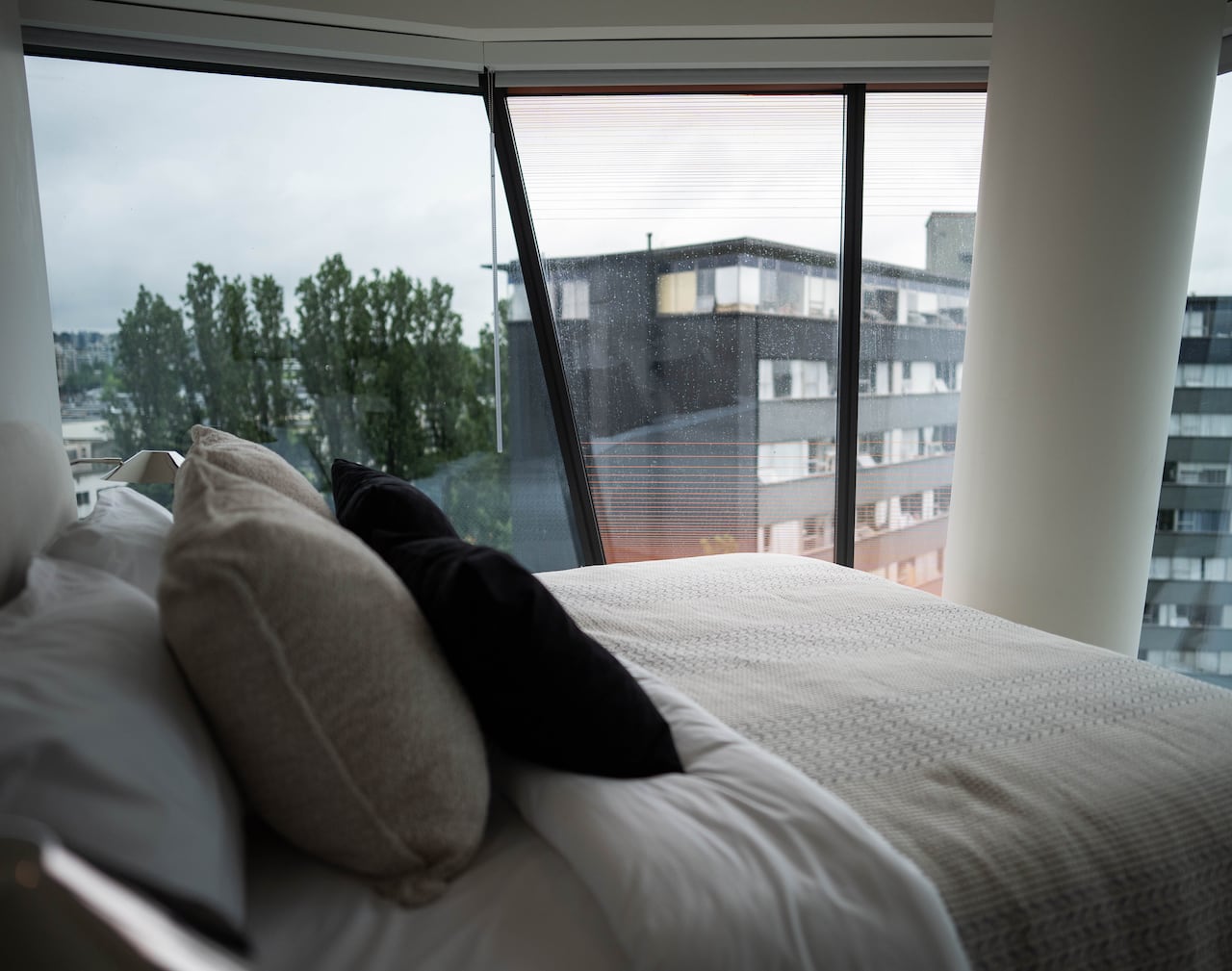 Rai noted that some of the floor plans at Sen̓áḵw — with a bedroom at the development seen here in May — feature an angled design, which may put off some renters. (Ethan Cairns/CBC)
He was also critical of some of the floor plans in the listed units.
“They are almost 1,300 square feet, which is generally a good size for three-bed,” he said.
“But the floor plans are angled, and they don’t make for good living. I don’t even know where you hang your art. But yeah, the the floor plans in those units leave a lot to be desired.”
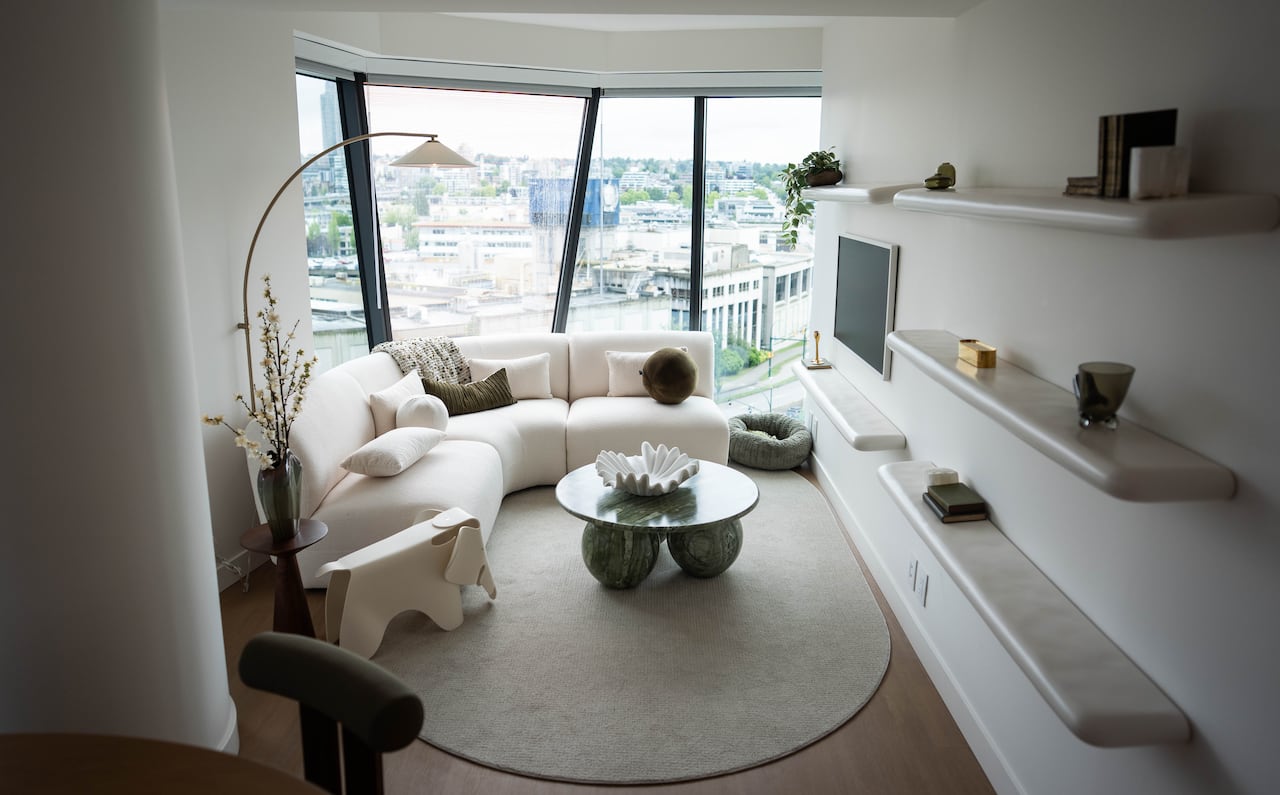 A living room is seen at the Sen̓áḵw development in May. (Ethan Cairns/CBC)Tension among renters
Sen̓áḵw comprises more than 6,000 rental units and 1,200 homes across 11 towers on 4.2 hectares of Squamish Nation land adjacent to Vanier Park.
The Squamish Nation began building the development in 2022, after a decades-long court battle that began in the 1970s and ended in 2002 with a $92-million deal that returned a prime, Y-shaped slice of land back to the nation.
At a groundbreaking ceremony, the Squamish Nation said the development is the largest Indigenous-led housing and retail development in the history of Canada. The federal government provided the Squamish Nation with a $1.4-billion loan to build 3,000 of the units.
WATCH | The fight to reclaim Sen̓áḵw: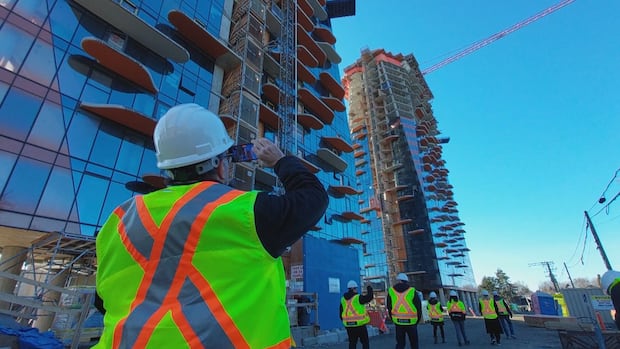
How the Squamish people reclaimed Sen̓áḵw Village
After decades of colonial expropriation, in 1913, the government of British Columbia displaced Squamish families at Sen̓áḵw Village by loading them onto a barge and setting them adrift.
Squamish Nation elder Paítsmuḵ, also known as David Jacobs, spoke to Stephen Quinn, the host of CBC’s The Early Edition, about his role in the decades-long legal effort to reclaim Sen̓áḵw, where a 6,000-unit housing development is now under construction.
After developer Westbank Corp. sold its stake in the project in 2025, the first and second phases of the project are equally owned by OPTrust, which manages one of Canada’s largest pension funds, and the Squamish Nation.
Andy Yan, the director of Simon Fraser University’s City Program, said the median household income for renters in Vancouver was far below that of homeowners.
As of the 2021 census, renters in the city had a median household income of $66,500, while owners had a median household income of $106,000.
“This still kind of represents the ongoing challenge, of the disconnect between how much market rents are compared to how much your typical renter household can afford,” Yan said of the backlash to Sen̓áḵw’s listed prices.
Yan said the frustration was unfairly focused on the project, which he said was presenting what it thinks the market will be able to afford.
He said the market will also decide on whether the buildings’ design, which was informed by Squamish culture, will be a sticking point that prevents units from being rented out.
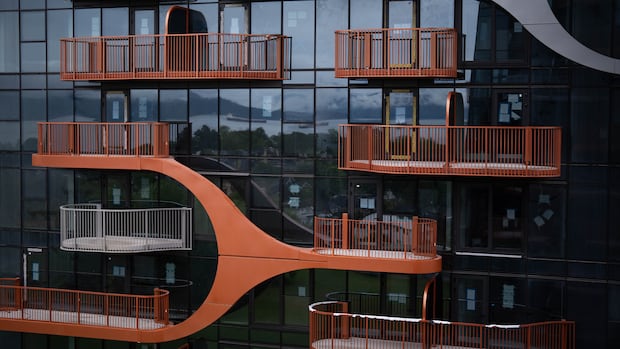
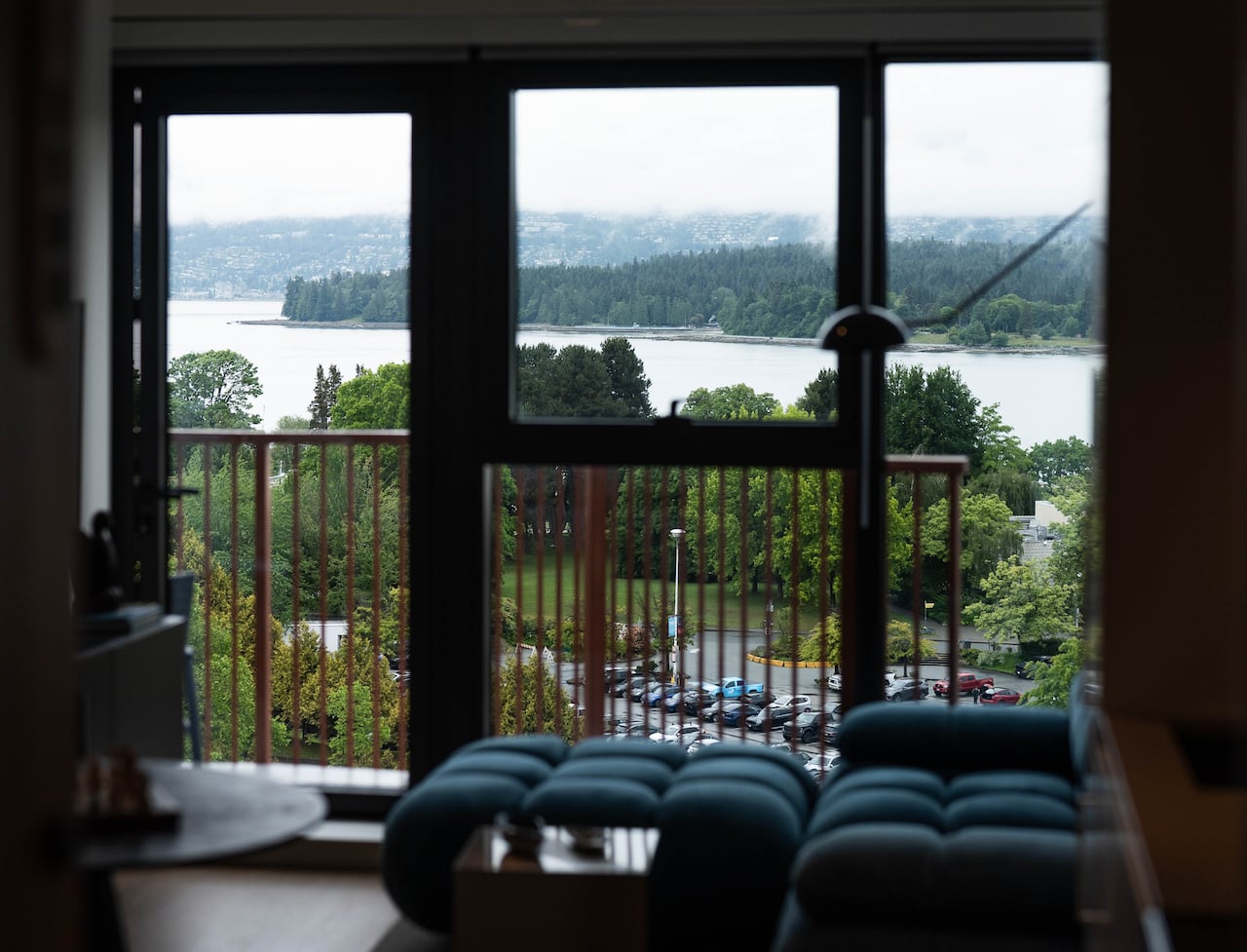 A view of a balcony at the Sen̓áḵw development in Vancouver’s Kits Point. (Ethan Cairns/CBC)