
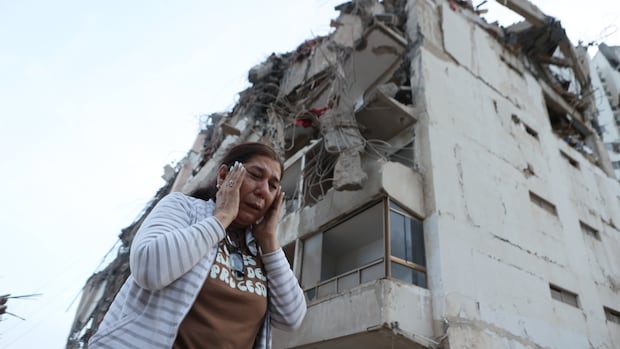
Months or even years of aftershocks possible: seismologist
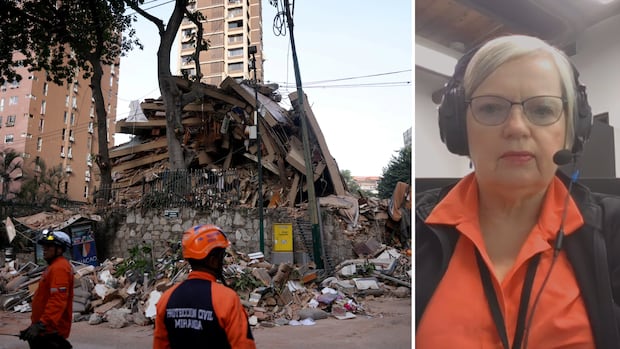
How unusual are back-to-back quakes? We asked a seismologist
Although rare, two earthquakes of similar magnitude hitting the same place in a short period of time, known as doublets, have occurred before, such as in Turkey in 2023, says Earthquakes Canada seismologist Allison Bent. Typically, they are hours or days apart, not less than a minute, which is what happened in Venezuela on Wednesda
An earthquake expert says the powerful back-to-back earthquakes that struck Venezuela are unusual because they occurred less than a minute apart.
“The more normal scenario is that we have a large earthquake followed by a lot of smaller earthquakes,” Allison Bent, a seismologist with Earthquakes Canada, told CBC News.
Bent said the quakes are what seismologists call a doublet — “almost like a pair of earthquakes” — where one large quake triggers another of a similar size. It’s happened before, such as the twin earthquakes that struck Turkey in 2023. But in that case, they hit several hours apart.
Bent says it is still too early to know why so many buildings collapsed in Venezuela, but noted that even structures built to modern standards can fail during exceptionally powerful earthquakes.
She noted that older buildings may not meet newer seismic standards and that “these are two very large earthquakes, very close. So even well-built buildings don’t always survive those as well as we might hope.”
Bent also said the USGS’s early estimates of potentially thousands of deaths are based on previous earthquakes of similar size, proximity to population centres and what is known about local building vulnerability.
“It’s based on past experience…. There are probabilities, but yes, it is very grim.”
Caracas could face months — or even years — of aftershocks after a quake of this magnitude, she added.
“It could be a long time before the number of earthquakes per day goes back to what would be considered average.”