
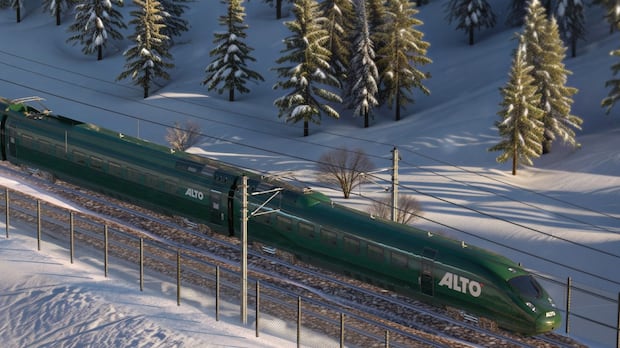
Ottawa city council unanimously passed a motion on Wednesday calling for more transparency as Alto plans its high-speed rail line, even as one councillor warned it risked setting unrealistic expectations that the project can’t easily meet.
Orléans South-Navan Coun. Catherine Kitts introduced the motion, which expressed “concern” that Alto has allegedly keeping residents in the dark about the proposed rail line’s eventual route.
Kitts said there are residents of her ward who “quite literally can’t sleep at night, not knowing if their homes, their land or their livelihood will be sacrificed for this project.”
“Imagine having this fear, having no additional information, and then having a drone fly over their property,” she added.
Kitts wasn’t alone in hearing those concerns. Like Kitts, councillors who represent rural areas say their residents are alarmed by the risk that the rail line will disrupt farm operations and create an impassible blockade, cutting off their communities.
 Coun. Catherine Kitts made the motion, seconded by Mayor Mark Sutcliffe. (Jean Delisle/CBC)
“We need to stand united against the idea that a project can sever our lands,” said Osgoode Coun. Isabelle Skalski. “We need to agree that that is not acceptable, and that we need to require Alto to mitigate the impacts that could be caused by this infrastructure project.”
The Alto project is slated to run nearly 1,000 kilometres from Quebec City to Toronto, with Ottawa a stop along the way. It’s expected to cut current travel times in half compared to current trains.
The project requires a dedicated corridor for trains running at up to 300 km/h, and doesn’t allow for at-grade crossings that allow roads to easily bypass the rails.
While Alto has revealed rough proposed corridors stretching several kilometres wide, it still hasn’t pinned down the specific route for the project, which will require a right of way about 60 metres wide.
In Ottawa, the Via Rail station has been floated as a likely terminus, and Alta Vista Coun. Marty Carr said there’s a neighbourhood right in the way of one possible approach.
“People are fearful of their homes. They have no idea, and I do not have the information to provide them,” she said.
“The opacity of this has to stop. There needs to be more transparency. If you know that the station is going there, if you know what the route is, that information has to come to us sooner rather than later.”
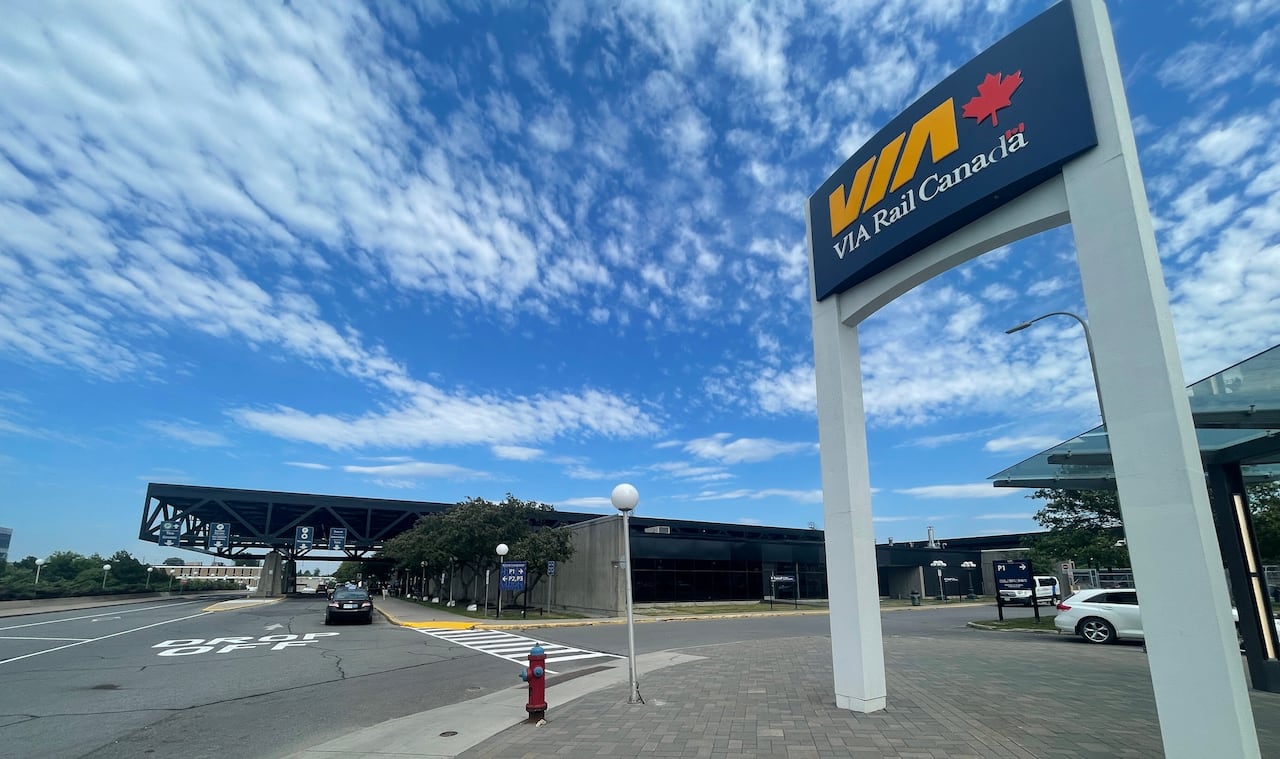 The Via Rail station on Tremblay Road has been pitched as a possible stop for high-speed rail, and local Coun. Marty Carr says some neighbouring residents are nervous. (David Bates/CBC)Alto defends consultation process
Alto spent 100 days consulting the public, reaching more than 10,000 people through 28 open houses, and many more through online platforms and surveys. It says that their input will feed into the route selection process and project design, which is still at an early stage.
Crystal Jongeward, Alto’s senior adviser of corporate communications, sent CBC an email saying Alto teams have met regularly with Indigenous and other community leaders to respond to unique local needs, ideas and concerns — work that she said remains ongoing.
She said a second round of consultations for the Montreal-Ottawa segment is coming this fall, with yet another one early next year.
“All feedback collected during the consultations is being incorporated into our analysis of the corridor under study as we work to refine the alignment and prepare for the next stage of the project,” Jongeward said.
“I would pause here to note that the alignment has yet to be refined, and along with consultation feedback, the technical and environmental studies we are currently doing will help us identify an alignment that will benefit communities the most while minimizing impacts.”
She said public feedback is already playing a role, including a recent announcement that could lead to a potential stop in Kingston.
Jongeward said Alto is “keenly sensitive” to concerns about land use, and has published a commitment to rural and agricultural communities that promises to prioritize negotiated agreements over expropriation, offer fair compensation and ensure “adapted road access” for farmers.
She also noted that Alto has published detailed information about its property acquisition process.
Open houses ‘were not consultations’
River ward Coun. Riley Brockington said he attended one of Alto’s open houses, and was left unsatisfied.
“They were not consultations,” he said. “It was an information session at best, with no answers to the questions that people came with.”
Kitts’s motion does more than call for transparency. While it starts by asking ALTO to give timely updates about route selection, and explain how residents’ input is factoring into those decisions, it also says that limiting fragmentation of farmland and minimizing the impact to private property should be “key objectives” for the route.
It asks city staff to convey those as “expectations” whenever they talk to ALTO, and stresses the need to avoid or mitigate cutting off municipal infrastructure or severing community links. It also states expropriation should be “an exceptional measure of last resort.”
Skalski called those “red lines” that the city should look to uphold.
Councillor urges caution
But Knoxdale-Merivale Coun. Sean Devine said council needs to be careful about what the motion is actually asking of Alto.
“This motion reads as though we are asking Alto to be something other than what it is mandated to be, which is a federal entity that is advancing a nationally significant rail project that is still at an early stage,” he said.
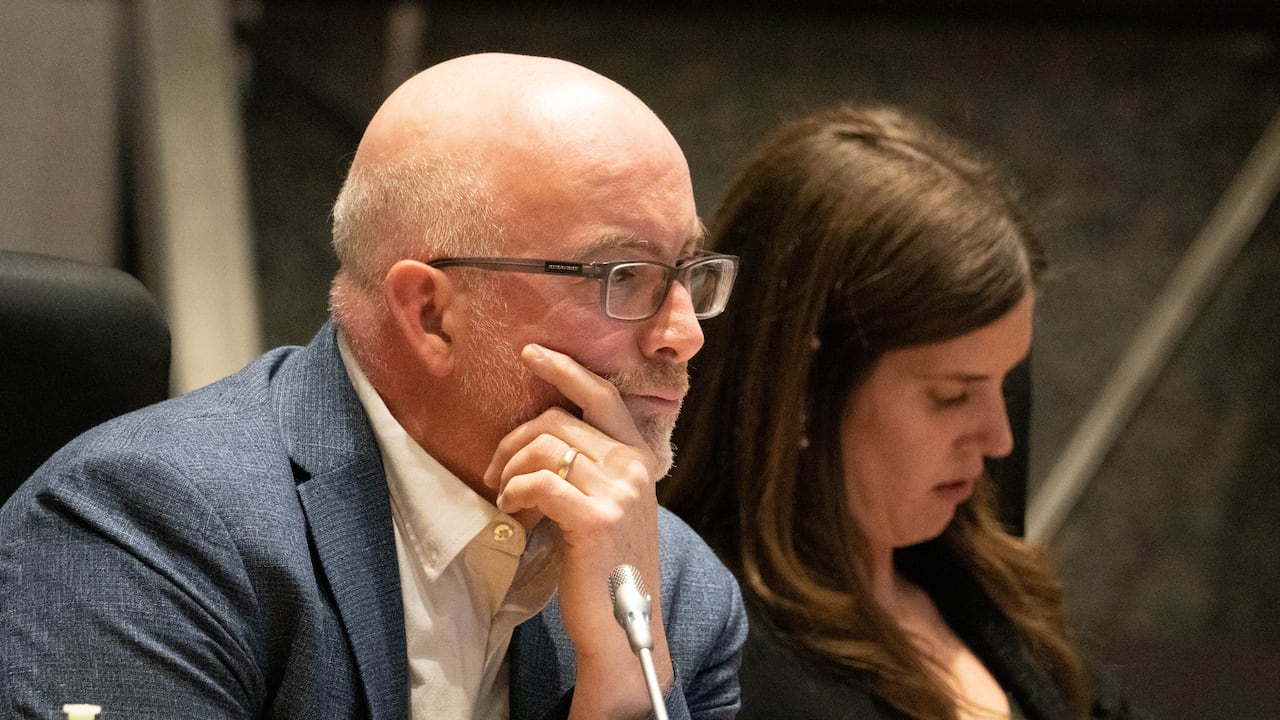 Knoxdale-Merivale Coun. Sean Devine expressed worry about the implications of the motion, though he did not dissent when it was carried unanimously. (Jean Delisle/CBC)
Devine said some of Skalski’s red lines are an inescapable part of high-speed rail.
“I don’t know how it can be avoided,” he said.
Devine called Alto a “historic nation-building project” and said he doesn’t know how to square his support for its significant economic benefits with a motion that asks council to “speak in unanimous opposition to the project interrupting roads or severing properties.”
Even Devine voted for the motion when it was carried unanimously, however. Mayor Mark Sutcliffe said there’s no contradiction between supporting ALTO and pushing it to do more to take residents’ concerns into account.
“They deserve whatever mitigation is possible to make sure that what could be a nation-building project does not end up dividing the community and impacting residents in such a negative way that the pain is more than the benefit,” Sutcliffe said.
Jongeward said Alto has had a strong working relationship with the City of Ottawa and says it is “deeply appreciative” of its support.