
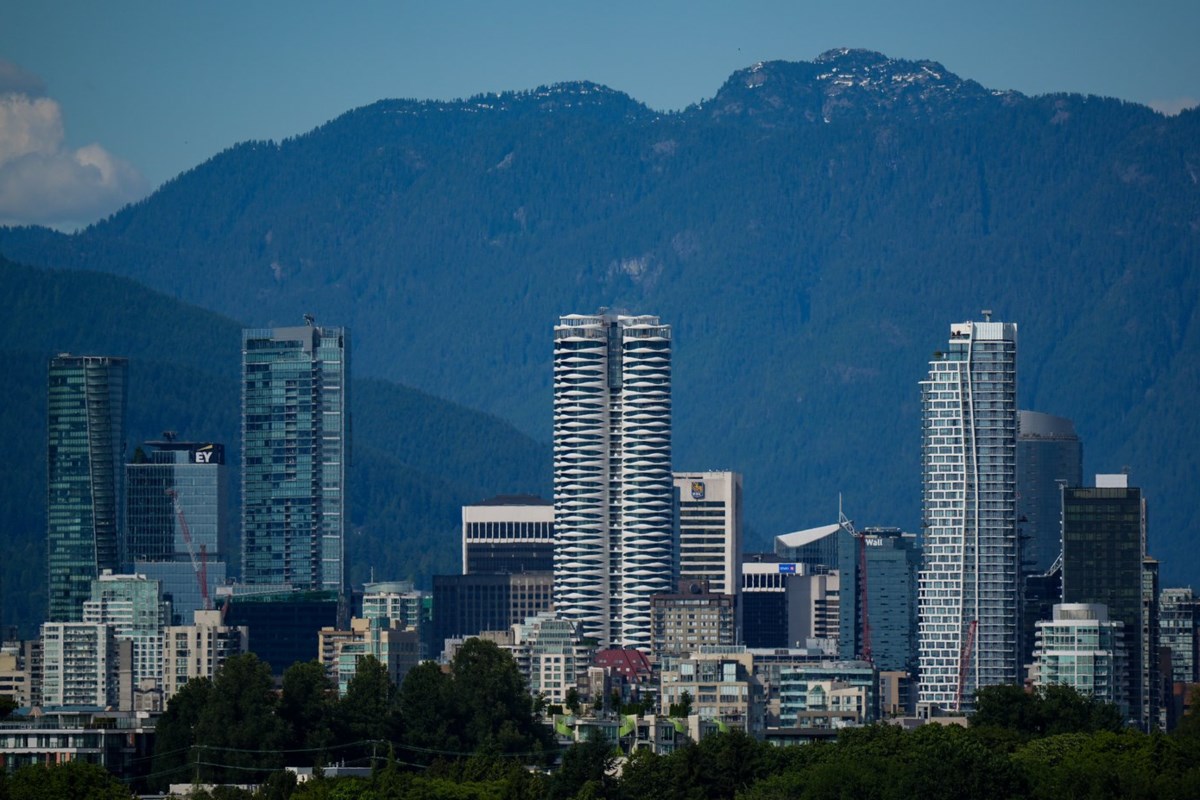
Premier David Eby and Prime Minister Mark Carney announced the plan to potentially help finance the purchase of 2,200 empty B.C. condos last week, and to make them available to the public under a rent-to-buy scheme.
British Columbia Premier David Eby says a joint federal-B.C. plan to buy unsold condominiums won’t be a bailout for Vancouver developers, but there’s now an opportunity for the government to purchase empty homes in other places for less than it would cost to build them.
Eby says the Vancouver condo market and its glut of unsold units will ultimately correct itself and the proposed program won’t assist developers in that city because “the numbers don’t work there.”
He and Prime Minister Mark Carney jointly announced the plan to potentially help finance the purchase of 2,200 empty B.C. condos last week, and to make them available to the public under a rent-to-buy scheme.
He says the “plot has been lost” over the past week in the absence of details, but there are purchase opportunities south of the Fraser River, as well as on Vancouver Island, and the Okanagan.
Asked how the government could argue it was buying at below-market prices when the condos would otherwise be unsold, Eby says bulk purchasing and buying entire buildings in bankruptcy proceedings present opportunities unavailable to individual buyers.
He says developers won’t profit from the proposal, which will instead help people get into the housing market at no cost to taxpayers, because their mortgages would be public assets.
“In fact, we expect developers to be taking losses on many of these initiatives, and ultimately it’s just another way for us to give people a chance to get into housing that wouldn’t otherwise have the chance,” he says.
Eby says the proposed program is not the preferred solution of developers, pointing to an open letter from the Urban Development Institute calling for the elimination of the GST on new homes.
He says that would be a bailout, because “it would be giving a tax cut to developers in order to avoid them having to take a cut to their profits.”
This report by The Canadian Press was first published June 25, 2026.