
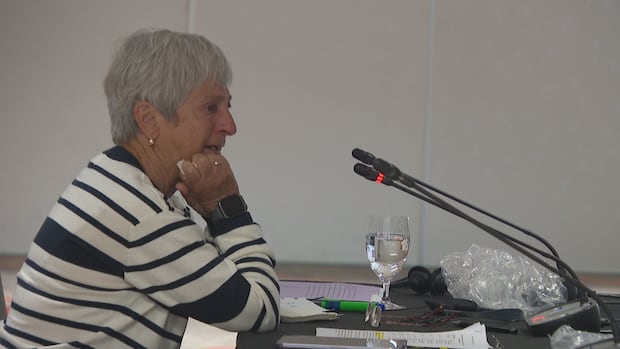
Among all the witnesses who appeared before a committee of MLAs examining New Brunswick’s Official Languages Act, one human story broke through.
On Tuesday, Gisèle Caissie gave an account of her sister Carmelle’s three-month stay at the Miramichi hospital following two hip surgeries.
She said her sister, a unilingual francophone, was unable to understand what staff were telling her about her treatment or tell them about the physical pain she was suffering.
“Please do something,” a sobbing Gisèle Caissie told the members of the committee in French.
“It’s not acceptable.
“She’s a citizen. She’s a person, just like us.”
Caissie spent half a year researching her own 24-page report on why the Miramichi hospital didn’t respect her sister’s rights under the Official Languages Act.
The hospital did not appear to be hiring enough bilingual staff, she said, and Horizon Health Network was turning a blind eye to the situation.
“I’ve been working on this for six months and there’s been no help from the health authority — none,” she said.
The all-party committee of MLAs have been travelling the province for the past two weeks to consult the public as part of a review of the language law, which guarantees equal access to provincial government services in both English and French.
“When you’re having testimony, typically it’s very pragmatic, you’re talking about funding, you’re talking about resources,” Progressive Conservative MLA Margaret Johnson said. “It’s pen and paper things.
“But these are human lives. … To have her break down multiple times – you cannot be untouched by that. You cannot come away from hearing that testimony and not say, ‘This is something that is impacting people at a visceral level.’”
Johnson said the story “struck me to the core, and there were other members on the committee who were deeply impacted by that.”
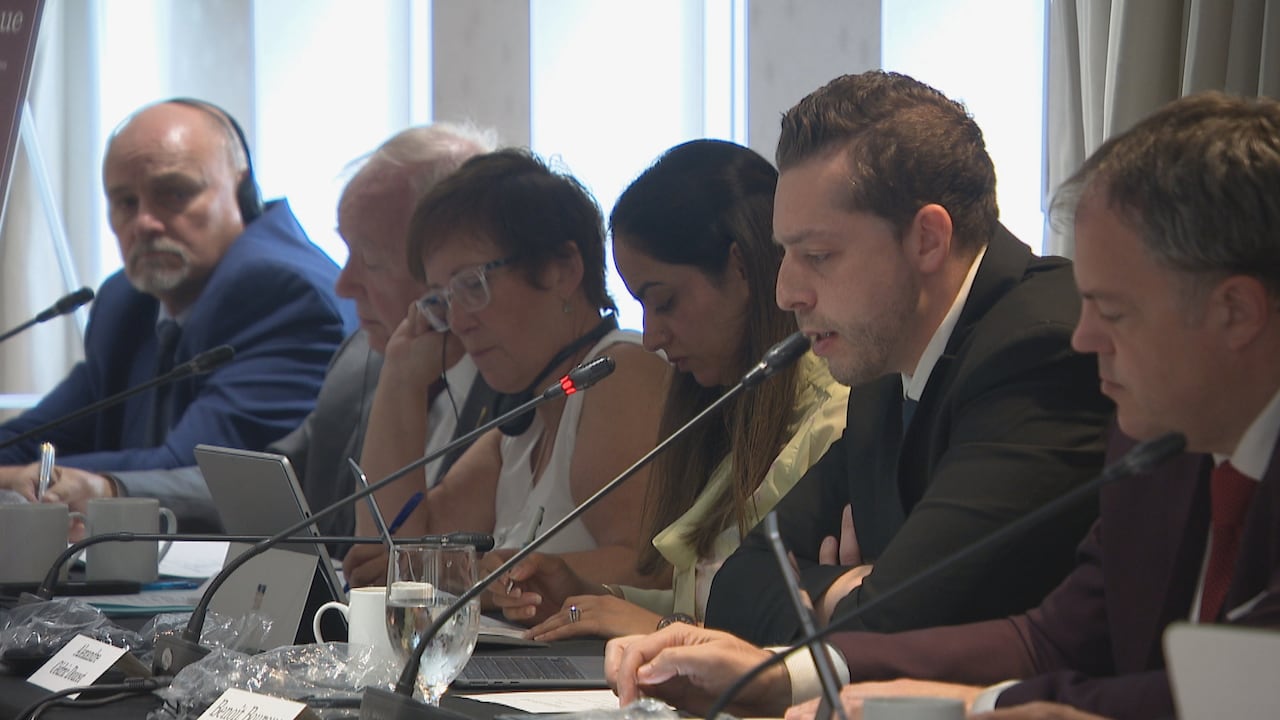 A committee with members from all parties is touring the province to consult with New Brunswickers on changes to the Official Languages Act. (Mathieu Bernier/Radio-Canada)
Caissie’s account came one day after New Brunswick’s official languages commissioner Shirley MacLean issued two investigation reports into the same hospital in Miramichi.
Those reports were also damning.
In one of the cases, the unilingual francophone family of a man admitted for emergency care was not able to speak to anyone in French about their family member’s condition, despite attempts.
As a result, they didn’t go to the hospital that night to be with him and he died alone.
The next day hospital staff contacted the family to tell them of the death, but the employee could only speak English, which left them unsure if they understood what had happened.
“The circumstances surrounding this complaint are not only sad, they also reveal a glaring lack of respect for the language rights of those concerned that is, without a doubt, cruel,” MacLean wrote in her report.
Caissie had similar observations about her sister’s care. Carmelle’s weight dropped from 132 to 80 pounds during her hospital stay.
“In a treatment relationship with a patient, empathy and human contact are essential elements … but she had none of that,” Caissie said.
WATCH | ‘You cannot be untouched’: MLA responds to patient story: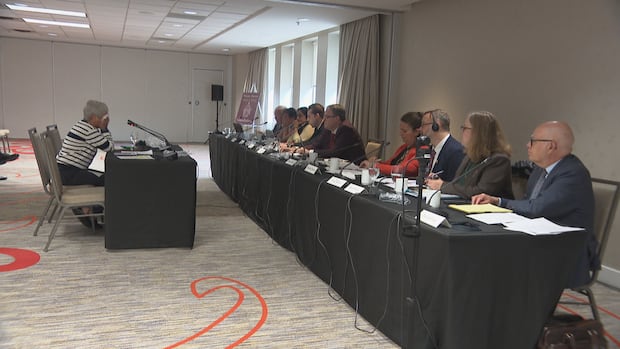
How one woman’s story shook MLAs on language committee
Raw account of lack of French service in Miramichi marks two weeks of hearings.
Liberal MLA and cabinet minister Luke Randall said Caissie’s story was moving.
“Moncton was a day of difficult testimony,” he said. “I think we certainly heard a lot of ways we can improve the implementation of the act around the province.”
It also appeared to have an impact on Randall’s approach on Thursday.
During the Fredericton hearing, he gently pushed back at a witness who called for the complete repeal of the Official Languages Act.
“Please put a complete stop to this legislation specifying our province of New Brunswick being bilingual,” Ron Steeves, an 84-year-old Fredericton resident, said.
Randall responded: “I think the act has a place, but I want to better understand, how do we protect the most vulnerable people who only speak one language?”
Steeves said more training in both languages was required but added, “I don’t know how to handle your question, really.”
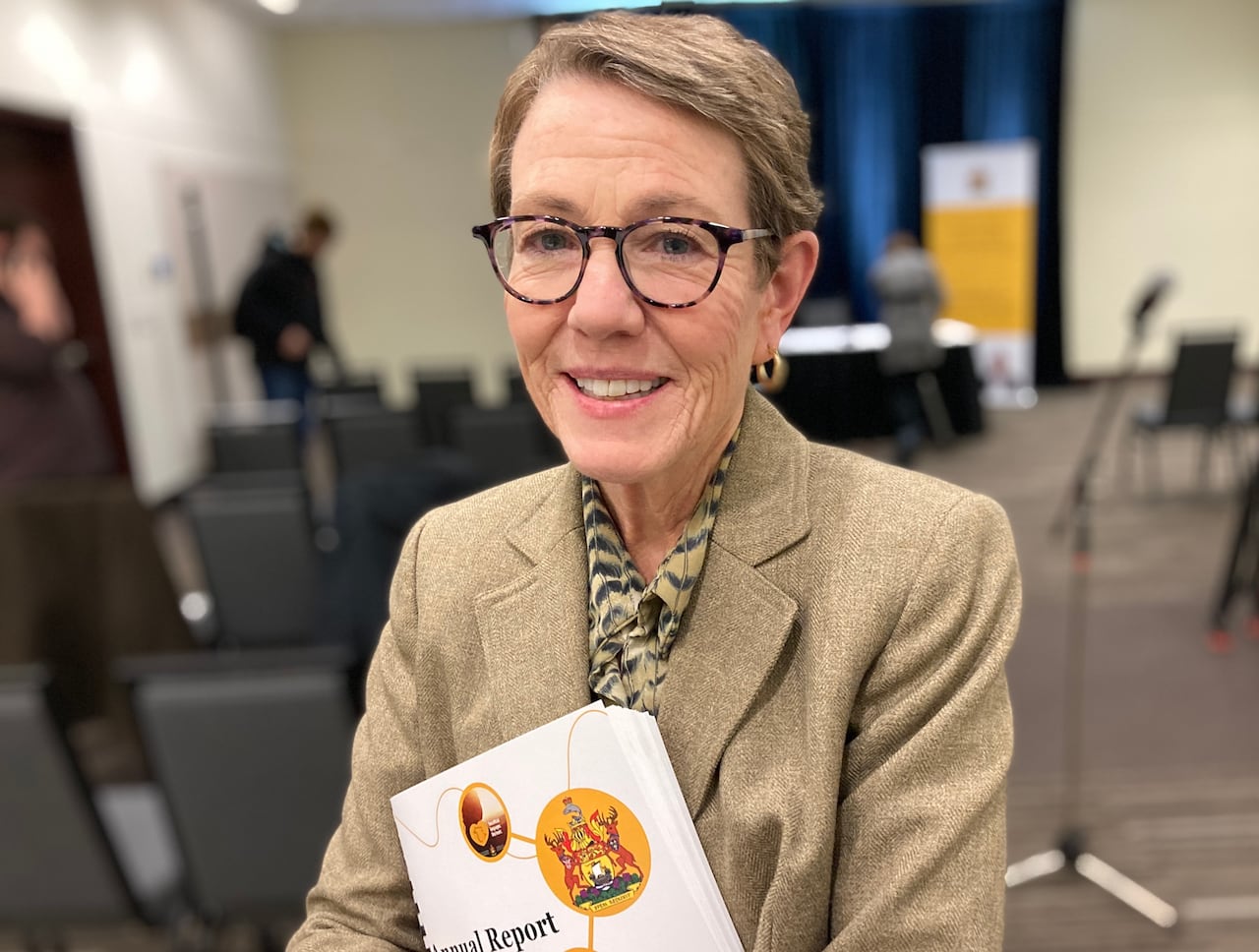 Shirley MacLean, New Brunswick’s official languages commissioner, has found two other instances at the Miramichi hospital similar to Caissie’s account. (Jacques Poitras/CBC)
In the case of the man who died, no one seemed to respect that his stated choice was to be served in French, MacLean said.
She also said she was “baffled” that the unilingual anglophone employee who called the family about the man’s death believed the family understood what they were saying.
“I frankly found that situation appalling,” MacLean told CBC News. “But what’s even more appalling is that … it appears to me it’s more of the same, and something has to change.”
In her report, MacLean said the number of language complaints at the Miramichi hospital have continued to increase despite promises from Horizon Health over the years to improve.
Horizon told MacLean efforts to hire more bilingual staff “do not seem to be yielding results.”
“How … can equal quality service for members of both official linguistic communities be ensured if there are not enough employees to make this happen?” her report said.
“Despite any challenges or special circumstances that may arise, as the institution is already well aware, its linguistic obligations under the OLA remain.”
MacLean said in her view, the Official Languages Act doesn’t need changes to address the Miramichi cases she reported on, as long as Horizon respects its obligations.
She would not comment on Caissie’s case because her office may issue a report on it in the future.
Horizon said in a statement to CBC News that it was working “to identify further steps we can take to strengthen compliance and accountability” around bilingual service.
“Every patient and member of the public has the right to be served in the official language of their choice, and the circumstances described in these reports fall short of that standard,” Horizon vice-president Jeff Carter said in the statement.