
TABLES TALES: Welcoming new editions of your favourite tabletop games
Published 5:00 pm Friday, June 26, 2026
The world of tabletop gaming is constantly evolving.
Over the last several months, since I first penned the column, I have explained how the hobby has evolved over the years. The development of new models and terrain, the explosion of new games and the increase in popularity the hobby has seen thanks to the internet.
One thing I haven’t discussed, however, is how the rules of the games themselves have also changed.
In both tabletop role-playing games and war games, rules have never been stagnant. Unlike games like Monopoly or Chess, where, outside of a few variants, the core games remain unaltered, tabletop RPGs and war games have been in a constant state of evolution since their inception. The rules for Dungeons and Dragons that were first penned by Gary Gygax and David Arneson in the 1970s are not the same rules I use today whenever I play a game of D&D.
Popular games like D&D, Warhammer 40,000, Frostgrave, Bolt Action and Necromunda have what we gamers call editions. Different versions of the same game with rules that build upon the concepts of the past, but also have radical differences.
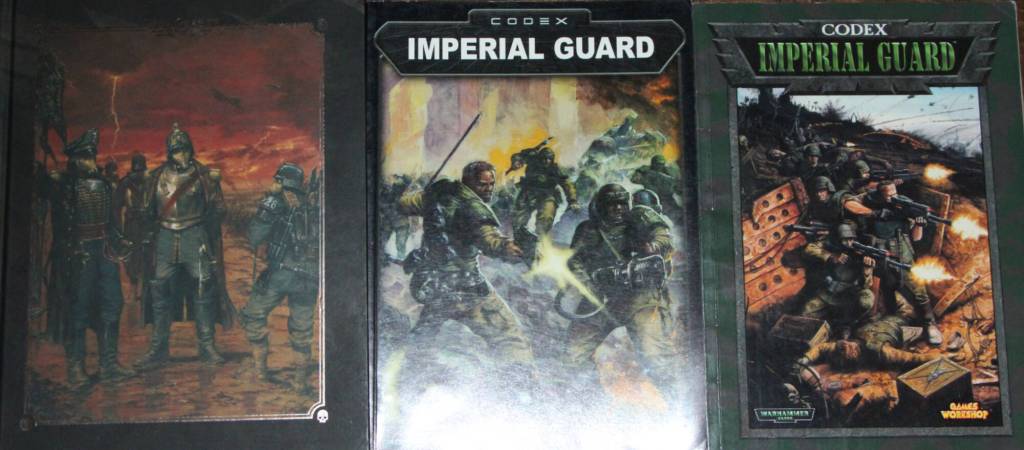
Take, for example, Warhammer 40K. Originally published in 1987, 40K launched its eleventh edition of the game this month. Both I and the other wargamers in the South Cariboo are currently poring over new rules and waiting to see how the armies we’ve played for the last three years are going to change and evolve.
Now, a layman might wonder how different a game of 40K in the eleventh edition could be from, say, fourth edition. Allow me to demonstrate.
In the current edition of 40K, rerolls are a common way for players to buff their armies. When you are rolling six-sided dice and looking for a three to hit the enemy, the ability to reroll all ones and twos is a powerful advantage. Indeed, with rerolls, the outcome of many actions in the 10th edition becomes almost a foregone conclusion.
In fourth edition, rerolls across an army were largely unheard of unless you bought certain enhancements when building your army. A fourth edition Imperial Guard army, for example, could only get rerolls if you took the ‘sharpshooter’ skill and bought it for each unit in your army. Even then, you would only get to reroll ones with select weapons.
New editions have become a regular part of tabletop gaming for three main reasons. The first is to address issues with unbalanced or unclear rules. If we play any game for any length of time, we’ll eventually find exploits and loopholes in the rules to take advantage of.
The second is to provide players with something new. No matter how fun a game might be, if we play it too much, we can eventually grow bored with it. New rules mean new ways to play and build your favourite armies.
The final reason and probably the most important gaming companies, however, is that a new edition means the creation of new rulebooks to sell to your customers. In the case of Games Workshop, they have it down to a three-year cycle with their flagship games like 40K and Age of Sigmar. A cynic might call that a license to print money.
Either way, I, for one, look forward to seeing just what evolutions the new editions bring to the table…