
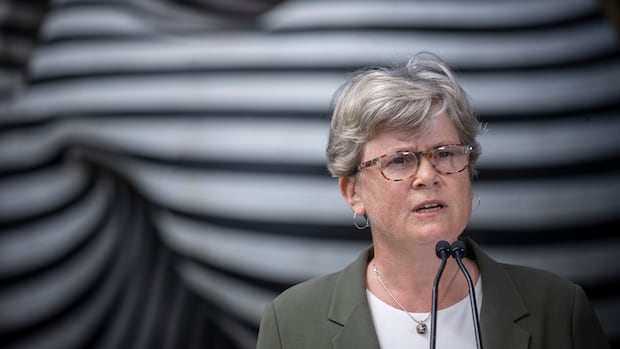
As the province continues to roll out broader access to free nasal naloxone this week, documents obtained by CBC News detail the Ministry of Health’s behind-the-scenes discussions that led to the decision.
Late last year, CBC News reported that the ministry was months delayed in releasing an evaluation of a pilot project that made nasal naloxone free for some groups for the first time. Medical experts and the official opposition called for the program to be expanded, so everyone in B.C. could access the resource some find more easy to use than injectable intramuscular naloxone.
Following that coverage, Health Minister Josie Osborne was asked in the legislature by the Green Party about British Columbians having to pay $80 for a dose, while other provinces offer it free. At the time, Osborne said she would have “more to say about that soon.”
Internal documents obtained by CBC News through a freedom of information request show that the following week, staff within the ministry exchanged a flurry of emails setting up an urgent meeting to discuss the fate of the program.
“We need to get [Osborne] briefed on next steps for nasal naloxone. It is getting a lot of media coverage,” wrote one senior adviser.
Ministry staff prepared a slideshow presentation to brief Osborne on the pilot and a timeline for an expanded rollout following these emails in early December. It is the only such presentation shown in the FOI, which spanned from May 2025 — when the Osborne said in the legislature that the evaluation was expected to begin — to early December, when the briefing occurred.
The pilot program, launched in May 2024, made 60,000 nasal naloxone kits free to people in “priority populations” — those in cold climates or who have trouble with syringes, youth who may witness an overdose, and Indigenous communities. This was later broadened in July 2025 to anyone at risk of experiencing or witnessing an overdose.
Ultimately, Osborne announced the expansion of the project this February, making nasal naloxone free to every British Columbian.
B.C. opened up orders this week for all of the more than 2,400 pharmacies, health centres, and other sites across the province that distribute free intramuscular naloxone to now stock the nasal alternative.
The Ministry of Health did not respond to questions about the emails and what work had been done to evaluate the program prior to the December briefing.
“Supply associated with these pilots was being shipped and distributed through early 2026,” wrote spokesperson Layma Maslova in a statement.
“The Ministry of Health and key system partners were actively monitoring the impacts of the pilots throughout their term, and these findings were critical to informing the integration of nasal into the [Take Home Naloxone] program.”
Documents show a delay in preventing further toxic drug deaths: critics
B.C. Conservative Critic for Mental Health and Addictions, Claire Rattée, said she supports widespread access to nasal naloxone. However, after reviewing the FOI documents, she said she is concerned that this decision appeared to be based on public pressure.
“Everything feels reactionary, everything feels too little, too late,” she said.
Alongside this rollout, she said she wants to see a broader public education campaign rolled out alongside the distribution of these tools, about the harms caused by toxic drugs.
Jess Wilder, a family and addictions medicine physician and co-founder of Doctors for Safer Drug Policy, says she is also troubled by what the documents reveal.
“It’s really heartbreaking to read [Osborne’s] advisers saying that they need to be giving her a briefing because there’s been attention in the media and not because this is B.C.’s biggest public health crisis and loss of life that we’ve ever experienced in our history,” she said.
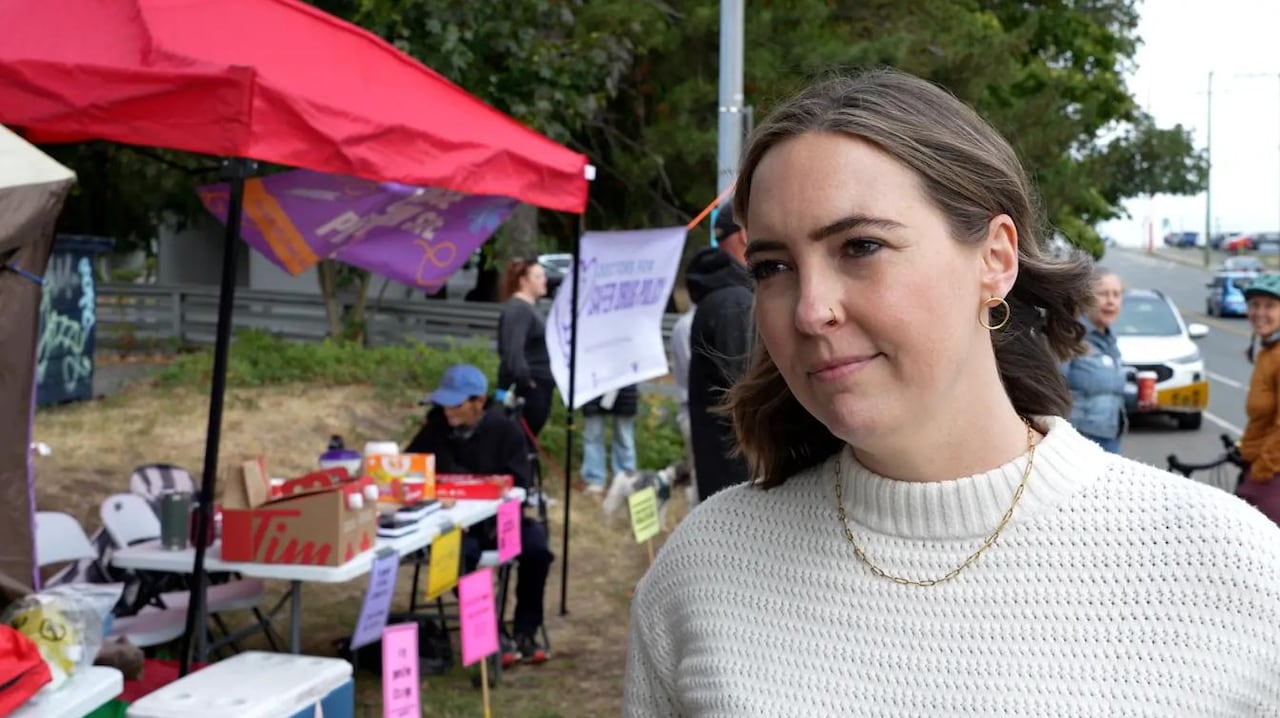 Dr. Jess Wilder, co-founder of Doctors for Safer Drug Policy, says the province is failing to respond comprehensively to the toxic drug crisis. (Claire Palmer/CBC)
Wilder says she is glad this tool is becoming more widely available. But with nasal naloxone more widely available for years in other provinces, she says it shouldn’t have taken B.C. a decade into its toxic drug death public health emergency to catch up.
“This isn’t something to be applauded, this is kind of a slow clap for the government that they’re just getting to this now,” Wilder said.
“I really don’t want to draw attention away from the fact that we are still just failing to respond to this on all levels, in a really comprehensive way.”
Nasal naloxone part of calls to action after university student’s death
Widespread access to nasal naloxone was one of the calls to action that emerged after 18-year-old Sidney McIntyre-Starko fatally overdosed in a University of Victoria dorm room in January 2024.
“It was impossible to understand why this was not widely available in B.C., and why B.C. was so far behind provinces that had much lower death rates,” said McIntyre-Starko’s mother, Caroline McIntyre, an emergency physician.
“It does not surprise me at all that it took ongoing media coverage for the province to carry through with making nasal naloxone widely available in B.C., as this has been the pattern they have followed since we first started interacting with them.”
The briefing from December 2025 described the pilot project’s aims and potential future steps, though some parts are redacted.
In a partially redacted page, it said the Provincial Health Services Authority would put out a call for supplier bids that month, and award a contract in January. From January to March, 150 of the initial pilot distribution sites would begin to get nasal naloxone. A page labeled “long term vision” is redacted.
It also shared statistics, including that fatal overdoses are 30 per cent more likely to occur in rural areas, that 20 per cent of people who died had a naloxone kit with them, and that half of people who died were using drugs alone.
However, none of the slides appear to share information learned from the pilot.
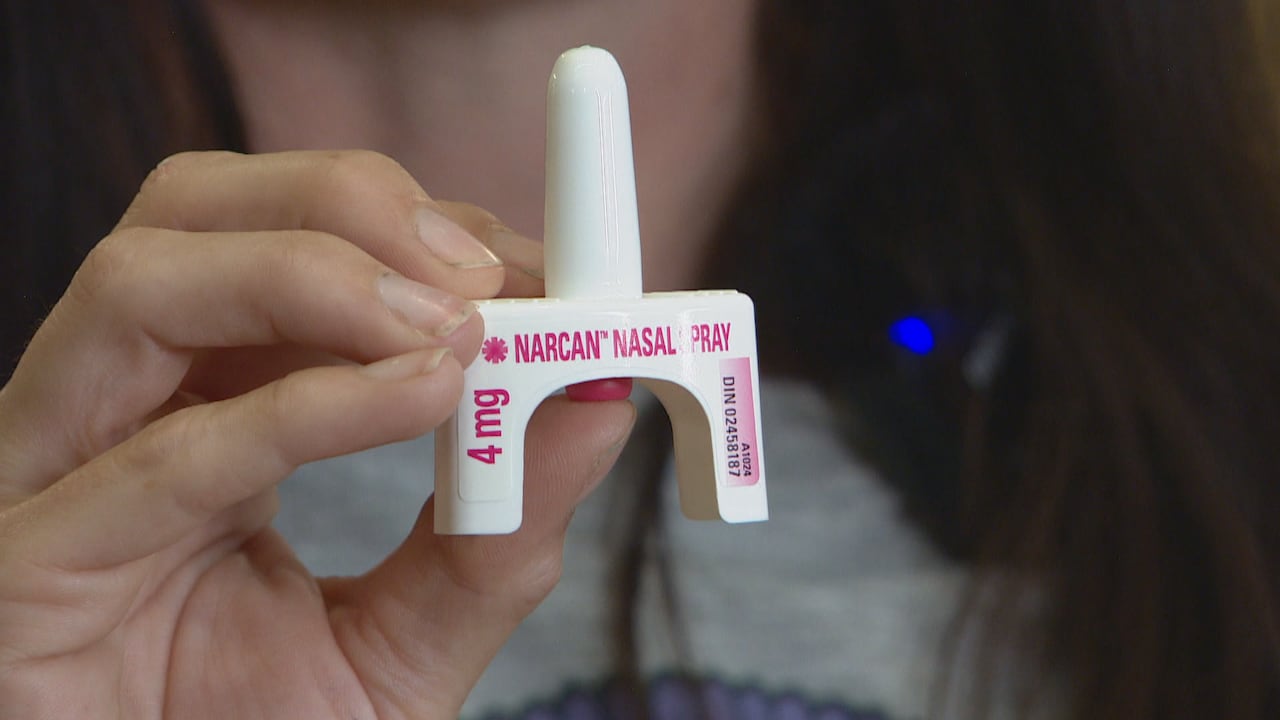 Nasal naloxone is available for free at 2,500 locations in B.C. (CBC Saskatchewan)Free nasal naloxone rollout underway
Alexis Crabtree, who leads the B.C. Centre for Disease Control’s Take Home Naloxone program, says work is underway to make nasal naloxone as accessible as intramuscular naloxone, and to research its impact. She’s also working on helping people understand which type of naloxone would be best for them to carry for their circumstances.
Chloe Goodison, who runs NaloxHome, a program that trains youth on overdose prevention and response, says students are often more comfortable with the nasal version. With free access to it now, she says she’s able to hand it out to her students.
There’s still more work to do, Goodison says — 75 per cent of participants find out about naloxone for the first time through her training — but it’s a step she’s proud to have fought for.
“Soon everyone will be able to go access it, which is just so fantastic and truly life saving,” she said.