

Listen to this article
Estimated 4 minutes
The audio version of this article is generated by AI-based technology. Mispronunciations can occur. We are working with our partners to continually review and improve the results.
Art conservators are giving new life to a pair of murals that have sat in downtown Calgary for more than half a century.
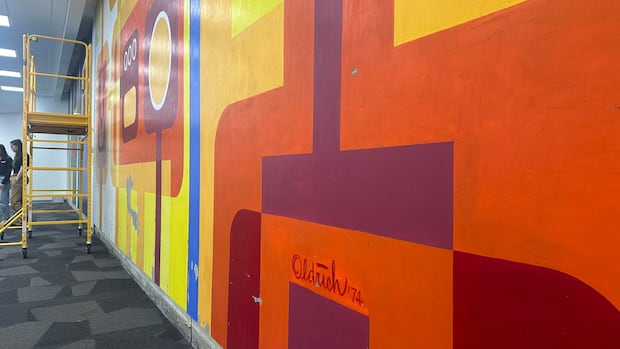
The city and the Glenbow Museum are collaborating to restore two untitled murals, painted by Robert Oldrich in 1974, that have long added colour to Calgary’s Plus-15 walkways. The work to revive the paintings’ original colour and structure requires removing dirt, stabilizing flaking paint and repairing damage like indents and gouges.
“The aim is to do a seamless re-integration where people can just stand and look and appreciate the image, and not be distracted by any losses or any weird abrasions on the surface,” said Doris Fuller Ruiz, a paintings conservator working on the project.
After Oldrich’s work accumulated 52 years of dirt and grime, Fuller Ruiz said it’s satisfying to see the colours restored. She noted the oranges and yellows already look brighter, while the blues add more depth.
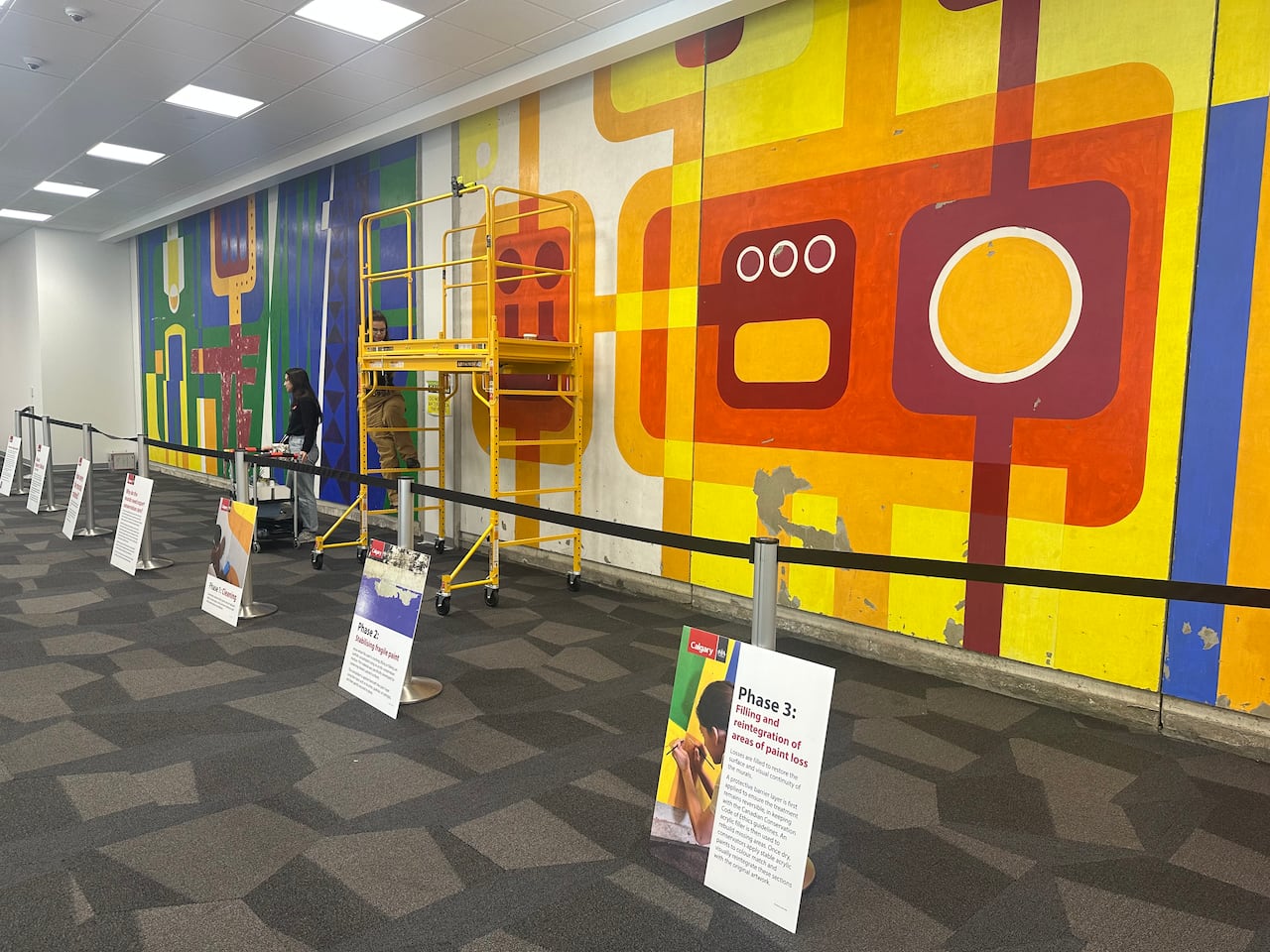 Robert Oldrich’s murals have withstood more than 50 years of dirt, grime, water leaks and poor weather, but now conservators are confident they can restore the works to their original vibrancy. (Colleen Underwood/CBC)
After the dirt is removed, the conservators stabilize the work by using adhesives to glue down loose paint flakes. Then, to account for indents or gouges in the murals, conservators add filling material just thin enough to come to the paint’s level, and paint over it.
The murals were originally located on the Glenbow’s outer walls, but have since been moved to a Plus-15 walkway near the museum. The conservators are completing the work in the walkways, so the public can have the opportunity to see the detail that goes into art restoration.
LISTEN | Hear from the art conservator working on the mural restoration project:
Calgary Eyeopener6:53Plus 15 murals
Some of the iconic murals in Calgary’s Plus 15 walkways are getting a facelift. We hear from the project’s art conservator about the restoration of some paintings from the 70s.
To know which materials to use, the Glenbow’s manager of conservation Priyanka Vaid, said the team shipped samples of the murals’ paint and ground layers to the Canadian Conservation Institute in Ottawa for analysis. The results they received help guide the conservators to know which materials to use to clean and stabilize the work without damaging it.
“We cannot remove the paint or even remove some layers of paint. That’s not what we do,” said Vaid. “So the agent has to be something that is very, very protective of the paint layers and it only affects the dirt.”
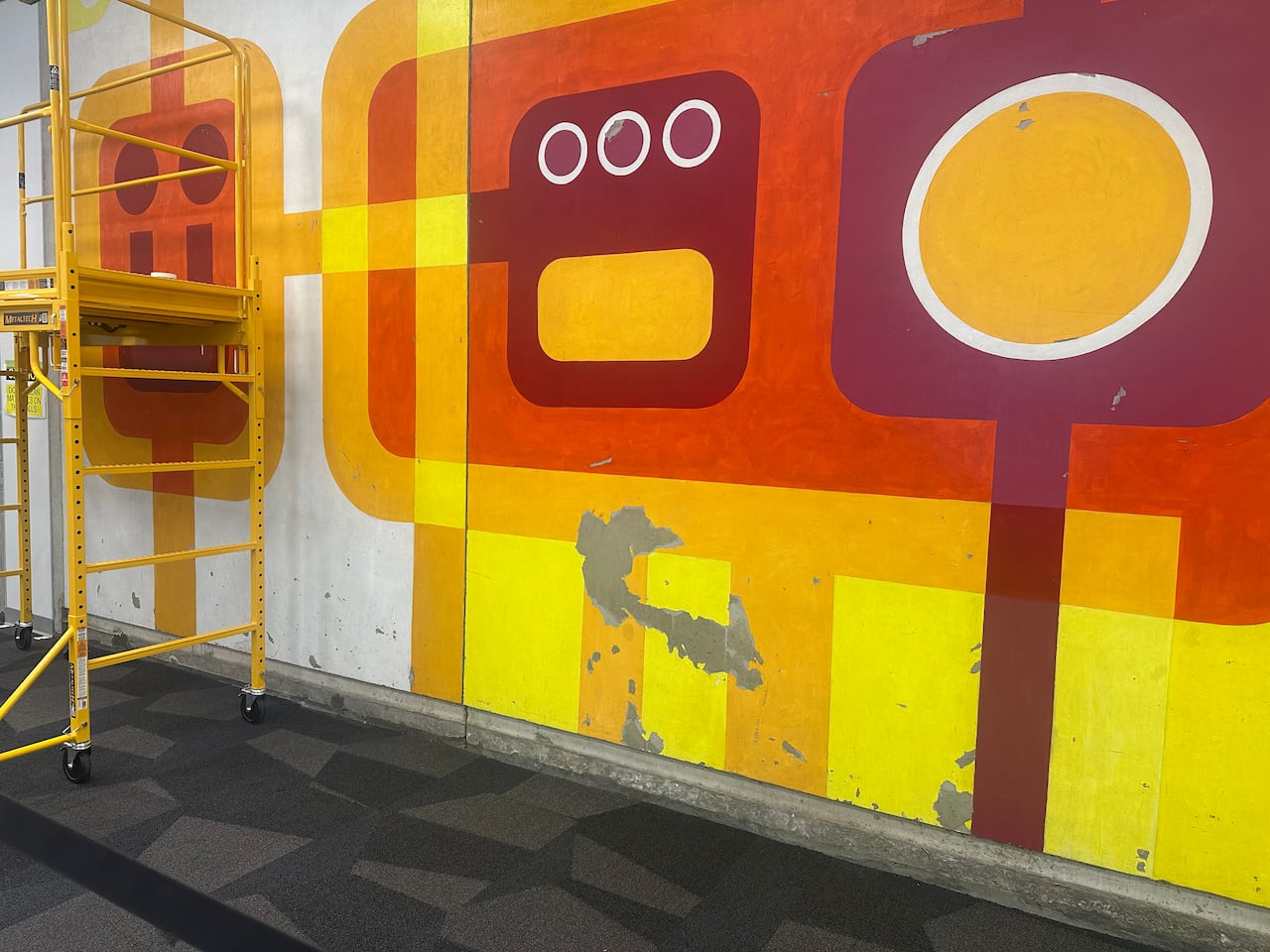 Peeling paint, gouges and indents are all part of the damage that Robert Oldrich’s murals have taken in the past 52 years, that art conservators are working to repair. (Colleen Underwood/CBC)
Vaid added that everything her team does has to be reversible and documented in detail, in case the materials they use age in unexpected ways, so future conservators can again restore the murals, if needed.
The materials Oldrich used are very stable, Vaid said, and most of the damage they have taken are due to being exposed to the outdoors or water leaks. The city plans to better protect the murals from the elements going forward, in hopes they could last another 50 years at least before needing restoration.
Oldrich created a variety of public art pieces around Calgary, including concrete panels that stood on the Glenbow’s outer walls since the museum opened, and that the museum has said they plan to re-install in time for its renovations to be completed next year.
Camille Lafrance, a public art associate conservator with the City of Calgary, said the restoration is a high-profile project for the city, to restore work that has been part of Calgary’s landscape since the 1970s.
“Robert Oldrich, he’s such a significant artist in the city of Calgary,” said Lafrance. “That’s why it’s significant to preserve the piece and really keep it in good condition because it’s part of our collective identity as Calgarians.”
The restoration project began last month and is planned to run until September.