
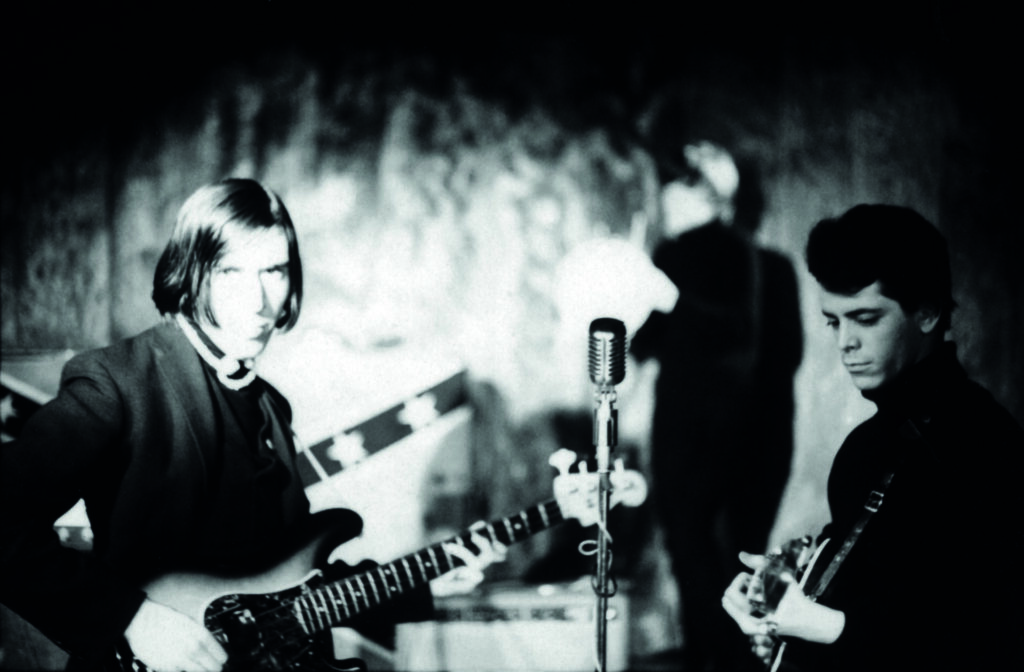
According to Paul Morrissey, “Andy was [saying], ‘There’s no money here. We’re not making any money. What is happening?’ He was always very uncomfortable if money wasn’t coming in. Even though they had signed their management contract before the Dom had opened, it was not easy, and Andy had to pay for the lawyers and all that. I said, ‘We have to do what everybody else does. They have to make a recording, and we have to try to sell it to a record company.’ Again, he had to lay out the money for the recording studio, but it was only two or three thousand dollars for two or three nights.” (Other sources put the figure closer to $1,500, Reed referring to it as “the profits from like one week at the Dom” in a 1987 interview with Joe Smith.)
So sometime around mid-to-late April, The Velvet Underground finally entered a recording studio for the first time, laying down the bulk of their debut album in just a few days. As the group didn’t yet have a recording contract, the idea was to produce material that could then be shopped around for one.The costs were shared roughly equally between Andy Warhol and Norman Dolph, a Columbia Records sales executive with a straighter background and character than most of the Factory crowd. Dolph was also an art collector, however, who met Warhol through his side job supplying music for art gallery shows and openings with his mobile disco – including the EPI’s Dom shows, where the scheme to make a record quickly took hold.
On the first or second night of the Velvets’ Dom stint, remembers Dolph, Warhol told him, “‘We’d like to do an album of them, a record.’ I said, ‘I can help you with that.’ He said, ‘Oh really? Okay, good. Do it.’ I think he did that with a lot of people; if he found somebody that could do what he wanted, he’d just say, ‘Do it.’ And they would, whether it was appear in this movie or go out for pizza. He never gave a lot of orders that I ever saw. He just made sugges- tions and people took him up on it. He had plenty of people around to do anything he wanted. He didn’t ask me any questions about ‘do you know this studio or that engineer or this producer’ or any of that. It was: ‘We’d like to make a record,’ and I said, ‘I’ll take care of it.’”
Through his day job in Columbia’s Custom Labels Division, which provided services for smaller labels without their own pressing plants, Dolph was aware that one of his accounts, Scepter Records, had its own recording studios. He arranged for the sessions to take place at Scepter’s midtown Manhattan facility on West 54th Street, in the same building that would later house the famous Studio 54 discotheque. He asked to be paid in art instead of cash, receiving a silkscreen picture from Warhol for his engineering services; if he held onto it, it probably amounted to a much higher fee as Andy’s work shot up in value over the years.
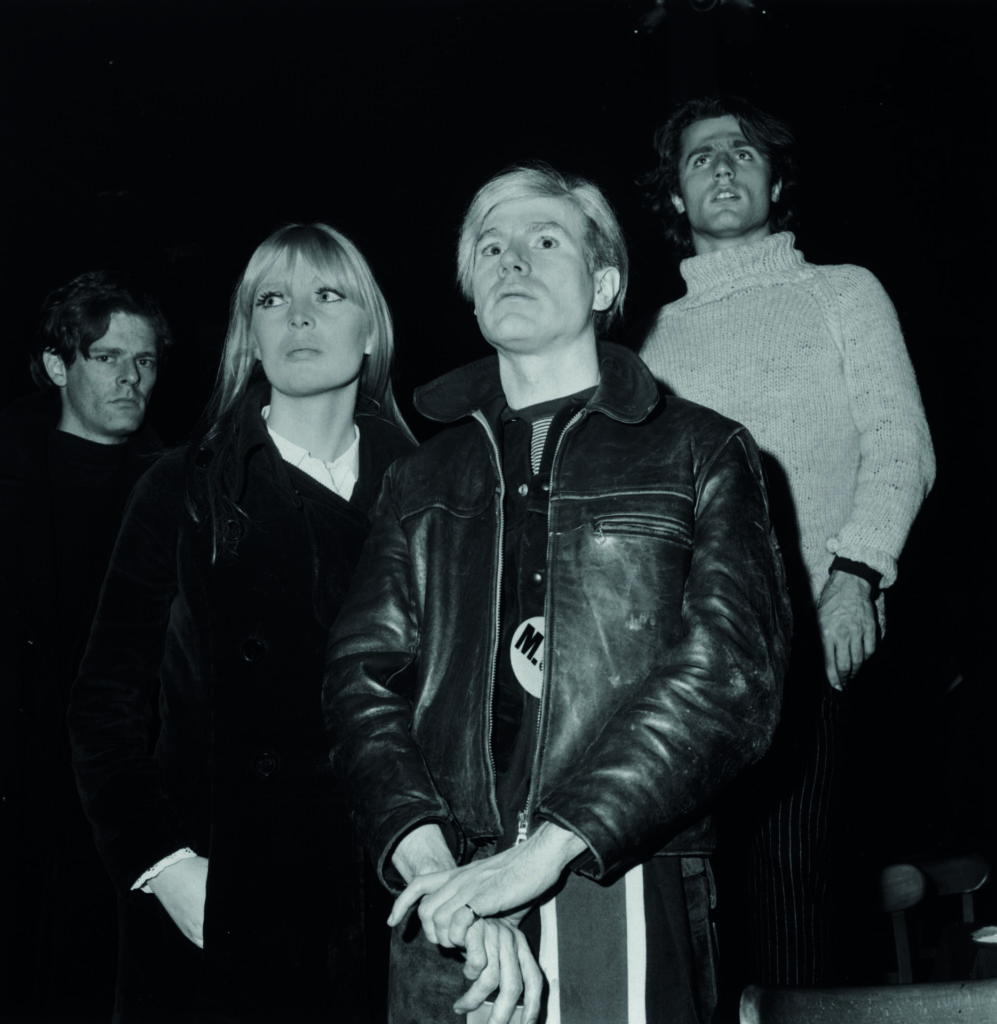 4th December 1966: Left to right: Director Paul Morrissey, singer Nico (1938 – 1988), artist Andy Warhol (1928 – 1987) and poet Gerard Malanga attend a ‘Freakout’ party featuring a Velvet Underground and Nico performance at the Action House, Island Park, Long Island, New York. (Photo by Tim Boxer/Hulton Archive/Getty Images)
Even in the absence of a record deal, the intention was always to make a releasable album, not just a collection of demos. “At no time was what we were doing ever referred to by anybody as a demo,” Dolph recalls. “They were going for the jugular. They wanted to make a record that sounded like they sounded.”
In Joe Harvard’s book The Velvet Underground & Nico, part of Continuum’s 33 1/3 series on classic albums, Dolph speculated the sessions spanned sometime between April 18 and April 23. He believes they amounted to a total of four days: two for recording, a third for listening to playback and a fourth for mixing. The Velvets later gave different estimates as to how much time was involved, but the total recording time probably added up to around ten hours. Recording must have wrapped up by April 25, as acetates were cut on that day of the finished tracks.
“We did it quickly, yes,” acknowledged Cale to Uncut in 2009. “But why should it have taken any longer? We’d been rehearsing those songs for a year and a half. We knew exactly what we wanted the record to sound like, which was how we sounded live, and just as loud.” Only Maureen Tucker had no experience of anything like a studio environment. Martha Morrison, a visitor to the sessions, recalls that “Moe’s drums were wiggling around, so I had to go in there and hold them for her.”
John Licata, Scepter’s in-house engineer, was brought in to lend the proceedings some approximation of professionalism. Neither he nor Dolph were credited on the eventual The Velvet Underground & Nico LP, but both are listed as engineers of the Scepter sessions on later CD reissues, even if Dolph’s role was much more like that of a producer. Licata, says Dolph, “was wonderful, cooperative, easy to get along with… he was the total antithesis of The Velvet Underground. At no time did any of the musicians ever tell him what to do. They went in and played, and he got what they wanted. When I heard the album [a year later], it didn’t sound appreciably different from what we did at Scepter.
“I was not the producer in any sense that Quincy Jones is a producer,” Dolph admits. “The only thing I would say is because they were doing it on my money, and we had limited time resources fiscally – ’cause we were always bumping up against commitments that Scepter had in the studio – I kept the thing on the rails. I think part of the way the record sounds the way it sounds is because of John [Licata] and I keeping the damned thing going and moving – you know, ‘Okay, next take, let’s do it, blah blah.’ That’s my contribution as a producer.”
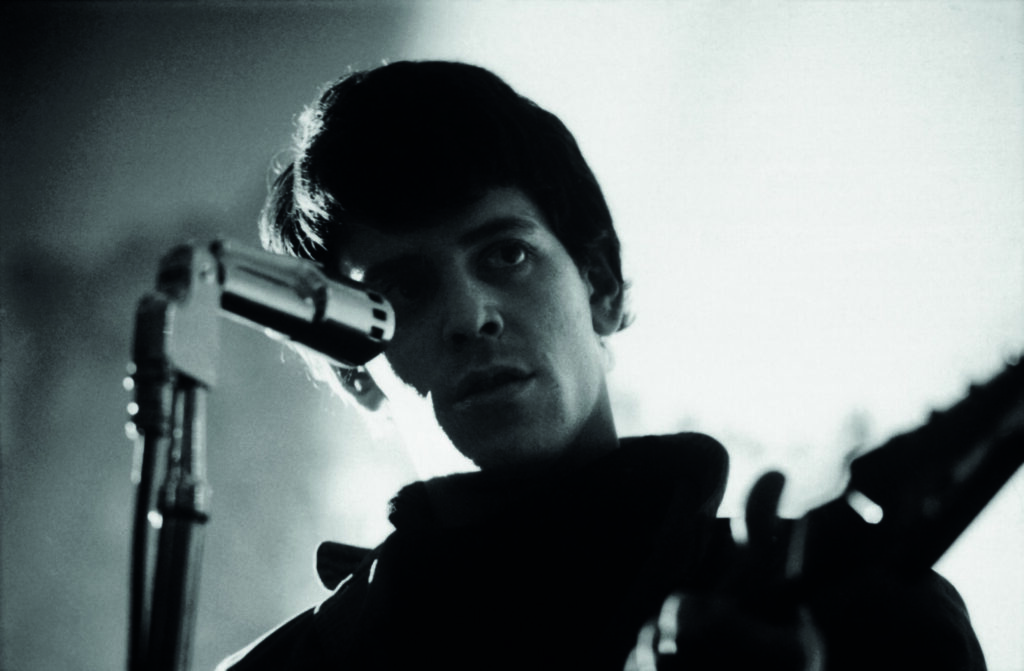 Lou Reed of the Velvet Underground performs on stage at the New York Society for Clinical Psychiatry annual dinner, The Delmonico Hotel, New York, 13th January 1966. (Photo by Adam itchie/Redferns)
Although the Scepter label was known for pop and soul hits by the likes of The Shirelles and Dionne Warwick, its studios weren’t quite as state of the art as The Velvet Underground and their producers might have expected. In fact, the studio was probably only available to the VU because the facility was in a state verging on the unusable. “We went in there and found that the floorboards were torn up, the walls were out, there were only four mics working,” Cale recalled in his autobiography. “We set up the drums where there was enough floor, turned it all up, and went from there. Dolph ran the sessions, but he didn’t understand the first thing about recording.”
Scepter’s studio might have had its limitations, but it still had equipment the Velvets couldn’t have accessed easily otherwise. Its two-track machine and four-track machine, which were probably used for overdubbing and alternate vocals, were a big step up from the Wollensak reel-to-reel at Ludlow Street. Dolph acknowledges the studio was “small, certainly by contemporary studio sound. But they often recorded fairly large ensembles. They recorded a big orchestra behind Dionne Warwick, and they recorded gospel choirs in there. But they were always very crowded. Once you had everybody in there, they had to pretty well stay put, because there wasn’t a lot of room to move around. For a playback everybody but John [Licata] and I had to stand, there were no real seats in the place.”
Recording The Velvet Underground in such an environment presented its own set of challenges. “It seemed to me that the instruments, as heard live in the studio as opposed to on the other side of the glass, were being played rather loudly,” Dolph remarks. “You would ordinarily expect if they were gonna play that loud, they would be in a much larger room to get some isolation between one and the other. But there could have been little separation or isolation in any kind of modern sense in that room, considering how loud they were playing.
“The adrenaline quality of it was because we knew we had eight hours,” he says, “and they wanted to get on with it, and I wanted to get on with it. Anytime they’d break down, I’d stop the tape and we’d start over. I don’t think there are two different complete takes of more than one or two songs, and I’m not even sure the breakdowns were saved. Because we were paying for the tape at probably $125 a roll, usually the broken takes were backed up and recorded over. Otherwise, there would be some interesting scraps lying around.”
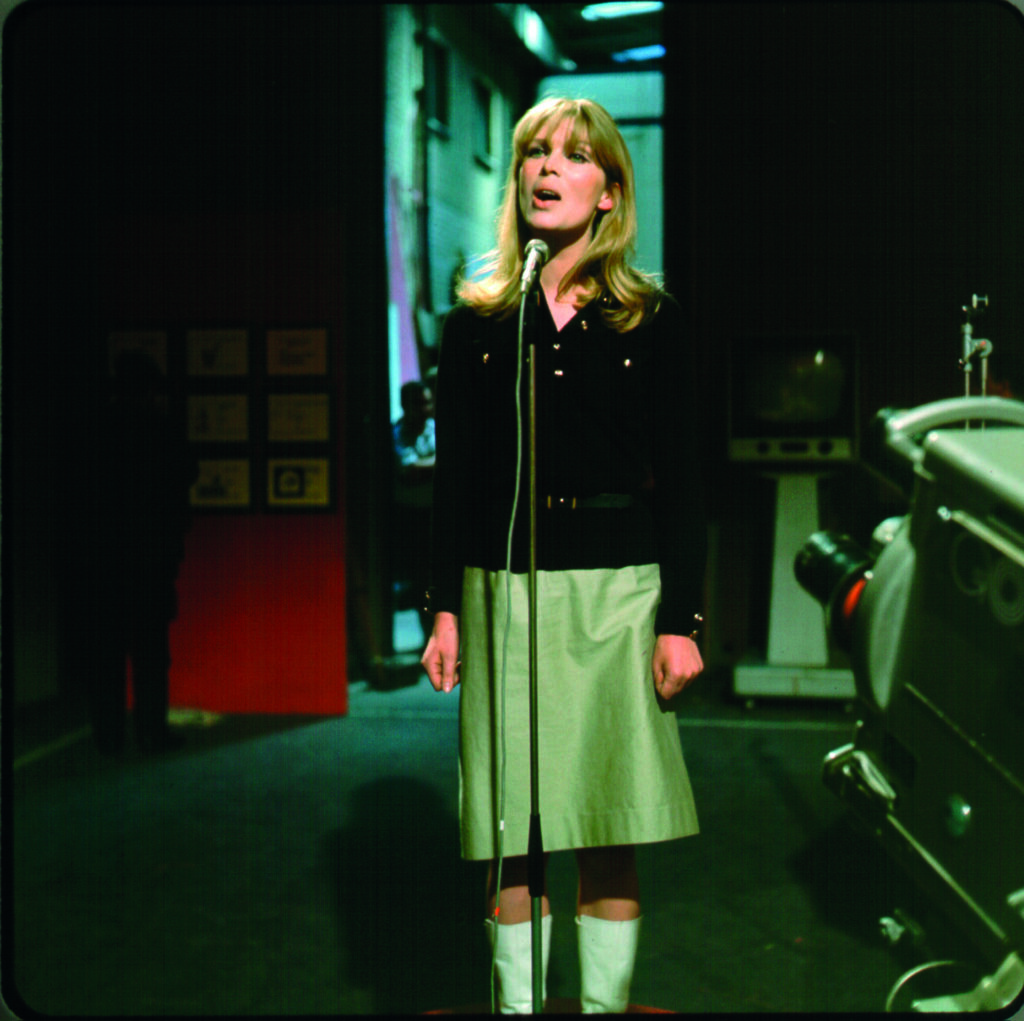 CIRCA 1968: Singer and entertainer Nico performs on a TV show in circa 1968. (Photo by Michael Ochs Archives/Getty Images)
The role Andy Warhol played in the recording studio during these sessions has been much debated over the years. In a 1970 interview with Fusion magazine, Sterling Morrison described Warhol as a producer “in the sense of producing a film,” helping to finance the sessions and generally keeping the band afloat and in good enough musical and psychological shape to enter the studio in the first place.
As Dolph recalls, “Licata was there 100 per cent of the time, I’m there 100 per cent of the time, and Morrissey was there much of the time. Warhol was there on occasion. He had his little tape recorder, which he carried all the time. I seem to remember him there probably for about two hours in the aggregate over maybe three occasions. But he was totally fascinated by what was going on, and I don’t think he made any aesthetic judgment whatsoever. ‘Gee, that sounds good’ might have been it. He was a spectator.”
At least one Factoryite remembered Warhol doing more than watching and paying the bill. Joey Freeman, then a teenage assistant to Andy, told Barbara Rubin documentarian Chuck Smith that “we would sit in the cab and go [to] The Factory, and Andy would play the Velvet Underground takes from the recording studio the night before. And he would make suggestions to Lou about what he had heard in the car.” However, the Velvets were in the studio so few actual calendar days it seems there would have been few opportunities for Andy to give Reed such immediate feedback.
“Andy would always like the more gothic, operatic versions of these songs,” Freeman added. “He didn’t like the rock’n’roll as much. He liked the ones that had a lot of drama to them. ‘All Tomorrow’s Parties’ was one of his favourites.” In his interview for the Lou Reed: Rock and Roll Heart documentary Cale speculated, “I think Andy’s love of ‘All Tomorrow’s Parties’ is really about the topic itself, about someone whose dress never lived up to the occasion.”
Both Cale and Reed, however, were later emphatic that Warhol’s contributions weren’t merely decorative. Cale praised Warhol’s insist- ence that the band stay true to their live sound, and Reed appreciated Andy’s refusal to shy away from controversial lyrics that could have endangered their commercial prospects. “What he did do is he made it all possible,” Reed pointed out in the Transformer documentary. “One by his backing. And two, before we went in the studio he said, ‘You’ve got to make sure – use all the dirty words. And don’t let them clean things.’ And so, when he was there, they – you know – they didn’t dare try to say, ‘Hey, why don’t you don’t do that over,’ or, gee, any one of all the other things they would normally have done never happened.”
Do What You Fear Most: The History of the Velvet Underground by Richie Unterberger is published by Omnibus Press