
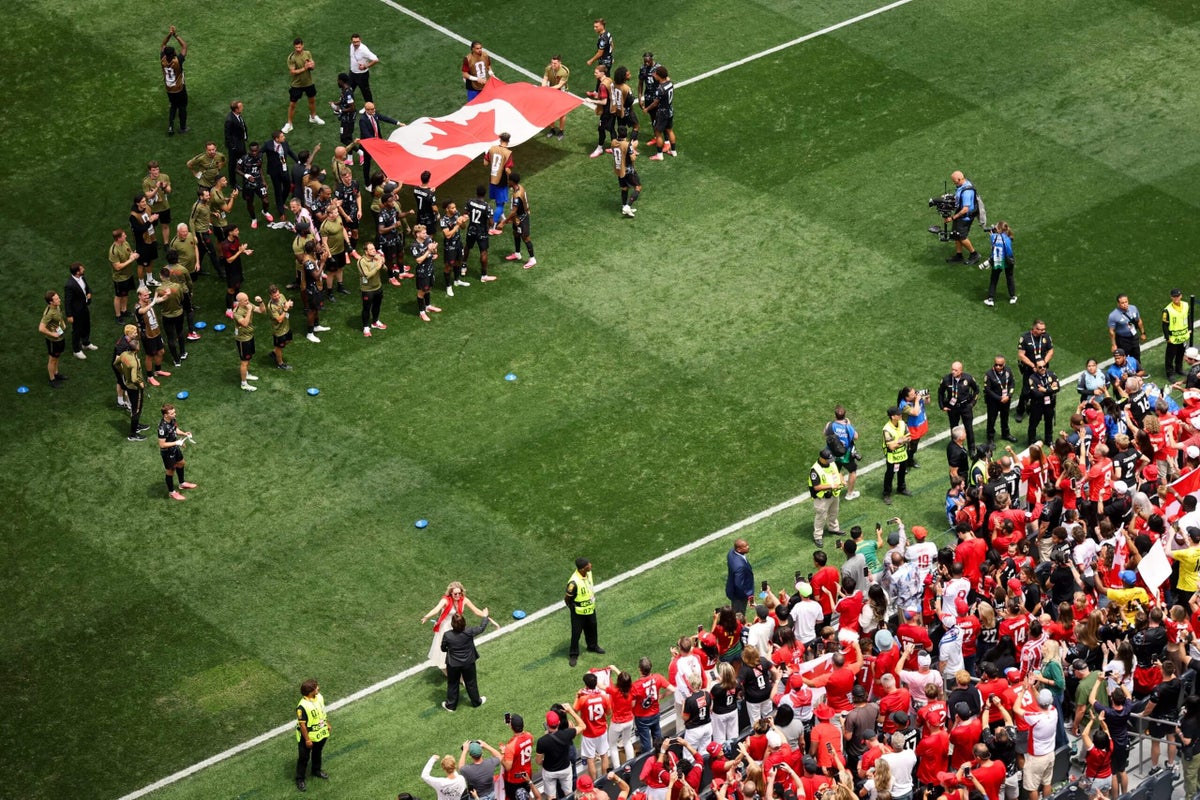
INGLEWOOD, Calif. — Ten days ago, Ismaël Koné suffered a horrific broken leg in front of 52,497 fans at BC Place in Vancouver and watched his World Cup end in the blink of an eye.
But on Sunday, he was again alongside his Canadian teammates, and the midfielder, who cannot walk without crutches, danced.
Koné swayed deliriously to music in the middle of Canada’s dressing room.
“He seemed to have recovered from his injury quite quickly,” defender Luc De Fougerolles joked.
With the sun breaking through after a grey Southern California afternoon, Koné and the rest of the Canadian men’s national team became, as head coach Jesse Marsch said in the post-match speech, heroes, elevated into Canadian history.
After 91 minutes of tense soccer in Canada’s first-ever knockout-round game in the men’s World Cup (the biggest sports event in the world, it is worth reminding curious Canadians), Stephen Eustaquio delivered a thrilling added-time goal to send South Africa home and Canada into the round of 16. Teammates stormed the pitch, then they danced in their locker room. They could dance because they had accomplished one of their many goals: deliver a moment that would change soccer in Canada.
“You guys are Canadian heroes,” Marsch said to his players huddled around him on the pitch with the same emotion any soccer fan from Port McNeil to Rivière-au-Renard would have provided. “To the future children of this country who play this sport, this sport has a big future because of you guys.”
Canada’s 1-0 win over South Africa was not just a soccer story; it was a story that will shine brightly in the annals of Canadian sports history.
That’s a place the men’s national team has rarely been. But they are never leaving, now.
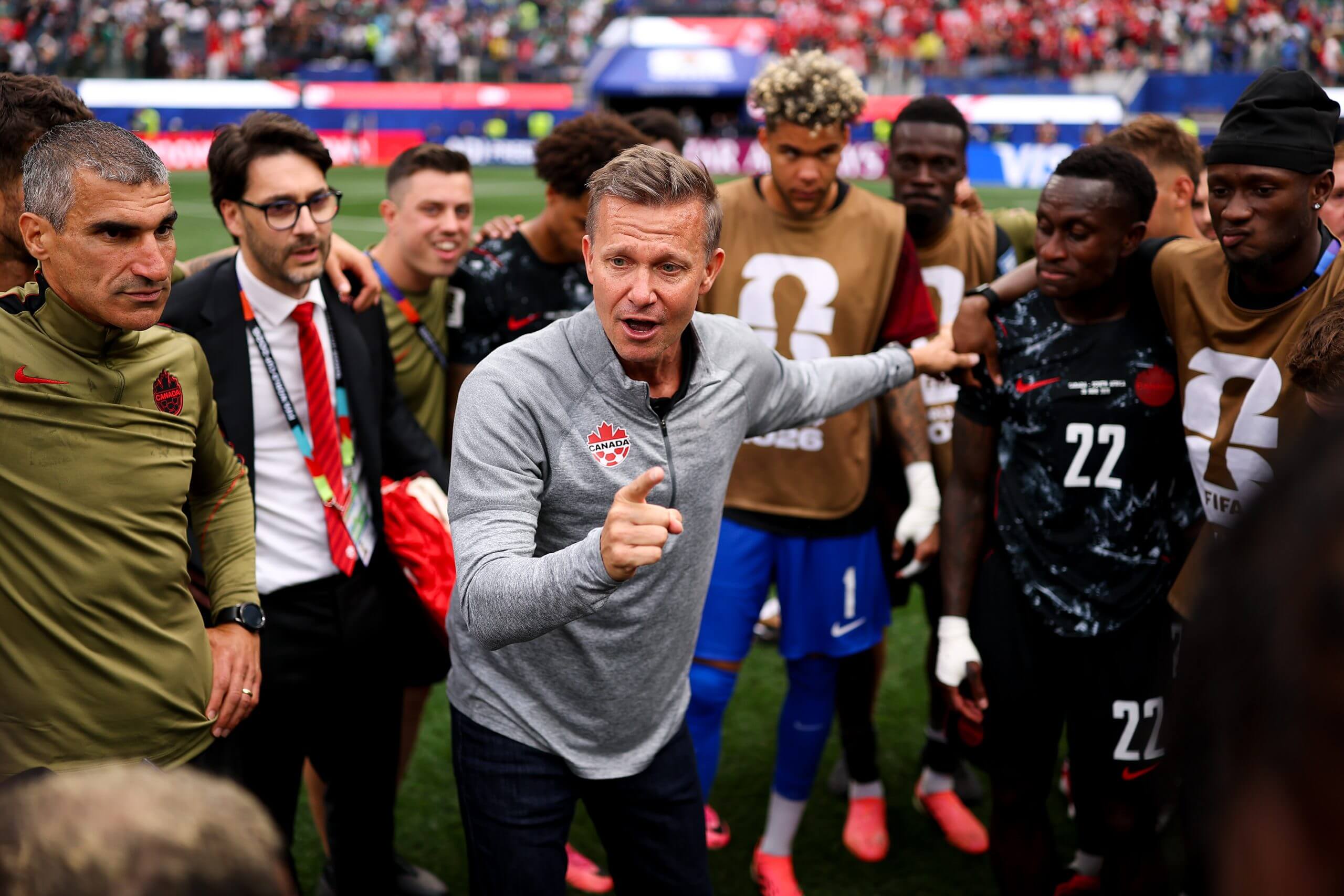
Head coach Jesse Marsch told his players they were Canadian heroes after their round-of-32 win. (Sarah Stier / Getty Images)
“For Canadian sports history, it’s going to be a moment where you’re going to know where you were when that moment happened,” defender Alistair Johnston said. “That’s something that is not lost on us. We know that not only are we writing history in Canadian soccer, but in Canadian sport, and that’s a magical thing when you think about it.”
To properly understand — nah, savour — this result, you have to appreciate where this sport and this team were not too long ago.
Overlooked in the Canadian sports landscape, soccer was the sport that people from other countries played. It was the sport that more kids played than any other team sport, but never as a proper Canadian pastime. Years of poor results saw the national team fall as low as 120th in the FIFA rankings in 2017.
Let that marinate for a moment: nine years ago, Canada were closer to the bottom of the world of men’s soccer than the top.
“I remember playing U.S. Virgin Islands at IMG Academy a couple of years ago, and there were five people in the stands,” goalkeeper Maxime Crepeau said of Canada’s 8-0 victory in the Concacaf Nations League qualifying stage in 2018, “and now we’re going to the World Cup round of 16.”
On Sunday, there was no bigger story in the country than the men’s national soccer team.
“It’s a strange feeling and I bet that it’s not dissimilar to what Canadians felt back home and in the stands,” Johnston said of Eustaquio’s goal. “It’s just a moment of magic and something just comes over your body. You see Steph sprinting away and the whole team sprinting.
“It’s one of those moments that you’ll never forget where you were.”
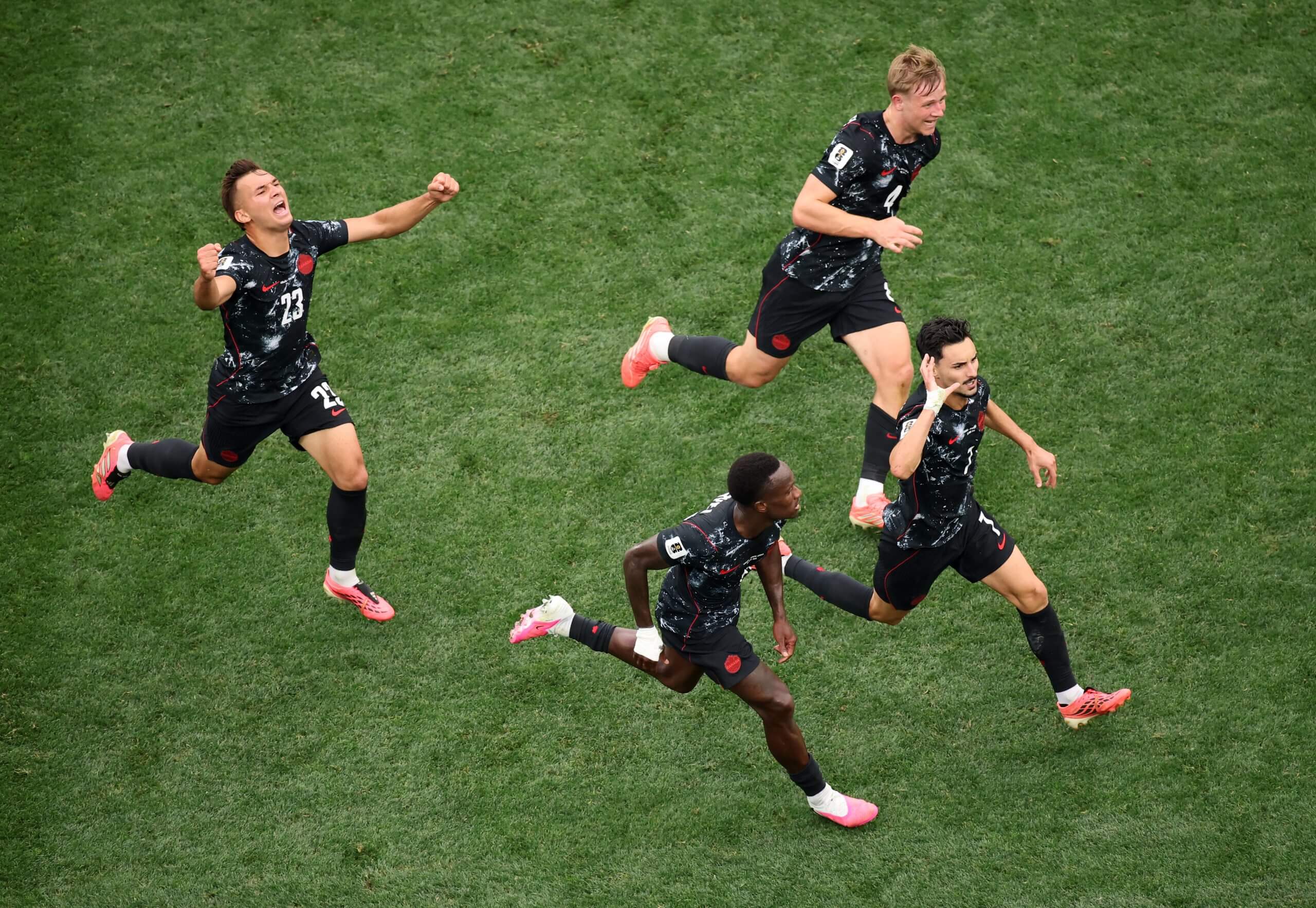
Canada midfielder Stephen Eustaquio scored the historic goal that sent his team through to the round of 16. (Alex Grimm / Getty Images)
This result has been building, sometimes out of the limelight but recently under bright lights, for some time. In Qatar during the 2022 World Cup, Canada were not ready for the moment. That was evident when the team was more than 30 minutes late for their first press conference. It was evident in how Canada showed flashes of brilliance, whether it was running Belgium into the ground or scoring their first goal, but they were unable to compete for an entire 90 minutes. They had not yet learned what resilience on the world stage looks like.
On Sunday, they defined it. Canada kept grinding after not converting multiple chances and had to push through a South Africa team that wanted only to defend. Finally, the moment.
Eustaquio’s goal and the performance it encapsulated eclipses Alphonso Davies’ goal in 2022, Canada’s first at a men’s World Cup, because it cemented a win.
“When we fight for each other, when we play for each other,” Eustaquio said, “special things like this can happen.”
If Canada had not clawed into relevance domestically after hosting World Cup games, it would have been a prime opportunity wasted. The opportunity of playing World Cup games at home and providing moments for young Canadians to latch onto might never come back.
The win will take Canada to a different place in the sport internationally, too. They should now be viewed as the kind of team that can win games when it matters, after losing those types of games for generations.
Eustaquio’s goal should be played alongside the great Canadian goals in sports history, whether it is Paul Henderson’s Summit Series-winning goal over the Soviet Union in 1972 or Sidney Crosby’s goal over the Americans in the 2010 Winter Olympics.
“We just have the belief, and I shot it with everything I have,” Eustaquio said.
The moment represented all that is worth celebrating about Canadian soccer: a perfect cross from a kid raised in a Nova Scotian town of a little over 7,000, where soccer was not played much. Jacob Shaffelburg kept playing the game he loved anyway, and delivered the cross on his wrong foot, no less.
And an emphatic finish from a man who grew up in another small Canadian town but is of Portuguese descent and played for Portugal’s youth national teams. Perhaps Eustaquio could have ended up playing for Portugal down the line, but he chose not to, telling those close to him in 2019 that “It’s my time to give back to Canada.”
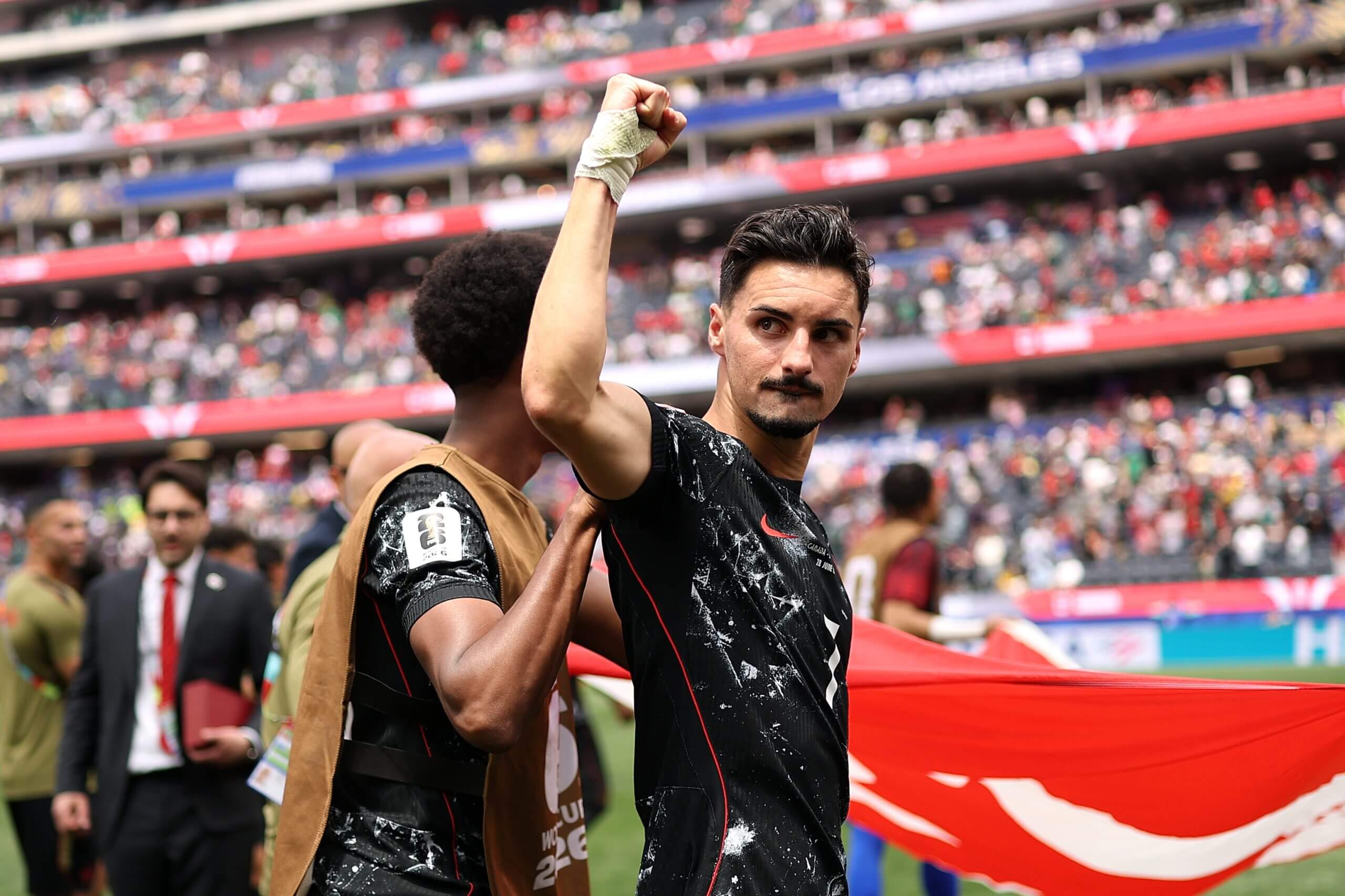
Stephen Eustaquio delivered a moment Canada soccer has been searching for. (Sarah Stier / Getty Images)
Seven years later, he gave Canada more than they ever thought possible in men’s soccer.
Crucially, Canada’s performance should, and will, inspire what comes next. Canadian children have new heroes who grew up in the same places they did.
“When we set off for this World Cup, the biggest message was that we’re trying to grow the game in Canada,” forward Tani Oluwaseyi said. “We’re trying to create opportunities for kids who want to be where we are right now. And I think doing that, being one of the 16 teams left in the World Cup. I think that’s exactly what we’re doing.”
Canadians never used to get up and dance about men’s soccer, as Koné did in Canada’s locker room. But after Sunday afternoon, they are now allowed not only to dance, but to think far more differently about the sport than they ever have.
“It feels great to inspire a lot of kids, because I was one of them as well,” defender Moise Bombito said. “I was looking at other teams, other big players. And now that you can make history and have people look at you and say, ‘I want to be like this guy when I grow up,’ it’s a proud moment.”