
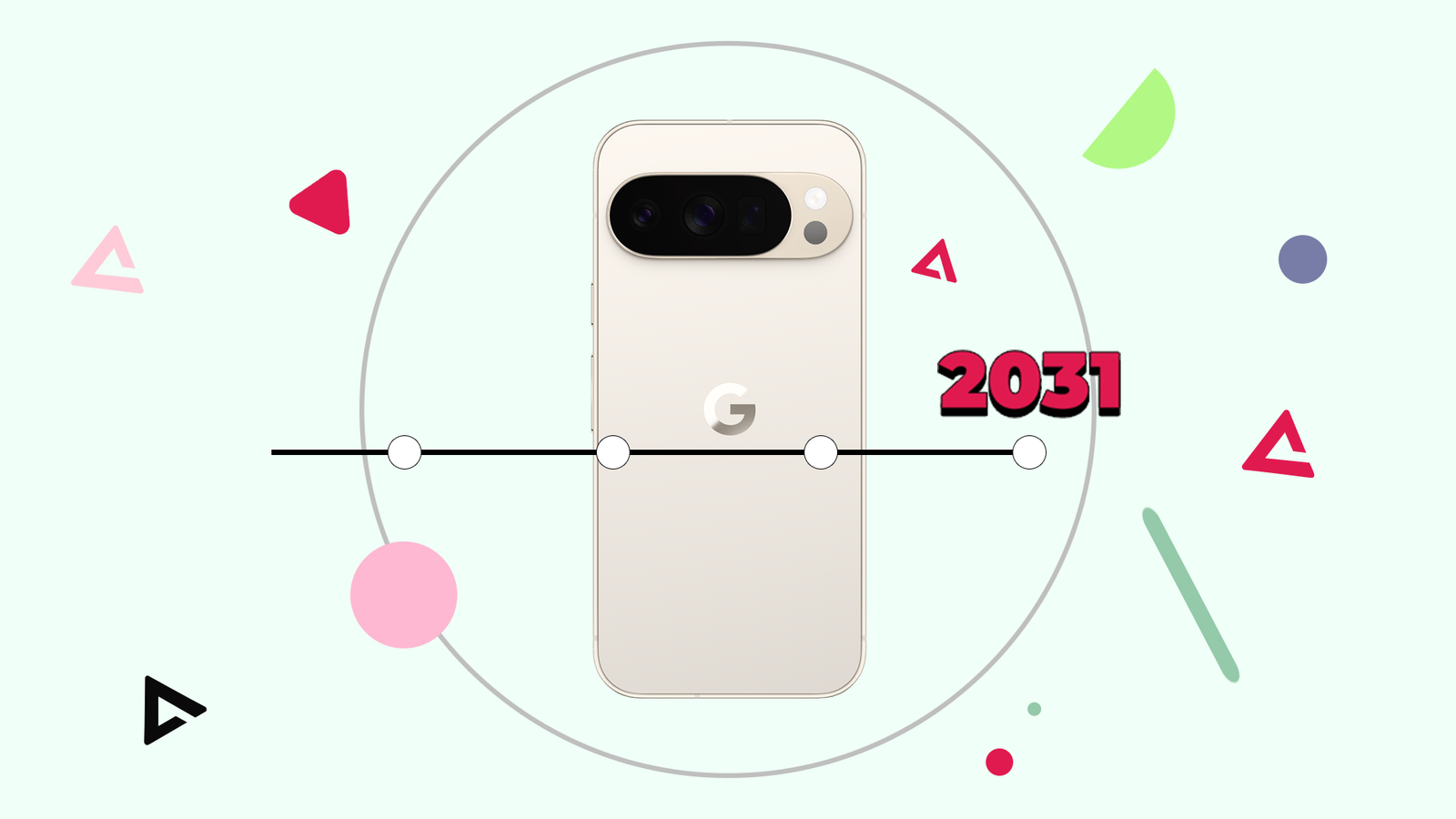
My Google Pixel 9 will get Android 17, and so will a Pixel 8 someone bought on day one. So Google’s technically honoring the seven-year promise to the letter. But not the spirit of it.
What you don’t get on old-generation Pixels is Gemini Intelligence, which is now the point of owning a flagship Android phone.
What good is the new Android version if the features Google advertised skip your device entirely?
Related
I bought an 8GB Android phone, and Google just told me it’s already outdated
Android’s AI era has a new minimum spec
You can install Android 17 and still miss everything Google is bragging about
Credit: Lucas Gouveia / Android Police
Don’t get me wrong, Android 17 itself is fine. App Bubbles can turn any app into a floating, resizable window for multitasking.
There are some creator-facing features, like Screen Reactions for filming yourself over your screen.
And there are new developer mandates that might make a few apps behave oddly for now, with the upside that they should run better across all your screens eventually.
You know, the usual round of OS maintenance. The interesting stuff, however, sits on a separate track.
Google has started describing Android as an intelligence system, and the features that justify the framing run through AICore and Gemini Intelligence.
You get tasks that run themselves across multiple apps, plus smaller quality-of-life wins like Gboard’s Rambler and Create My Widget, which creates a home screen widget from a plain-language prompt.
None of those is version-gated. You can have the newest build installed and still not get the features that Google’s leadership won’t stop calling the future of the phone.

Quiz
8 Questions · Test Your KnowledgeGoogle Pixel phones
Trivia challenge
From the original Pixel to the latest flagship — how well do you know Google’s own phone lineup?
HardwareHistoryCamerasSoftwareFeatures
Begin
In what year did Google release the very first Pixel smartphone?
A2014B2015C2016D2017
Correct! The original Google Pixel and Pixel XL were announced on October 4, 2016. They replaced Google’s Nexus line and marked the first time Google fully branded a smartphone under its own name.
Not quite — the first Google Pixel launched in 2016. Google had previously made Nexus devices with hardware partners, but the Pixel line was the first to carry Google’s own branding front and center.
Continue
What computational photography feature, first introduced on the Pixel 2, allowed sharp photos of moving subjects using a single lens?
ANight SightBPortrait ModeCSuper Res ZoomDMotion Photos
Correct! The Pixel 2 introduced Portrait Mode using a single rear camera, relying on Google’s machine learning rather than dual lenses to create that blurred background bokeh effect. It was hugely impressive for its time.
The answer is Portrait Mode. Unlike rivals that used two cameras to simulate depth, the Pixel 2 achieved Portrait Mode with just one lens by using Google’s advanced machine learning algorithms — a notable technical achievement.
Continue
Which Google-designed chip first appeared in the Pixel 6 series, marking Google’s shift away from Qualcomm processors?
ATensor G2BGoogle Titan MCGoogle TensorDPixel Neural Core
Correct! The original Google Tensor chip debuted in the Pixel 6 and Pixel 6 Pro in 2021. It was Google’s first in-house SoC designed specifically to accelerate AI and machine learning tasks on-device.
The correct answer is Google Tensor. Introduced with the Pixel 6 in 2021, Tensor was Google’s first custom-built SoC. It prioritized AI workloads like speech recognition and photo processing over raw benchmark performance.
Continue
What Pixel-exclusive calling feature uses AI to screen spam calls and read out a caller’s reason for calling before you pick up?
ALive TranslateBDirect My CallCCall ScreenDHold For Me
Correct! Call Screen launched with the Pixel 3 in 2018 and lets Google Assistant intercept unknown calls, asking the caller to state their purpose. You see a live transcript and can decide whether to answer or mark it as spam.
The answer is Call Screen. Introduced on the Pixel 3, this feature lets Google Assistant handle incoming calls from unknown numbers, transcribing the caller’s response in real time so you can decide how to respond without ever picking up.
Continue
Which Pixel model was the first to feature a hole-punch front camera, moving away from the notch design?
APixel 5BPixel 4aCPixel 6DPixel 4a 5G
Correct! The Pixel 4a, released in August 2020, was the first Pixel to use a punch-hole selfie camera cutout. It was a budget-friendly device that many considered one of the best value smartphones of that year.
The first Pixel with a hole-punch camera was the Pixel 4a, launched in 2020. Its predecessor, the Pixel 4, used a large top bezel housing Face Unlock sensors, so the 4a’s punch-hole design was a notable shift in Google’s approach.
Continue
What night photography mode, now a staple of smartphone cameras everywhere, did Google debut on the Pixel 3?
ANight ModeBNight SightCAstrophotographyDDark Mode Capture
Correct! Night Sight arrived as an update for the Pixel 3 in November 2018 and used computational photography to capture bright, detailed images in near-darkness. It set the benchmark that nearly every Android manufacturer has since tried to match.
The answer is Night Sight. Google launched Night Sight for the Pixel 3 in late 2018, and it quickly became a gold standard for low-light smartphone photography, using multiple exposures and machine learning to dramatically brighten dark scenes.
Continue
The Pixel 4 series featured a unique sensor array on the back. What was the distinctive sensor included that no other mainstream Android phone had at the time?
ALiDAR scannerBSoli radar chipCInfrared depth sensorDUltrasonic fingerprint sensor
Correct! The Pixel 4 included Google’s Soli radar chip, which enabled Motion Sense — allowing the phone to detect hand gestures hovering above the screen to skip tracks or silence alarms. It was innovative but ultimately discontinued in the Pixel 5.
The correct answer is the Soli radar chip. Google embedded this miniature radar sensor in the Pixel 4 to power Motion Sense gesture controls. Despite being a fascinating piece of technology, the feature was dropped by the Pixel 5 due to limited practical use.
Continue
Pixel phones are known for receiving Android updates first. How many years of OS updates did Google promise for the Pixel 8 series at launch?
A3 yearsB5 yearsC7 yearsD10 years
Correct! With the Pixel 8 and Pixel 8 Pro launched in 2023, Google committed to an impressive 7 years of OS and security updates. This matched Samsung’s Galaxy S24 promise and set a new standard for Android software longevity.
The answer is 7 years. Google announced 7 years of guaranteed OS and security updates for the Pixel 8 series — a major leap from the previous 3-year promise and a direct response to pressure from Samsung’s similarly extended update commitments.
See My Score
Challenge CompleteYour Score
/ 8
Thanks for playing!
Try Again
Google has moved these goalposts before, and chances are it will again
Credit: Lucas Gouveia / Android Police
What locks you out now is the AI model. Gemini Intelligence runs on Gemini Nano v3, with 12GB of RAM and a flagship chip needed to run it locally.
The Pixel 8 and Pixel 9 series ship with the older version, and that’s the end of the conversation.
The funny part is that the Pixel 9 Pro has 16GB of RAM, more than enough, and it’s still excluded. Inside Google’s own lineup, only the Pixel 10 family (excluding the Pixel 10a) clears the bar.
It’s worth remembering how Google has handled these hardware gates in the past.
Back in the Pixel 8 days, Google said the base model couldn’t run Gemini Nano because of hardware limitations, which was a strange statement about a phone with the same Tensor G3 as the Pro it sat next to.
The main difference was RAM, 8GB versus 12GB, and when people pointed out that the 8GB Galaxy S24 managed it, Google backtracked soon after.
Same pattern with Pixel Screenshots. Pixel 9 exclusive at launch, blamed on a Tensor on-device requirement.
Yet Google recently changed the “on-device AI” wording from app settings to “on your device or in the cloud.” The hardware excuse, it turns out, is negotiable.
It holds when it conveniently segments the lineup and vanishes when the cloud is the better business answer. So, forgive the skepticism about Nano v3.
Maybe the features will reach humble Pixel 9 owners through the cloud. It doesn’t matter.
The promise wasn’t “a seven-year phone, once we decide you’ve waited long enough.” It was a seven-year phone on day one.
A phone you keep for 7 years is a phone you never buy again
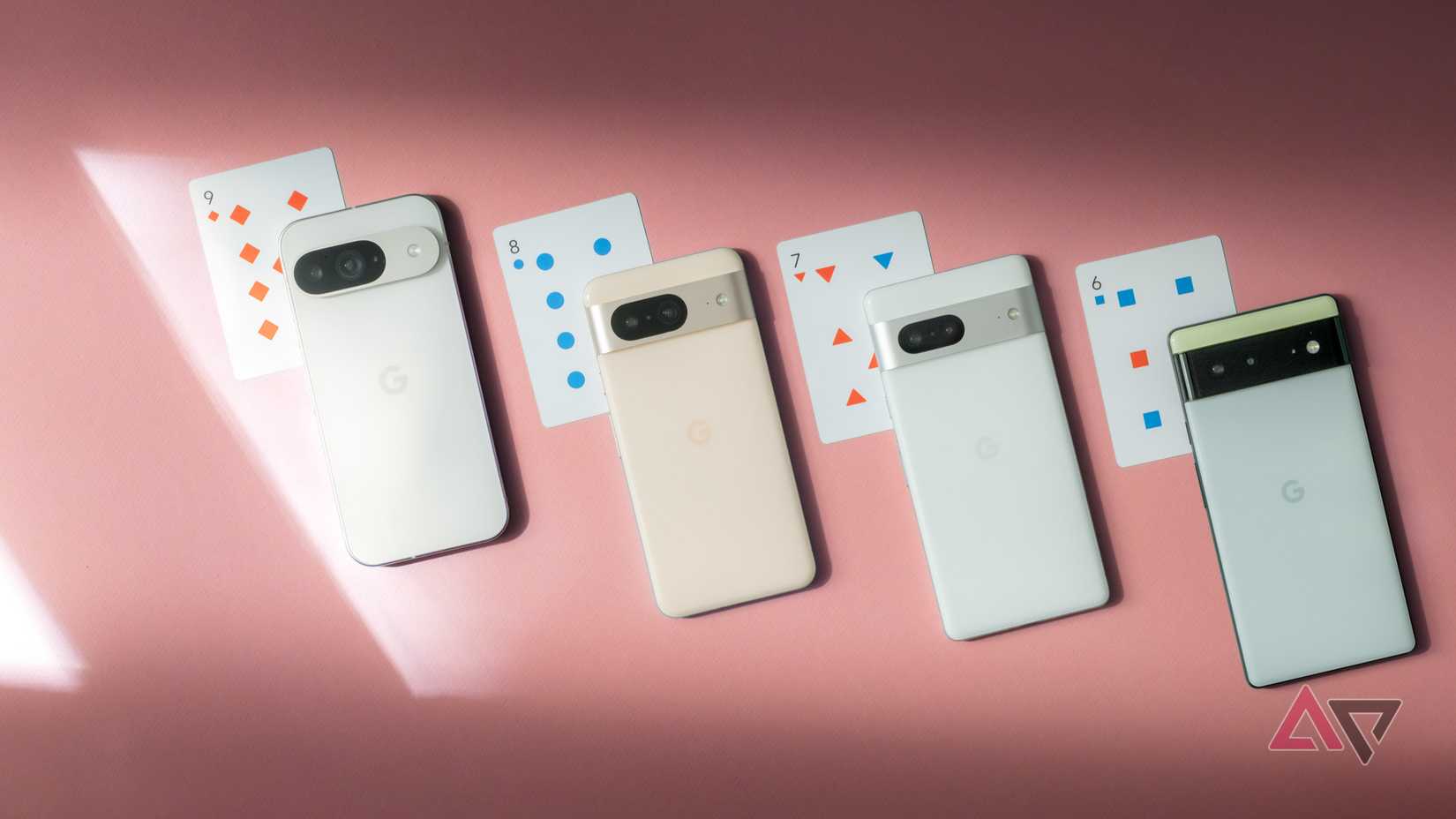
A phone you keep for seven years is a phone you don’t replace in two, and I can see how it’s a problem for a business that sells hardware on an annual cycle.
If my Pixel 9 is still getting updates in 2031, Google needs a reason for me to buy a Pixel 11, and “here’s a faster chip” hasn’t sold units for a while.
AI feels like the answer they’ve been looking for, or at least the best one available.
It’s one of the few upgrades where you can make a credible case for requiring newer hardware and more memory, which, whether by design or happy accident, also makes it easy to lock behind a generation boundary.
This is where Pixel loyalty starts to hurt
Here’s another part that stings. The Oppo Find X8, a 2024 phone from the same year as my Pixel 9, clears the Nano v3 bar. My Pixel 9 doesn’t.
So someone who bought a Pixel 9, partly for the first-party Google experience, gets to watch an Oppo user run Google’s software stack while their Pixel sits it out.
I don’t think it’s dramatic to say I feel betrayed by Google here. One of the Pixel’s main selling points was Google’s software, first and fastest. That promise is wearing thin.