
What we are experiencing here is a bit of magic.
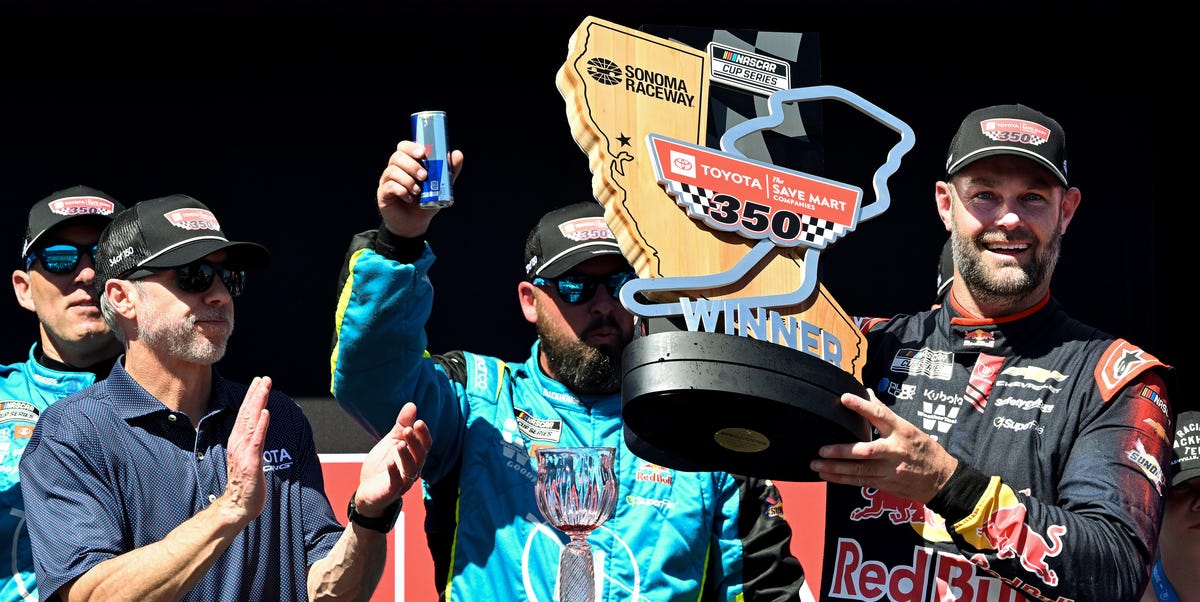
On Sunday, Shane van Gisbergen won a NASCAR Cup Series road race in Sonoma, California.
Ho hum, some will say. This outcome was as expected as the morning sunrise. No news here. In any particular road race in which he participates, Van Gisbergen is favored along the same lines as John Wooden’s UCLA basketball teams, the 1927 New York Yankees, and Tiger Woods in the peak years of his career.
This, though, is missing the point. Or maybe it is the point. NASCAR has never seen a driver dominate a particular form of its racing in quite the same manner as Van Gisbergen, who, it should be remembered, has been around the Cup Series only four years—and only two full-time.
Sunday’s win, in a close battle with Chase Briscoe, was SVG’s eighth in Cup, making him the first driver to score his first eight victories on road courses. SVG needed only 68 career races to reach eight wins, placing him second (to Tony Stewart, with 62) in that category. He reached the number eight faster than a list of notable drivers, including Jeff Gordon, Jimmie Johnson, and Kurt Busch.
Only Gordon, who mastered every style of stock car racing, has scored more road course wins—nine—than Van Gisbergen. Barring injury or calamity, SVG seems certain to break that Gordon record, and breaking any Jeff Gordon record is so small thing.
Clearly, Van Gisbergen, a true outsider after racing many years on another continent, is setting new standards for what it means to be considered a success on NASCAR’s road. He fits well into a bracket that might include Gordon, Stewart, and Tim Richmond, drivers who seemed to conquer the rather odd—for NASCAR—concept of racing on the road from their early laps.
“Real” racing, for many NASCAR devotees, occurred only on the tight ovals and wide-open superspeedways.
For many years, road-course racing was largely an afterthought at the highest levels of NASCAR competition. Storied tracks like Watkins Glen held their own kind of charm, but “real” racing, for many NASCAR devotees, occurred only on the tight ovals and wide-open superspeedways that dominated the schedule. Road-course racing was generally considered sort of a detour.
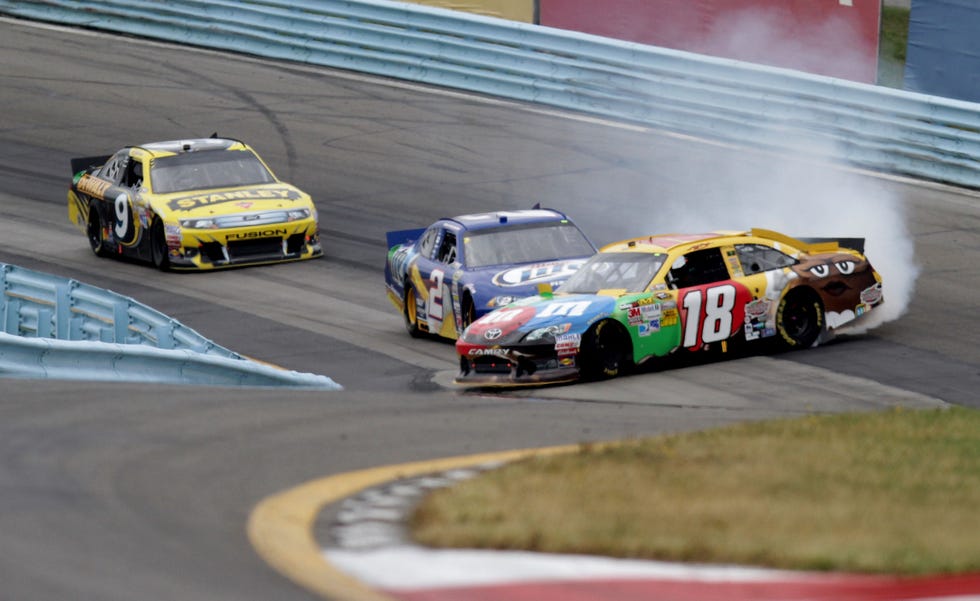
But business picked up as the years went by. In 1991 at Sonoma, Ricky Rudd bumped Davey Allison from the lead on the last lap and crossed the finish line first. NASCAR penalized Rudd for the contact, awarding the win to Allison and sparking a round of controversy. In 2012 at Watkins Glen, Brad Keselowski engaged in a fierce battle with Kyle Busch running toward the finish, their contact and an oily track opening the door for Marcos Ambrose to win.
 Jerry Markland//Getty Images
Brad Keselowski and Kyle Busch crash at Watkins Glen in 2012.
Road-course racing became “the thing” for a while, with fans expecting electricity and madcap antics through the final turns of every race. In the first race on the Charlotte Motor Speedway Roval in 2018, Jimmie Johnson and Martin Truex Jr. tangled in the final turn, with Ryan Blaney inheriting the win.
The latest iteration of left-and-right racing has featured not “regular” roads but artificial ones like the Chicago Street Course and Naval Base Coronado in San Diego.
Van Gisbergen’s weekend sweep at Sonoma underlined the fact that he remains the example of the high ground in this category. Sunday’s win returned him to the Chase top 16 (he’s 14th), but he faces a tough row of ovals ahead to qualify for a run at the championship.
SVG’s best finish on an oval track this year is a fifth at Nashville, but his success on the road has overshadowed his teammates at Trackhouse Racing. Ross Chastain is 22nd in points, and rookie Connor Zilisch is 34th. Neither has a win. SVG is one of only four drivers with multiple victories this season.
Sunday’s battle with Briscoe was tight, SVG winning by only 0.35 of a second. A last-lap challenge failed. “I just didn’t do as good a job as he did driving,” Briscoe said, a simple statement that clearly defined what Van Gisbergen is accomplishing in one unique style of motorsports competition.
He remains king of the road.

Mike Hembree has covered auto racing for numerous media outlets, including USA Today, NASCAR Scene, NBC Sports, The Greenville News and the SPEED Channel. He has been roaming garage areas and pit roads for decades (although the persistent rumor that he covered the first Indianapolis 500 is not true). Winner of numerous motorsports and other media awards, he also has covered virtually every other major sport. He lives near Gaffney, South Carolina and can be convinced to attend Bruce Springsteen concerts if you have tickets.