

Listen to this article
Estimated 3 minutes
The audio version of this article is generated by AI-based technology. Mispronunciations can occur. We are working with our partners to continually review and improve the results.
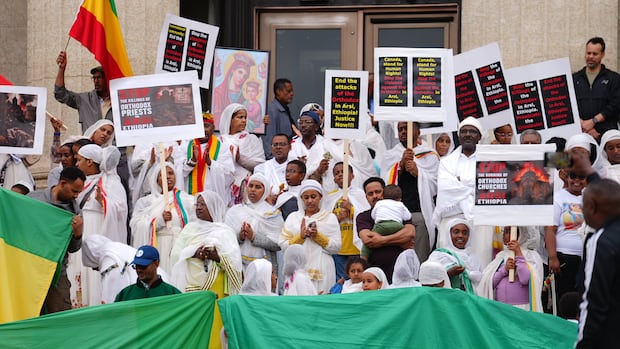
About a hundred Manitobans with ties to Ethiopia showed up for a rally in Winnipeg this weekend to protest a recent wave of violence in a region that’s been mired in conflict for years.
Organizers said the demonstration in front of the Manitoba Legislature Sunday was meant to raise awareness about attacks that have killed civilians — including Orthodox Christians — in the Oromia region’s Arsi zone, which is southeast of Ethiopian capital Addis Ababa.
Alex Gizaw, who helped co-ordinate the event on behalf of a group of Orthodox Christian churches in the city, said it hurts to see what’s happening in his country of birth.
“We want the world to know what’s going on there,” Gizaw said. “We can’t keep silent, because our silence is encouraging the perpetrators.”
Independent monitor Armed Conflict Location and Event Data (ACLED) says more than 200 Orthodox Christian properties, including a 101-year-old church, were destroyed in the Arsi zone as the country held general elections on June 1. Civilians have been targeted in attacks, ACLED says.
Clashes between government forces and rebel groups intensified in the country’s Amhara and Oromia regions while the vote was taking place.
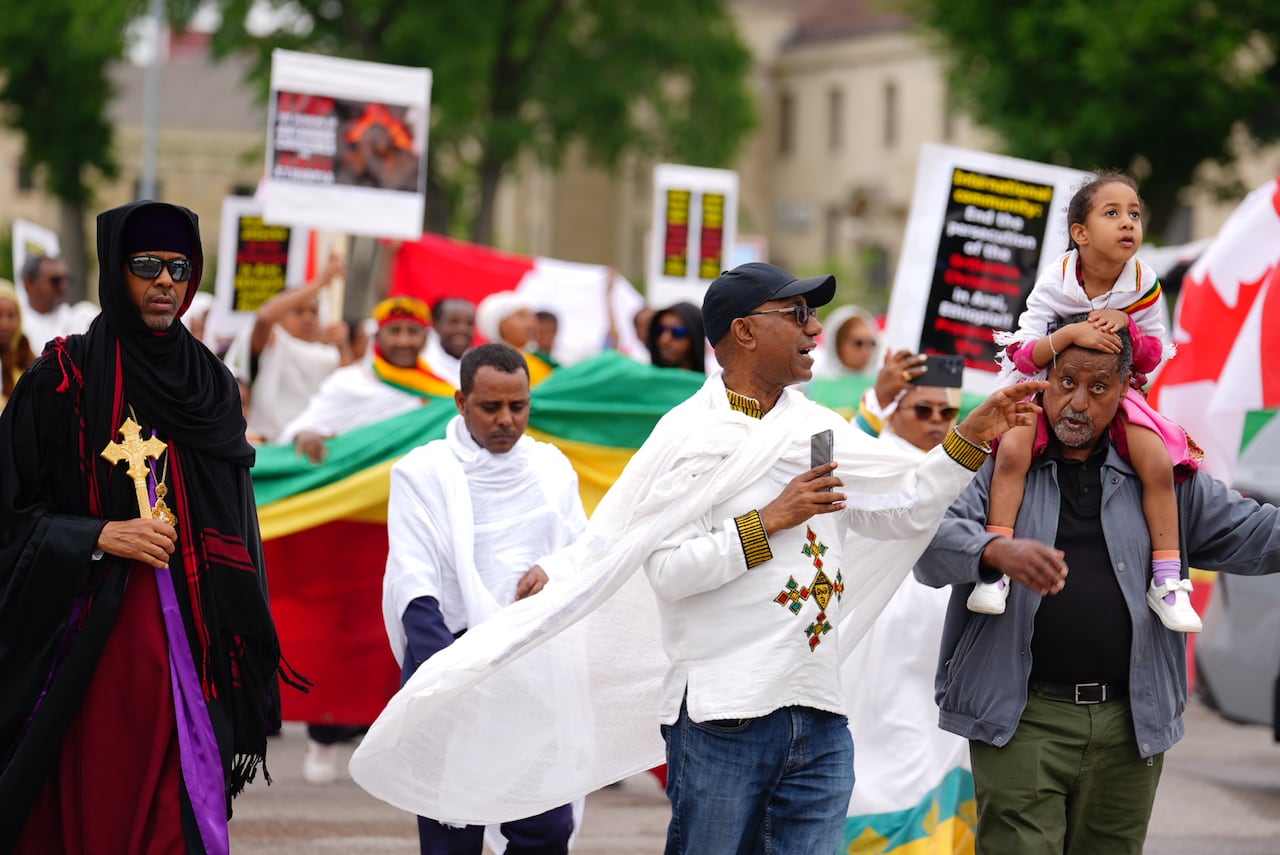 Alex Gizaw, centre, with Ali Saeed on the right. Gizaw said no one can stay silent while civilians are being killed in Ethiopia. (Kevin Nepitabo/CBC)
The Ethiopian Human Rights Commission — an agency established by the country’s government — has blamed one group, the Oromo Liberation Army, or OLA, for killings of civilians and security forces in the Arsi zone.
ACLED says it has recorded more than 150 instances of the group targeting civilians in the area since 2023, with over a third specifically targeting Orthodox Christians.
“We just want to stop this killing,” said Zena Mussie, who has lived in Winnipeg for more than three decades.
Mussie said he wants the Canadian government to do what it can to help.
Amnesty International said in a March briefing OLA fighters have subjected civilians elsewhere in the region to sexual violence, summary killings and other forms of human rights violations for years.
The humanitarian organization said that violence has partly been enabled by a communications blackout, as the Ethiopian government — whose military forces have also been accused of abuses in Oromia and elsewhere, including extrajudicial killings — restricts access and cracks down on human rights activists and journalists.
Winnipegger Ali Saeed said the situation is unacceptable regardless of which group is behind the violence.
“Every human being should be respected … regardless of their tribe or religion,” he said.