
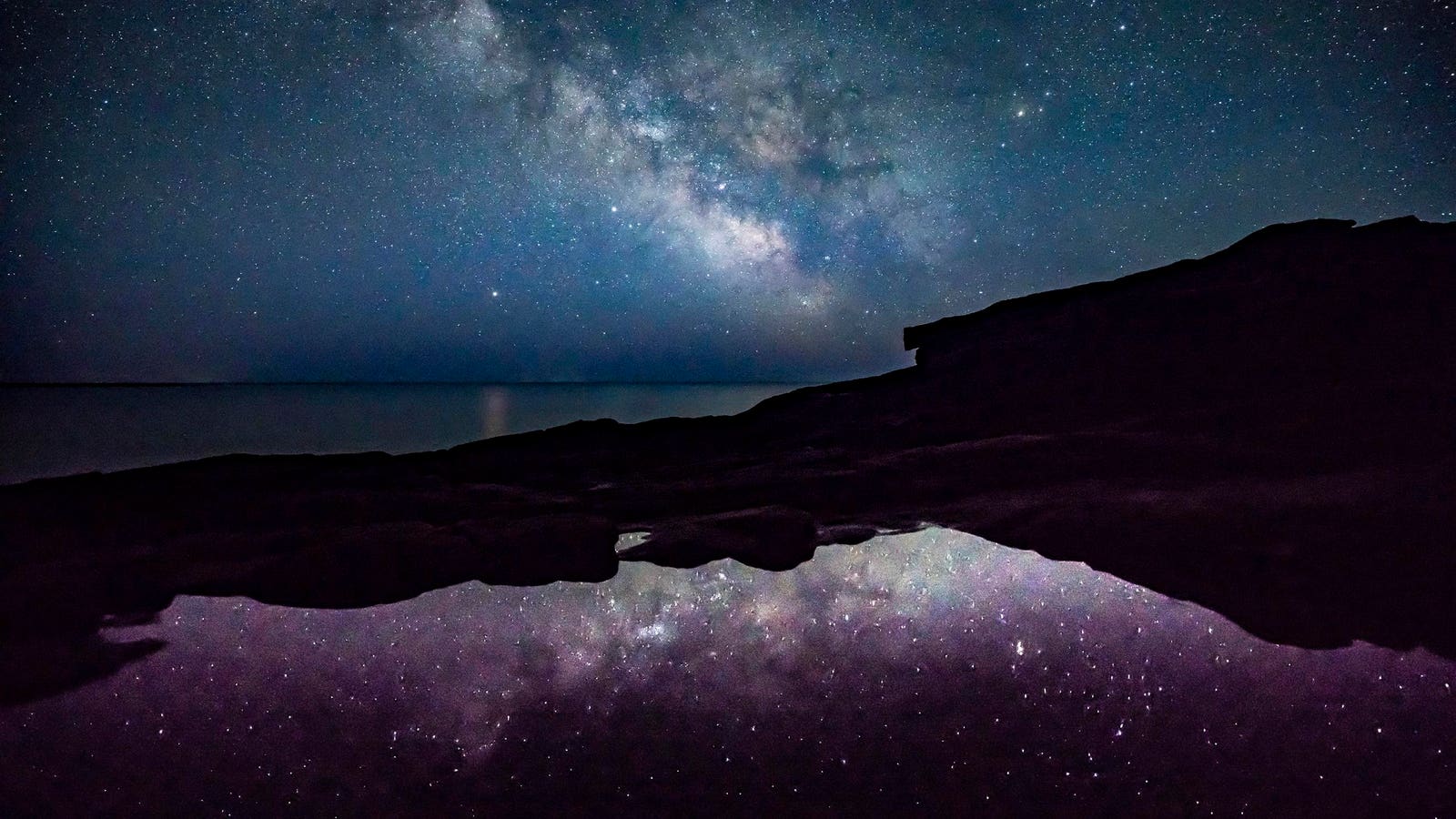
ACADIA NATIONAL PARK, ME – APRIL 23: The Milky Way shines above the ocean off the coast of Acadia National Park in the early morning hours of Monday, April 23, 2018. Night skies in northern Maine consistently place first in a rating of darkness, meaning there is less light pollution and allowing more stars and planets to be seen. Parks like Acadia, Katahdin Woods & Waters National Monument as well as the Appalachian Mountain Club,
Portland Press Herald via Getty Images
A desire to unplug from screens, retreat from light pollution and tap a growing love of the natural environment are all contributing to a surge in interest in dark sky parks. For those who appreciate dark skies, the only thing better than a dark-sky park is a dark-sky campsite, where fans can stay overnight to savor starry skies and astronomical wonders.
From Death Valley National Park in southeast California’s northern Mojave Desert to Cape Lookout National Seashore on the Southern Outer Banks, or Crystal Coast, of North Carolina, dark sky campsites provide campers the increasingly out-of-this-world opportunity to revel in the calming, grounding feel of staring into a star-filled sky undiminished by the orb-dimming impact of urban light pollution.
Interest in stargazing campsites is substantially larger than generally recognized, says Juliana Baena of RV Trader, an online classifieds site for buying and selling new and used recreational vehicles. She reports KOA’s 2025 Camping & Outdoor Hospitality Report estimates a third of campers wish to view night skies during their travels.
“That’s a sizable audience when you consider that camping and RV travel continue to attract millions of households annually,” she says.
“For RV travelers in particular, stargazing is a natural fit. RVs give travelers the flexibility to stay in remote areas with less light pollution, making destinations like Death Valley National Park and remote public lands more accessible.
“As travelers increasingly seek experiences centered on nature, wellness and disconnecting from everyday routines, the night sky has become part of the appeal.”
Wellness focused
Dark-sky campsite popularity is part of a broader trend toward wellness-focused travel, which lets people recharge and reconnect with nature, Baena says. Also increasing has been interest in eclipses, meteor showers and other celestial events. In fact, KOA has found the most highly sought camping adventures include those focused on natural occurrences.
“Major astronomical events, including the 2024 solar eclipse, introduced many travelers to astrotourism and raised awareness of dark-sky destinations,” she says. “Rather than being a niche hobby reserved for astronomy enthusiasts, stargazing is increasingly becoming another way travelers experience the outdoors.”
Because darkness is the number one priority in these campsites, many of the most visited dark-sky campsites are situated in secluded deserts, preserved seaside regions and national parks. Wide-open viewing areas with sightlines unobstructed by vegetation and structures are another must. As well, some dark-sky campsites feature events and activities such as astronomy festivals, educational sessions and astronomy programs overseen by park rangers.
A number of those areas showcasing very dark skies and responsible outdoor lighting initiatives have also captured dark-sky certifications, bestowed upon parks, communities and protected areas by DarkSky International, a 38-year-old organization devoted to protecting dark skies and the nighttime environment worldwide.
Dark victory
With travelers increasingly prioritizing distinctive outdoors travel and opportunities to leave everyday living behind, interest in dark-sky campsites will probably continue to grow, Baena says. But the greatest stargazing settings are inherently limited to a few due to their dependence on dark skies and low levels of urban development, she adds.
Many of the most favored dark-sky settings, from Big Bend National Park, along the U.S.-Mexico border in Brewster County, Texas, to the aforementioned Cape Lookout National Seashore, are esteemed specifically for being far removed from the bright lights of civilization and therefore from even minimal thresholds of development.
“While we hope more camping destinations embrace dark-sky-friendly practices and promote night-sky experiences, the number of places that can offer truly pristine viewing conditions will remain constrained by increasing development and light pollution,” she says.