
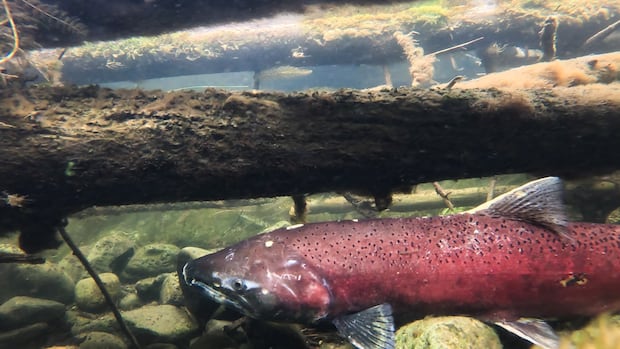
The Yukon River salmon count has begun at the Canada-U.S. border, and experts and officials expect to see around 25,000 chinook by the end of the summer — well short of the bilateral target of 71,000.
At the same time, another tally is taking place by the U.S. National Oceanic and Atmospheric Administration: the number of chinook caught as bycatch by trawlers operating in the Gulf of Alaska and the Bering Sea.
This is year two of a seven-year moratorium on fishing in the Yukon River, and in Alaska, Indigenous subsistence fishers and small-scale commercial operators are already chafing under its requirements.
“Families must now replace salmon and rely on expensive, store-bought food that cannot replace the nutritional or cultural importance of wild salmon,” said Brian Ridley, who is Han Gwich’in and lives in Eagle, Alaska. “Elders worry that without fish camp, our kids won’t know how to live anymore.”
For Ridley and other fishers, the anger isn’t directed towards Yukoners or the leaders who crafted the restriction, but the commercial fisheries that trawl in federal waters off the coast of Alaska.
The practice involves dragging fish nets, in some cases larger than a football field, through the ocean.
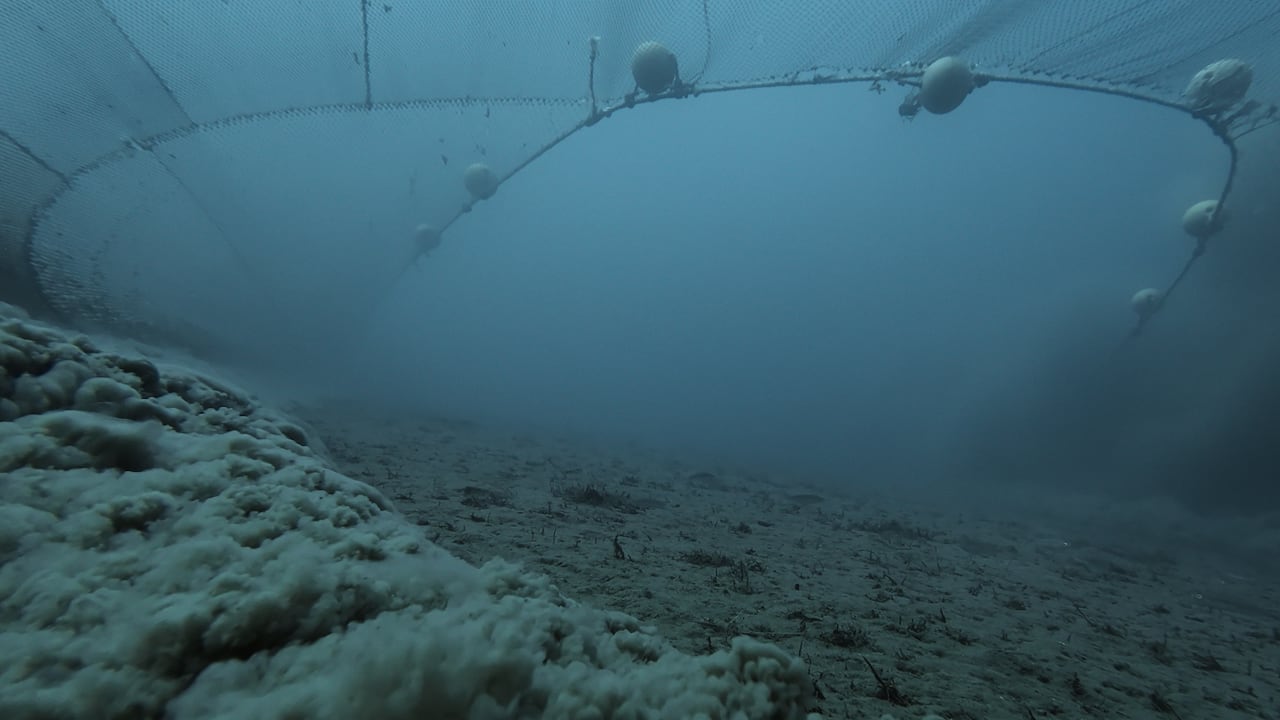 A bottom trawler scours the ocean floor. (Silverback Films and Open Planet Studios)
According to the non-profit Salmon State, fisheries targeting flatfish like sole and flounder are the worst offenders for bottom trawling, which can be particularly destructive.
And while the pollock fishery mainly uses midwater or pelagic trawl nets, intended not to scrape the ocean floor, critics say this often happens anyway.
Salmon are often caught unintentionally with these methods. As of June 25, the number of chinook caught as bycatch so far this year was 21,970.
That number has been rising each year for the past three years. By the end of 2025, 38,923 had been caught.
Not all of those fish would have been bound for the Yukon. In 2021, a Yukon River Panel technical report showed only 493 chinook from the river were caught as bycatch in the Bering Sea.
But at a state committee meeting earlier this spring, a series of delegates expressed grave concern about the impacts of industrial fish trawling on Yukon River salmon.
‘Like clearcutting a forest’
“We are responsible for getting salmon across [to Canada] to spawn,” said Janet Woods, a Koyukon Athabascan elder. “And if we don’t stop the trawling in our waters, there is going to be no fish, absolutely no salmon. They’re killing them.”
At the same meeting, Tlingit and Haida president Richard Peterson said it’s unfair to ask rural fishers to shoulder the burden of conservation.
“Subsistence harvest has been reduced to zero, yet large scale ocean interception of those same fish continue earlier in their life cycle,” he said. “When subsistence needs go unmet year after year, while harvest continues elsewhere, public trust erodes.”
It’s not just chinook — trawlers frequently sweep up hundreds of thousands of crab, halibut and herring as bycatch, and occasionally catch protected species like orcas and sea otters.
Mel Erickson, a fishing guide in Cook Inlet, said Alaska’s Department of Fish and Game issues emergency orders to close certain areas to sport fishing for species like yelloweye rockfish, but those orders don’t get issued to larger players.
“You can go out behind some of these trawlers in Prince William Sound and other places, and there’s just floating yelloweyes, dead yelloweyes, all over the surface that they’re dumping out of their nets,” he said.
On the Canadian side, the focus of research and salmon advocacy has in large part been on salmon travelling in Canadian freshwater. But Elizabeth Macdonald, manager of fisheries with the Council of Yukon First Nations, said salmon also rely on the open ocean to feed and mature. She believes more information is needed about how trawling affects salmon throughout their life cycle.
“It’s not just about the number of fish coming back to the river, it’s also about the habitat that’s out there,” she said. “So trawling, particularly bottom trawling, has been described as kind of like clear cutting a forest, but you can’t see it because it’s underwater, so nobody is aware of it or concerned about it.”
Macdonald said trawling could present a “huge habitat concern” for salmon if it renders swaths of the ocean floor and pelagic zones inhospitable to them.
The Yukon Salmon Sub-Committee, which helps manage the salmon count on the river, declined an interview with CBC for this story.
Trawling becomes an election issue
While a proposal earlier this year to ban bottom trawling died in committee, trawling has become a top issue in the run-up to Alaska’s primaries this August.
Calling for bycatch to be reduced has long been a moderate position for Alaskan leaders, but outright criticism of trawling is more controversial. Trawling supports the multi-billion dollar fishing industry along with thousands of jobs — and industry leaders often help fund Alaskan election campaigns.
But now, multiple candidates for governor have pledged not to accept campaign contributions from those involved with trawling. Some are also calling for an end to trawling in state waters.
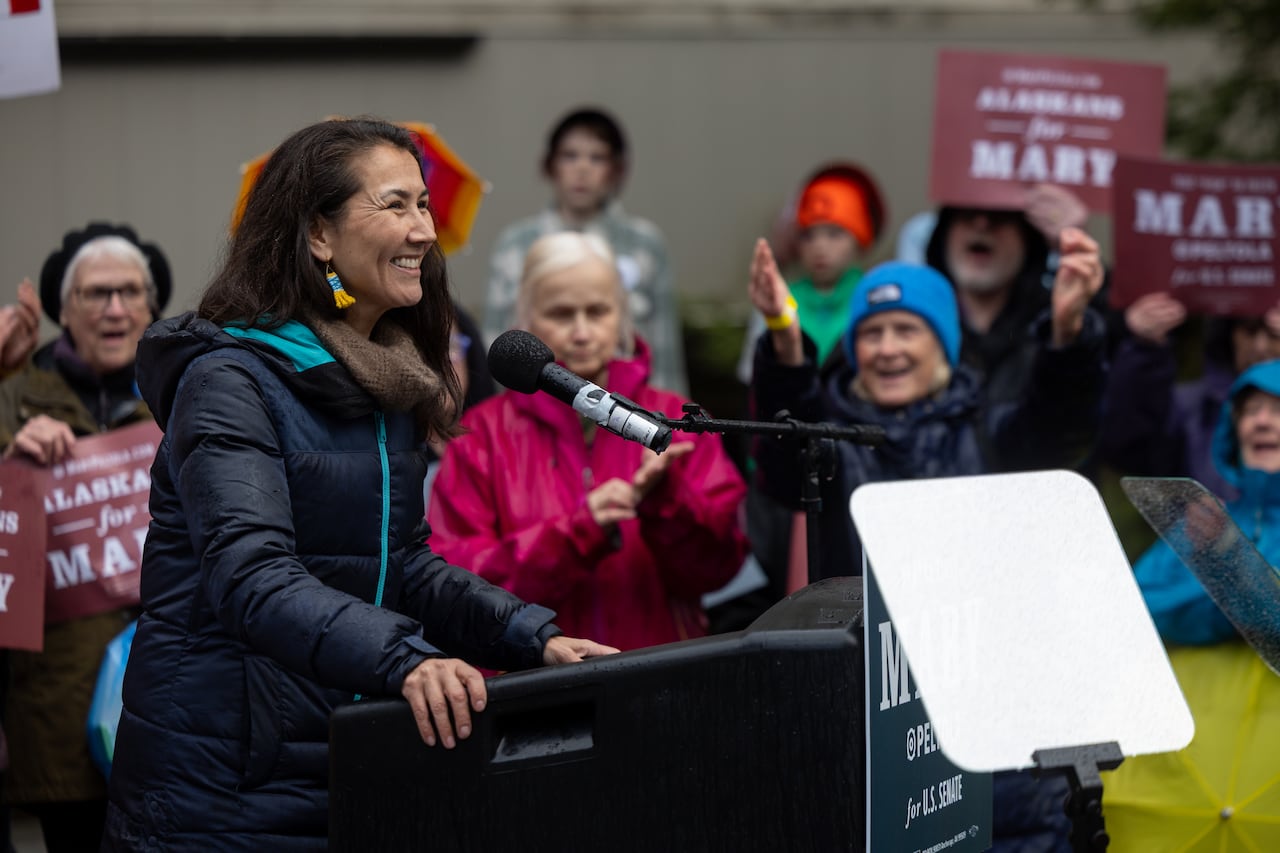 Mary Peltola, who is Yup’ik from the Yukon–Kuskokwim Delta and became the first Alaska Native elected to U.S. Congress in 2022, on the campaign trail in May 2026. (Mary Peltola)
Mary Peltola, one of the top candidates for U.S. senator on the Democratic ticket, has made banning factory trawling a key part of her election platform — and she’s found agreement across the aisle.
“I do know there is a leftist element to this,” Republican candidate for governor Dave Bronson, said to the Alaska Beacon. “[But leftists] might be right once in a while. If we treated our forests the way we treat the bottom of our oceans, everyone would have shut this down decades ago.”
Alaska’s elections will be held in November.