
This story is part of Peak, The Athletic’s desk covering the mental side of sports. Sign up for Peak’s newsletter here.
When Mauricio Pochettino was manager of Tottenham Hotspur in the English Premier League, he asked a friend named Xesco Espar to come to north London and spend some time with his players.
Espar was the former coach of the FC Barcelona handball team and the author of “Play from your heart,” a book about mental performance. He believed that every person had three lives: a public life, a private life and a secret life.
A person’s public life consisted of their professional network and colleagues, while their private life included family and intimate friends. The former could offer identity and status, and the latter could provide stability and love. But it was our secret life that was the vital force for big ideas and big projects, the energy source that thrust everything in motion.
The secret life existed in the deepest part of the heart. Pochettino wanted Espar to help his players tap into it.
“It is the guardian of our boldest dreams,” Espar wrote, “and it is in this life that our passion and aspirations are born.”
Few coaches think about “the secret life” more than Pochettino, who has led the United States Men’s National Team to the knockout round of the World Cup, where they will play Bosnia and Herzegovina on Wednesday.
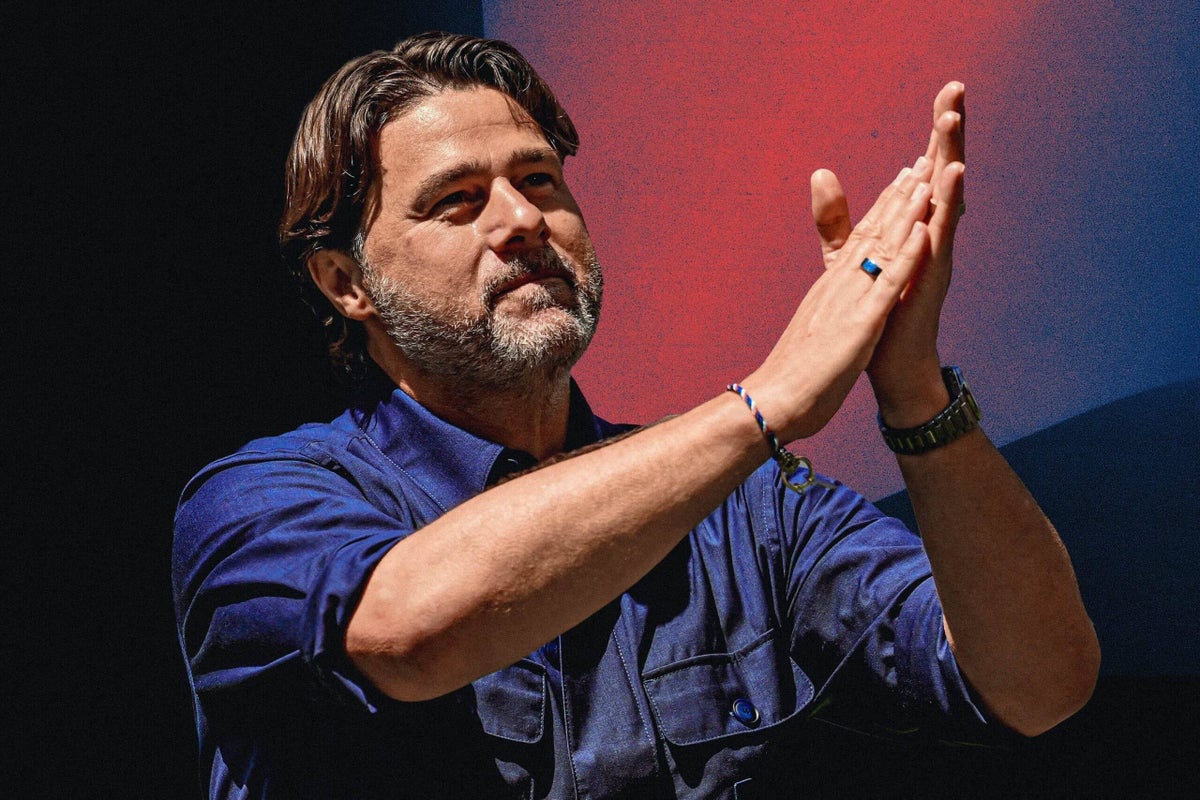
On the sideline, he channels the look of a Casual King — shirt untucked, hair flowing, vibes on point. The look belies a spirited intentionality. Pochettino is convinced humans have mental abilities that have yet to be developed. He believes leaders who punish subordinates don’t know how to wield their power.
And then there are the lemons. Just about every story about Pochettino mentions the tray of lemons he keeps in his office. A friend from Argentina suggested them as a strategy to absorb the negative energy in the air. It was an apotropaic belief — a piece of folk wisdom — found in many cultures around the world. But Pochettino didn’t see it that way.
“Decisions, personal relationships and absolutely everything else are a matter of energy,” Pochettino wrote in his book. “Good or bad, small or large.”
In time, the lemons became a symbol of his leadership — a reminder that energy is contagious, whether it’s positive or negative, and no club could succeed with the presence of negative energy. From a moment of startling vulnerability after a loss to Mexico in the Gold Cup final to sprinting the length of the sideline to celebrate after Gio Reyna’s late goal against Paraguay, Pochettino has created a culture of emotional depth and buoyancy.
Call it the Lemon Tray Theory of Leadership.
Mental trick one USMNT player does before games
Elise Devlin
In his 2017 book, “Brave New World,” co-authored by Guillem Balague, Pochettino explained that he subscribed to the idea of “universal energy” — or energia universal — an energy field that makes the world go round.
People have auras, which offer information. Pochettino believes he has honed the ability to read them. When he was the captain of Paris Saint-Germain in the early 2000s, he spent hours with a fitness coach named Feliciano Di Blasi, who shared his experiences analyzing individuals through their auras and energy.
“That’s how I gradually learnt how to develop that sixth sense,” Pochettino wrote.
When Pochettino asked Espar to work with his Tottenham players in 2019, the club was just more than a week away from playing in the Champions League final. The lessons included the four pillars of a person’s emotional state. The first was posture — this is what created emotion. The others were movement, focus, and inner dialogue.
The players underwent exercises in which they greeted each other with various levels of negative and positive energy. They shook hands coolly and indifferently, as if they were wasting their time. Then they did the same while pretending to be a salesman. It didn’t matter if they were walking over hot coals or snapping arrows over their necks; they possessed the tools to control their emotions.
“It’s not that you have no pain,” Espar told The Athletic in 2021. “It is that the universal energy protects you when your emotional certainty is at its top level.”
Pochettino, of course, is not the only successful coach with strident beliefs about energy — or its cousin, enthusiasm. John Wooden, the legendary college basketball coach at UCLA, said that enthusiasm “brushes off upon those with whom you come in contact,” while Jim Harbaugh, the coach of the Los Angeles Chargers, once put it more simply: “Energy finds the ball.”
Pochettino and Espar share a belief that a team is more than a collection of individuals. It is “a state of mind,” distinguished by its special aura, a collective confidence and joy that all of its members share.
When Espar coached at FC Barcelona, his team’s state of mind was so important that each week, he assigned two different players to be in charge of the team’s mood, tasked with lifting it when the energy dipped. When Pochettino became head coach of the USMNT in late 2024, he began talking about the importance of the team’s supporters.
“When you have the support of the fans, it regenerates the football player’s energy on the field,” he told reporters last summer. “And also, when you don’t have it and the atmosphere is against you, it drains your energy.”
The way Espar sees it, a team is like a rope, made up of many threads. On their own, the threads are thin. They can be fragile. But when the threads are intertwined and twisted together, they are resilient and strong. When the energy is good, everyone is pulling in the same direction.
So it was for Pochettino and the USMNT during group-stage victories over Paraguay and Australia. And so it wasn’t in the moments after a 3-2 loss to Turkey last Thursday.
As Pochettino faced questions about a possible loss of momentum heading into the knockout round, he struck a defiant tone.
“I need to remind everyone we won the group,” he said. “Sorry guys, we won.”
It was easy to see the posture as a coach attempting to control the narrative and protect his players. But maybe the explanation was simpler. The energy was a little off. So Pochettino tried to change it.
Just like a tray of lemons.