
Gleb Pugachyov
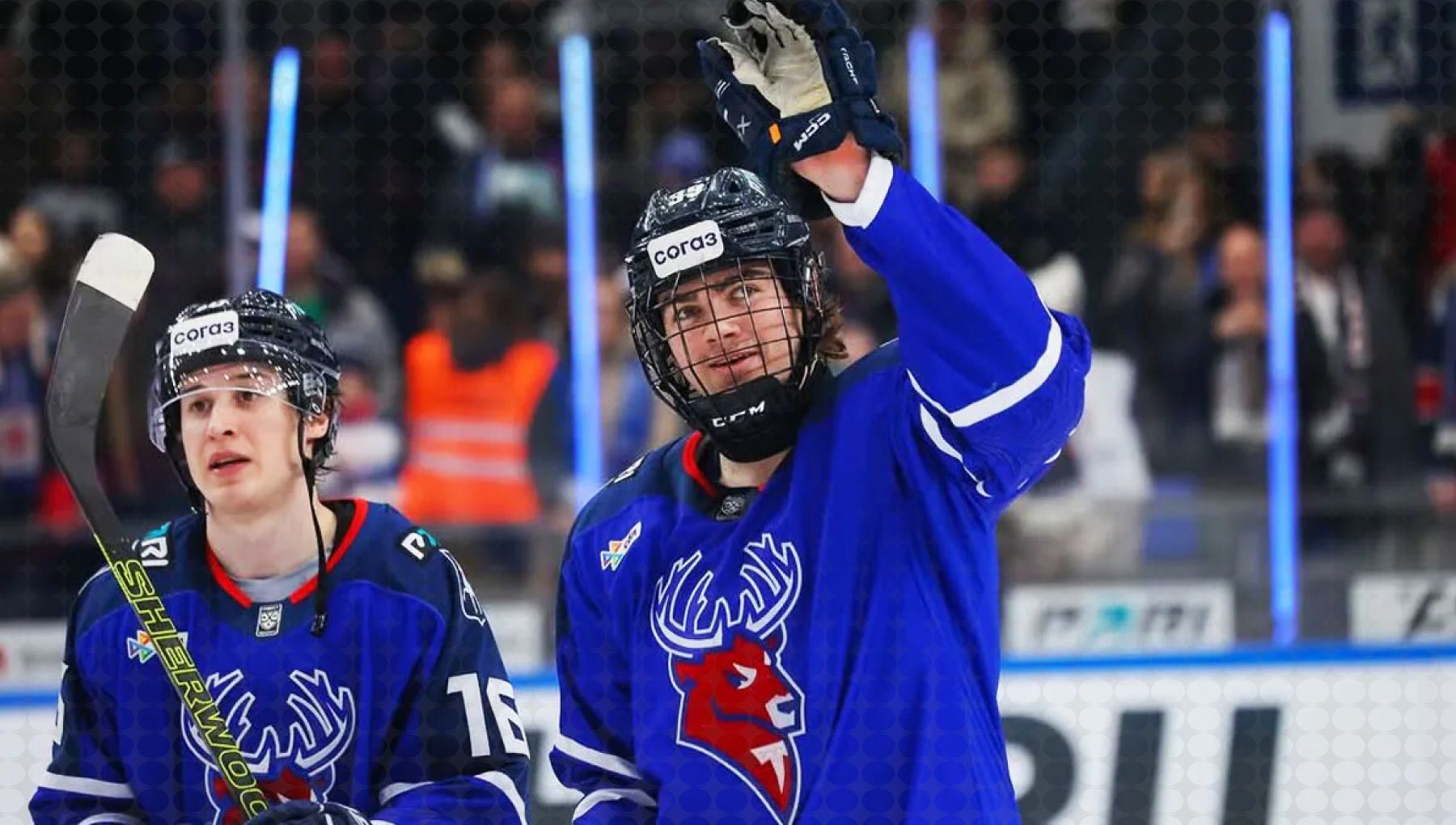
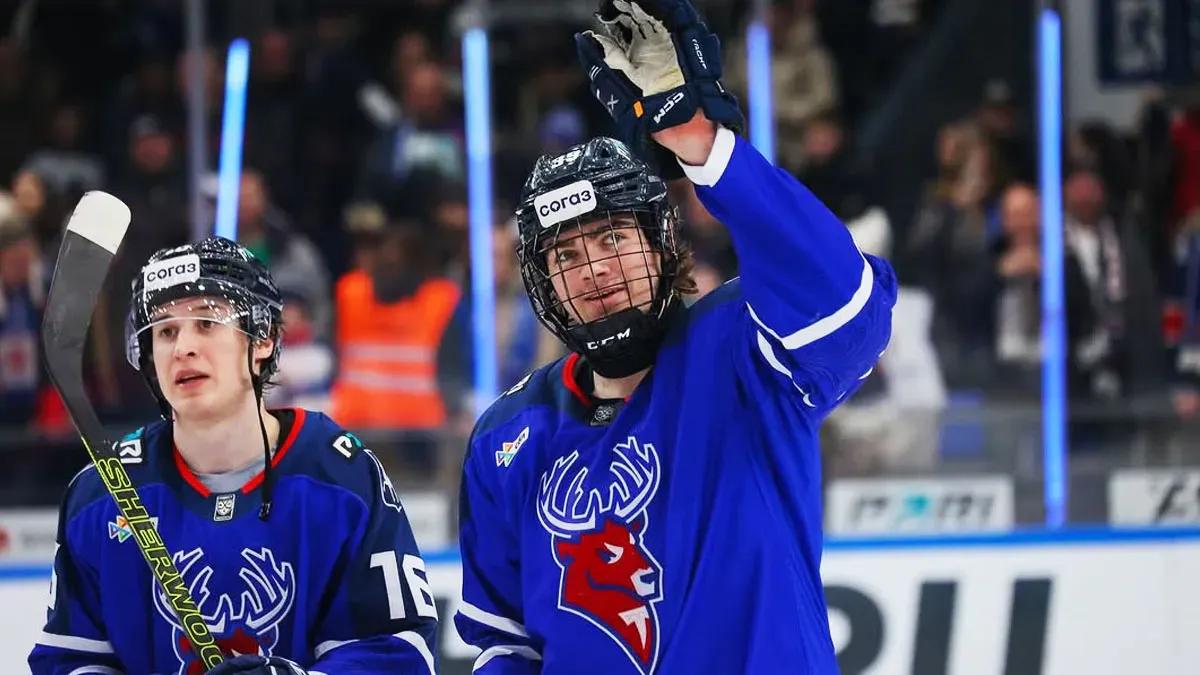
Russian forward Gleb Pugachyov was selected 26th overall by the Montreal Canadiens in the 2026 NHL Draft.
“It was an incredible feeling. I had worked toward this moment throughout my entire career,” Pugachyov said in an exclusive interview with RG.
“Of course, I was nervous and thought about it, but I would not say I was under too much pressure. I had spoken with Montreal before the draft, and I understood that they really wanted to select me. In the end, that is exactly what happened.
“Montreal gave me the most creative and memorable interview. It was actually my first in-person interview with an NHL club. It was very unusual and quite serious. I enjoyed it, and it left a strong impression on me.
“They said: ‘You are a big player who hits everyone and is not afraid of anybody. Imagine that you already play for Montreal. We are facing Washington, you deliver a hard hit on one of their young players, and Tom Wilson immediately comes after you. Are you ready to fight him?’
“Then they gave me another situation: ‘You arrive at Montreal’s rookie camp, and Josh Anderson is there. You hit him, he responds, and an argument starts between you. What happens next?’
“I answered: ‘There will be a fight.’”
Asked whether he would really be ready to fight Wilson, Pugachyov replied: “Yes. I told them there would be nothing left of him.”
Immediately after the draft, Pugachyov traveled to New York to apply for a Canadian visa. His interview took place June 29, and the forward said he hoped to fly to Montreal on Tuesday to take part in the Canadiens’ development camp.
“I simply want to practice, gain new experience, see how everything works there and meet everyone. I only have positive expectations.
“We went quite far in the playoffs last season and did not finish until May 5. I knew the draft was coming. At the same time, I had a problem with my leg and was supposed to have surgery, but fortunately, it was not needed in the end.
“Because of that, I did not skate for around two and a half to three weeks. I rested and focused mainly on dealing with the leg problem. Then I returned to the ice, but I did not push myself too hard. I had around 10 productive days of work. There was another short break before camp, and then I tried to get back into shape at my agent Dan Milstein’s camp.”
Childhood Dream Becomes a Reality
The 18-year-old was born in Almaty, Kazakhstan. He began playing hockey in his hometown before moving with his family to Kaliningrad, Russia, at age 9. He later played for Vityaz Podolsk before joining the Torpedo Nizhny Novgorod system.
During the 2025-26 season, Pugachyov played for Chaika in the MHL. He also appeared in 15 games for Torpedo-Gorky in the VHL and played 13 games for Torpedo’s senior team in the KHL. He made his league debut against Barys on Jan. 6.
Only a year ago, such a season felt like a dream. Now, it has become part of his everyday life.
“Honestly, I do not always think too far into the future. I try to live in the present, work every day and keep improving,” Pugachyov said.
“Everything builds gradually, and something that was once a childhood dream eventually becomes your normal life. I am very demanding of myself, so I always set big goals.”
Pugachyov grew up in an athletic family.
“My father did weightlifting, and my mother competed in track and field. They were not professional athletes, but sports were part of their lives. My father is 193 centimeters tall, and my mother is 184.”
His love of hockey began almost by accident.
“When I was around 4 years old, I received skates as a New Year’s gift. We went skating as a family with my parents and grandparents. I enjoyed it so much that I spent the whole day at the rink. When I was 5, they signed me up for hockey. I loved the game from the very beginning. Hockey is still my life. It is part of my daily routine. I have never felt burned out or not wanted to go to practice.”
At age 15, Pugachyov moved away from home and began living independently.
“I cook for myself and take care of all the everyday things. For some reason, I have always enjoyed living alone and being alone with my thoughts. I think it helps you grow up faster and makes life easier later.”
More Than Just Size and Strength
The forward is now around 190 or 191 centimeters tall and weighs more than 95 kilograms.
“I gained muscle. I was also quite a big kid when I was younger. My parents are tall, so it is probably genetics.”
However, Pugachyov does not believe size is his main advantage.
“Yes, I have good size, but it does not always decide who wins a battle. You are facing players who are just as strong but have more experience, so sometimes it can be difficult.”
He believes skating is the most challenging area for bigger players.
“It is really difficult. When you are this size, you have to spend much more time working on your skating. You constantly need to improve your mobility and coordination.”
Pugachyov hopes he would still be recognized by his playing style even without his name on the back of his jersey.
“I think people would recognize me because of my versatility. I try to be equally useful in all three zones. I can play responsibly on defense, I often play on the penalty kill, and I use my physical strength. I try to help the team in every situation. Versatility is probably what defines me.”
He does not believe he is close to reaching his full potential.
“You need to work on absolutely everything. You also have to continue improving your strengths and make them even stronger. But I pay special attention to my skating and mobility. I constantly work on my shot, even though I consider it one of my strengths.”
One scout described him as a physical and aggressive forward with a strong shot and the ability to make intelligent decisions. Pugachyov agreed with that assessment.
“I think that is fair. Those are the qualities people value in my game: leadership, physical play and a good shot.
“At the same time, you have to play differently in different leagues. When you are a leader in junior hockey, you can allow yourself to do a little more, take some risks or look for an unusual pass. I always want to play intelligent hockey and make the right decisions on the ice.”
He believes he is already prepared for senior hockey.
“I think I can comfortably play at the senior level. Since childhood, I have trained myself to pay attention to the right details because people always told me that senior hockey is completely different. Small details are important, and you have to follow them. When I was around 13 or 14 and already playing for the national team, coaches began teaching me more advanced things and explaining the theory of the game. I started studying it more deeply. All that knowledge, which began building when I was 14, has stayed with me through age 18.”
Learning to Handle Senior Hockey
In just one season, Pugachyov played at three different levels: the MHL, VHL and KHL. He admits that moving into senior hockey requires a completely different level of responsibility.
“When you move to a stronger league, there is almost no room for mistakes. You face players who are just as strong physically but have much more experience.”
He finds it difficult to deal with poor performances and defeats.
“Nobody likes losing, either in life or on the ice. I take defeats very seriously because I demand a lot from myself. When a game does not go well, it can be mentally difficult.
“The hardest part is dealing with it, resetting and preparing for the next game. I try to study the details, watch the game again, understand what I did wrong, analyze myself and have an honest conversation with myself. Then, the next day, I go back to work.”
Inspired by Radulov, Matthews and Barkov
Pugachyov has already been compared with Alexander Radulov, who played for the Montreal Canadiens during the 2016-17 season.
He takes those comparisons calmly.
“Of course, it is great. Radulov is a legendary player in Russian hockey and world hockey. I can say that he is now one of my favorite Russian players.
“I followed him from childhood and watched his highlights and videos. I really like his style of play and his energy. I have now played two games against him, and you can see how focused and motivated he is for all 60 minutes and how much he gives to the game. I try to take the strongest parts of his game and add them to my own.”
The player he would most like to meet is Auston Matthews.
“It would be interesting to meet him and see his daily routine, how he lives, how he prepares and what kind of mentality he has.”
As a child, Pugachyov looked up to Alexander Ovechkin and Pavel Datsyuk.
“Ovechkin, of course. He is a legend. I also watched Datsyuk a lot. My father constantly showed me videos of his best moments.”
Pugachyov did not hesitate when asked to name his favorite current forwards.
“Aleksander Barkov, Auston Matthews, Kirill Kaprizov, Nathan MacKinnon and Valeri Nichushkin.”
Why Nichushkin?
“I really like him as a player because he has a similar style. He plays with energy, has good size, drives to the net, shoots, plays physically and does a lot of work around the crease.”
Among the league’s young stars, he especially admires Ivan Demidov and Macklin Celebrini.
“Demidov is a unique player and a huge talent. His game is very well-developed for modern hockey. Celebrini is also unique. He shows an extremely high hockey IQ at such a young age and is improving very quickly.”
Pugachyov’s journey is only beginning. However, judging by the way he speaks about hard work, self-analysis and daily improvement, those qualities have already helped him move from the MHL to the first round of the NHL Draft in just one season.