
Here’s my idea of paradise. Dress uniform: old flip flops, faded swim trunks and tank tops. Culinary delights: spicy jerked chicken, juicy fresh papayas, fried plantains, grilled saltfish and conch fritters. Thirst quenchers: umbrellaed rum drinks and ice-cold Presidente beer. All enjoyed poolside, while relaxing to the rhythmic beat of steel drums and Calypso plus the swaying moves of merengue and bachata dancers.
Where, oh where, can you find all this? I’ll tell you: The Dominican Republic resort of Punta Cana. In all honesty, this is not much of a secret. Punta Cana draws more than 6 million visitors a year to enjoy its delights. And for good reason.
Home of impossibly white sugary sand beaches gently lapped by azure waves, this vacation hot spot of the DR is known for not only its delightful weather, seaside recreation and great food, but also truly great golf.
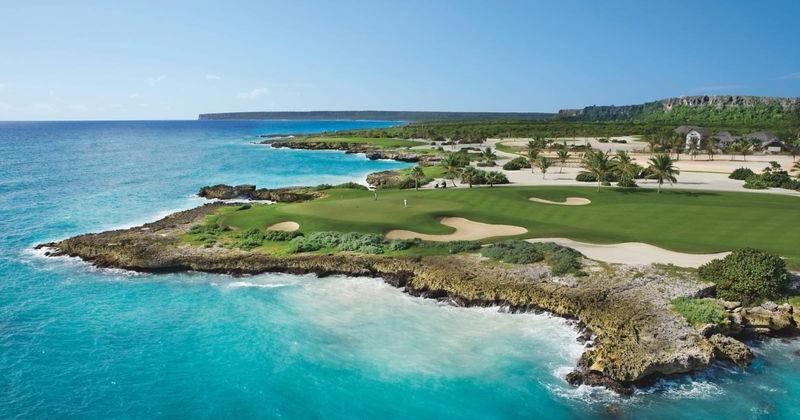
Punta Espada at Cap Cana has long been a standard bearer for high quality Dominican golf. It is No. 3 in the Golfweek’s Best ranking of the top 50 courses in Mexico, the Caribbean, South America and the Atlantic islands. A Jack Nicklaus design opened in 2006, Punta Espada is a championship layout with compelling strategic demands and off-the-map aesthetics.
If there were a worldwide beauty contest for golf courses, Punta Espada would be a strong contender. All 18 holes have views of the ocean, and eight are fully seaside. It’s truly hard to concentrate on your game with such non-stop stunning views.
But beauty alone doesn’t carry Punta Espada. From the opening hole – where a coral stone wall bisects the property – the course demands precision and commitment. Length is a recurring theme, highlighted by a pair of front-nine par 5s stretching beyond 600 yards, while strategically placed bunkers and varied approach angles ensure that brute force alone won’t suffice.
But the ocean holes? Oh, Lordy.
The unique par-3 fourth – played across a nearly enclosed seaside cay to a stingy green mounted on a coral outcrop – is one of four outstanding one-shotters at Punta Espada. The par-3 16th may be even better with a heroic forced carry at 224 yards from the tips, all atop the ocean. Looking down from this green you could almost imagine an enterprising octopus selling slightly used Pro V1s.
Besides Punta Espada, two other quality courses bless the Punta Cana region: La Cana, a P.B. Dye 27-hole complex that opened in 2001, and Corales Golf Club, a Tom Fazio effort that opened in 2010. Both touch on the Caribbean here and there but play more inland than Punta Espada. The finishing par 5 at Corales is an excellent hole, short and sickle-shaped around a cove, a classic bite-off-what-you-can-chew design where birdies are quite possible but so too are the dreaded “others.”
Soon to join these gems is a fourth course called Las Iguanas. A sister to Punta Espada, Jack Nicklaus started construction on Las Iguanas in 2006 in parallel to the construction of Punta Espada. Punta Espada was completed, but a market downturn led to a halt in construction of Las Iguanas. A recent building boom in condos, vacation homes and hotels has revived the project, and Las Iguanas is underway again with Nicklaus design associate Troy Vincent working alongside the alongside the golf legend and members of his family.
The goal at Las Iguanas is to integrate the course into the natural landscape while preserving the topography and maximizing Caribbean views. Distinguishing the golfing experience at Iguanas from Espada, by designing a shorter but still strategic layout, is also a principal goal.
While shorter, Iguanas will still afford plenty of defense primarily through increased putting surface movement. The front nine will survey a more inland site, wending its way through waterways and condominium complexes. The same striking coral stone wall seen on Espada’s opening hole cuts through several holes on Iguanas.
The back nine breaks out to the ocean for a series of spectacular holes. The short 14th may be the best of all, offering a number of options, each with varying associated risks. A small bay closely guards the right with the ocean to the left, giving longer players enticement – but pause – when considering an attempt to drive this green. When it’s windy, only the boldest would try anything other than a conservative route.
With 10 inland ponds and the Caribbean Sea, water features in no less than 15 of the 18 holes of Las Iguanas. Strategic bunkering and waste areas further complicate tee-to-green navigation, making this a thinking player’s course. When fully open late this year, Las Iguanas will both contrast and complement Punta Espada quite well.
“With Punta Espada operating under a more exclusive model, the addition of Las Iguanas was envisioned to complement the offering by providing a high-quality resort experience, creating a well-rounded and complete luxury golf portfolio,” said Alexis Santana, managing director of the two golf courses.
Sustainability is also a big concern and goal with Las Lagunas. DR national environmental protection laws and natural resource (coastal areas, wetlands and wildlife) compliance requirements are no less stringent than those in the United States. All irrigation used on both courses is effluent. Hardy Dynasty paspalum grass – a premium salt-resistant turfgrass widely used on Caribbean golf courses – provides the two layouts a tee-to-green, fine-textured playing surface. With 51 inches of annual rain, oddly but conveniently mostly during the nights, the turf water requirements are environmentally friendly.
There is another reason the decision was made to complete the unfinished Las Lagunas. Building and tourism are booming. With 13,726 rooms (combined hotel and real estate inventory) and the capacity to host more than half a million tourists annually, there has been a dramatic increase in the population of the once sleepier side of Punta Cana.
Additionally, a large marina is under construction that can accommodate mega-yachts and will be the future port of call for world-class billfishing outfits. Nearby Scape Park offers ziplining and cave or sinkhole explorations, and the El Dorado Water Park (the largest in the Caribbean) boasts an array of family water sports. It’s easy to see why the place is booming. Ultimately, the goal is to create a complete resort complex (golf, hotels, condos, shopping, culture and recreational facilities) in a new area separate from Punta Cana called Cap Cana.
Lodging options are plentiful. Besides the influx of mainlanders buying second homes in Punta Cana/Cap Cana, there are nine hotels or resorts. Each has access to the soon-to-be four area golf courses. The best of all might be the newly opened St. Regis Cap Cana.
This high-end Marriott property is all about luxury. With spacious rooms and suites, some with “swim-out” options and all with personal butlers, a world class spa, a glorious seaside pool complex, intriguing artwork throughout the complex and a wide array of dining choices including a rooftop signature steakhouse led by a renowned chef, this St. Regis is primed for those seeking lavish comfort. Take St. Regis’s cigar bar for example.
“The Amber Room, a distinguished lounge, is a space offering a premium selection of rum, cognac and whiskey, complemented by smoky cocktails and sophisticated Latin-inspired bites like empanadas, caviar and jamón,” describes a resort brochure. Of course, a cigar sommelier is always nearby for guest consultations.
With world class golf soon to be on either side of the St. Regis’ front door, it’s easy to understand why planned departures here are often treated as mere suggestions. “Oh, I’ll just take tomorrow’s flight.”
– Jonathan Cummings helps manage the Golfweek’s Best course rating database and writes occasional stories for his frequent travels around the world.
This article originally appeared on Golfweek: Growing Caribbean destination hits the mark with seaside golf holes
Reporting by Jonathan Cummings, Golfweek / Golfweek
USA TODAY Network via Reuters Connect