
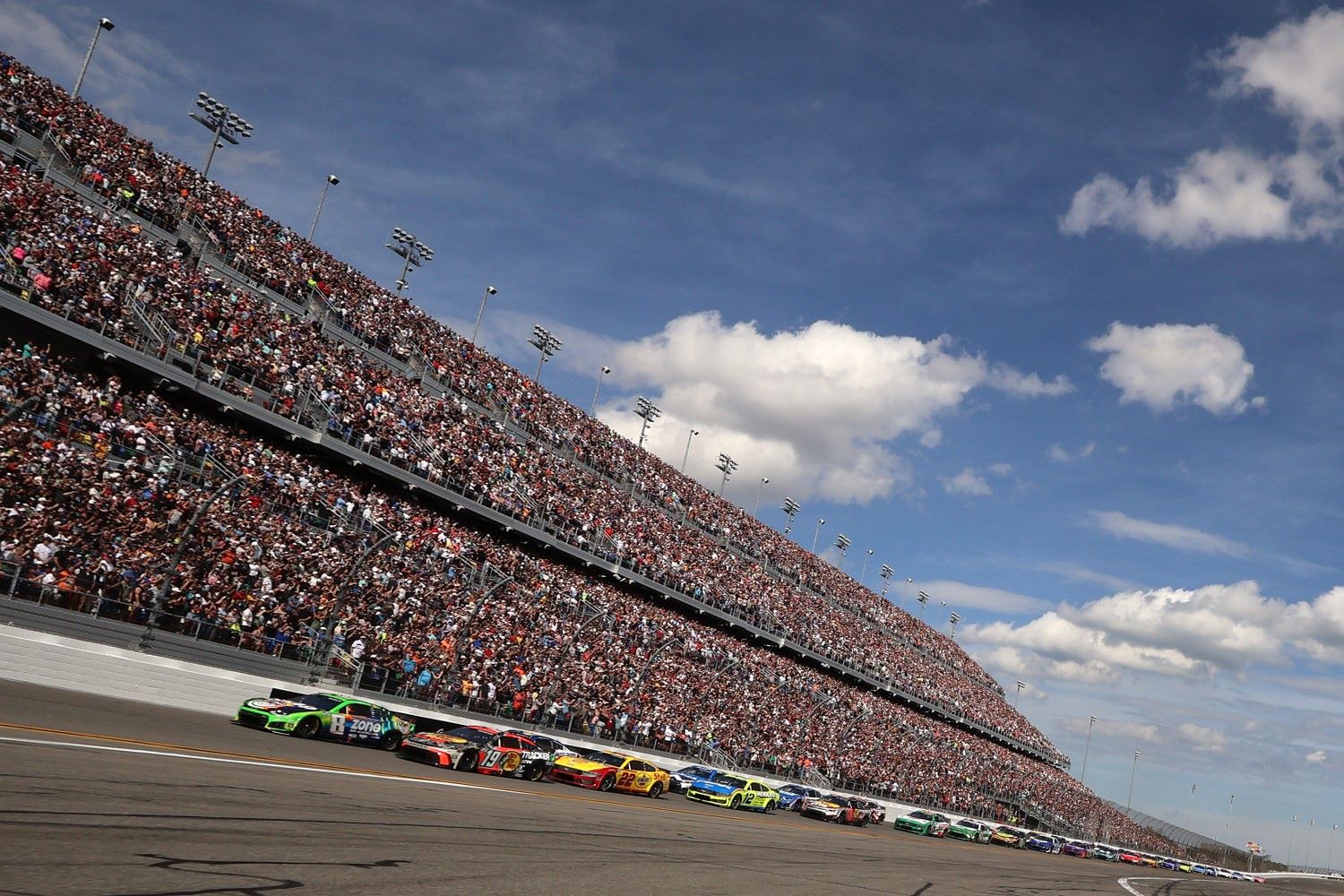
A NASCAR race win may look quite simple, but the prize money behind it sits inside one of the most layered payout systems in professional sports. Every Sunday, forty cars compete for a purse built from finishing-position payments, charter guarantees, contingency bonuses, and contributions to a season-long points fund.
None of those figures appear on the trophy itself, yet they shape nearly every decision a team owner makes long before the green flag drops. Staffing the shop, choosing equipment, and picking which sponsor logo goes on the hood all trace back to that picture.
Eight-Figure Purses Across the Schedule
Most points races on the 2026 Cup Series schedule carry a purse close to $11.23 million, a number that has held steady at tracks ranging from Atlanta to Darlington to Kansas. The Daytona 500 sits well above that baseline, with the 2026 edition paying a record $31,045,575, up from $30,331,250 the year before.
NASCAR credits much of that growth to its seven-year media rights deal, reportedly worth more than $7 billion, which began airing across Fox, NBC, Amazon, and TNT Sports in 2025. The sanctioning body releases the total purse figure for every weekend, yet it still will not publish a full position-by-position breakdown.
How the Field Actually Gets Paid
Documents unsealed during recent litigation showed the payout curve is flatter than most fans assume. A driver who finishes fortieth in a Cup points race can still take home more than $100,000, while the winner earns several hundred thousand more once bonuses are added.
That narrow spread keeps even backmarker teams solvent enough to load the hauler for the following weekend. It matters more than casual fans often realize, since a single mechanical failure can end a contender’s day early.
Casino-Style Wagering Joins the Equation
Legal sports betting has added another layer to NASCAR’s financial engine, with sportsbooks now treating each race the way a casino treats its odds board. Futures markets, prop bets, and live in-race lines all run alongside the purse and sponsorship money already in play.
Every wager carries a built-in house edge, whether it sits on a sportsbook line or inside a slot machine’s return to player percentage. Bettors curious how that edge plays out across thousands of slot titles can compare RTP rates and volatility right here, where the same risk and reward tradeoff behind a NASCAR prop bet shows up in every spin.
That crossover spending matters beyond the betting slip itself, since wagering interest across sportsbooks and online casinos indirectly supports the broadcast numbers behind NASCAR’s growing media contracts. Networks pay more for live sports when viewers have a financial stake in the outcome, and racing is no exception to that trend.
The Charter System Changed Who Gets Paid
The NASCAR charter system was introduced in February 2016. It converted 36 ownership stakes into guaranteed starting spots and a steady cut of revenue. Chartered teams receive a base payment of roughly $141,000 per event, a figure that climbs closer to $185,000 once recent points performance is factored in.
An average Cup team earns about $330,000 per race weekend, while a top organization can clear $488,000. Those numbers only became public through a federal antitrust case, since NASCAR had treated its payout formula as closely guarded information for years.
Four open entries exist alongside the charters, and those teams race without any guaranteed payment. Their income depends entirely on where the car finishes that day, which makes every position on the track worth real money rather than just championship points.
A Lawsuit Pulled Back the Curtain
That case, filed by 23XI Racing and Front Row Motorsports, argued that NASCAR controls too much of the sport’s economics, from track ownership to parts suppliers to the payout formula itself. The litigation forced NASCAR to unseal a decade of financial statements as part of the discovery process.
Those records showed team revenue per car ranged from $8.2 million for the lowest-earning organization to $43 million for the top team in 2024. Even at those totals, the average team still lost more than $2 million that year once expenses were counted against revenue.
Sponsorship Still Carries the Sport
Purse money rarely covers a Cup team’s full budget, which is why sponsorship remains the financial backbone of NASCAR. A primary sponsorship on a contending car ranks among the most expensive single buys in American motorsports and covers a paint scheme, hospitality suites, and roughly three hours of national television exposure.
Contingency awards add another layer on top of that base. Manufacturers and parts suppliers often pay small bonuses for specific achievements, such as leading a lap, winning the pole, or posting the fastest pit stop, and those checks accumulate into a meaningful supplement over a full season.