
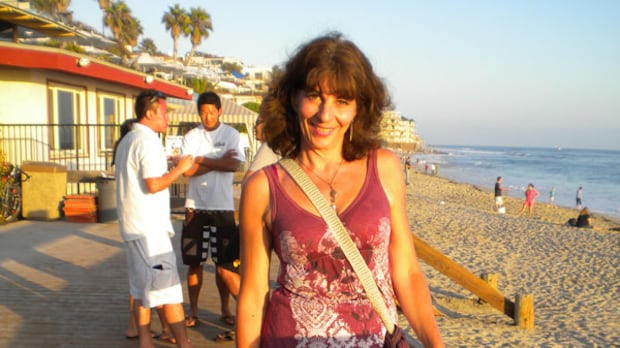
This First Person article is the experience of Margo McCall, a former Californian who returned to Winnipeg, and a participant in CBC Manitoba’s First Person writing workshop, which helps people finesse the skills to tell their own stories in their own words.
For more information about CBC’s First Person stories, please see this FAQ. You can read more First Person articles here.
As a student in Winnipeg in the late ’70s, I wrote scathing articles decrying the American takeover of Canadian culture.
Two years later, I’d be living in the belly of the beast.
When I announced my engagement to a native Californian, my brother said with disgust, “You’re marrying a Yank?”
Thus began my life as a dual citizen of two countries that share the world’s longest undefended border. Once I lost my clipped Canadian accent and developed a perpetual tan, I was an invisible immigrant. No one ever asked me where I was from.
I admired Americans’ can-do attitude. Everything seemed bigger and better. I was fine without a safety net. Young and energetic, I was confident I could succeed.
I didn’t become an American citizen until anti-immigrant sentiment gathered steam a decade later. At the citizenship ceremony in the cavernous Los Angeles Convention Center, I was issued a plastic American flag and forced to listen to country singer Lee Greenwood singing God Bless the U.S.A.
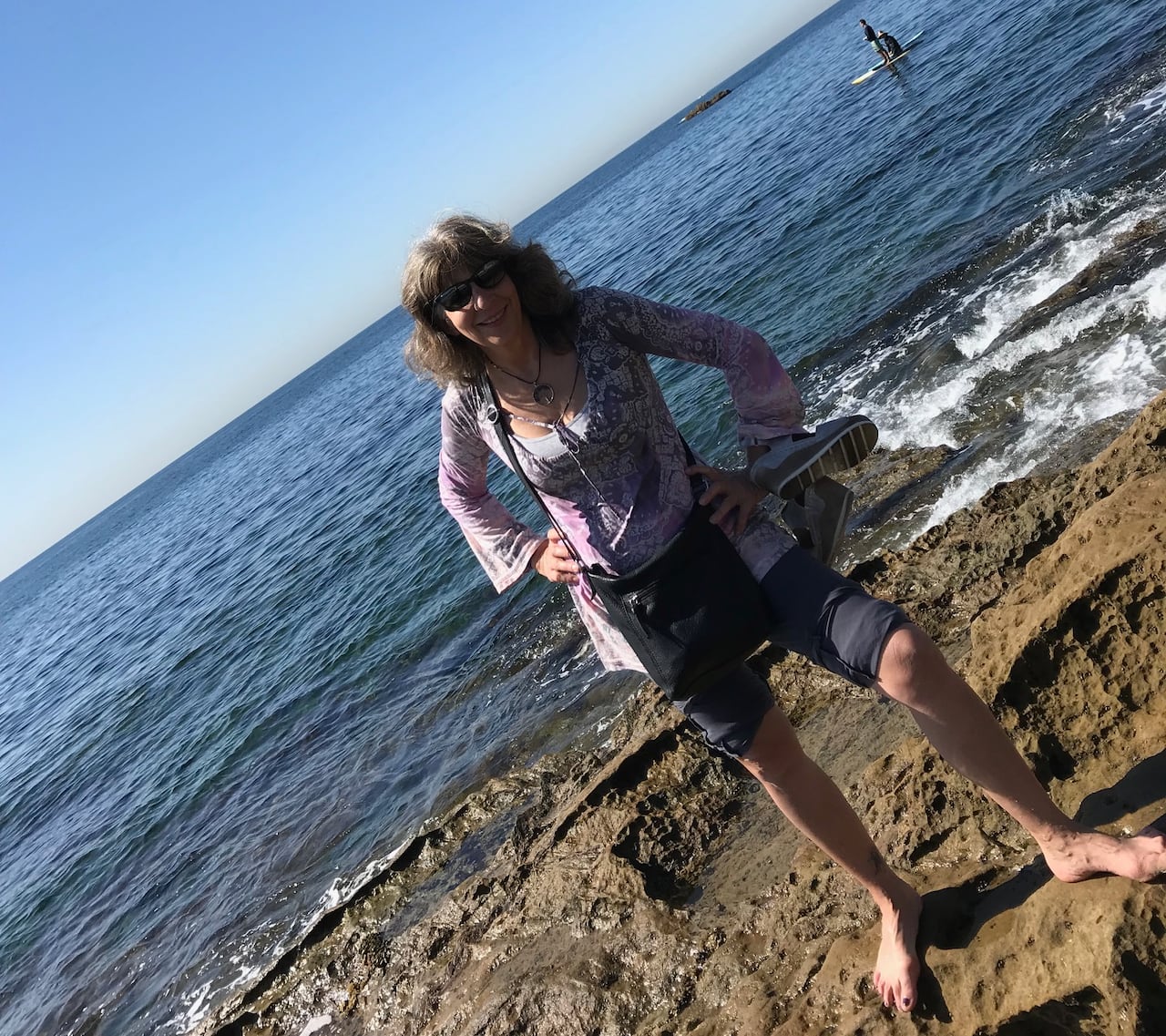 ‘My life in California was good,’ writes McCall. (Submitted by Margo McCall)
I felt different from the other immigrants, many still struggling with English. I’d had the benefit of Canada’s strong education system and already knew much about America from the movies, news, books, music and magazines that had flooded my consciousness since I was a child.
My life in California was good. Besides the endless sunshine, California provided limitless job opportunities and cultural offerings. I earned a journalism degree, then worked at newspapers, tech magazines and a university. Got married and divorced. Made friends. Thrived.
Then came the pandemic. During its height, I’d watch the briefings presided over by U.S. President Donald Trump, then switch to the Canadian briefings run by then prime minister Justin Trudeau. When Trump suggested injecting bleach to treat COVID-19, something in me snapped.
It was time to check out of Hotel California.- Margo McCall
I was sitting at the computer in my home office, a room I rarely left now that I was working remotely. I walked onto my balcony, a plant-filled oasis of flowering jasmine and hot-pink geraniums. Felt the warm sunshine on my shoulders. Inhaled the fresh sea breeze.
When I walked back inside, a thought coursed through me: I want to live in a country whose values match my own. That thought persisted as the pandemic wore on. I cleaned out drawers. Threw things out.
It was time to check out of Hotel California.
‘A cold, dark place of perpetual winter’
I never thought I’d move back to Winnipeg. In my memories, it was a cold, dark place of perpetual winter (colder than Mars).
But I was nearing retirement age. Did the math. Discovered it was possible.
There were other things, though none of them deal breakers on their own. California seemed to be getting hotter. There was the megadrought — the worst in 1,200 years. Fires charring recreation areas throughout the state. Traffic. High housing costs.
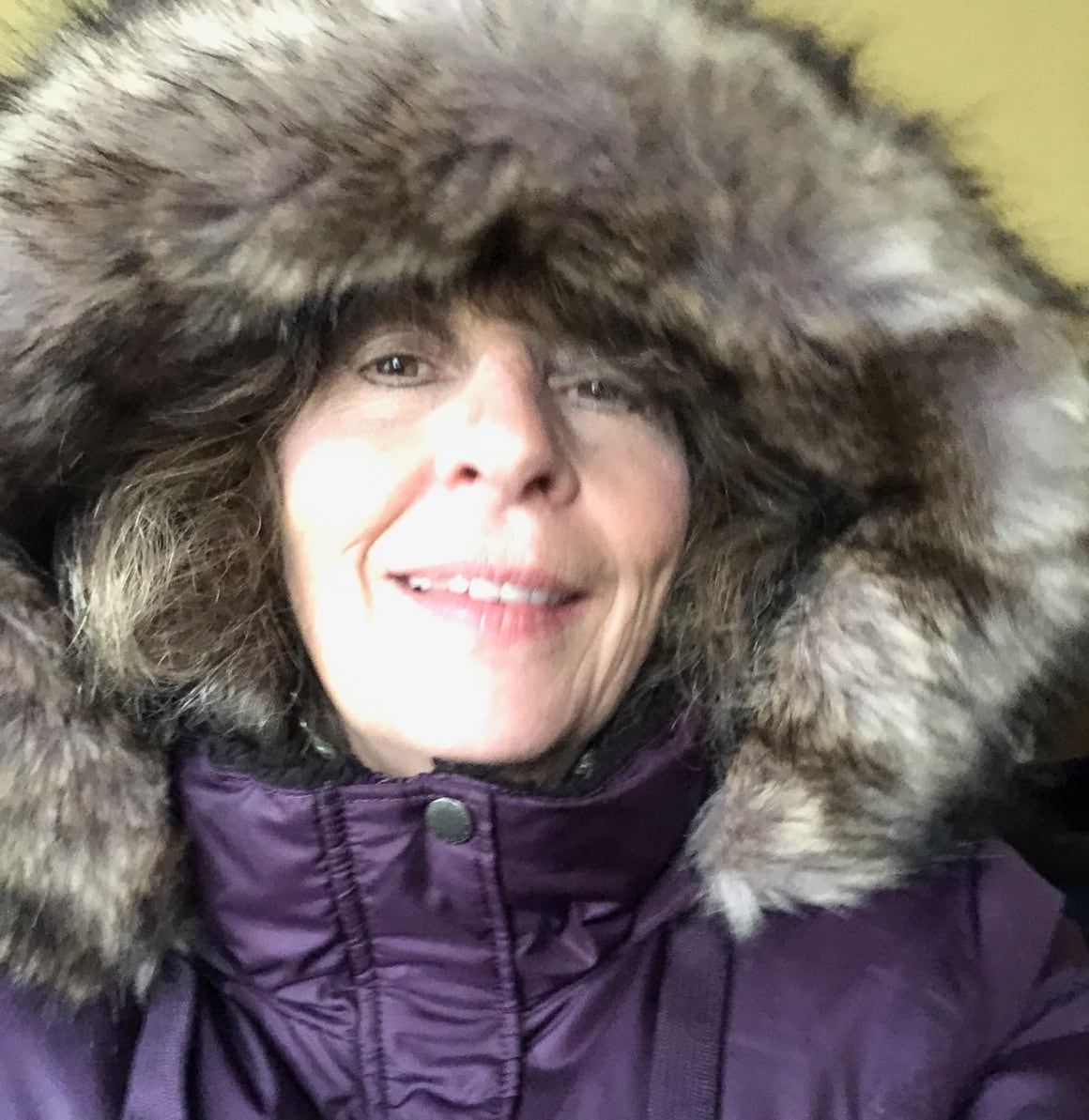 McCall recalls her first winter back in Canada. ‘I hadn’t shovelled snow in 40 years, and it felt great.’ (Submitted by Margo McCall)
I also had family in Winnipeg. Family I missed. I’d visit them every few years. Always in the summer, for I no longer owned a coat. Every few years, they’d visit me — always in the winter — and I’d take them to the beach. Packing up all the photos they’d sent over the years, I realized how much I’d missed.
It took almost a year to plan and execute my move back to Canada. There were so many details — getting a new passport, reactivating my social insurance account, applying for health insurance — plus the physical ordeal of packing my household belongings in a pod that would travel across the country before making its way north.
Meanwhile, disturbing things kept happening in the U.S. The courts abolishing women’s reproductive rights. A wall to keep out immigrants. The storming of the U.S. Capitol to prevent certification of election results. Each new development made me even more anxious to escape while I still could.
‘Why would you leave California?’
There was snow on the ground when I arrived in December to my empty house. It would be five weeks until my stuff arrived.
My brother came with knives and forks, bedding and plants. My sister showed up with bananas, coffee, peanut butter, towels and more bedding. My brother-in-law donated a snowblower and an easy chair, which my dog and cat immediately claimed. My brother gave me a snow shovel.
When the snow fell, I eagerly cleared my driveway. I hadn’t shovelled snow in 40 years and it felt great.
I still keep in touch with my American friends.… They remind me that I’m lucky.- Margo McCall
Initially, people asked, “Why would you leave California and move back to Winnipeg?” Now, if I mention that I used to live in the U.S., they shake their heads and remark, “Bet you’re glad to be out of there.”
I still keep in touch with my American friends. When the 51st state stuff came up, they were too preoccupied with their country’s tumult to understand Canadians’ outrage.
Now that things have calmed down, I ask them how they are doing. But they don’t want to talk about the situation in their country. They want to hear about Canada, their nirvana. I regale them with stories about fresh air, clean water, a calm political climate.
They remind me that I’m lucky. I remind myself the same thing. I never expected to move back to Winnipeg, but I’m so glad I did.