
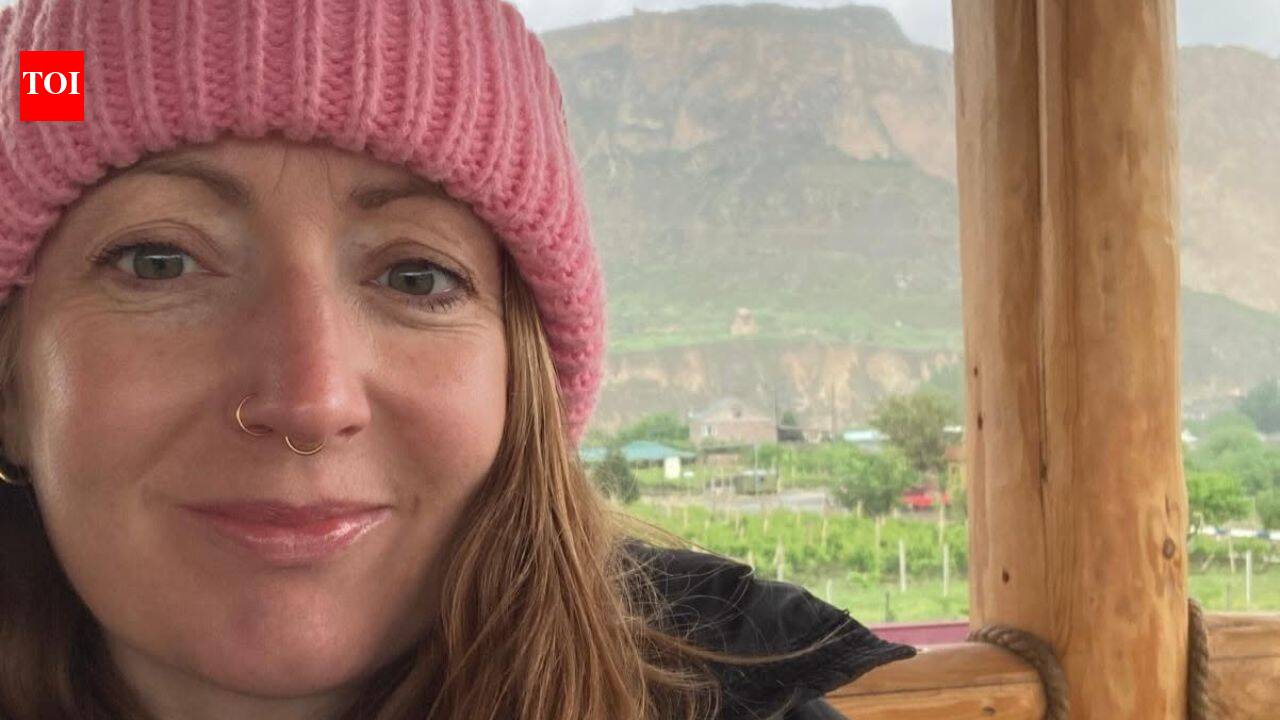
 In an ordeal that is gaining traction online, a British woman claimed her trip to India left her with 38 parasites in her brain and a lifelong disease.Lowri Denman first noticed that something was up when she discovered a metre-long tapeworm after going to the toilet. “It looked absolutely disgusting, like sellotape with little ridges in it,” said the 42-year-old from Carmarthen.
A lifelong disease
This was the first symptom of neurocysticercosis, a brain infection that left her with 38 parasites in her brain and other life-altering symptoms like headaches, seizures and psychosis.She is one of the only people in the UK who are diagnosed with the infection each year, which is caused by the larvae of the pork tapeworm.It all happened back in 2007 when the media worker went on a three-month trip around India. According to her doctor, Brandon Healy, a consultant in infectious disease and microbiology, this is where she picked up the infection.While Lowri had already decided to forgo meat on the trip in order to avoid poisoning, as per Healy, she inadvertently ate pork that contained microscopic tapeworm eggs.However, it was only three years later in 2010 that she discovered the tapeworm in a restaurant toilet. A visit to the GP and stool tests were satisfactory and thus, life continued as normal.Within a year she began getting terrible headaches and had her first seizure in 2011. “I was really starting to struggle to get some words out,” she said.“And the next thing I came around and I was in an ambulance and I was like how has that happened and why?”
Hospital visits and medications
After a CAT scan and an MRI scan, the doctor revealed to her the shocking news. “The doctor sat me down and said ‘Right, we have looked into your scans and we’ve found 38 parasites in your brain’” she said.Initially, they thought it was toxoplasmosis, an infection caused by coming into contact with infected cats’ faeces. But then her mother questioned if her seizure could be linked to the tapeworm she had found a year earlier. After further tests, she was diagnosed with neurocysticercosis.She stayed in the hospital for two weeks and was put on antiparasitic drugs and steroids. For a while, she had several years of good health, where she was able to go on a trip to New Zealand with her sister, move to Bristol, take circus classes and run marathons.But then she collapsed at work and scans found huge swellings in her brain around the parasites. Soon, she became confused and experienced numbing and tingling in her body. She had to give up her work and move back with her dad.She was put on steroids that changed her appearance and her mental health came tumbling down. “This paranoia and psychosis started kicking in… there was severe anxiety, panic attacks,” Lowri, who spent six weeks in a neuropsychiatric hospital, said.Her friends and family were scared seeing her in this condition. “I walked into the room and she was essentially behaving like a child,” recalled Nicola Brown, Lowri’s friend of 20 years.”Crawling around on the floor, hiding behind a curtain, sitting on her dad’s lap as if she was five.” She said when the visit ended Lowri swore at her and told her to never come back. Lowri later sent her a text message.”It essentially said, ‘Thanks so much for coming to visit. You’re going to see me on the news tonight. The police are after me’.”As per the WHO, humans are infected by consuming food such as raw or contaminated pork, water with tapeworm eggs, or poor hygiene practices. The infection is extremely rare in the UK and is mostly found in people who have migrated from endemic regions.
Recovering from it all
“I didn’t feel myself at all, I didn’t look myself in the slightest, I didn’t want to go out” said Lowri.Recovery had been a long and ongoing journey for her. While living with her dad she completed an art degree course in Carmarthen and by 2018 moved back to Cardiff and did an interior design degree. She eventually returned to work in 2022.Now, the parasites have been calcified in her brain. “I’ve not had any surgery to actually take them out of my brain,” she said. “Apparently they just sort of die down and they calcify basically. So at this point, they are now calcified.”While she has not had a seizure since 2017, she will remain on epilepsy medication for the rest of her life.“What I want to do now is progress in my life and spread awareness of this disease and do something positive with it,” she said. “You don’t know what’s around the corner… I’m happy to be alive and healthy and fit again and I never take that for granted.”However, Lowri said she still doesn’t regret her trip to India and the people, culture, food and everything else will stay with her forever.