

Listen to this article
Estimated 4 minutes
The audio version of this article is generated by AI-based technology. Mispronunciations can occur. We are working with our partners to continually review and improve the results.
Hello from Hi Art, the CBC Arts weekly newsletter!
Every Sunday, we feature Canadian art that’s grabbed our attention. This is a roundup of recent highlights.
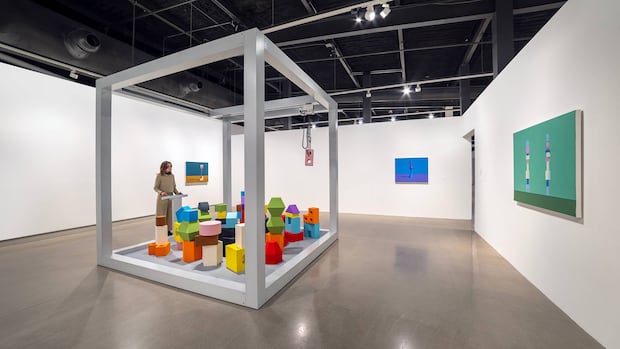
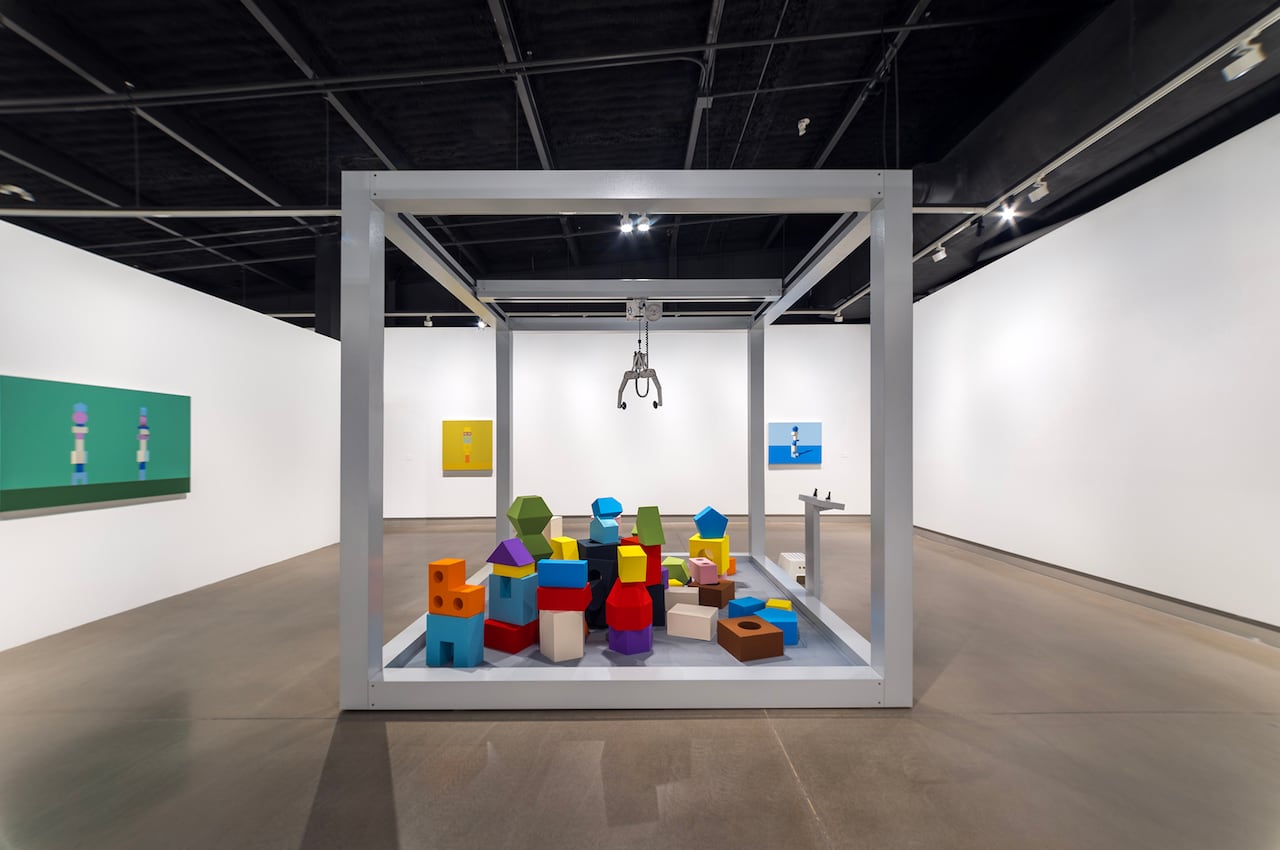 Installation view of Balancing Act (2023) by Jennifer Marman and Daniel Borins. (Artwork: Jennifer Marman and Daniel Borins; Photo: Contemporary Calgary)
Step right up. This giant claw machine is totally playable. It’s part of Three Dimensions, a travelling exhibition from Jennifer Marman and Daniel Borins, and the show is set to arrive July 27 in London, Ont., at Western University’s McIntosh Gallery. It ponders a few big themes related to digital technology, like how images circulate. For example, maybe your algorithm’s been flooded with posts about this next item …
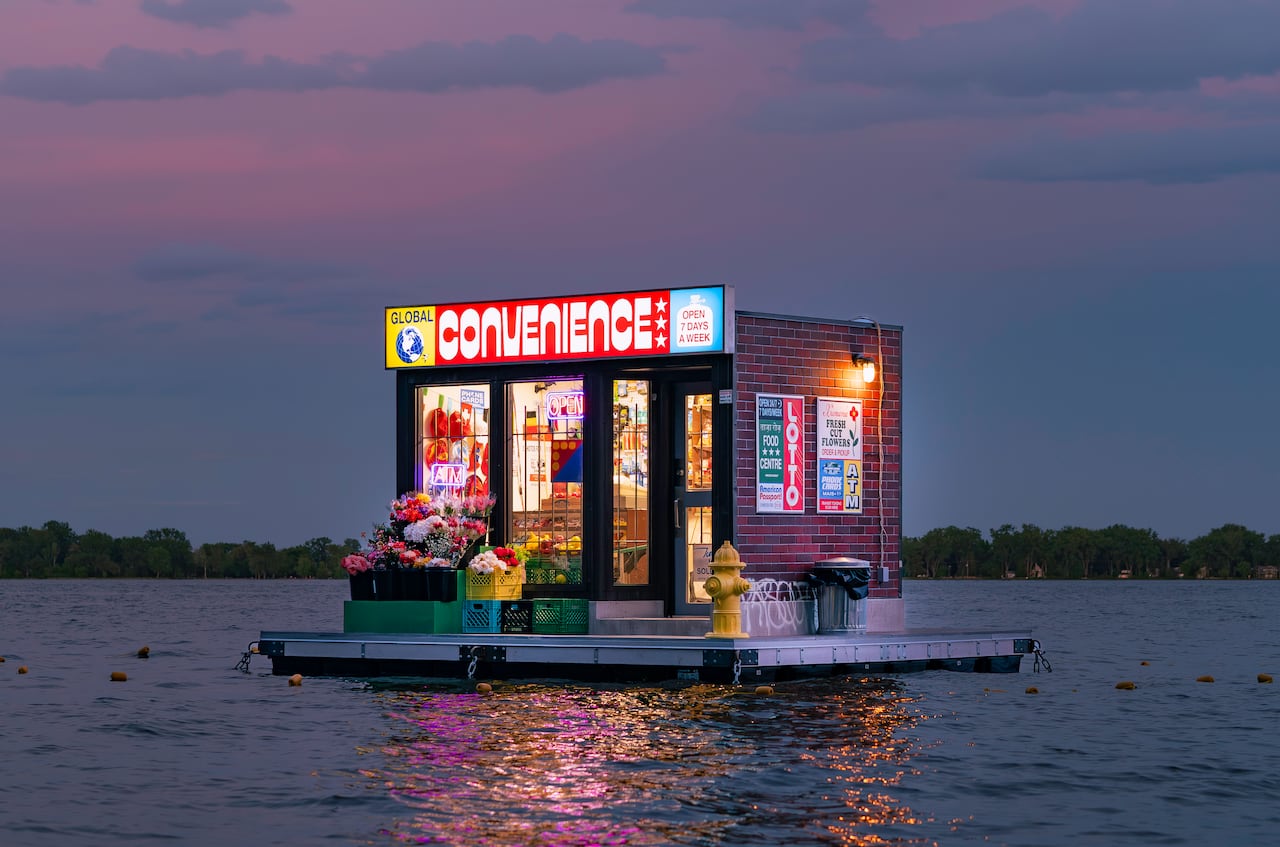 Global Convenience by Trevor Wheatley, Cosmo Dean and Puncture. (Trevor Wheatley, Cosmo Dean, Puncture)
In Toronto, this floating art installation has been making plenty of waves online. (Heck, even Commotion ran a segment about it.) Trevor Wheatley, Cosmo Dean and Puncture unveiled the piece (Global Convenience) earlier this month in the Harbour Square Basin. Commissioned by Waterfront Toronto to welcome FIFA World Cup 2026 fans to the city, it’s a nod to the humble mom-and-pop shops that serve communities everywhere.
I was down at the lake for an after-work picnic shortly after its debut and watched a boat make a beeline for it — all the way from Toronto Island. (It really does look like a pint-sized marina shop; I didn’t get to ask, but I bet the captain was bummed he couldn’t dock to buy some chips.)
About that — the store’s not actually open for business, and clambering on the artwork is strongly discouraged. “It’s only meant to be viewed from afar,” Cosmo told me in an email. “But to some extent, we acknowledge it’s now part of the commons and will take on a life of its own,” he said.
From the boardwalk, however, you probably won’t be able to see this detail: the shop is fully stocked, and the inventory reflects the global flavour of the project. The artists tell me they searched for international foods and products that would be recognizable in multiple countries. What were some of their favourite finds? Shrimp puffs, plantain chips, Coffee Crisp and a stack of vintage newspapers.
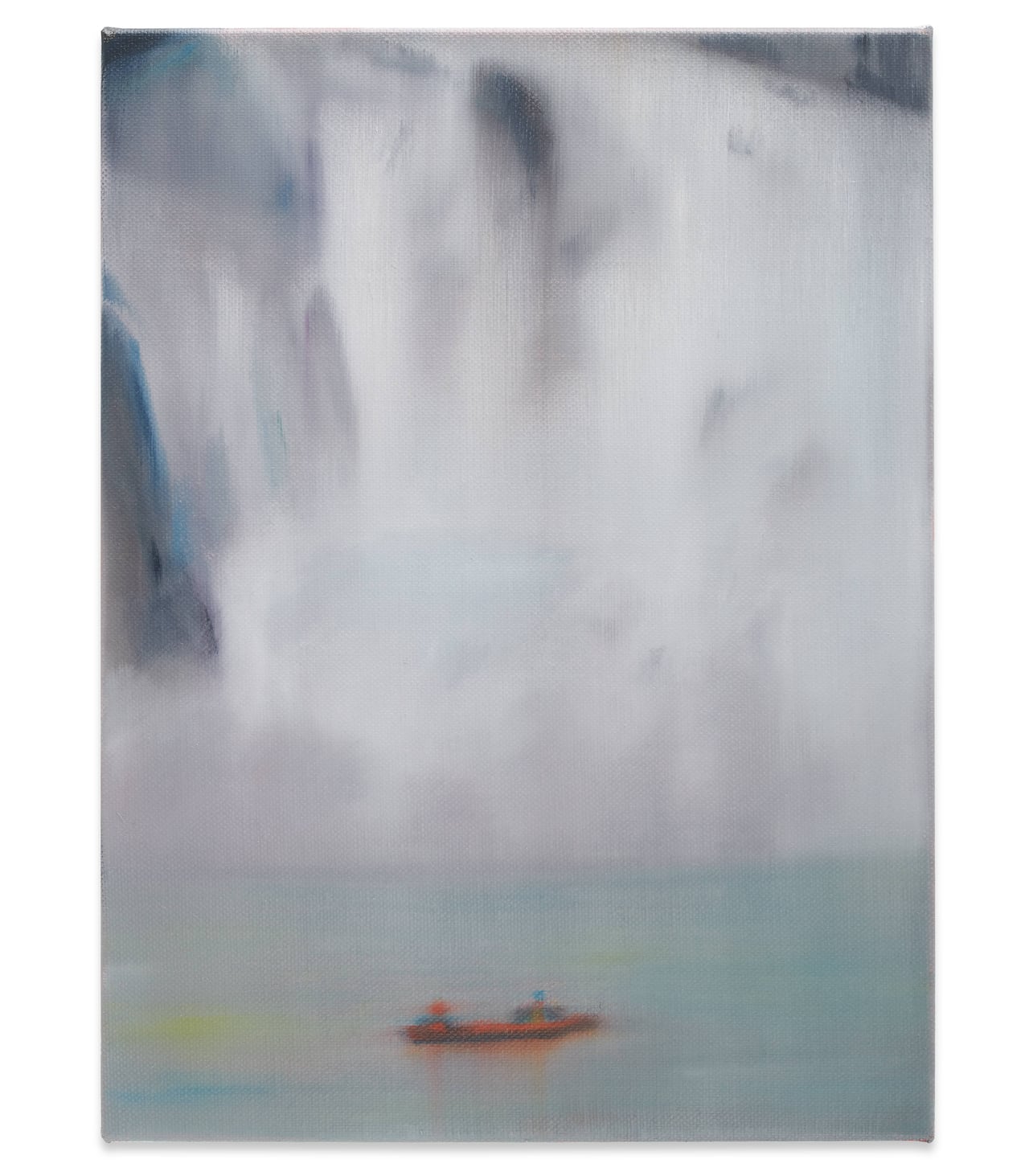 Plunge Pool 1 by Matt Schust. (Matt Schust)
Matt Schust based this painting off a picture of Nahanni National Park Reserve in the Northwest Territories, and yet the scene has the hazy feel of a half-remembered dream. “My paintings are often based on photographs or film stills both real and fictional,” Matt told me over email. “But I like to pull back details, zoom in or distort in order to create a sense of mystery and stir the imagination. The end result are images that seem representational and abstract at the same time — something you recognize and also can’t quite put your finger on.” More of Matt’s water paintings are on view at Toronto’s Towards gallery. He’s featured in the group show (Material Imaginations), which runs through Aug. 8.
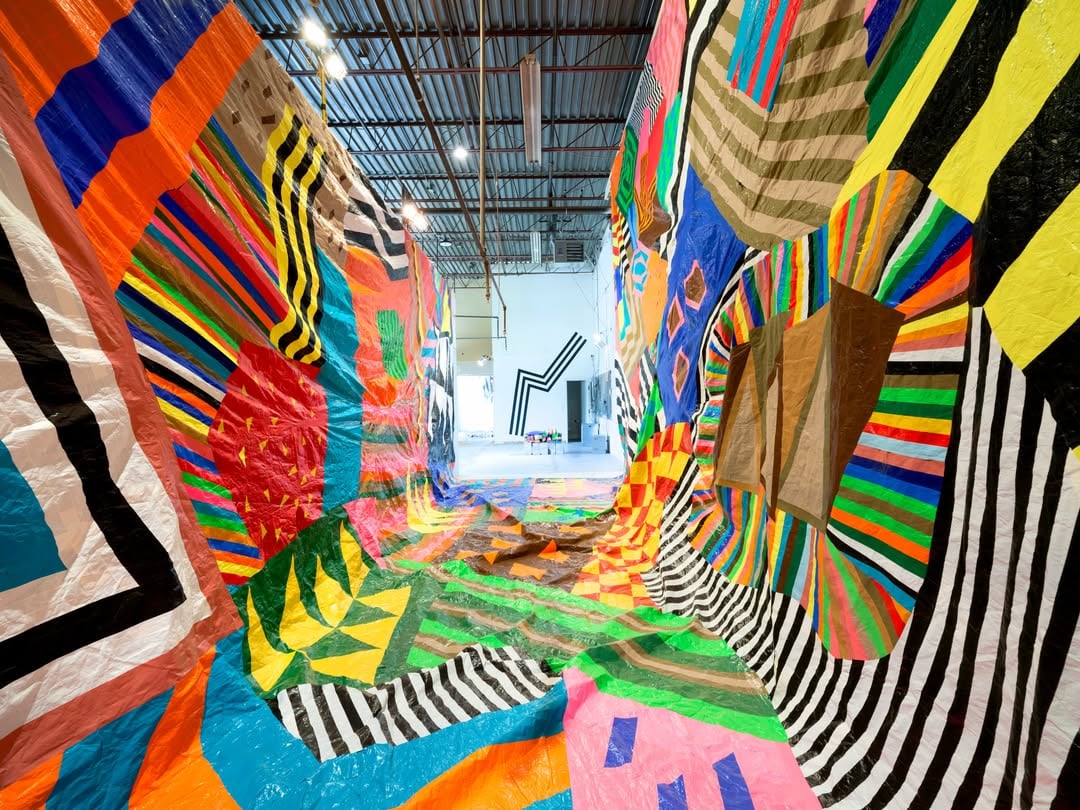 Installation view of Janine Miedzik’s Turn Signal/Next Exit. (Artwork: Janine Miedzik; Photo: Darren Rigo)
Inspired by traffic signs and “the visual language of the modern city,” Janine Miedzik dreamed up Turn Signal/Next Exit for Steelcase Art Projects, and the exhibition is on now at Industrial Arts in Markham, Ont. The show is open to the public through Aug. 30 (weekday visits by appointment), and you’re looking at the titular installation. “I was originally hoping to create a tunnel for people to walk through,” Janine told me over email. “But you can walk behind it, which is how Darren [Rigo] got this photograph.”
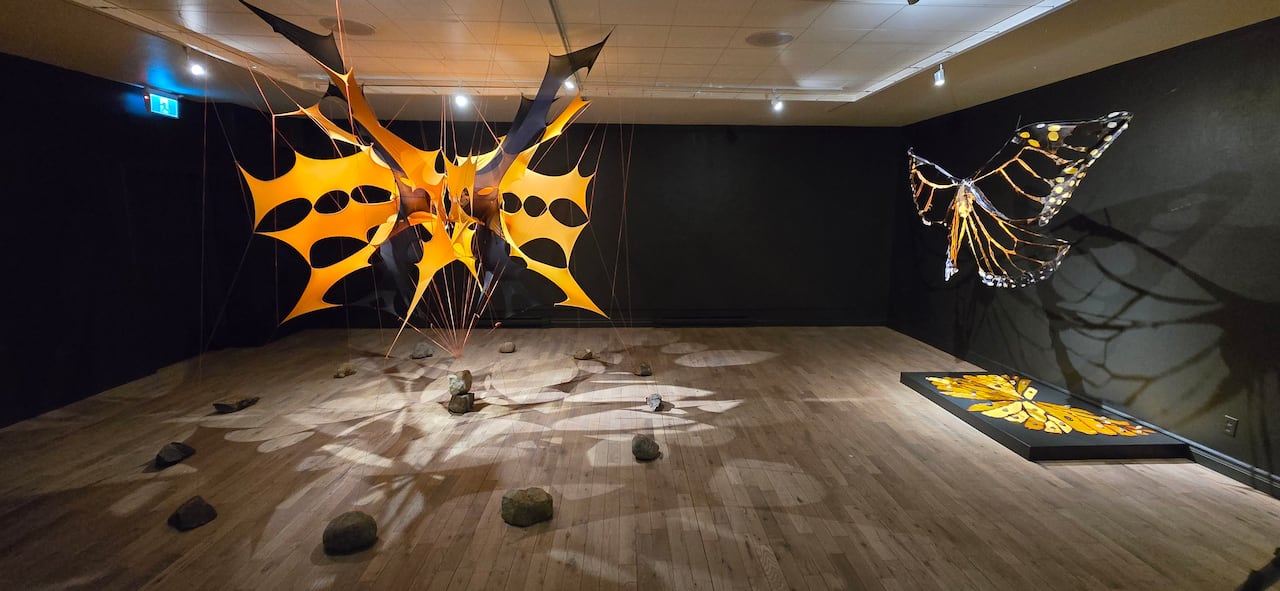 Installation view of Maria Ezcurra’s Lignes de gravité at Centre d’exposition de Val-David. (Maria Ezcurra)
And finally, here’s a peek inside Maria Ezcurra’s Lignes de gravité. It’s at Centre d’exposition de Val-David in Quebec. “For the past several years, my work has focused on migratory birds and, more recently, on the monarch butterfly,” says Maria, who emailed me some background on the show. The pictured works relate to the experience of human migration, and Maria references the journey of the butterfly to explore themes of movement, belonging, vulnerability and resilience. “Growing up in Mexico, I was mesmerized by forests turning orange as millions of monarch butterflies covered the trees. That memory has stayed with me ever since. The monarch’s migration between Mexico and Canada has become a powerful metaphor in my work.”
Do you want to see even more incredible artwork — plus the top stories from CBC Arts?
Sign up here and Hi Art will be delivered to your inbox.