
Energy harvesting and deployment were the big talking points at the start of the 2026 Formula 1 season, as the limitations of the new power units became apparent. However, rule tweaks for round four in Miami and a run of circuits with plenty of braking areas and where harvesting was not as critical saw such chat drop off the radar somewhat.
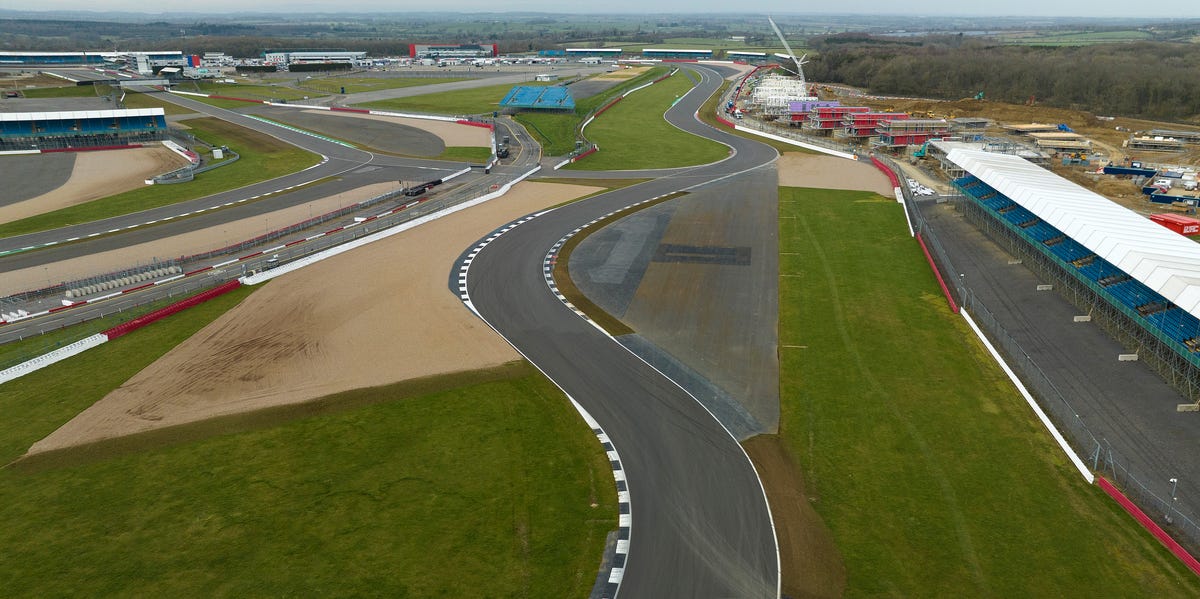
It is front and center once again at Silverstone this weekend for the British Grand Prix, and a venue always associated with high speeds and drivers pushing to the limit looks set to be very different this year. That’s because once they get through the twisty section at the start of the lap, the drivers have a run from Turn 8 to Turn 15—probably more familiar to you as Woodcote to Stowe—where there is little to no slowing down where cars can harvest energy.
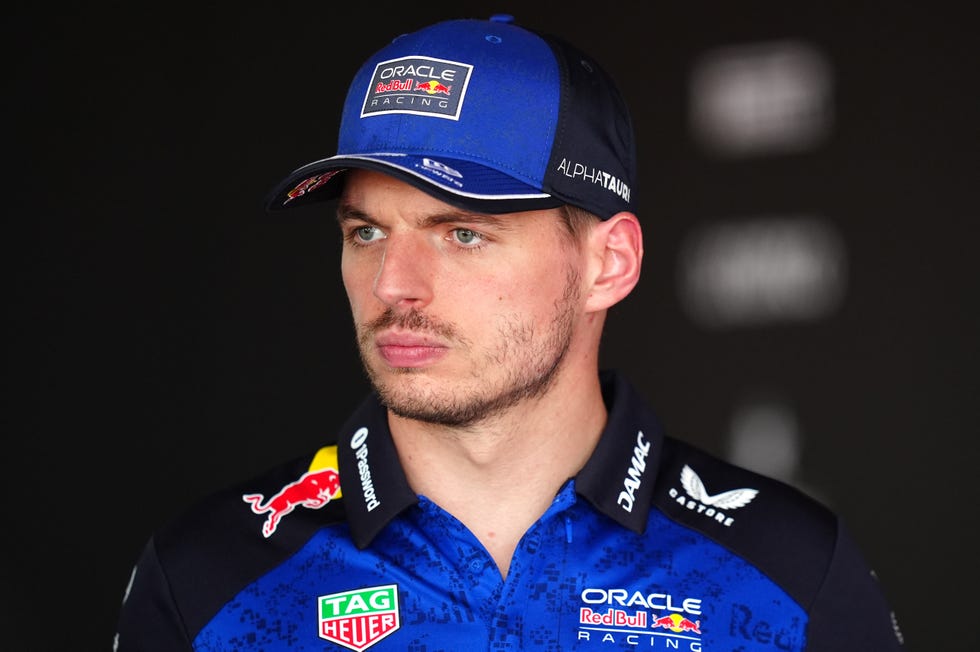
It’s not an issue that has suddenly cropped up. Along with Monza, Silverstone was always going to be one of the major stretches for the 2026 power units, and thus drivers have been sampling it in simulators over the past couple of years as they were being developed. Max Verstappen noted recently that he’d laughed when he first tried it, it was so odd to drive. On Thursday, ahead of his first real world laps with the RB22 on Friday, he made his feelings clear.
“I don’t want to keep being too negative about it,” said the Red Bull driver. “I’ve been, of course, in contact with FOM, FIA. Everyone is trying to do their best. It’s just that—because of how we generate our power nowadays—this track layout, unfortunately, it’s just not suited for it, because of all the continuous [running]. You have long straights and fast corners, you don’t really tap the brake or whatever, so you can’t really recharge enough. When you rely only on the ICE, you don’t have enough power. So in a lot of places around the lap, you basically just slow down a lot, because that layout is just not made for the current formula of the engine. I think it’s just as simple as that.”
David Davies – PA Images//Getty Images
It’s not just about the straights, as Verstappen stressed. It’s those sweeping high-speed corners—the very bits that made Silverstone such a challenge in past generations of cars—that now work against it. “Of course, we go to some tracks, we also have a lot of long straights, like [Austria] last week,” he said. “But there’s at least a braking zone. You can recharge a bit—can use it again. Unfortunately, here that’s not really the case. So for sure some corners are completely different than last year, for example. And that then also, of course, it makes it a lot easier to get around the lap. But at the same time it’s quite painful, because all of your inputs matter even more. Just probably not the most exciting, unfortunately.”
It’s the loss of that special challenge, especially through the twisting Maggotts/Becketts complex, that drivers lamented ahead of the race. “There aren’t really many high-speed corners any more in F1,” said Alex Albon. “You arrive so slowly to them that the speeds themselves are low. You would think Silverstone is a high-speed track, but actually, if you look at the corner speeds now, it’s more a medium-speed circuit … Once you get through turn six-seven, and you lack any braking all the way into turn fifteen, clearly, the battery’s pretty depleted very quickly, and then you’re struggling from there on … [It’s] a very different feeling this weekend, I think, to what we normally feel around Silverstone. Silverstone has always been special. It’s less special when you don’t have that kind of speed that you feel through some of the high-speed corners.”
Albon’s sentiments were echoed by his colleagues up and down the F1 grid.
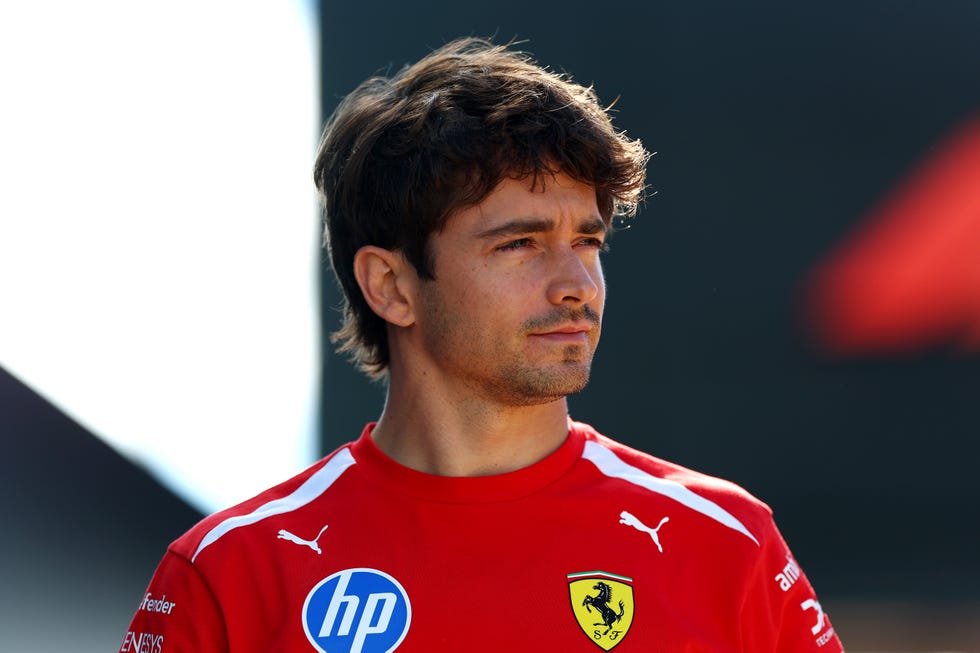
“I think most of the drivers feel probably a bit sad seeing the [speed] trace, and also trying the track at the simulator,” said Charles Leclerc when asked by Road & Track for his take. “These were tracks where we actually, I think—the bravest one in qualifying will make a difference, because you get into the high-speed corners with quite a lot of power, and need to play with the limit of the card at very high speed. Now, the high-speed corners are more medium-speed corners, because we have a lot of clipping. I don’t know exactly what to expect. I have an idea, but, but I’m pretty sure it won’t feel as special as it used to yet to be.”
Clive Rose//Getty Images
“A lot of the tracks with the most character in the previous generation, the fast-flowing high-speed circuits, now seem to really just lack reward when driving them,” said Haas driver Oliver Bearman. “And that hurts a bit. One of maybe the ballsiest sections of track of the whole year, which was Maggots and Becketts—this year, it seems to be just one corner. And the bits before, you’re going so slow because you don’t have any power, that it’s not actually a corner anymore. So that’s tough.”
Austrian GP winner George Russell, however, had a slightly different take, and the Mercedes driver tried to see the glass as half-full. Rightly or wrongly, he suggested that fans won’t be too fussed about the difference to past years—and he believes that we could actually get a good show on Sunday. “I think Silverstone will be great!,” he said with a wry smile. “With these regs, we knew there’s going to be some tracks that are more difficult than others for twenty-two drivers to experience. There are six hundred thousand fans here who I don’t think probably care so much about energy management.”
“And on the flip side,” he continued, “the tracks that are most challenging for the energy, such as Melbourne, China—they have so far produced better racing than we’ve seen in the past at those tracks. And there’s no doubt the tracks that are energy-starved, the racing will be better. It probably will be a bit more chaotic, so you could look at that as the positive. But, for sure, a single lap in qualifying is not going to be as fast as we’ve seen in the years gone by.”