

Listen to this article
Estimated 4 minutes
The audio version of this article is generated by AI-based technology. Mispronunciations can occur. We are working with our partners to continually review and improve the results.
The Alberta government is investigating the poaching of two grizzly bears believed to have been killed on the same day.
In mid-June, Alberta Fish and Wildlife Enforcement Services (FWES) said it was investigating the killing of a grizzly bear that had been found illegally shot along Highway 734 near Sundre, a town about 95 kilometres northwest of Calgary in Mountain View County.
The province initially said FWES had responded to the shooting on June 14, before amending the date in their statement to June 13.
In a followup statement Thursday, the province said a second grizzly bear was found in the same area later in the month.
“Based on the proximity to the first bear and the state of decomposition, Fish and Wildlife officers believe both bears were killed on the evening of June 13,” FWES said.
The province says both bears were estimated to be three to four years old, male and around 200 to 300 pounds.
FWES says the initial report came after someone heard a gunshot and saw “a black 2003-2006 Chevrolet Crew Cab Duramax diesel truck with tinted windows and a loud exhaust” travelling “at a high speed” on Highway 743.
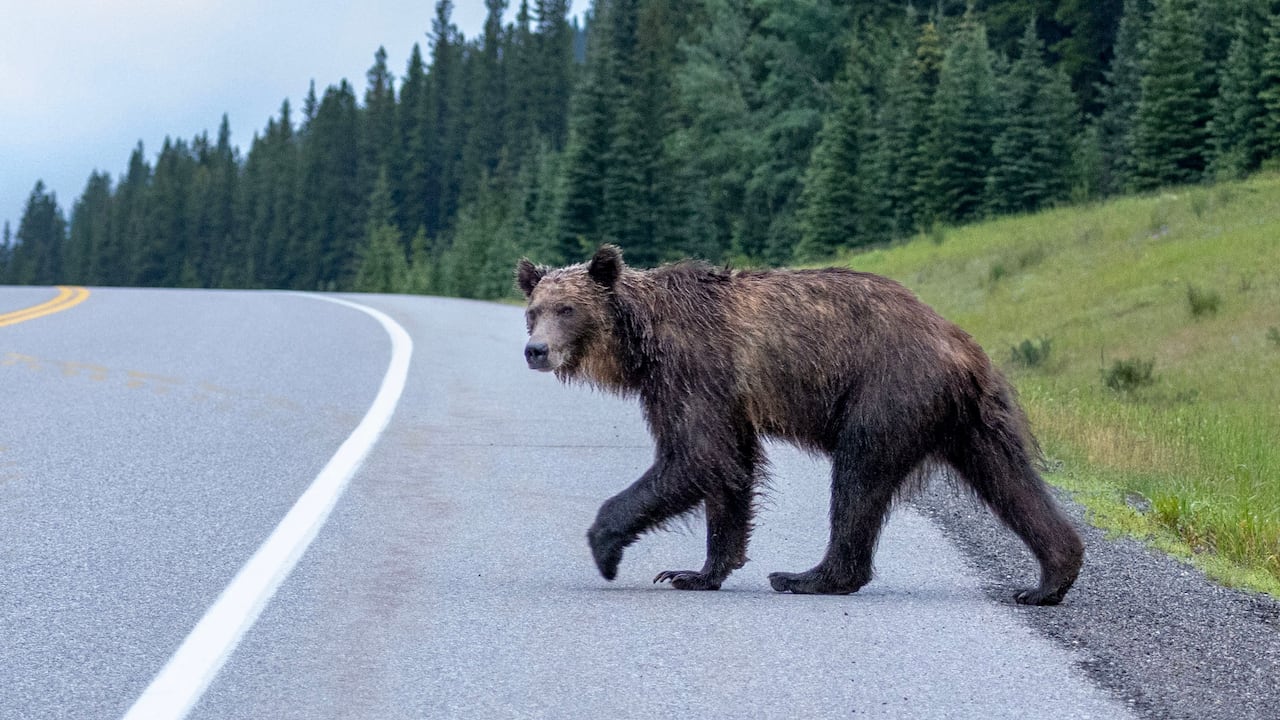 A file photo of a grizzly bear crossing Highway 40 in Kananaskis Country. (Amir Said/CBC)
Hunting grizzlies has been banned in Alberta since 2006, with the exception of harvesting by Indigenous hunters for subsistence or cultural purposes. Grizzly bears have been a threatened species in Alberta since 2010.
Through the province’s Report A Poacher program, a tipster who provides information leading to charges being laid could be eligible for a cash reward.
“Poaching and other illegal hunting activities not only affect Alberta’s ecosystems, but law-abiding hunters as well,” the provincial Ministry of Public Safety and Emergency Services said in a statement.
“These activities undermine conservation efforts and threaten wildlife population management, leading to more restrictive legislation that impacts lawful hunters.”
Poaching among leading causes of grizzly mortality in Alberta
The provincial government keeps track of grizzly bear deaths in Alberta. The latest publicly available data, covering 2013 to 2022, suggests 58 grizzly bears were illegally poached, making up about a quarter of grizzly deaths recorded during that time.
Darío Fernández-Bellon, who leads fRI Research’s grizzly bear monitoring team in Alberta, says the actual numbers could be higher.
“When poaching happens, people either cover up their traces, or it’s done in remote areas, or people remove the body of the bear,” he said.
“So unless there’s another means of finding it, there could be lots of poaching that goes unrecorded.”
The leading cause of grizzly bear mortality from 2013 to 2022 was vehicle collisions, with 66 reported during that time.
Fernández-Bellon says his team’s research has found a direct link between road density and human-caused grizzly bear mortality.
“The fact is that roads that go into grizzly bear habitats actually provide access to grizzly bear habitats and increase the risk of poaching,” he said. “So basically, where you have higher densities of roads, there’s higher risk of poaching to grizzly bears.”
He says fRI Research’s continuous monitoring and population research is intended to help quantify poaching and provide the evidence needed to assess the status of the grizzly population.