
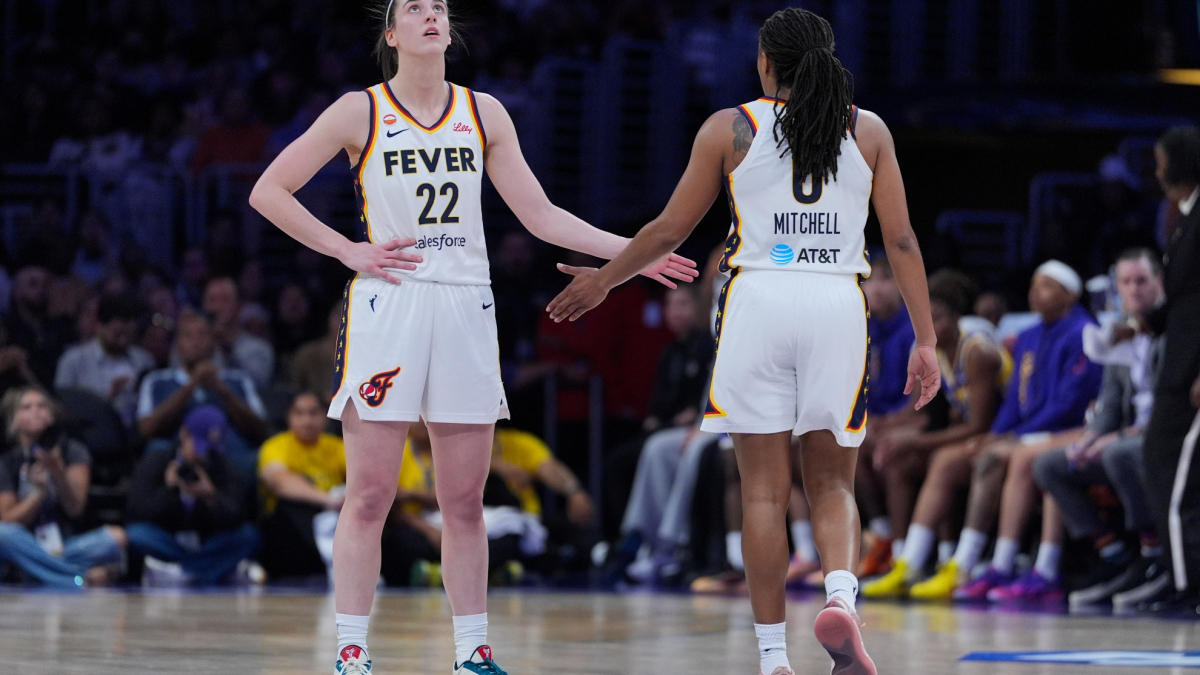
The conversation surrounding Caitlin Clark and online harassment has taken another turn after former WNBA players weighed in on whether the Indiana Fever star should publicly condemn the abuse directed at Phoenix Mercury forward Alyssa Thomas.
The debate follows the physical altercation between Clark and Thomas during the Fever’s recent game against the Mercury, a contest that quickly became overshadowed by social media backlash.
Sophie Cunningham faces fine after pointing finger in Fever–Mercury altercation
Thomas faced a barrage of abusive messages and threats after being involved in the controversial play, prompting calls from some fans for Clark to publicly ask her supporters to stop the harassment.
However, former WNBA standout Angel McCoughtry believes that expectation is misplaced.
Speaking on the Just Women’s Sports podcast alongside broadcaster Ros Gold-Onwude, McCoughtry argued that the responsibility belongs to the league and team officials rather than Clark herself.
“It’s not Caitlin’s job,” McCoughtry said. “It is the league’s job and the people around Phoenix’s job.”
The discussion comes after Fever head coach Stephanie White strongly condemned both the physical play involving Clark and the online abuse that followed.
White made it clear that while she disagreed with how the incident unfolded on the court, threats and harassment directed toward any player have no place in basketball.
Her comments have been widely praised for attempting to separate competitive play from unacceptable behavior on social media.
Former players urge stronger action from the WNBA
Although McCoughtry believes Clark is under no obligation to issue a statement, she admitted she would have handled the situation differently if she were in Clark’s position.
“If it was me, if I’m Caitlin, I would make a statement: ‘Hey guys, we moved past it. We moved along. It was a tough play, but we’re over it. We’re keeping it moving,’” she said.
Gold-Onwude shared a similar perspective. She said Clark should not be expected to carry the burden of addressing the issue but acknowledged that many fans will inevitably judge her decision to remain silent.
She added that she personally would have appreciated hearing Clark publicly discourage the abuse, even if she does not believe it is required.
The discussion also shifted toward WNBA leadership, with both former players expressing disappointment over what they viewed as a delayed response from league officials.
Thomas herself previously criticized WNBA commissioner Cathy Engelbert after receiving online threats, suggesting the league was too slow to respond publicly to the abuse directed at her and her teammates.
McCoughtry echoed those concerns.
“I’m very disappointed that this wasn’t done from the league first,” she said.
Gold-Onwude agreed, arguing that the WNBA has a broader responsibility to protect its players from targeted harassment.
“I think the league has an obligation to do that for its players,” she said. “I’m especially disappointed because this is not the first time.”
Her comments referenced criticism Engelbert received during the 2024 season, when online hostility surrounding the rivalry between Clark and Angel Reese escalated.
At the time, many observers felt the league failed to adequately address the abuse before Engelbert later apologized for remarks that appeared to frame the heightened attention as beneficial for business.
The latest controversy has once again highlighted the difficult balance between growing fan engagement and ensuring player safety.
Clark, meanwhile, has remained focused on basketball while also dealing with injury concerns.
The Fever guard recently exited a game against Phoenix because of a recurring back issue, leaving questions about her availability moving forward.
Despite the injury setback, she continues to be one of the league’s biggest attractions, drawing record television audiences, sold-out arenas and unprecedented social media attention.
That visibility has also amplified scrutiny surrounding virtually every incident involving Clark, whether on the court or online.
As the WNBA continues to grow in popularity, former players believe the league, not individual athletes, must take the lead in establishing clear standards against online harassment.
While many fans would welcome a statement from Clark, voices such as McCoughtry and Gold-Onwude argue that protecting players should ultimately be the responsibility of league leadership, not one of its biggest stars.