
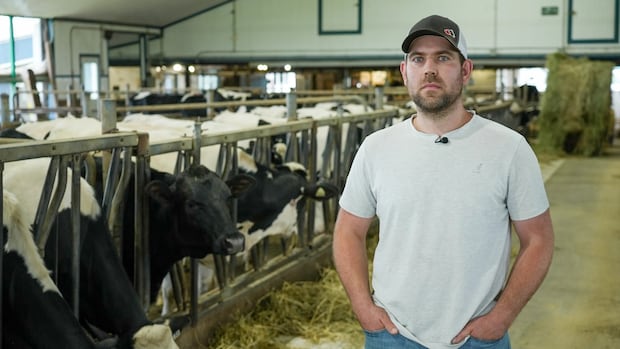
Chris Waddell’s grandfather used to drive cows down what’s now Mitch Owens Road in Ottawa when it was nothing more than a gravel farm route.
If he saw anyone along the way, they were his neighbours, ready to lend a hand to get the cows to pasture.
“It’s changed so much now that it’s not even safe to drive a tractor on the road,” Waddell said.
That point was driven home on June 23, when a short routine trip down Mitch Owens Road almost cost Waddell his life.
He started that day the same way he does every one.
“Rolled out of bed, got my barn clothes on, jumped in the tractor, drove down the lane here as I do every morning to head over to our dairy farm to milk the cows,” he said.
His farm is less than a kilometre away from his family’s Ivandale Farm. He started up the tractor at about 4:30 a.m., dragging a discbine used for cutting hay. He turned on the lights and took a left onto Mitch Owens.
“I made it just over halfway and I could see the transport coming behind me,” he said.
That’s nothing unusual. Truck traffic has gotten heavier in recent years. But this time, Waddell realized all of a sudden, the transport wasn’t pulling over to pass — and it wasn’t slowing down.
He braced for impact — and then felt it. The crash was so loud that the surveillance camera back at his farm picked up the sound, hundreds of metres away.
His tractor slid sideways across the road. He felt his back spasming. He had a large gash across the top of his head. But when he was able to get out the back window and walk, he saw the scale of the damage.
His discbine was a ball of scrap, and the impact had knocked the axle off his tractor.
The transport driver was standing there, he recalls, seemingly unharmed. Waddell said he didn’t see any skid marks, or any sign the transport had tried to stop.
Ottawa police confirmed that the driver of the truck, a man in his 30s, was charged with careless driving under the Highway Traffic Act in connection with the incident.
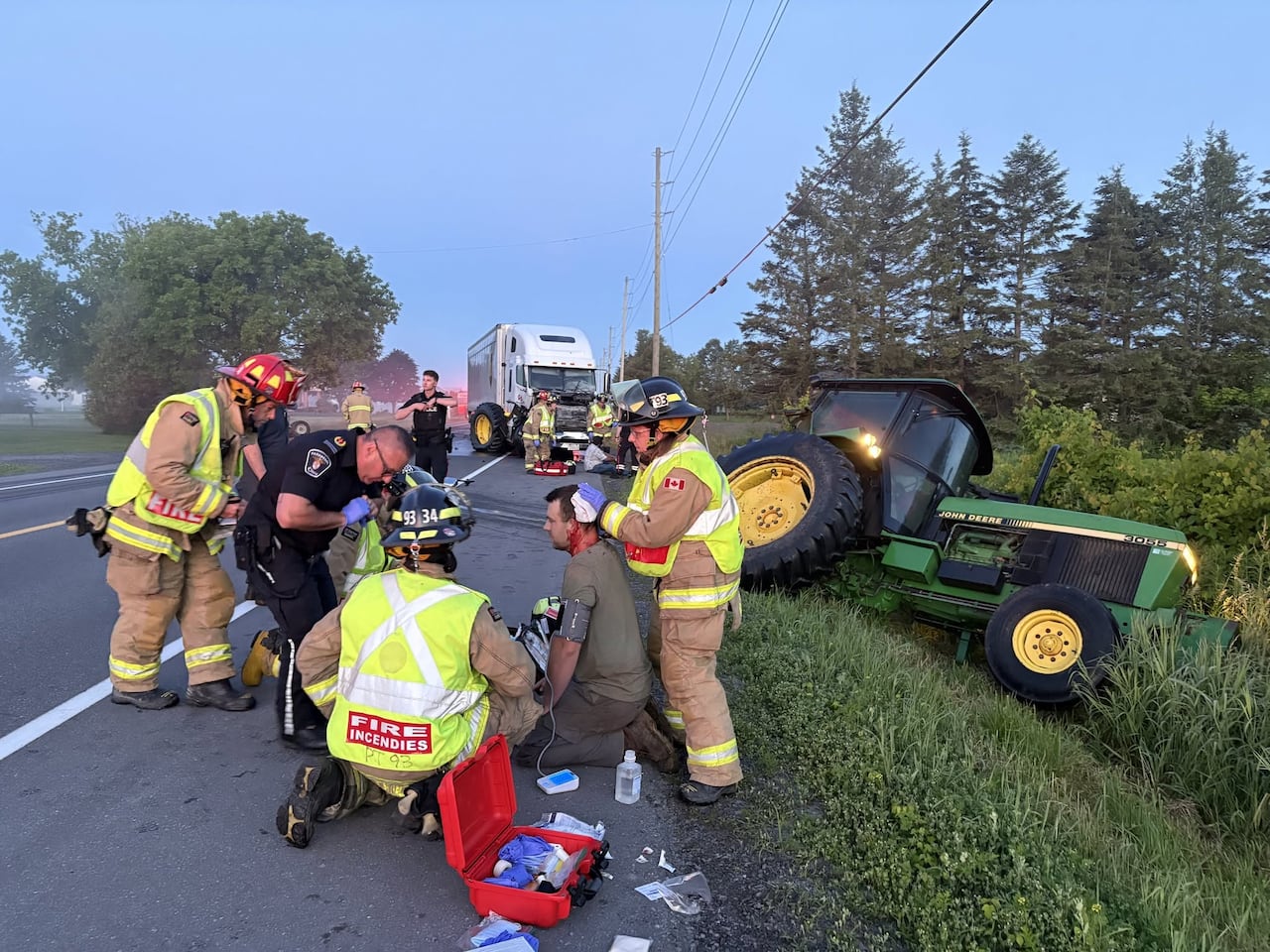 Emergency responders treat Craig Waddell after his tractor was struck by a semi-trailer on the morning of June 23. (Submitted by the Waddell family)
Waddell said the collision should be a wake-up call about the pressures facing rural roads in Ottawa — and the need for drivers to do a better job sharing the road safely with farmers.
“It feels like our rural road has been hijacked as a highway,” he said.
Close calls almost every day
His family, which has been farming along Mitch Owens Road for six generations, has seen more and more examples of dangerous driving.
“It’s almost every day that when we go on the road, we have a close call,” Waddell said.
Often, it’s drivers in a hurry looking to pass slow-moving farm equipment, like the transport driver who tried to get ahead of Waddell’s father and just missed a head-on collision. That happened the day before his crash, he said.
His father caught another risky pass on his tractor’s dash cam, as he was bringing a newborn calf back to the dairy farm.
“The van didn’t want to have the patience to wait and went to go overtake my father, and there was an oncoming vehicle,” he said.
The van just managed to swerve back in time as the oncoming vehicle moved to the shoulder. The van missed a cyclist who was traveling on the right shoulder.
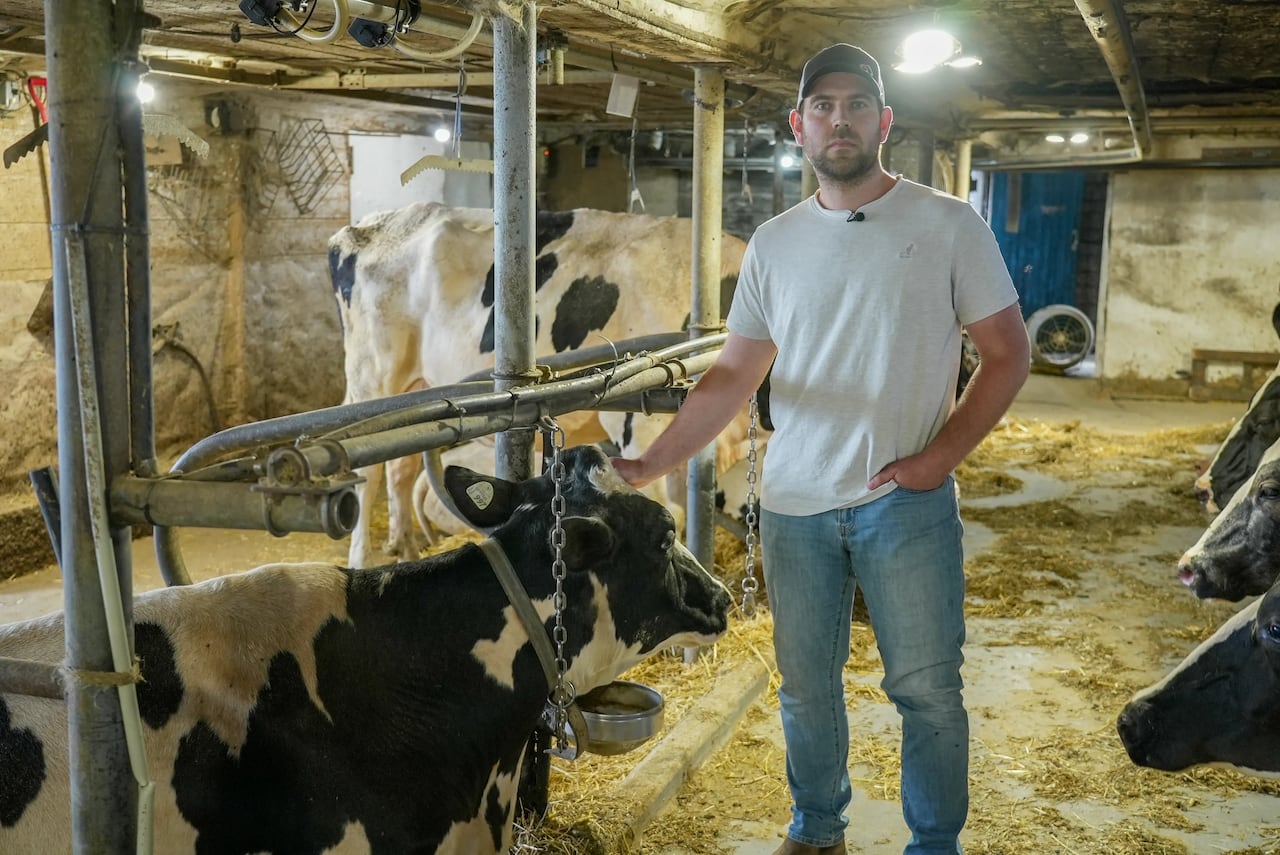 Craig Waddell with Periwinkle, the cow his father was transporting when overtaken by a passing vehicle. (Mathieu Deroy/CBC)
The speed limit on that stretch of Mitch Owens Road is 80 km/h, but Waddell says he often sees drivers going 100 km/h and sometimes much more.
“It’s exhausting the amount of close calls we had,” he said. “We knew at some point something was going to happen.”
Councillor calls for patience
Osgoode Coun. Isabelle Skalski said she hears about a lot of examples of speeding and unsafe passing on Mitch Owens Road, but she added that it’s hardly unique to one corridor.
“I think we’re seeing it across all the rural roads, to be honest,” she said. “There’s a lot of new traffic and people are feeling it and they’re seeing the sharing of the roads with trucks and they are noticing the volume increases across all of rural Ottawa.”
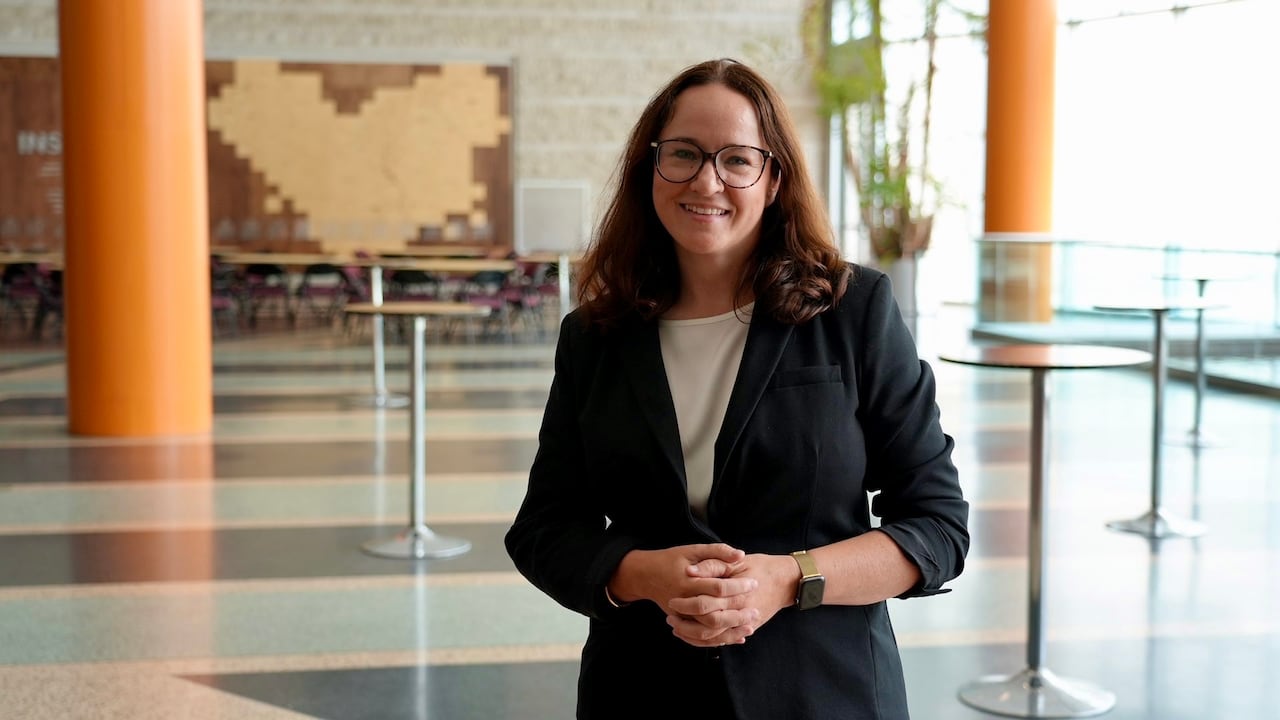 Osgoode Coun. Isabelle Skalski poses for a photo at Ottawa City Hall on June 18, 2025. (Francis Ferland/CBC)
Skalski said she also hears concerns about the lack of signalized intersections on the road, making for dangerous left turns. She said the city is doing a full corridor assessment of every intersection along Mitch Owens Road and is working on a signal for the crossing with Boundary Road.
“At the end of the day, that’s where I hear the biggest issues and I think we need to focus in on those sorts of traffic control measures,” she said.
But she said driver attitudes also have to change to be more respectful of farm equipment.
“Obviously farm vehicles move slower and people need to be more patient, need to give them space,” she said.
“The reality is that people are rushing and not driving safely on these roads and sharing the roads the way they should be.”
Search for solutions
Waddell said he’s seen more and more traffic since the Amazon warehouse opened at Boundary Road near the 417, just past the eastern end of Mitch Owens.
Mitch Owens is currently a full-load truck route. It heads straight to Bridge Street, a key crossing over the Rideau River in Manotick, where residents have pushed the city to redraw the truck route network to spare the village so much traffic.
The city has launched a south end truck route study that could lead to potential changes, but Waddell is hesitant to see the problem simply moved to another road to trouble other farmers.
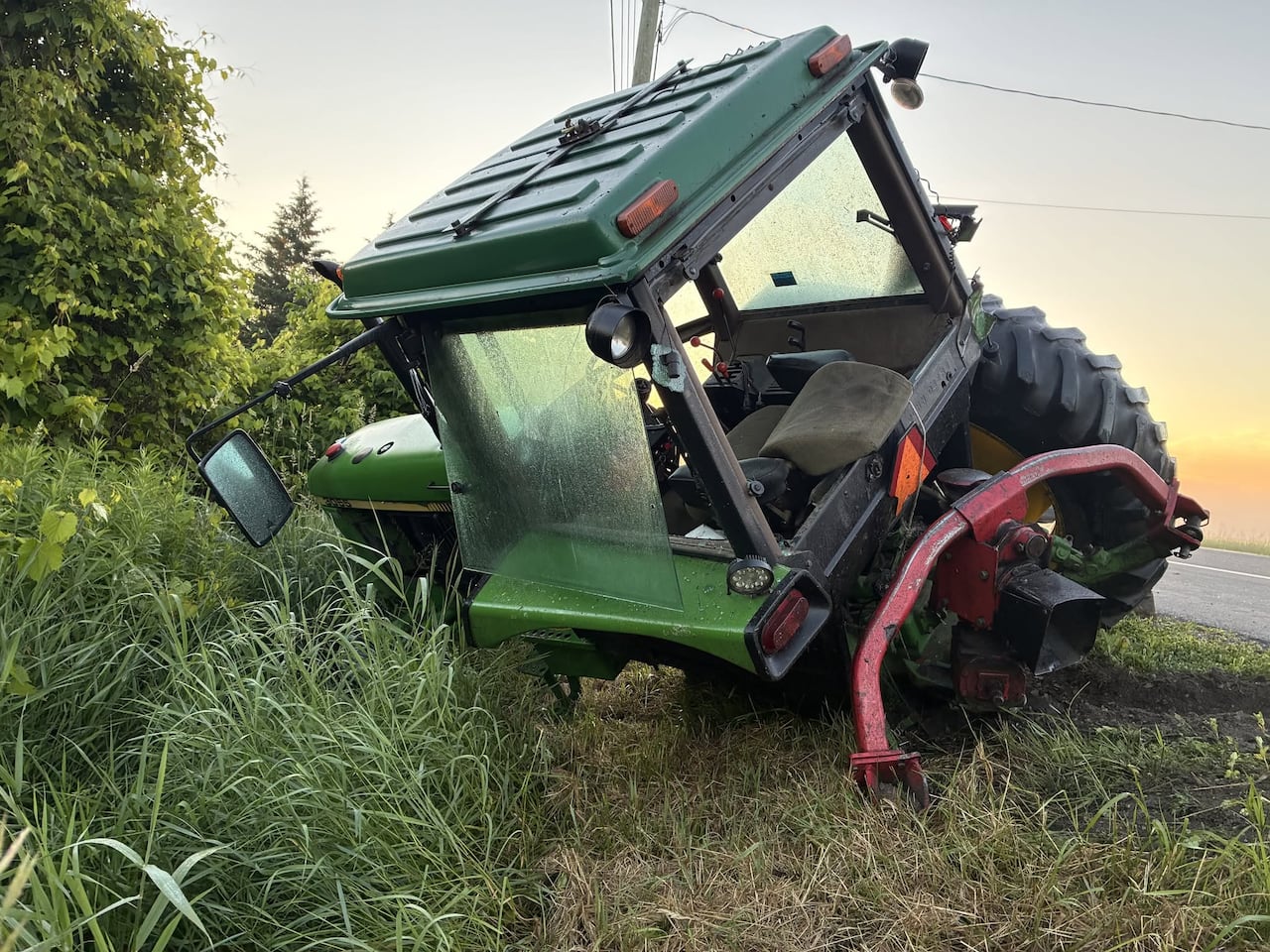 Craig Waddell’s tractor after the collision. (Waddell family)
He’s also skeptical about the notion of a ring road that could absorb and divert the traffic — but only at the cost of cutting into agricultural land.
“What rural families and family farms are going to be the victims of that?” he asked.
Like Skalski, he thinks part of the solution is working to change driver mindsets, reminding them that rural roads aren’t expressways, but part of an agricultural way of life.
“I think there’s a lot of people that are so removed from agriculture, because we’re at a point now where you have to go a generation or two back before anyone has a connection to having family on the farm,” he said.
“So they don’t have a cognizance, a recollection of what to do around large equipment like that. That we move slower, that we need extra space.”
He hopes to see that message sink in before he’s ready to pass his farm onto the seventh generation of Waddells.
“Farming already inherently is dangerous, but we didn’t think that one of the most dangerous parts of it would be our road.”