

Listen to this article
Estimated 5 minutes
The audio version of this article is generated by AI-based technology. Mispronunciations can occur. We are working with our partners to continually review and improve the results.
The queen of pop Madonna is back with a new album.
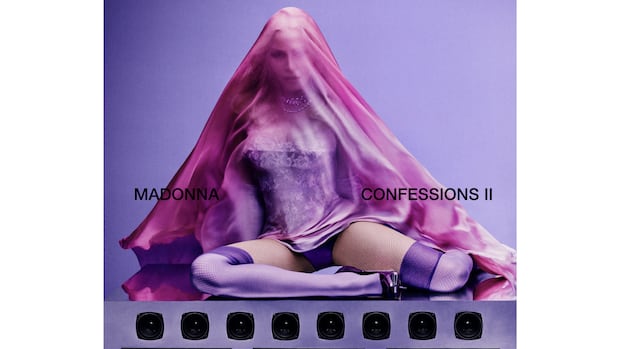
Madonna’s 15th record is called Confessions II — and if that title sounds familiar, that’s because it’s a sequel to her hit 2005 album, Confessions on a Dance Floor.
Today on Commotion, music journalist Emilie Hanskamp, broadcaster Garvia Bailey and culture writer Mel Woods join guest host Radheyan Simonpillai to discuss why this sequel might be Madonna’s best new album in years.
We’ve included some highlights below, edited for length and clarity. For the full discussion about Canada joining the Eurovision song contest and Antidiva: The Carole Pope Confessions, listen and follow Commotion with Elamin Abdelmahmoud on your favourite podcast player.
WATCH | Today’s episode on YouTube:
Radheyan: Before we dig into the new record, I think we should of course remind everyone what made [Confessions on a Dance Floor] so special…. Mel, can you talk to me about this album’s place in Madonna lore, and whether it warrants a sequel more than 20 years later?
Mel: I mean, first of all … you can’t listen to Hung Up and not just be bopping back and forth…. I’m going to admit something: when the original Confessions came out, I was 11 years old. I was not at the club, so my experience with Confessions came later in life, unfortunately. I’m of the generation that was largely introduced to Madonna through Glee, which is dark, but true. But I think the original Confessions, as a queer person especially, is like the quintessential album you put on at the party, because it is a complete mix-through.
And the new Confessions is like this as well, and I think it’s one of its greatest strengths — is that the songs blend together in a really amazing way because it’s creating this experience, this environment, and it’s all about this idea of coming together on the dance floor, and letting loose, and having that collective joy and spirit. And when we think of what we need now in the culture, in the summer of 2026 … I really want to come together on the dance floor and dance with a bunch of queer people…. That is what Madonna has given us. And it is a gift, and it is a treasure, and I’m holding it just as tightly to my chest as I hold the original for that reason.
Radheyan: It’s giving MuchDance ’95, that description that you just gave me. I love that. Emilie, let’s actually dare to put ourselves in Madonna’s shoes for a moment. Why does making a Confession sequel make sense for her at this point in her career?
Emilie: I mean, this is Madonna as a memoirist. This is Madonna as a storyteller. Madonna at this juncture, at this specific point in her life, is very ready to tell her story. And there’s context to that. I mean her last album, you know, was in 2019 and was not the biggest success, let’s just say. She’s had a really tough few years. She had a real health crisis, a death scare. She lost her brother. She lost her stepmother. She was experiencing a lot of grief and loss. Then she tried— you know, wrote a script for her biopic, and that has been shelved. So she has this story that she was so hungry to tell, and it didn’t work out on film. So she said, “I need to go back to my roots,” and the roots are — you know, the last massive success she had was this album, Confessions.
And yes, it is a return to form in so many ways. But I also find it to be incredibly reflective, deeper in a sense of the themes that she’s investigating and kind of grappling with across this album. Yes, you’re sweaty on the dance floor, but she’s talking about her trauma, her past relationships, her brother, her loss, her relationship with her daughter. So I feel not only, to Mel’s point, is this actually exactly what we need as a culture — sorry, Charli, the dance floor is not dead; it’s actually the lifeblood that we need right now — but, it’s also perfect for Madonna and her arc and her story, and kind of taking that agency of what her story is and owning her legacy that she’s starting to do recently. And she’s doing that so beautifully on this album. I just want to say this album is incredible. Like, I was so impressed, really blown away, and I feel so happy for her. She deserves this, and we deserve this.
You can listen to the full discussion from today’s show on CBC Listen or on our podcast, Commotion with Elamin Abdelmahmoud, available wherever you get your podcasts.
Panel produced by Stuart Berman.