

Listen to this article
Estimated 3 minutes
The audio version of this article is generated by AI-based technology. Mispronunciations can occur. We are working with our partners to continually review and improve the results.
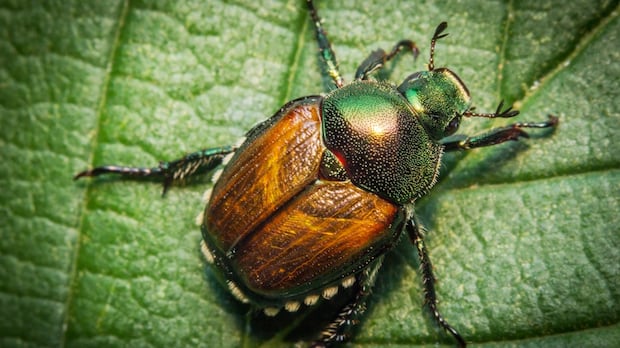
The downtown National War Memorial and parts of Bowring Park will close temporarily as part of efforts to tackle an invasive pest, the Japanese beetle.
The closure within Bowring Park is slated for Monday.
The area from the main west gate entrance on Park Road to the Jamie Morry Sports Field will be closed to accommodate treatment for the beetle.
However, the area that spans from the duck pond entrance on Waterford Bridge road to the playground area will be open, the city of St. John’s said in a media release on Friday afternoon.
“The splash pad, pool, playground, and all recreational programming will continue to operate as usual,” the city said, adding that closures will be marked by signage and barricades.
Similarly, the National War Memorial on Water Street will be off limits Monday, the provincial government says, due to spraying for the beetle.
“A treatment program has been developed that will include the use of a larvicide to target these pests. This substance is registered by Health Canada and approved for use in Newfoundland and Labrador under the Environment Protection Act to control pests,” the provincial government said in a news release Friday afternoon.
The closures at both sites are weather-permitting and will last a day.
The treatments are happening as part of a broader effort to keep the invasive beetle from gaining ground. Spraying is taking place at sites in the downtown and other parts of the St. John’s-metro area identified as areas of concern by the Canada Food Inspection Agency because of beetle sightings.
The provincial government says the species, which has no known predators and can feed on more than 300 kinds of plants, is a threat to the province’s agriculture and forestry industries.
“Japanese beetle can spread quickly, especially via wind, or through transportation of soil and plants. If not controlled, this insect poses a serious threat to agriculture, horticulture, landscaping and forestry industries, and may result in damage to lawns, sports fields and golf courses,” the provincial government said.
Download our free CBC News app to sign up for push alerts for CBC Newfoundland and Labrador. Sign up for our daily headlines newsletter here. Click here to visit our landing page.