

When Sunna Van Kampen became a father, he started turning his attention to children’s diets and was shocked at what he found. “Almost 60 per cent of the UK diet comes from ultra processed foods (UPF), but when we look at kids’ lunchboxes, this rises to 82 per cent,” he says.
His social media posts, where he forensically measures and compares UPF and sugar content in supermarket foods, are now watched by millions. “Parents are duped into buying unhealthy foods because checking labels takes time – and can be impractical with children in tow,” says Van Kampen, the author of The Good, the Bad and the Healthy, host of the podcast The Unprocessed Truth, and founder of vitamin brand Tonic.
He is concerned by the lack of nutrition in the average UK diet, which some dieticians believe is contributing to the UK’s short children – five-year-olds are up to seven centimetres shorter than children of the same age living in mainland Europe.
Shorts
Scroll to previous short
Scroll to next short

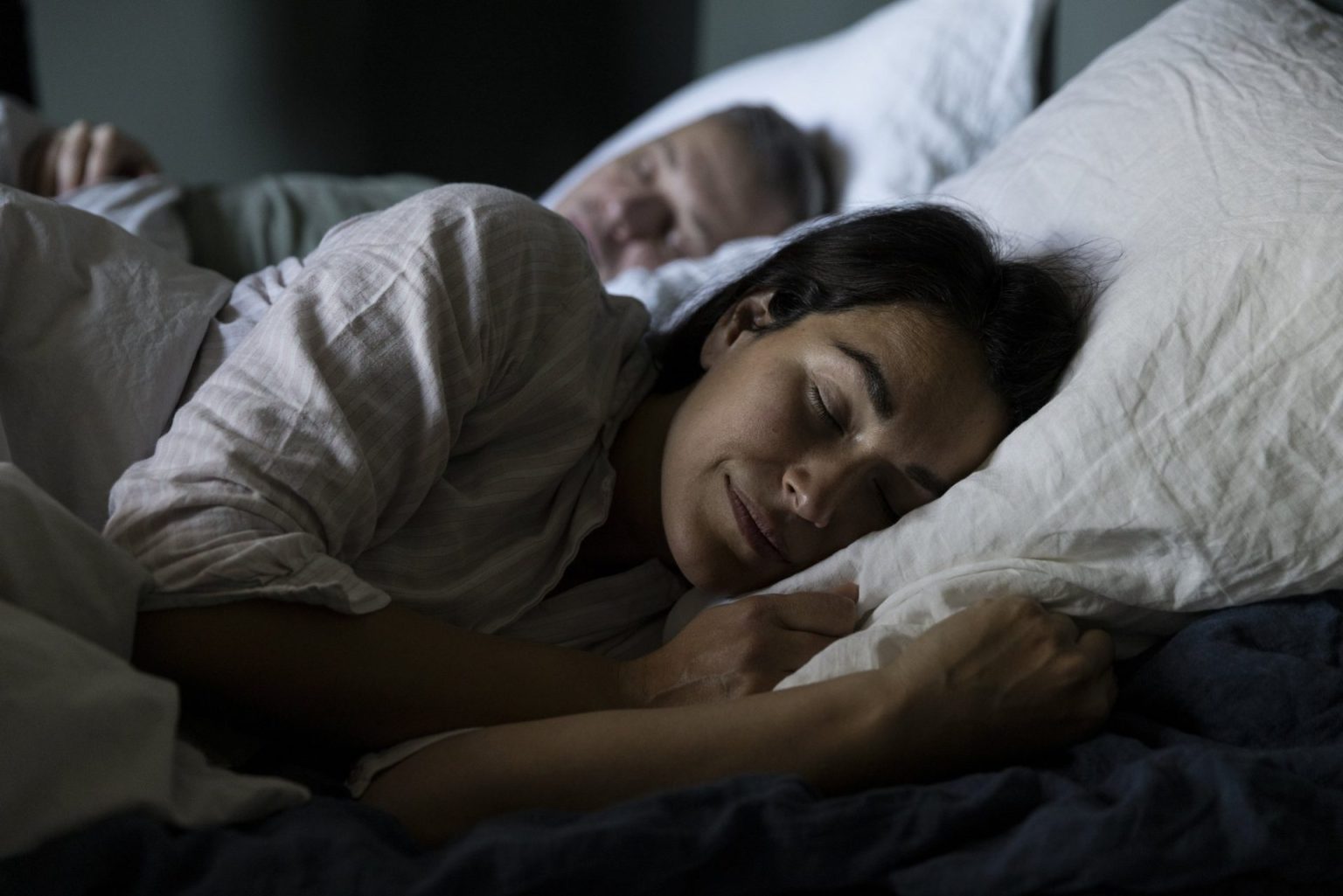
Your sleep has a huge impact on your heart health
How sleep and your heart
health are linked

Adults who regularly sleep fewer than seven hours are at increased risk of high blood pressure, obesity, heart attack and diabetes.
The risk of coronary artery disease is 45 per cent higher in adults with short sleep durations at night.

LIFESTYLE
4 min read
The bedtime habits that reduce risk
 Sleep tourism in hotel. Exhausted woman sleeps sweetly in bed in the morning – stock photo. (Photo: Getty)
Consistency
Keep daytime naps to less than 20 minutes and aim for seven to eight hours sleep per night.
Wind down
A reasonable 20-30 minute bedtime routine can include reading, light stretching, and meditation.
 A mature man meditates in the last sun rays coming into his bedroom – stock photo. (Photo: Getty)
 Caption: Close-up view of female jogger tying laces of her sport shoes before running exercise routine. Motivation, healthy lifestyle and fitness concept.
Photographer: Xavier Lorenzo
Provider: Getty Images
Source: Moment RF
Time your exercise
Vigorous exercise within three hours of bedtime can cause insomnia.
The bedroom environment
 Pensive young Asian woman sitting on bed writing on journal in cozy bedroom. Copy space. – stock photo. (Photo: Getty)
Sleeping in a bedroom with bright overhead light has been associated with a higher risk of major cardiovascular events, including heart attack (47 per cent higher risk), stroke (28 per cent) and heart failure.
Darken the room with blackout blinds or an eye mask, avoid blue light and leave your mobile phone outside your bedroom.
The bedtime habits that reduce risk
Food and drink
Alcohol, nicotine, caffeine and large evening meals can all disrupt sleep quality.
 One theory is that alcohol and drugs can hijack the brain’s pathways (Photo: Guillermo Spelucin/Getty Images)
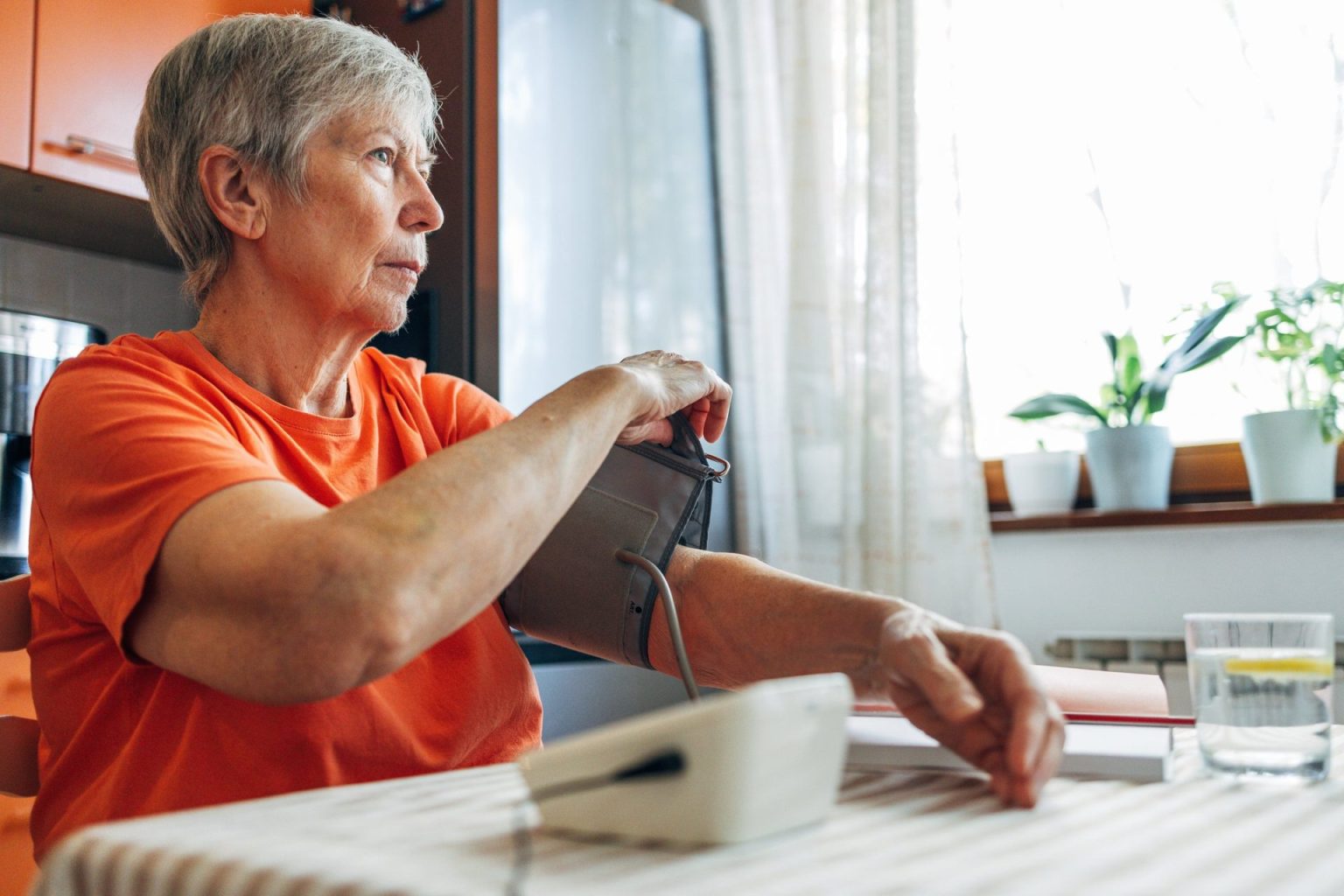
Know your numbers
If your blood pressure at bedtime is consistently high, consider discussing medication with your GP.
Beware of snoring
Sleep-disordered breathing is linked with cardiovascular conditions, so it could be time for a GP evaluation.
 Separate bedrooms is not the first step on the road to dissolution; it’s the route to joint survival (Photo: LordHenriVoton/E+/Miljan Lakic/Getty)
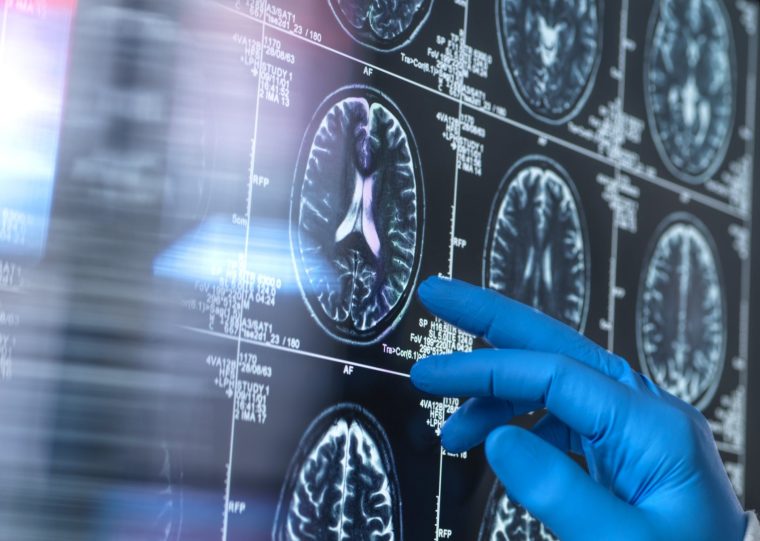 Alzheimer’s can be seen on brain scans (Photo: Tek Image/Getty)
HEALTH
Reflecting on the early signs of dementia
Three families reflect on the early signs of the illness, which affected their parents.
They include the things they missed or dismissed, what they’d do differently and what they’d want other people in the same position to know.
Robert and his mother Joyce
She fell for a scam
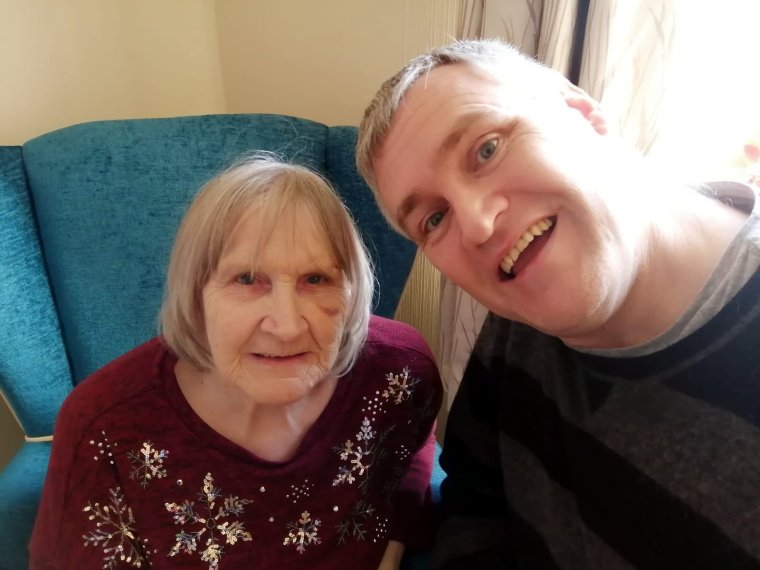 Robert’s mother Joyce spent her last six years in a care home
One of the first incidents that rang alarm bells for Robert was his mum falling victim to a suspected scam from someone selling mattresses door-to-door.
She also started to struggle with cooking and making her special dishes she’d been making for decades without a problem.

LIFESTYLE
5 min read
Did he tell his mother?
We [had] just sort of played along with everything. But on one particularly bad day, I blurted it out over the phone, ‘Because you’ve got dementia, mum!’ She threatened to kill herself, which was very scary. Maybe it’s something I should have explained properly to her from the get-go.
JOYCE WAS DIAGNOSED WITH ALZHEIMER’S IN HER EARLY SEVENTIES
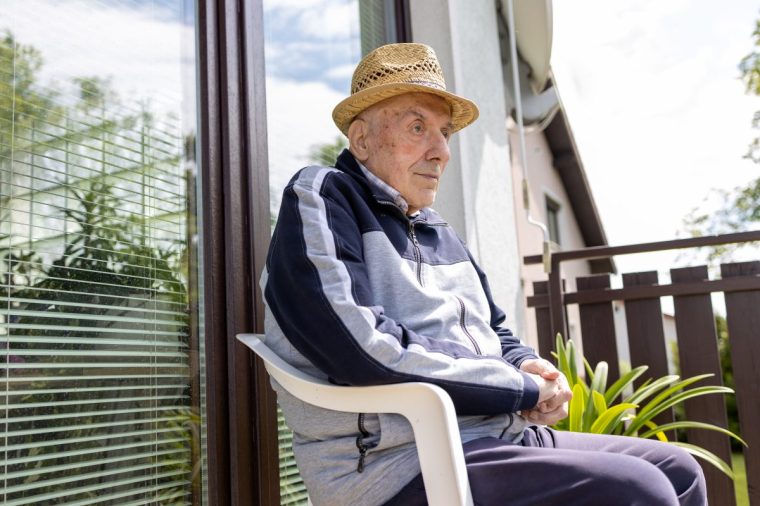 Old man with dementia enjoys sunny weather – stock photo. (Photo: Getty)

Rosie became a carer
in her early thirties
I think we missed some of the really early subtle signs.
Rosie’s mother was diagnosed with Young Onset Alzheimer’s Disease at 58 but some symptoms, like brain fog, were put down to the menopause.
She had become more forgetful, and was repeating herself, but as she had always “been scatty” it was dismissed.
She became fixated
It was on strange things like going to the same buffet.
Chloe was just 14 when her mum, Sarah, was diagnosed with young onset frontotemporal dementia, a rare form of the disease.
Another time Sarah, who was diagnosed in her forties, forgot how to boil an egg.
On Saturdays, when she’d usually go shopping, she’d go out and come straight back home, almost like she was forgetting
what she was going out for.
Unused or unwanted subscriptions cost consumers £1.6bn.
Writer Sadhbh O’Sullivan looked into her own forgotten subscriptions when she became a first-time buyer, and realised how much she was wasting on things she wasn’t using.
 Are you good at managing money (Photo:
Peter Dazeley/Getty/The Image Bank RF)
The hidden spends that go unnoticed
I’d long considered myself to be quite a reasonable spender.
But the hidden costs across her bank accounts, like free trials that hadn’t been cancelled and memberships for abandoned services, proved otherwise.
It was full of small amounts, £2.99 here, £4.50 there. These small amounts added up.
The ghost subscriptions
Sadhbh isn’t alone.
19%
According to a Nationwide survey almost one in five Brits don’t use every platform they pay for.
The bank suggests they could save as much as £400 a year by ditching them.
4.7 million
National Trading Standards’ 2025 research found 4.7 million people were paying for subscriptions they didn’t know they’d signed up for.
In 2024, a government report found unused and unwanted subscriptions cost consumers up to £1.6bn a year.
How to deal with the subscriptions
Hunt them down
Banking apps usually list your ‘subscriptions’ separately from direct debits and standing orders so you can easily spot what you’re shelling out on.
 Pensioners have some flexibility over the timing and payment of their state pension
(juststock/Getty Images/iStockphoto/ NIPITPHON)
 Edge will give customers cashback on debit card and direct debit spending
Check everything
You can be debited through credit cards, E-payment services, your mobile phone bill, Apple Pay or Google Pay.
How to deal with subscriptions
 Dating apps have failed the black community, says Amber (Photo: Morsa Images/Getty)
Be honest
Don’t vow to use a subscription you’re not going to, even if you
have good intentions.
Look over 13 months
Many businesses have changed from monthly to annual payments so look further back.
 Changes are due to kick in on everything from inheritance tax to filling in self-assessment forms (Photo: Getty).
 Customers struggling with debts are highly likely to be in vulnerable circumstances, regulators warn
(Photo: Martin Prescott/Getty)
Future proof
Make sure to track any subscriptions you have kept so you can cancel them, if need be, in future.
Don’t be afraid of phone calls
If companies don’t let you cancel online, don’t fear the customer service line.
With TV and broadband, call the new customer number as it’s often answered more quickly.
If you’re happy with the service, but not the price, speak to a real person that may offer a better deal.
Look for a phone number and press the ‘thinking of leaving us’ option. It’s usually a fast track to a team with authority to offer bigger discounts.
Donations to charity have increased dramatically
But staff say many people treat their shops like a tip.
Here they share the most useful donations they get, and the
ones that drive them mad.
 A rail of clothes in a second hand vintage charity shop – stock photo. (Photo: Getty)
People won’t buy the current donations
The quality of donations over the last year has diminished.
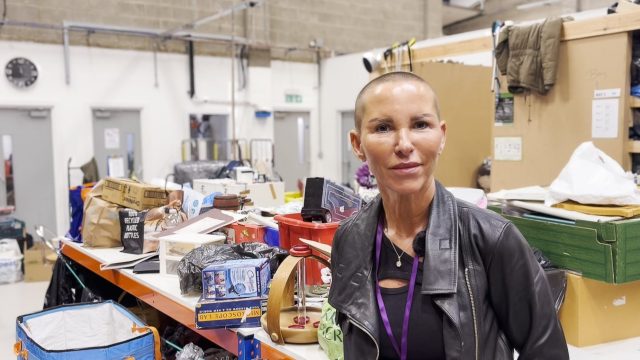
Claire Stockman, head of retail for St
Luke’s Hospice [pictured], says many donations include used items from fast fashion like Boohoo and Primark, which they cannot sell for more than £2, if at all.
What the workers see
60%
of what comes into St Luke’s Hospice is unsellable, Stockman says.
She adds its soiled, damaged beyond
repair or smelly.
Vinted
Harriet, a volunteer at Crisis in Dalston,
says people bring in clothes that are dirty and stained – things that they cannot sell
on Vinted.
She also sees dirty kitchenware and technology that no longer works.
It’s not all bad
 Two young women shopping in a vintage charity shop – stock photo. (Photo: Getty)
Harriet says they still get their
fair share of designer items.
She’s seen a pair of Louboutins
sell for around £400.
People will buy high-end items
even if they’re a little worn.

First Person
5 min read
The best donations
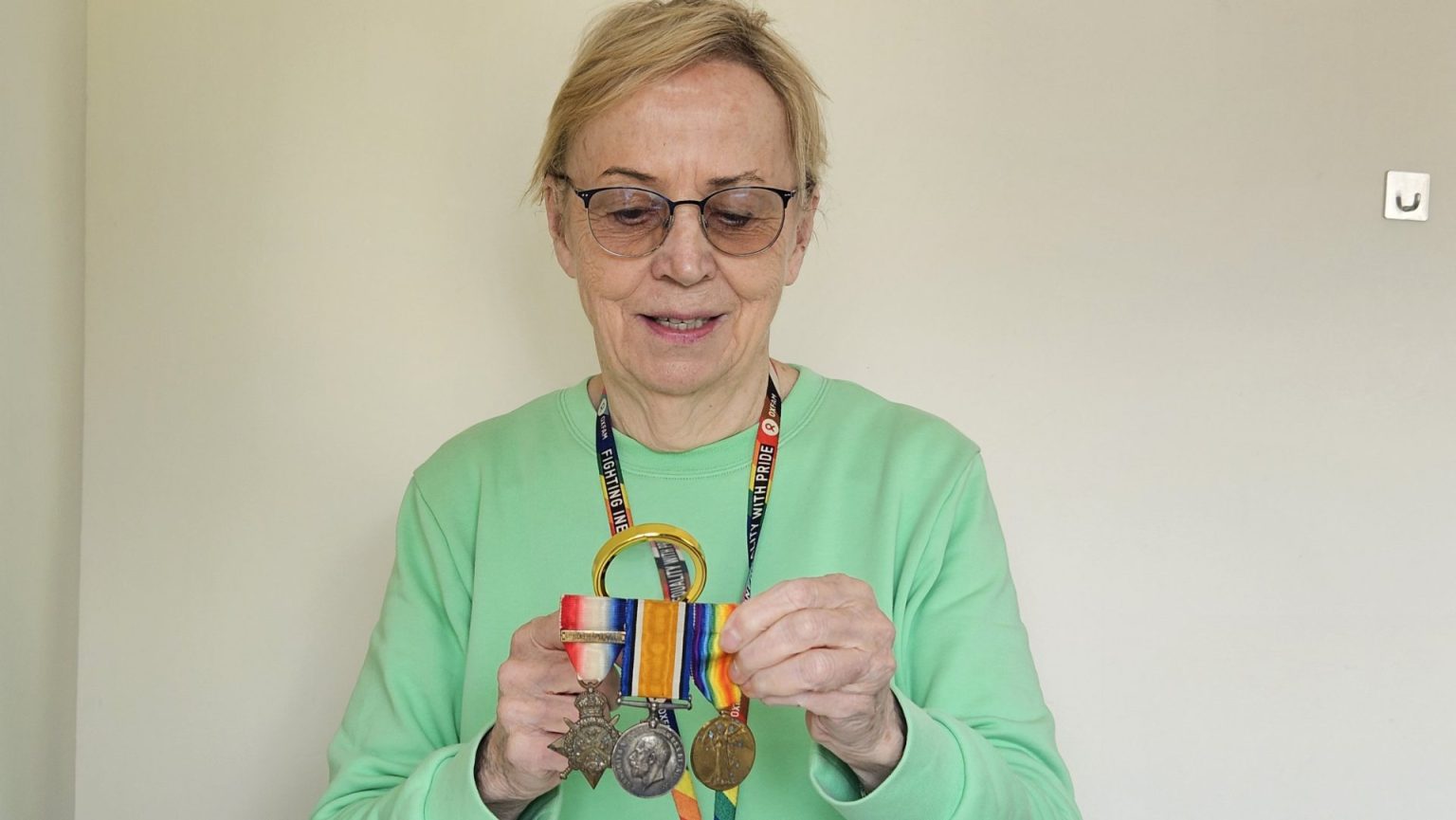
There was a box donated after someone’s family had passed and in it were all these medals. I researched them and the whole collection ended up going for £2,340…
JANE THURNELL-READ, VOLUNTEER AT
THE OXFAM GENERAL SHOP IN EXETER
What is a good donation?
 A young woman chooses clothes in a fashion store and reads the labels on things while shopping at the mall. A millennial shopaholic woman tries on clothes in a fashion boutique – stock photo. (Photo: Getty)
A good donation is anything new with tags on, anything that hasn’t been opened, or higher quality items.
Items that have been well looked after are more likely to sell and generate a better price for charity too.
Harriet adds that knick-knacks and wine glasses are surprise hits in her branch.
The feeling of dread that the weekend is over is all too familiar.
Here, psychologists, career consultants and sleep experts give their best advice on how
to beat the gloom that the
work week is looming…
 (Photo: Getty).
How to beat the Sunday scaries
Pave the way on Friday
Psychologist Maria-Teresa Daher-Cusack says to wrap up tasks and not to leave big or difficult things for Monday. And write a to-do list for the next week so you know what to expect when you return after the weekend.
 Young man practicing meditation in nature at sunrise – stock photo. (Photo: Getty)
 Working from home is being blamed by some councils for the rise in fraudulent ‘polygamous’ working (Photo: Moment RF/Getty)
Get outside early
Doctor Naheed Ali says getting out on a Sunday morning – not sleeping late – helps regulate the circadian rhythm that can become skewed over the weekend.
How to avoid Sunday scaries
On Sunday spend time away from technology to allow yourself a personal reset away from doom scrolling.
 Relaxing with dog on sofa – stock photo. (Photo: Getty)
Rebrand your Sunday evenings from a daunting time to relaxing. Career consultant Victoria McLean goes out for dinner or reads something unrelated to work.
She also doesn’t check her inbox on a Sunday night as it can begin the dread.
How to beat the Sunday scaries
Sleep tourism in hotel. Exhausted woman sleeps sweetly in bed in the morning – stock photo. (Photo: Getty)
Sleep well
Put yourself in the best position to rest by avoiding large meals, screens and caffeine.
Structure your week
If possible don’t stack your Mondays with high-pressure tasks.
 Caucasian mid adult patient writing a diary while recovering in the hospital ward – stock photo. (Photo: Getty)
 Cheerful aged woman, senior intern waving, saying goodbye to her young colleagues while leaving office after first day at work – stock photo. (Photo: Getty)
Find the fun daily
Don’t just save joyful things for the weekend. On lunch breaks, try to do something you enjoy.
 (Photo: Getty).
Sometimes, you
need to listen.
If the Sunday scaries are constant, listen to them. If every Sunday fills you with dread and nothing seems to quell it it’s worth asking if it’s the job, the culture or the career itself. No one should spend half their weekend bracing for impact… ” says Victoria McLean
The UK has one of the most stable electricity grids in the world.
But no country’s energy system is 100 per cent secure and large-scale blackouts, although rare, are possible.
Here’s how to prepare, and what could happen, if we do have a blackout.

The immediate effects
If the UK’s power went down tomorrow, these are the ways it is likely to impact you first.
You’d get stuck in lifts, wherever you are in the lift shaft.
Trains would be stopped as the signals depend on electricity.
Traffic lights would stop working on the roads – leading to congestion or crashes.
Contactless payments are likely to fail.
Your Wi-Fi at home would stop working and communication becomes difficult.
Fridges and freezers will turn off – unless you have a standalone generator – and food will spoil over time.
Hospitals and water treatment works have their own backup generators so will keep going until their supply runs out.
How transport would be affected
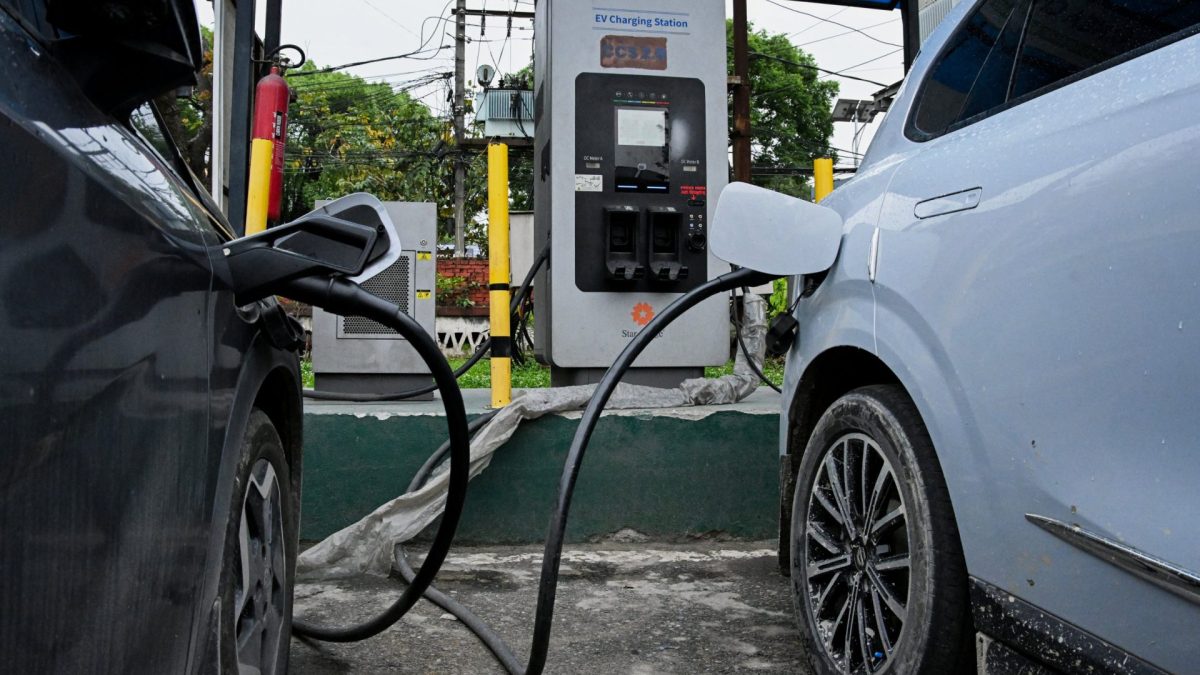 Caption: This photograph taken on April 29, 2026 shows people charging their electric vehicles at a charging station in Kathmandu. As global fuel markets reel from the Middle East war, motorists in Nepal are increasingly turning to electric vehicles, with high demand putting a strain on dealerships. (Photo by Prakash MATHEMA / AFP via Getty Images) / TO GO WITH ‘Nepal-Transport-Automobile-Energy’ FOCUS
Photographer: PRAKASH MATHEMA
Provider: AFP via Getty Images
Source: AFP
Copyright: AFP or licensors
For EV owners that are already on the road, Professor Keith Bell, who works in electricity planning, recommends that those with an EV with reasonable charge use it as a generator, like your own store of electricity.
In the case of the power system going down, petrol isn’t a totally safe option as queues at petrol stations could be huge and places are likely to run out of fuel.
The longer term effects
The longer the power takes to return the worse things are likely to get. In 2021 Storm Arwen physically damaged power lines across the UK.
 Without nuclear to take the strain, that exposure to gas is costing us dear (Photo: Catherine Falls Commercial/Getty)
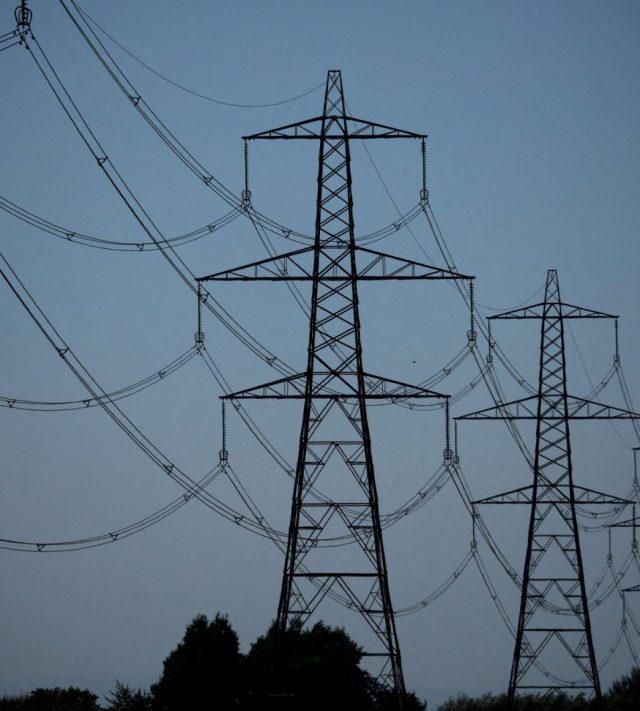 Caption: FILE PHOTO: A row of electricity pylons is seen near the Frodsham on shore wind farm in Frodsham, Britain, September 5, 2023. REUTERS/Phil Noble/File Photo
Photographer: Phil Noble
Provider: REUTERS
Source: REUTERS
During the 1977 New York blackout, which lasted 25 hours, there was civil unrest, resulting in widespread looting and arson, although intense heatwaves are thought to have exacerbated the situation.
Things to buy now to prepare
 The Russian state-owned Sputnik news agency took over the BBC’s radio frequency in Lebanon (Photo: Getty)
Battery radio
To get updates during a power cut – a car radio can be used, but in severe weather it might be safer to stay inside.
Bottled water
A minimum of 2.5-3 litres of drinking water per person per day is recommended.
 Caption: Plastic bottle with clean water on a blue background.
Photographer: SimpleImages
Provider: Getty Images
Source: Moment RF
 A Cuban rides his bike during a nation wide blackout in Havana on 21 March (Photo: Yamil Lage/AFP/Getty)
Wind-up torch
The Government recommends opting for torches over candles, for safety reasons.
How to prepare
A blackout is unlikely but we should make small changes.
If possible, don’t let your petrol tank run down to almost empty. Keep it over half full so you’re never caught short.
Always have a portable power bank, and spare batteries, to charge your phone and other essentials.
As card machines could fail, keep some cash at home.
To keep yourself distracted and entertained, keep board games and a pack of cards handy to play.

Eight easy ways to stop
your child spending summer glued to their devices
Not all screen time is bad
Using screens in a way that benefits your child’s development is key and balancing educational content and entertainment with offline activities ensures a well-rounded routine.
DR GUMMER

How to keep your kids off screens

Outdoor activities
For younger children, try scavenger hunts, garden games and nature walks. For older ones, hikes
and biking trips.
Create a schedule
Designated screen-free times helps children develop a routine that balances screen use with other activities.
 Caption: Mid adult man with eyeglasses sitting on a comfortable sofa at home, thoughtfully writing notes in a small notebook while natural sunlight illuminates the room
Photographer: Milan Markovic
Provider: Getty Images
Source: E+

Family game nights
It’s an excellent way
to bond and develop critical thinking skills.
How to keep your kids off screens
Creative hobbies
Getting creative, through drawing, painting or model construction, enhances cognitive skills and offers an alternative to screens.


Social interaction
Arrange playdates or group activities with friends, or for older kids try an overnight camping trip in the garden.
How to keep your kids off screens
Lead by example
Showing that you value offline time encourages your children to do the same.


Have a reward
Implement a reward system where screen time is earned through positive behaviour.
Open conversations
Discuss the importance of balancing screen time with your children so they understand the reasons behind the rules.

Can following a particular diet
help prevent or delay dementia?
Some studies suggest so.
These are the eight brain-boosting foods registered dietitian Fareeha Jay
recommends people consume as part of a weekly diet…
Foods that can cut dementia risk
 Caption: A detail of cracked egg falling into the pan as woman holds egg shells in both hands.
Photographer: SimpleImages
Provider: Getty Images
Source: Moment RF
Eggs
They contain several nutrients thought to support brain health, including choline, vitamin B12 and iodine.
Coffee
Caffeine can reduce inflammation and
slow the degeneration
of brain cells.
 Barista hand making cappuccino Coffee with espresso machine in cafe – stock photo. (Photo: Getty)
 Cooking fruit and vegetables (Photor: GMVozd/Getty Images/E+)
Broccoli
It’s packed with antioxidants and high in vitamin K, which is essentially for healthy brain cells.
Fibre is overlooked in dementia prevention
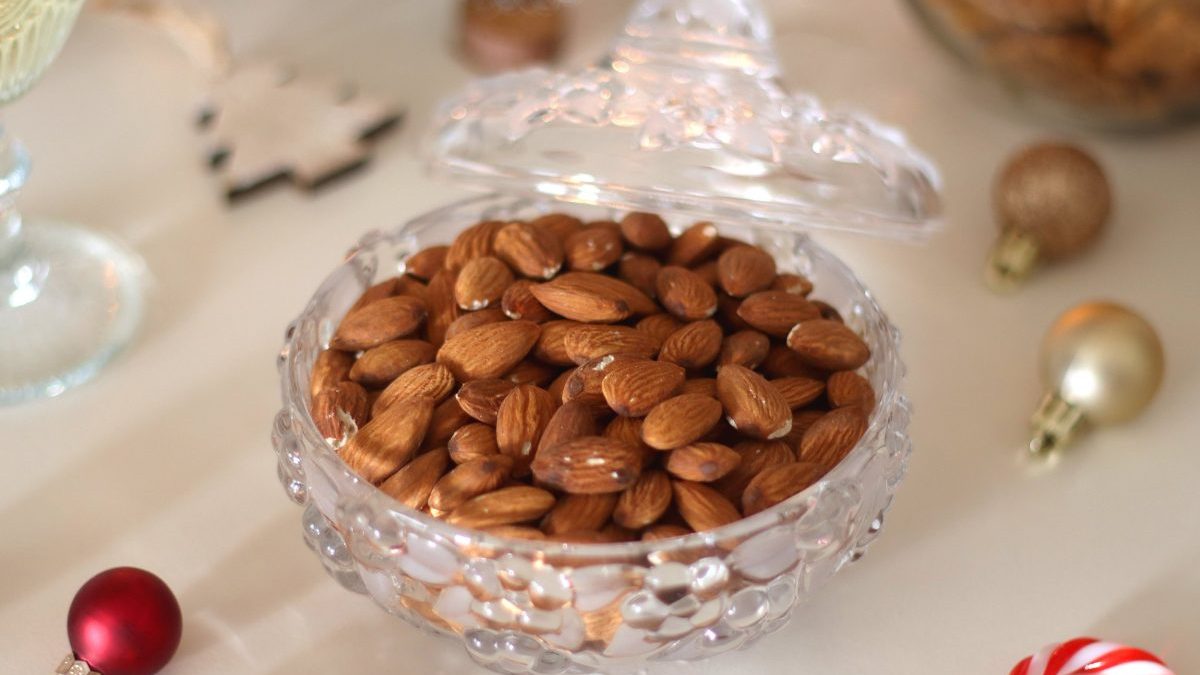 Caption: Cookie jar, tea, wine, nuts, books, lit candles and Christmas decorations on the table. Cozy Christmas hygge at home. Selective focus.
Photographer: Jelena990
Provider: Getty Images
Source: iStockphoto
To increase fibre intake, include wholegrains, nuts, seeds, lentils, and legumes.
Fermented foods also support brain health by improving the gut microbiome.

LIFESTYLE
4 min read
Foods that can cut dementia risk
 (Photo: Joff Lee/Getty Images)
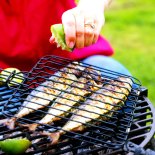
Oily fish
Your brain uses Omega-3s to build brain and nerve cells – so a diet rich in them may slow age-related mental decline.
Walnuts
These improve heart health markers, which is linked to a lower risk of neurological disorders.
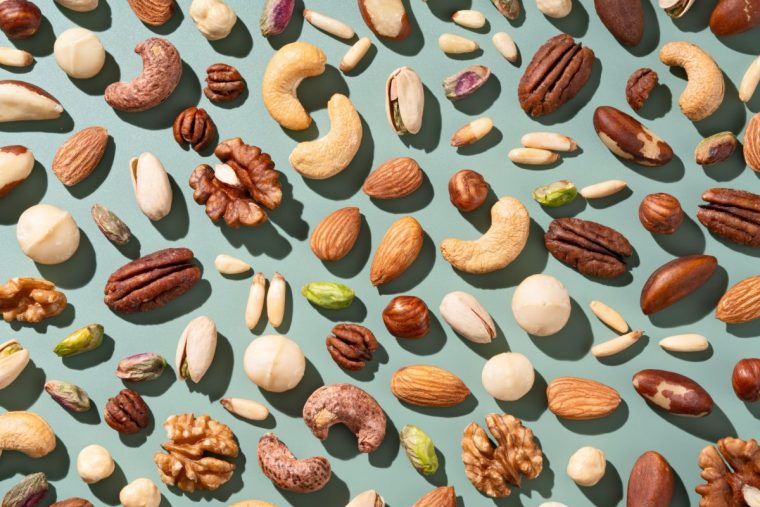 Health professionals are nuts about nuts – with good reason!
 Supermarkets report increasing demand for blueberries (Photo: RHS/Guy Harrop)
Blueberries
They contain compounds which have been shown to improve blood flow to the brain, cognitive function, and memory.
The Mind diet
The diet aims to reduce dementia risk and the decline in brain health.
It was created in 2015 by Dr Martha Clare Morris and colleagues at Rush University Medical Centre and the Harvard Chan School of Public Health.
It encourages vegetables, berries, nuts, whole grains, olive oil, fish, beans, and poultry.
These foods contain nutrients that promote good brain health by reducing oxidative stress and inflammation.
While most of us know that cooking from scratch is best for our children, it’s not always practical. So here is Sunna’s advice on picking better quick, supermarket food – and what to avoid.
Avoid the cereal aisle so your children have better focus
“Breakfast cereal is still the default breakfast that most parents give to their children,” Sunna says. “But studies show that children who eat a low GI (glycemic index) breakfast of protein and healthy fats have better attention in school. So avoid the cereal aisle and instead give your child protein and fat for breakfast. Eggs are great, or Greek yoghurt with granola, which adds fibre.
“Compare this with Frosties, which are 27 per cent sugar. Even Weetabix, which is just wheat with a tiny bit of sugar added, is all carbohydrate so a high GI breakfast. If your children really want cereal, I’d recommend having it with Greek yoghurt or at least with double-filtered milk, which is higher protein. SuperNutrio, which is sold across supermarkets in a black carton, has double the amount of protein to regular milk (17.5g per 250ml) so is a lot healthier.”
Best: Eggs or natural yoghurt
One to avoid: Frosties and all high-sugar, low-protein cereals
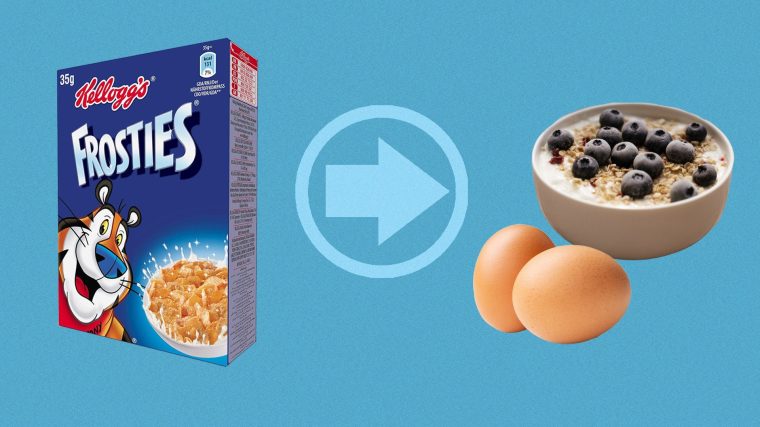 Always avoid cereal in the morning
How to pick better picnic foods
It might be the season for picnics but not all picky bits are equal. “I’m really glad that M&S has recently launched minimal ingredient cocktail sausages, which are 92 per cent pork,” Sunna says. “They have none of the preservatives and additives that many other cocktail sausages contain, the majority of which are only around 61 per cent pork. Sausage rolls can be as low as 30 to 40 per cent pork, because of all the pastry too.”
He also warns parents to beware of processed meat. “Salami and Pepperami are carcinogens, so I recommend avoiding. Instead, go big on cheese. The cheese aisle is a great place for parents to shop: Cheese Strings might get a bad rap but they’re fine; Babybel is good; Pilgrim’s Choice has launched snacks with a red pepper dip that uses olive oil. It is hard to go wrong.”
Best: M&S Only… Ingredients cocktail sausages and all types of cheese
Avoid: Pepperami
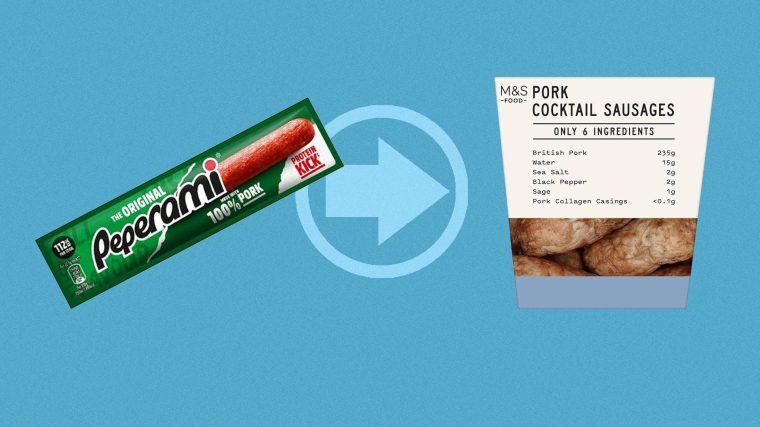 M&S has a good range of simple ingredient picnic foods
The lunchbox traps to avoid
Yoghurts always explode in lunchboxes, but for parents who are determined to give them to children, beware. “A lot of kids’ yoghurts brands are high in sugar: Frubes and Munch Bunch classic range are 10 per cent sugar.
“We stopped putting two teaspoons of sugar in our coffee or tea because it’s unhealthy: how can it be okay for kids? I always give my children plain yoghurt and add berries and honey,” Sunna says.
He also believes many parents fall into the fruit juice trap, believing that these are healthy. “My children love apple juice, but fruit juices are so bad for us because they contain all the sugar from fruit without the fibre. A 200ml apple juice carton contains between four and five teaspoons of sugar. Even smoothies contain 75 per cent less fibre than real fruit. It’s hard: we try to stick to water and milk, and when we’re out for a meal and they want juice, I’ll water it down to be 25 per cent juice.”
Best: Drink water or milk
Avoid: Fruit juice and flavoured yoghurt.
 Swap high-sugar fruit juice for nutritious milk
Some sweets have double the sugar of others
Unless you’re never going to give your children sweets, it’s worth knowing which ones to steer clear of. “It’s easy to think ‘I’m giving my children a treat so of course it’s unhealthy’ but some have double the sugar of neighbouring packets on the sweet aisle,” Sunna explains. “I let my son eat sweets occasionally – but not the worst offenders.”
Skittles are 74 per cent sugar and Sour Patch kids are 63 per cent, while even Candy Kittens are more than half sugar. More child-friendly are Haribo, especially Zingfest, which are 32 per cent sugar, or Fruitilicious at 34 per cent. Rowntree also do some berry hearts that are around a third sugar.
Best: Haribo Zingfest
One to avoid: Skittles
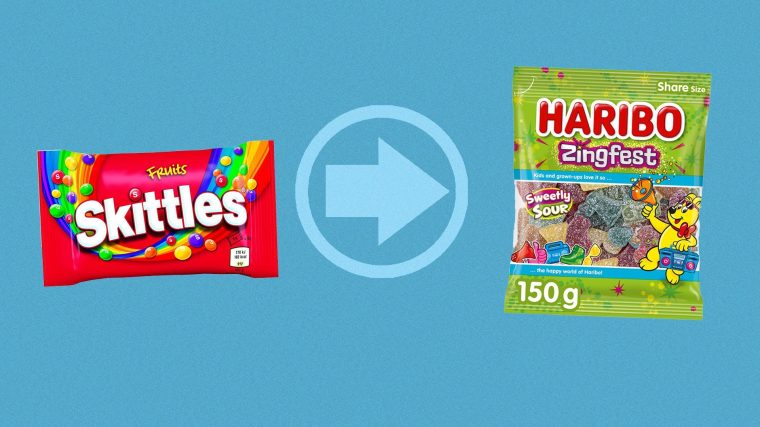 Haribo has surprisingly less sugar compared with Skittles
Better biscuits
There’s a similar variation with sugar in biscuits. Take Maryland chocolate chip cookies, which come in mini bags for lunchboxes: they are 5.9g of sugar in a 19.8g bag, which is almost one-third sugar. (The recommended maximum amount of sugar for children between age seven and 10 is 24 grams, which is six spoons.)
“But if you buy shortbread, it’s a classic biscuit that we’ve never adulterated: it’s just butter, wheat and sugar. Shortbread usually averages between 12 and 16 per cent sugar. Children are just as excited but it’s a better choice,” Sunna says. He says that in fact, rich tea biscuits are generally the least sugary – though not all children find them quite as exciting.
Best: Shortbread
One to avoid: Maryland cookies
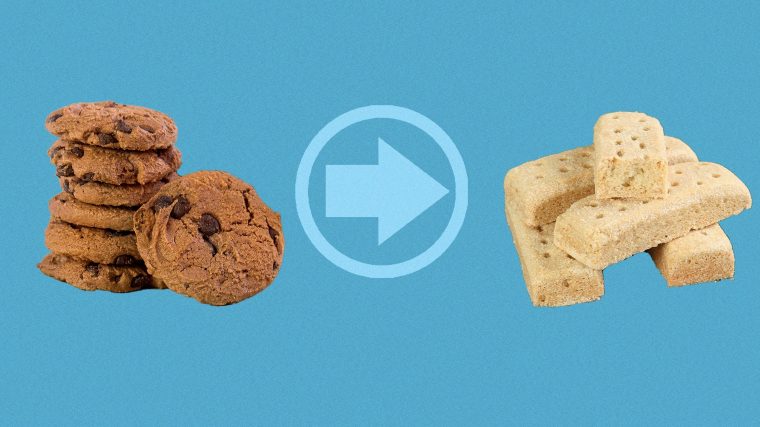 Shortbread has a simple recipe list compared with Maryland cookies (left)
A crispy crunch without the fat
When it comes to crisps, baked varieties are usually between 30 and 50 per cent lower in fat than their fried counterparts, Sunna explains. If you want a high-fat crisp, then look what oil is used: avocado oil, for example, is healthier than regular crisps. But if it’s crunch you are looking for, there are other snacks. “Pretzels are often the lowest-fat crunchy snack, so I’d recommend them.”
Best: Pretzels, Pop Chips, Snack-a-Jacks and baked crisps
One to avoid: Standard crisps with 30 per cent fat
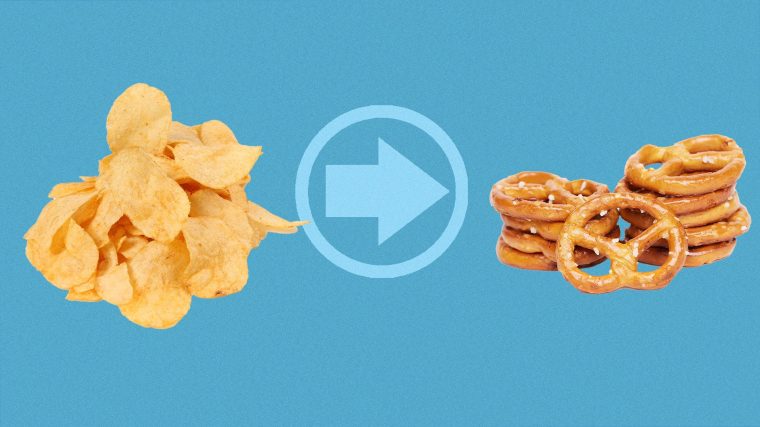 Swap crisps with low-fat pretzels
Keep cool without sugar overload
“I don’t want to stop my children eating all ice cream, but there are some varieties that our family avoids,” Sunna says. “It’s easy to think that ice lollies, especially those made purely with fruit juice, are healthy, but the sugar load varies hugely. A classic Calippo is full of sugar, with over four teaspoons at 18 grams, which is more than four teaspoons. Tesco’s Valencia orange juice ice lollies have around four teaspoons of sugar, or 16.5g. A classic Mini Milk contains only a quarter of the sugar, with just one teaspoon. This is partly because of portion size, but it’s lower sugar in general and satisfies the moment and the occasion.”
He recommends choosing ice cream wisely. “A quarter of Ben & Jerry’s Cookie Dough ice cream is sugar, while M&S Only Ingredients range has gone back to more traditional ways of making ice cream and is heavy on cream and much lower on sugar. I recommend the heather honey flavour, which is 13 per cent sugar and so creamy, with just a bit of sweetness.”
Best: Mini Milks
One to avoid: Ben & Jerry’s Cookie Dough
 Mini Milks (right) have relatively few ingredients
Beware of baby fruit pouches
“There’s a lot of great marketing of baby and toddler snacks,” Sunna says. “Some fruit pouches have up to three teaspoons of sugar in one pouch and none of the fibre that is beneficial for all bodies. Babies benefit so much more from real fruit.” While a lot of packaging claims ‘no added sugar’, fruit puree is naturally sweet: Ella’s Kitchen Bananas and Apples contains 19.6g of sugar according to lab testing – which is closer to four teaspoons of sugar.
Sunna has further concerns. “I used to work for a baby food company and the pouches would be filled with food and then pasteurised,” he remembers. “From a microplastics point of view, it is heated plastic that poses a problem for our bodies, so I’d recommend returning to old-fashioned glass pots.”
Best: Real fruit and vegetables for fibre
Avoid: Fruit pouches
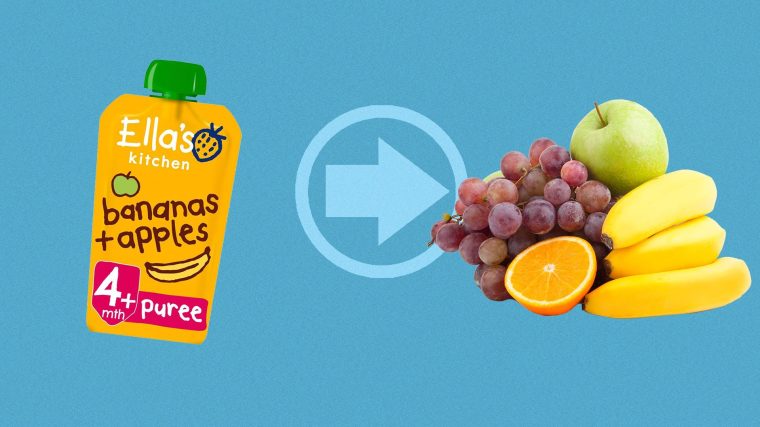 Replace fruit pouches with pieces of fruit