

Listen to this article
Estimated 4 minutes
The audio version of this article is generated by AI-based technology. Mispronunciations can occur. We are working with our partners to continually review and improve the results.
Mactaquac Golf Course has been buzzing this weekend as crews put the final touches on the grounds before professional golfers arrive for the PGA Tour Americas’ Explore N.B. Open.
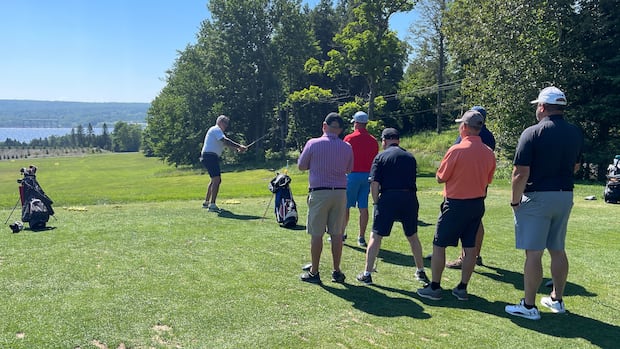
Among the signs and grandstands being assembled is a group of active-duty military members and veterans who are more than happy to be out on the course. The dozen golfers are participating in a weekend camp run by Soldier On, a Canadian Armed Forces program that helps ill and injured military personnel and veterans recover through sport and peer connection.
Leading the clinic is Michael Feyko, a PGA of Canada teaching professional who has worked with veterans on the course for more than a decade. Feyko, who entered the military in 1989, knows the therapeutic value of the game firsthand.
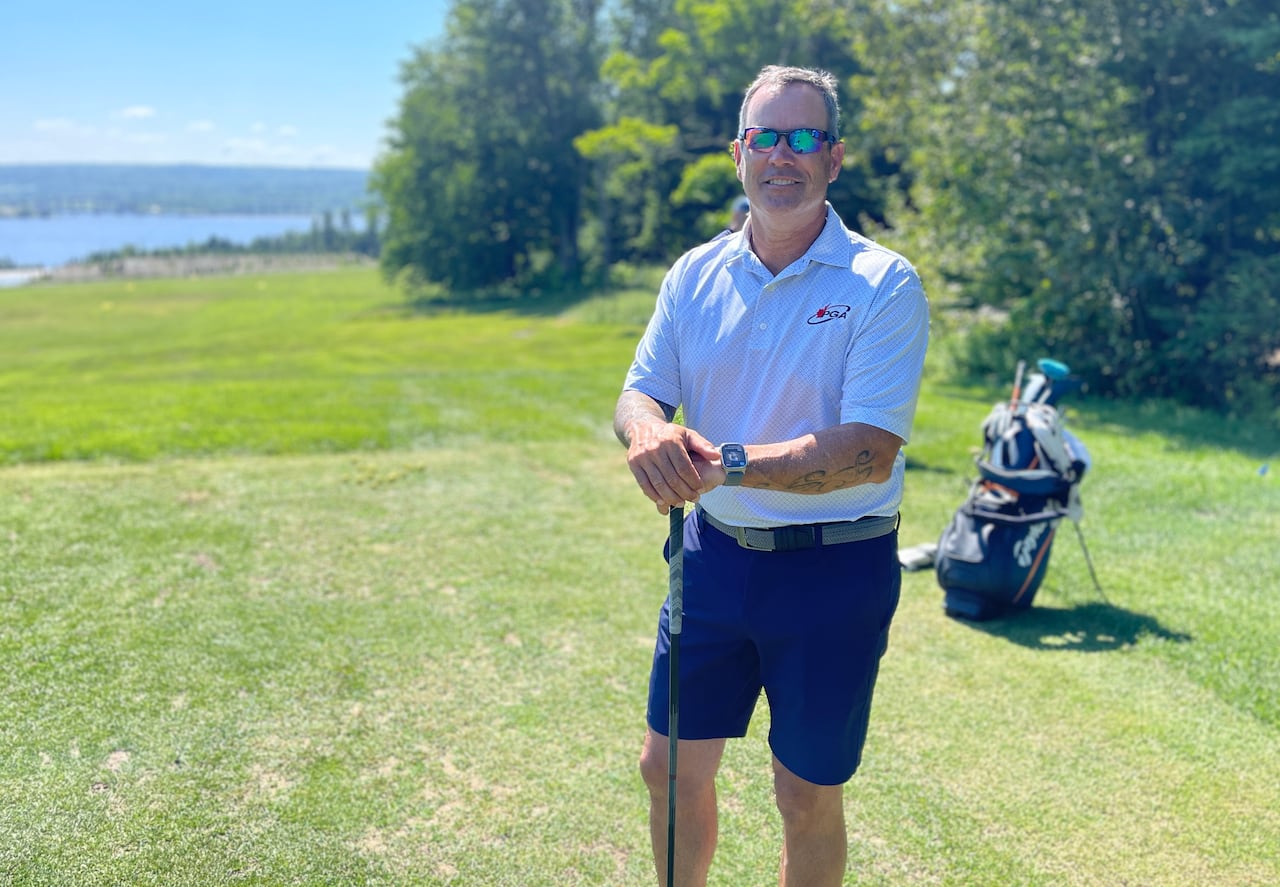 Michael Feyko is a PGA of Canada teaching professional who has been working with military members and veterans on the golf course for over a decade. Feyko has been working with a dozen golfers this past weekend at courses around the Fredericton area. (Oliver Pearson/CBC)
In 1997, at age 27, Feyko was severely injured during a parachute jump in Alberta when another jumper collided with him. Their parachutes tangled, sending him falling more than 20 metres to the ground. Feyko broke nine bones below his waist, endured 10 surgeries, and spent three months in a wheelchair.
Close to paralysis, Feyko says he “got lucky.” By the spring of 1998, he turned to golf to get active and clear his mind.
“You get the depressions and you get the good and the bad,” Feyko said. “But golf is definitely one of those things where I can get back to that sense of feeling normal again. No matter what’s going on in life… getting on the golf course and for four hours there’s only one thing that’s going to frustrate you, and that’s that little white golf ball.”
What began as a single volunteer session taught by Feyko in Moncton has since expanded into golf camps across the country.
“People think that they’re injured and they’re suffering alone,” Feyko said of the participants. “They come out here and they’re talking to others. Their injury may be different, but their struggles are the same.”
For participants like Sheldon Roberts, the weekend was a chance to rediscover an active lifestyle. Roberts retired in 2017 after nearly 30 years of military service and hadn’t played golf in a decade. He suffers from neuropathy in his feet, making walking or running difficult, but decided to give the program a shot.
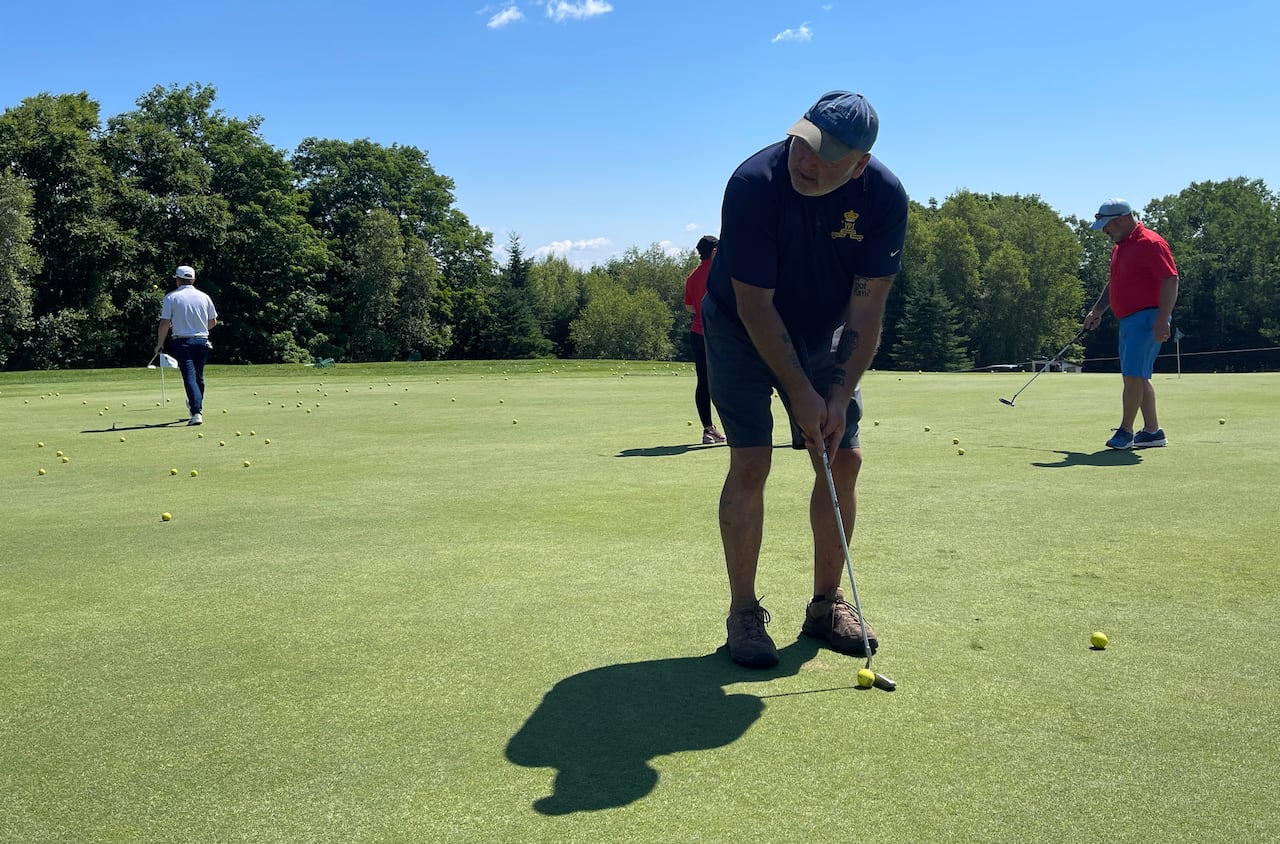 Sheldon Roberts served in the military for almost 30 years before retiring in 2017. He hasn’t golfed in around 10 years but he came out this weekend to give it another shot. (Oliver Pearson/CBC)
With help from Feyko and the other coaches, Roberts saw major improvements over the weekend. More importantly, he is active doing something he enjoys and now plans to golf weekly with his grandson.
Rodney Tatchell, an engineer officer who has served in the military for more than 27 years, praised the program’s format, which provides participants with lessons followed by a full round of golf.
“I think it’s very important because it helps you get out, meet new people, be active, and be around people that have similar experiences—whether they’re retired, injured, or still serving,” Tatchell said.
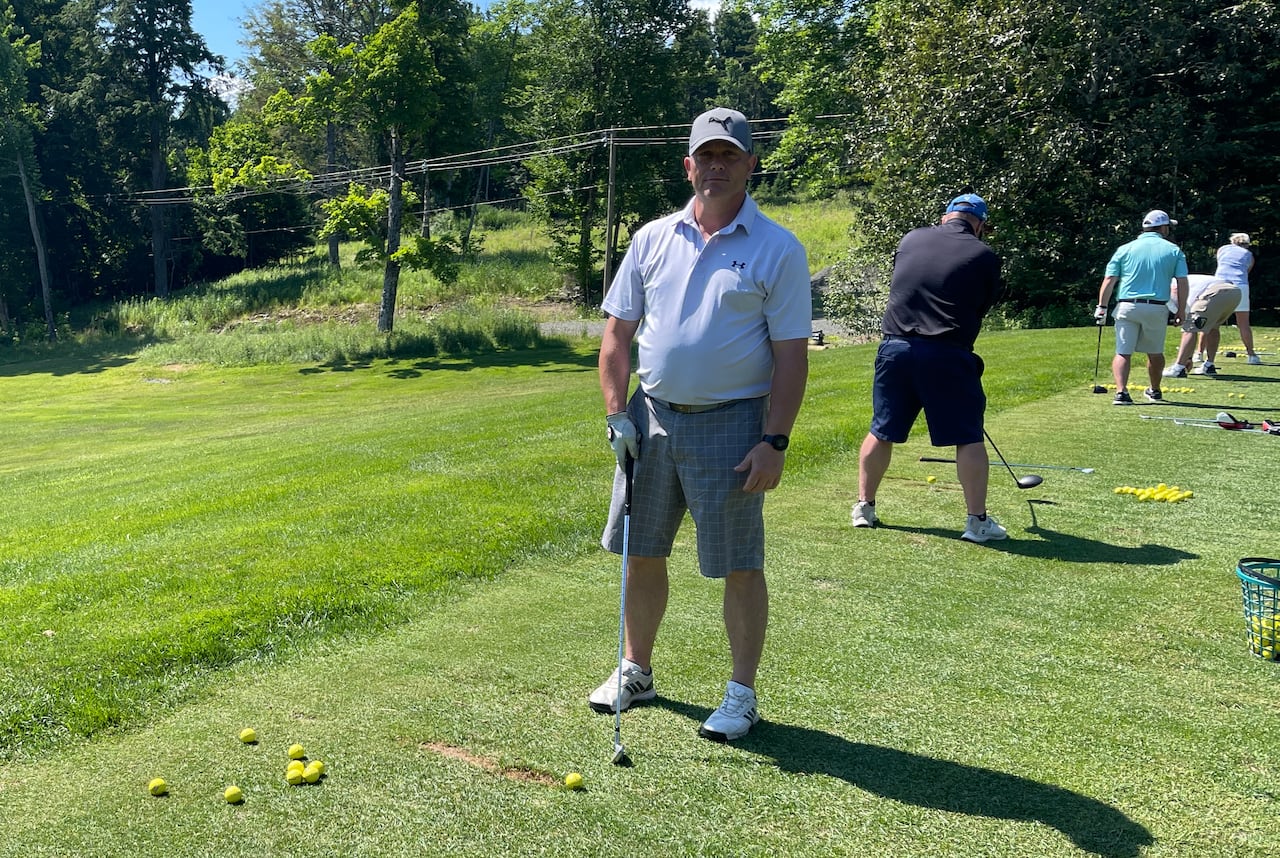 Rodney Tatchell is still serving in the military after over 27 years. He said it’s important for active members and veterans to keep in touch and support each other. (Oliver Pearson/CBC)
He said that the deep bond shared by military members can easily feel lost after retirement, making this kind of support network vital. “It’s important to stay connected with the people you served with and lean on each other for support, even if it’s just a chat over coffee.”
While Soldier On offers various activities beyond golf — including hiking, biking, kayaking, and woodworking — program co-ordinator Shannon Nowell said the ultimate goal remains the same: ensuring participants know they are not alone.
The golf camp is free for participants through sponsor support, and this week features a bonus. Ahead of the official tournament start on Thursday, the Soldier On participants will hit the Mactaquac course on Monday to play alongside touring professionals in a Pro-Am format.
Tatchell said he is so excited for Monday’s round that he doubts he will get much sleep the night before.
“It’s going to be so much fun tomorrow,” Tatchell joked. “I just hope I don’t embarrass myself too much.”
Proceeds from the Explore N.B. Open tournament will also go towards supporting Soldier On.