
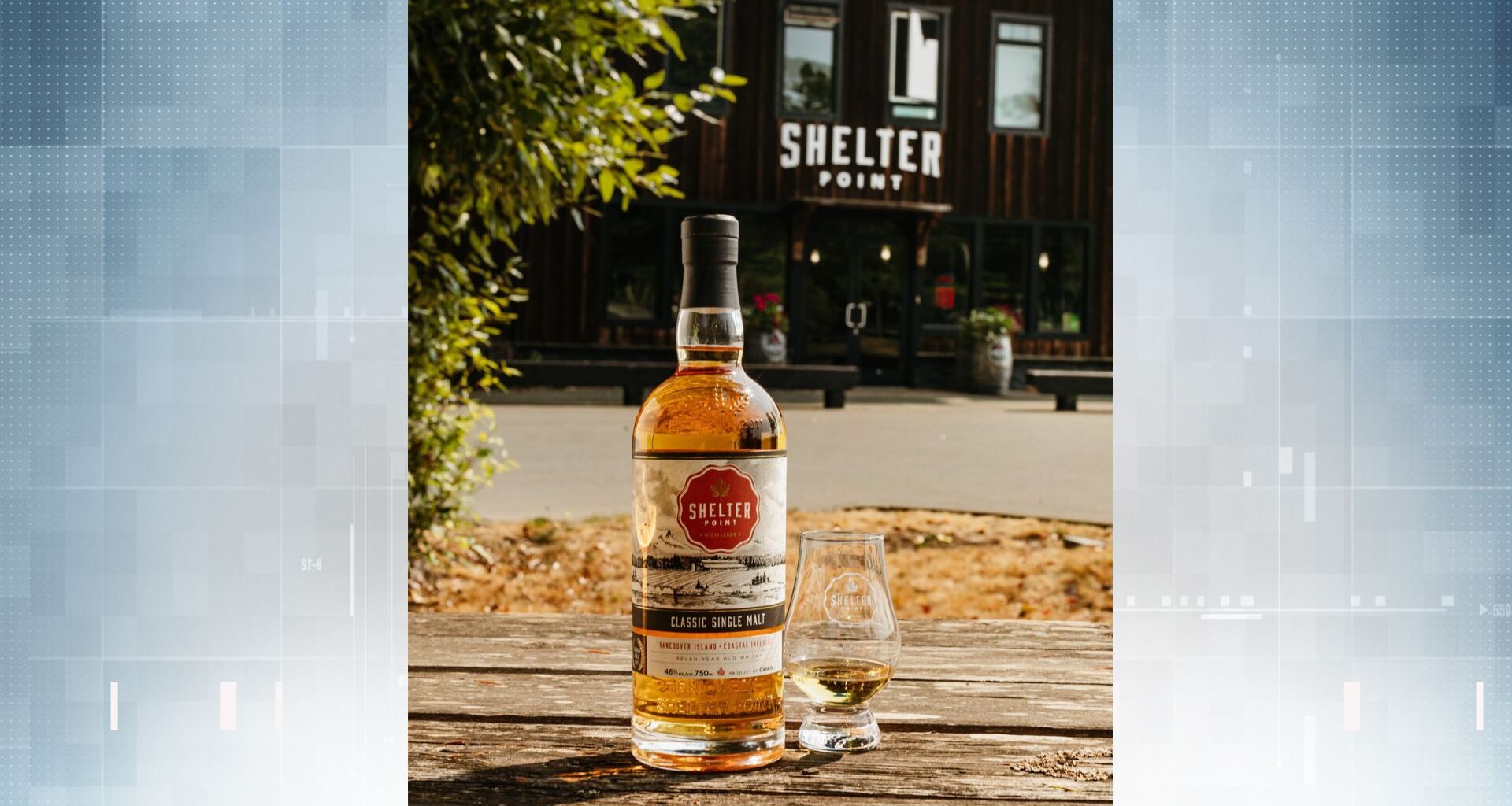
A Vancouver Island distillery has been selected to represent North America in what organizers say is the world’s first scientific study comparing how climate influences the maturation, chemistry and flavour of single malt whisky.
Shelter Point Distillery, located near Campbell River, is one of eight distilleries participating in the international research project, which will analyze single malt whiskies from every continent over a six-month period. Among the whiskies being studied is the world’s first whisky matured in Antarctica.
The research is being led by Brazilian food scientist Dr. Aline Bortoletto and her team at INOVBEV in São Paulo. Using chemical analysis and trained sensory panels, researchers will compare how vastly different climates – from the heat of India to the extreme cold of Antarctica – affect the development of whisky during maturation.
Shelter Point was chosen to represent North America with a special single malt, though details about the whisky, including its age and cask type, will be revealed later.
Founded in 2011 by third-generation farmer Patrick Evans, Shelter Point produces its whisky entirely on its 380-acre coastal estate on Vancouver Island. The distillery grows its own barley, sources water from an on-site aquifer and oversees every stage of production, from grain to bottle. Its whiskies mature in the region’s cool maritime climate, which researchers hope will offer insights into how coastal conditions influence flavour.
The study, titled Climate-Driven Maturation Signatures in Global Whisky: A Comparative Multi-Continental Chemical and Sensory Study, will compare whiskies from eight distilleries representing North America, South America, Europe, Africa, Asia, Australia, Zealandia and Antarctica.
Participating distilleries include Shelter Point in Canada, Penderyn in Wales, Union Distillery in Brazil, La Alazana in Argentina, Boplaas in South Africa, Rampur in India, Lawrenny in Tasmania and Pokeno in New Zealand.
Researchers will combine advanced techniques such as gas chromatography with sensory evaluations before using statistical modelling to identify how climate affects the chemical composition and taste of each whisky.
James Marinus, Shelter Point’s head distiller, said the distillery is proud to represent North America in the project.
“We make our whisky from the field to the bottle on one estate, shaped by the cool coastal climate of Vancouver Island, and it’s exciting to see what the science can tell us about that and to have our whisky in The Eight Continent Series, which shines a light on world whisky,” he noted in a release
Bortoletto said the research explores territory that has never before been scientifically examined.
“No study has examined how single malt whisky matures across climates this different, from the heat of northern India to the freezing cold of Antarctica, and having a whisky matured in Antarctica among the samples makes it more remarkable still,” she said in a release.
“By combining chemical and sensory analysis, we hope to give whisky lovers and producers a clearer picture of how different climates and place shape what ends up in the glass.”
The findings will be published in an international scientific report and are expected to be presented at food and beverage science conferences. Researchers say the results could help distillers better understand how local climates influence whisky production and identify opportunities to improve efficiency and sustainability.