

Listen to this article
Estimated 4 minutes
The audio version of this article is generated by AI-based technology. Mispronunciations can occur. We are working with our partners to continually review and improve the results.
Opening up a case and holding some 100-year-old Naskapi artifacts filled Chief Louise Nattawappio with a feeling she says is hard to describe.
The items haven’t been home in decades — since they were aquired by American anthropologist, Frank Speck.
The painted and carefully sewn doll clothes, netting needles and hunting tools, dating from 1927 to 1950, are on loan to the Naskapi Nation of Kawawachikamach in northern Quebec for the next month from the Royal Ontario Museum (ROM) in Toronto.
“They’re back home in the territory,” said Nattawappio.
Seeing and holding them was a mix of wonder and excitement, she says. For her, it’s about history and “connecting back to our identity that we’ve lost.”
The items, all originally from the surrounding region, are on loan to coincide with the community’s summer camp.
For the next few weeks kids between the ages of five and 11 will learn about the artifacts and how to recreate some of the tools or items in order to preserve and pass on part of the community’s history.
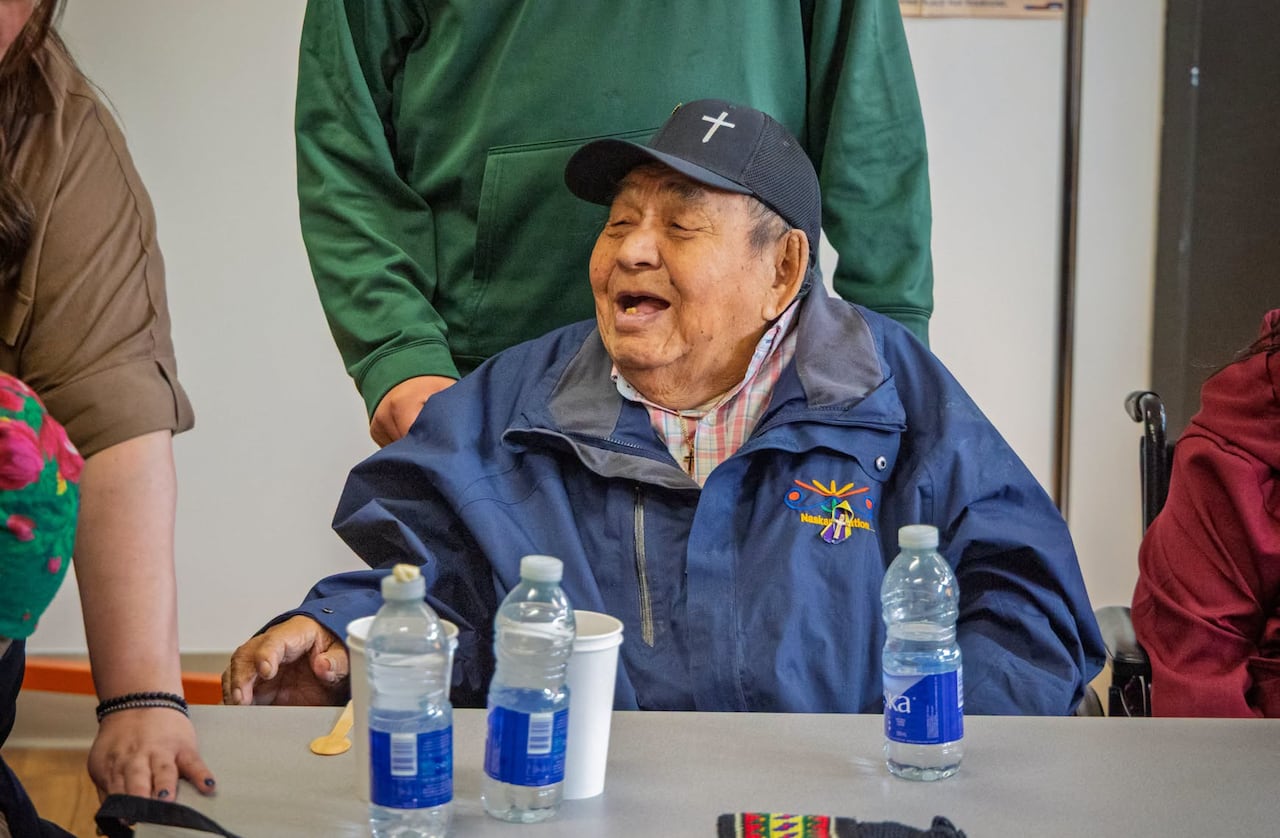 David Swappie, who will be 93 years old this year, viewed the objects on Monday. The nation’s chief said some elders have already asked if the items are staying in the community for good. (Benjamin Jancewicz/The Naskapi Nation of Kawawachikamach)
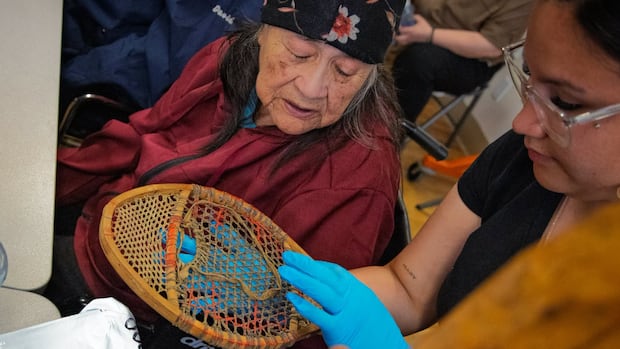
On Monday, the day the shipment arrived, the community’s elders gathered together to take a first look at the objects.
“There was one elder who knew most of them,” said Nattawappio. “He was the oldest. And he said he’s the last one alive of his group.”
One of the items that stood out to the chief were snow goggles — used to prevent eye irritation caused by the weather, wind and the sun, as explained by the community’s elders.
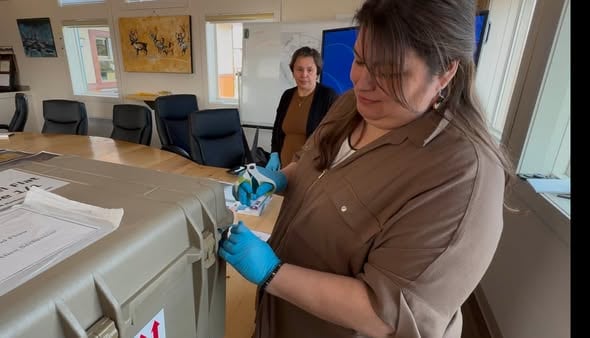 Chief Louise Nattawappio opened up the case which travelled from Toronto. (Benjamin Jancewicz/The Naskapi Nation of Kawawachikamach)
Up until this week, many elders had only seen these artifacts through photos.
“They have a hard time travelling, especially long, long travel,” Nattawappio said. “I was glad it was possible to bring them back home so that they can see [it] in person.”
Loan is part of reconciliation efforts, says curator
This kind of loan is considered “pretty exceptional” considering the objects will be used interactively, says John Creese, Vettoretto Curator of North American archeology at the ROM.
The process of bringing a case of artifacts home to the community started last year, when a group travelled from Kawawachikamach to the museum and then began speaking about the possibility of a loan.
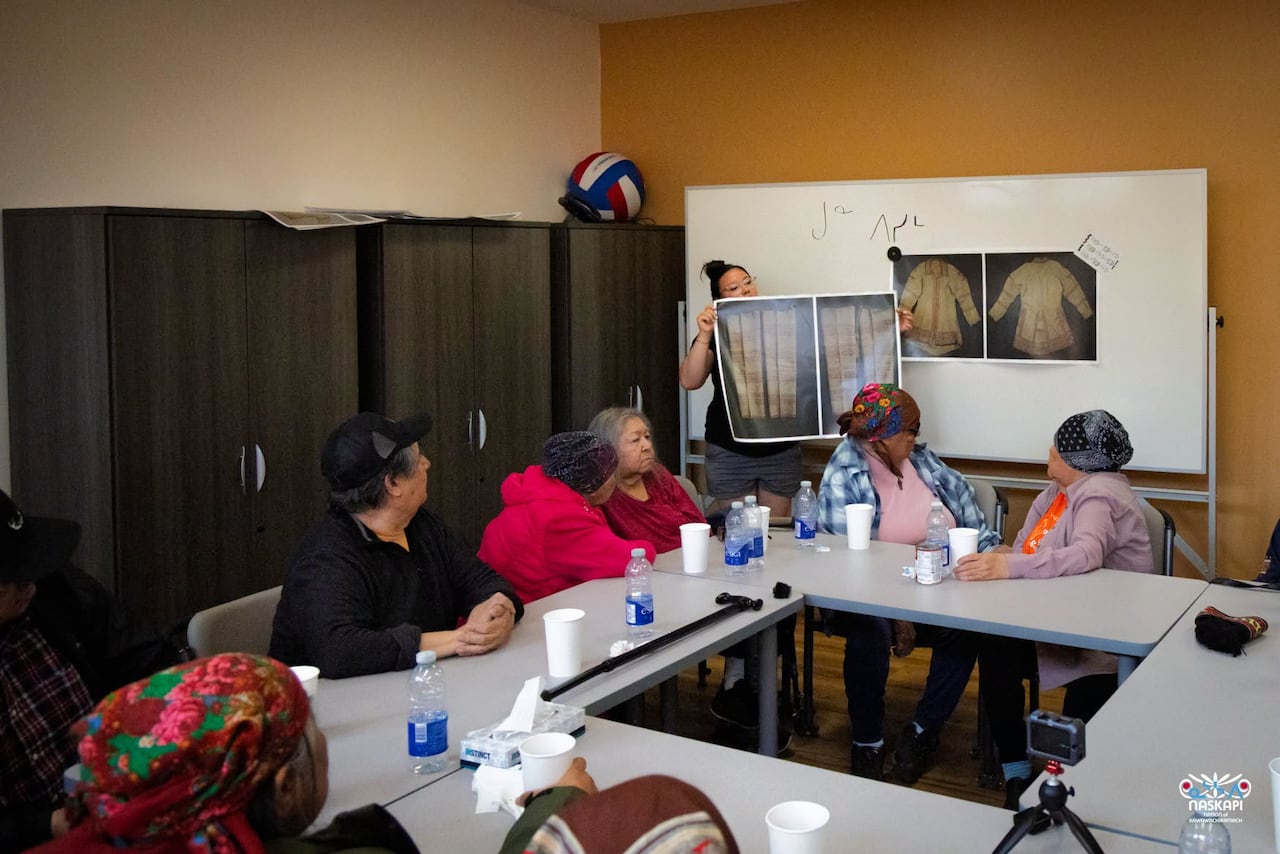 On Monday, the day the shipment arrived, the community’s elders gathered together to take a first look at the objects. (Benjamin Jancewicz/The Naskapi Nation of Kawawachikamach)
“We were really thrilled to be able to co-ordinate with them and make it happen,” he said.
ROM worked with a fine arts shipping company to get the items to the community, located over 1,000 kilometres northeast of Montreal. Creese said he is personally planning on visiting the community in August to bring the items back to Toronto.
“It’s very exciting. I do see this kind of work as part of the broader reconciliation efforts that organizations like the ROM are making. It’s so important for belongings like this to come home,” he said.
Repatriation an ‘ongoing discussion’
Creese said seeing and holding these types of objects create a sense of “rootedness” and connection with ancestors and traditional activities.
“There’s a lot of information which in some ways is kind of embedded in belongings. You know, you can learn about the specific techniques that were used for painting, for sewing, for making,” said Creese.
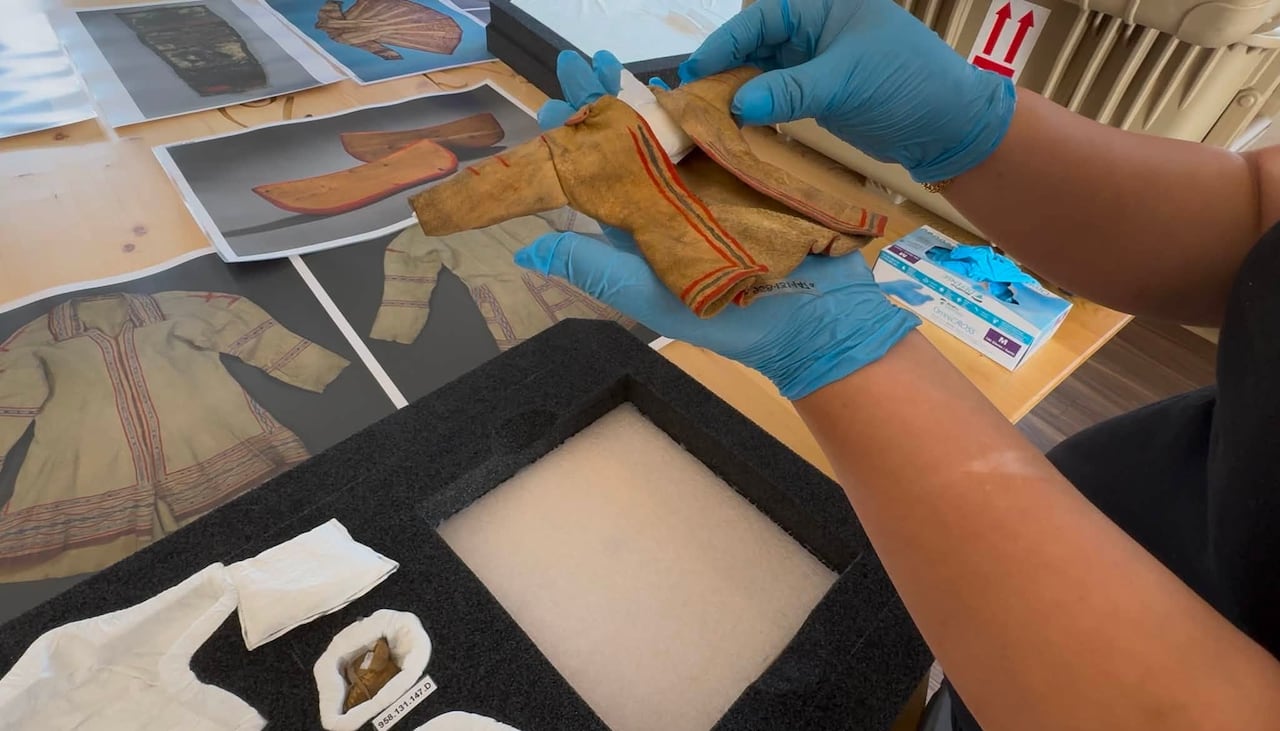 The painted and carefully sewn doll clothes, netting needles and hunting tools, dating back to the early 20th century, are on loan from the Royal Ontario Museum (ROM) in Toronto. (Benjamin Jancewicz/The Naskapi Nation of Kawawachikamach)
While the loan for these items is set for four weeks, he said the museum has had conversations in the past with other communities regarding repatriation of belongings and is “open to talking about that, at the right time.”
Chief Nattawappio said some elders have already asked if the items are staying in the community for good.
While Nattawappio informed the elders the items need to be sent back next month, she said repatriation is an “ongoing discussion.”