OTTAWA—When it comes to theatre of the absurd in public life, nothing tops pipeline politics.
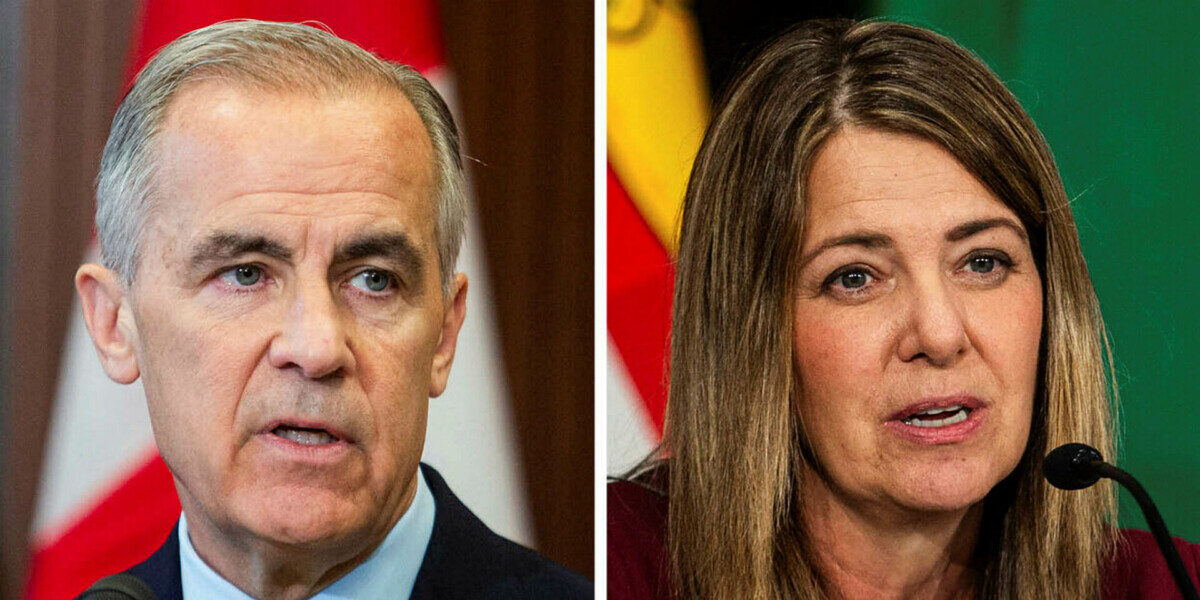
There was Alberta Premier Danielle Smith—who has accused the Liberals of hamstringing Big Oil, crushing her province’s aspirations, and inciting Albertans to break up the country—turning to the feds to build her long-sought new pipeline.
After spending seven months trying to rustle up a private company as the proponent for an extra Alberta-to-the-British-Columbia-coast oil conduit, Smith announced last week that it would be built—wait for it—by a federally owned company, Trans Mountain Corp.
And the so-called West Coast pipeline would be almost entirely funded—at a cost of at least $40-billion—by federal and provincial taxpayers. (Calgary-based Pembina Pipeline Corp. came through with a bit of a fig leaf by agreeing to maybe take a 10-per-cent stake in the project.)
In short, it’s the socialists from Ottawa coming to the rescue in the bastion of drill-baby-drill petro-capitalism yet again.
Like most Albertans, Smith seems in recent years to have forgotten good ol’ Trans Mountain Corp. You might recall that it was acquired in 2018 by then-prime minister Justin Trudeau to build TMX, which was a twinning of Trans Mountain’s 47-year-old oil pipeline from Alberta to Vancouver. Opened two years ago at a cost of $34-billion in federal taxpayers’ money, it has proven a major success for the oil industry and Alberta’s revenue collectors. But it’s hard to find any mention of TMX in Alberta politics or all the screaming about Albrexit.
Smith said last week that building along the existing Trans Mountain route would increase exports to Asia more rapidly, and would be easier to manage than her preferred option of a pipeline to the northern B.C. coast.
As I have noted before, a man named Joseph Hazelwood, who let the Exxon Valdez tanker run aground and dump 11 million gallons of crude into Alaska’s Prince William Sound, put paid to that option 47 years ago. Thirty years later, they were still trying to repair the environmental damage.
In any case, everything Carney and Smith announced last week ran counter to the stipulation on all sides that a new Alberta pipeline must be built by the private sector. But what happened to that requirement is only one of the many questions that emerged from Carney’s flurry of action on energy strategy and federal-provincial diplomacy on July 2.
In a single day, the prime minister radically changed Ottawa’s relations with the key western provinces of Alberta and B.C. And, in aid of his vision of Canada as an energy superpower, Carney ushered in the biggest, most far-reaching reshaping of the national energy playing field in decades.
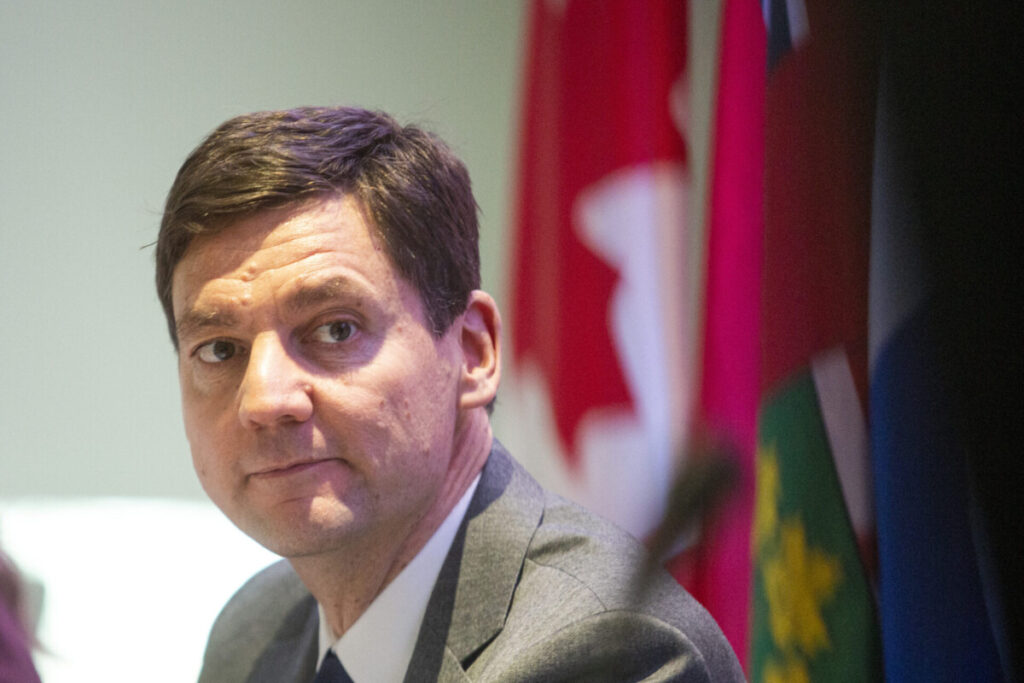 B.C. Premier David Eby’s objection to another pipeline to the Vancouver area was defused by the feds providing B.C. with some $20-billion in funding for provincial priorities. The Hill Times photograph by Andrew Meade
To defuse B.C. Premier David Eby’s objection to another pipeline to the Vancouver area, Carney provided B.C. with some $20-billion in funding for provincial priorities. At the same time, the prime minister cleared the way for liquefied natural gas and other energy developments in northern B.C. by heading off a standoff with First Nations over a tanker port.
Get Innovation & Industry Newsletter
From investment to regulation, the policies, decisions and people working on industry and innovation. Tuesday.
By entering your email address you consent to receive email from The Hill Times containing news, analysis, updates and offers. You may unsubscribe at any time. See our privacy policy
As a matter of national unity, promising to get Canadian taxpayers to buy Alberta another pipeline was no doubt seen as useful with a separatist referendum looming.
As a matter of national energy/environmental policy, it’s another thing entirely. To begin with, there’s no real business case for going ahead with the massive project. The one million barrels a day in shipping capacity to be created by the West Coast line in 2033 may become available much sooner—and cheaper—through several other planned pipeline expansions.
Beyond that, petroleum demand in the foreseeable future is more hazy than ever as a result of the Iran war. And Canada’s highly profitable but cost-conscious oilsands companies have been reluctant in recent years to devote large portions of their revenues to increase crude output. Industry estimates put the investments needed to expand production to fill the new pipeline in the $100-billion range. So, building the pipeline may be only the beginning in taxpayer support as it’s clear that the oilsands sector will be offered more tax incentives to finance added production.
When the details are finalized, the Carney-Smith package will also involve additional compromises to reduce the cost and environmental burden on oilsands producers for the Pathways carbon-capture-and-storage project required by Ottawa as part of a pipeline approval. That will further undercut the federal government’s justification for incentivizing more greenhouse gas-emitting oil sands production.
But Carney’s preliminary commitment to get Smith’s pipeline built should at least help dampen Alberta separatism. In the wider context, the Alberta-Ottawa deal confirmed the oil industry’s ascendancy as a political winner in the wake of United States trade disruption and the energy crisis from the Middle East conflict. Ontario Premier Doug Ford capped that game-changing development on July 6 by announcing a deal with Alberta for a new pipeline to Ontario, which he said might have to be paid for by taxpayers as well.
Les Whittington is a regular columnist for The Hill Times.
The Hill Times