
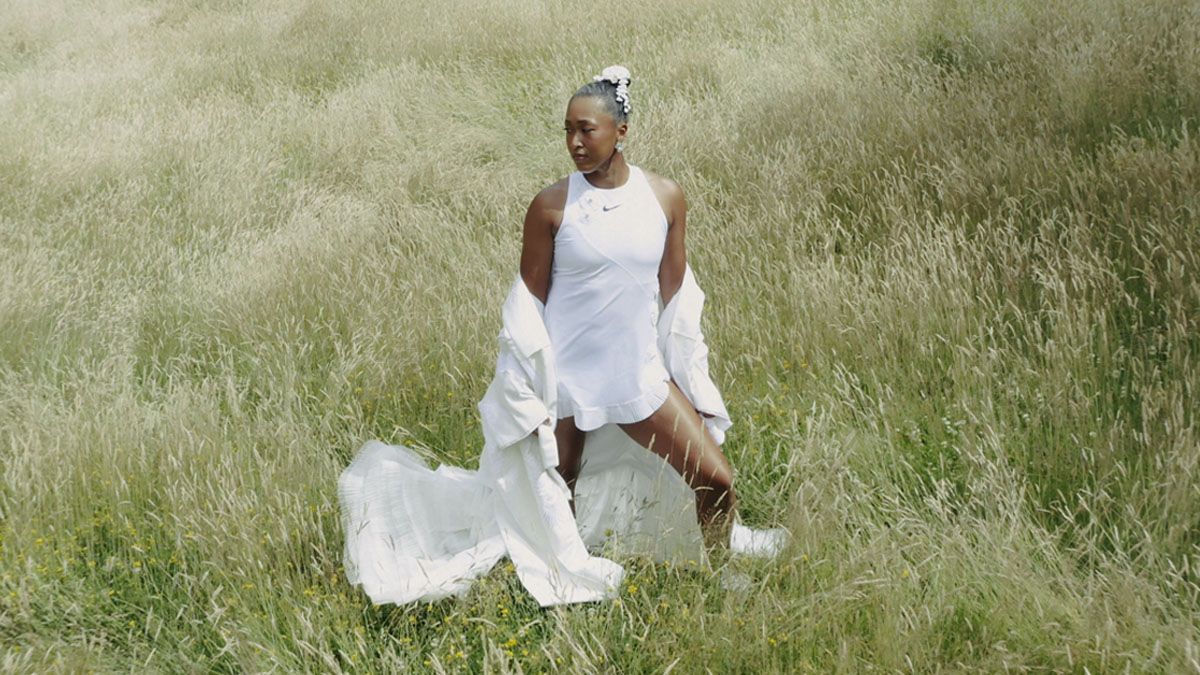
“For fashion brands, fans aren’t just an audience, they’re millions of people actively looking for ways to express who they are through what they wear in a highly emotional environment,” Garriga says. However, she notes, tennis may not have penetrated into wider fan culture yet, with specific fan merchandise few and far between and many of these athletes still to become visible fashion ambassadors off-court. “The fashion moments, however magnificent, tend to remain on the court, leaving potential new audiences on the margins.”
The rise of walk-on looks showcases the ability to storytell to an audience through the lens of fashion in tennis, a development that Morgan Riddle, co-founder of sport and culture agency The 400 Club, believes was inevitable. “Many fans don’t just want to watch what happens on the court, they want the story around it.” Jannik Sinner caused an early stir in 2023 when the Gucci ambassador wore a logoed bag — breaking Wimbledon dress code — onto the court. It positioned the brand at the heart of Sinner’s rise to the number one spot, code violation aside. “Fashion obviously isn’t replacing the sport, but it is becoming another entry point into it,” Riddle adds.

Jannik Sinner enters Centre Court with a Gucci bag during Internazionali BNL d’Italia 2026.
Photo: Getty Images
For the tennis players themselves, the walk-on outfit can go beyond self-expression and into brand expansion. “A playing career might last 15 years, but the cultural equity you build lasts a lot longer,” says Roberto Cordero, a journalist and brand advisor working across sport and culture. “The walk-on is how you reach people who will never watch a fifth set.”
The integration of fashion into leading tennis tournaments seems set to not only continue, but to deepen. Cordero praises the greater opportunity athletes now have to not only take control of their own sponsorship deals, but to build their own business portfolios — Roger Federer dropped Nike for a stake in challenger brand On, while Serena Williams opened her own venture capital firm. “The direction is moving from endorsement to equity. Signature lines, athletes with real creative roles, and players launching their own labels,” Cordero says.