
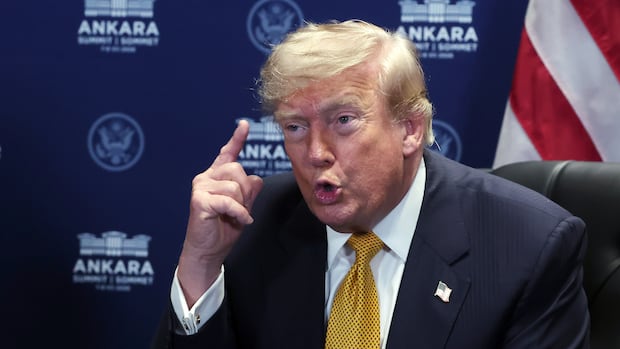
The U.S. military said on Wednesday it was launching fresh strikes on Iran aimed at keeping the critical Strait of Hormuz open to traffic, hours after U.S. President Donald Trump declared that an interim agreement to end the war with Iran was “over.”
In a flare-up that sent oil prices up about seven per cent, Iran said on Wednesday it had struck U.S. military sites in Bahrain and Kuwait. The escalation had been triggered by Iran’s attacks on Tuesday on three cargo ships in the Strait of Hormuz, prompting retaliatory strikes from the U.S.
“At the direction of the Commander in Chief, U.S. Central Command forces have started conducting additional strikes against Iran to further degrade their ability to threaten freedom of navigation in the Strait of Hormuz,” U.S. Central Command wrote in a post announcing Wednesday’s fresh round of strikes on X.
“The United States is holding Iran accountable for recent unjustified aggression against commercial shipping and civilian crews freely navigating a vital international waterway.”
Control of the strait, through which a fifth of global oil supplies pass, has given Tehran immense leverage, effectively allowing it to force a stalemate with the world’s most powerful military. While Iran has not claimed responsibility for the attacks, analysts say Tehran uses such actions to underscore that leverage as it negotiates a long-term peace deal with the U.S.
The latest exchange of attacks rattled a shaky ceasefire agreement and dented hopes of turning the memorandum of understanding signed on June 17 into a permanent peace deal to end the war, which began with U.S.-Israeli airstrikes on Iran on Feb. 28.
‘I don’t want to deal with them’: Trump
“If we make a deal with Iran, I’m not sure that will stick,” Trump had said during a press conference in Ankara, Turkey, on Wednesday where he was attending a summit of the NATO military alliance. “I found them to be very dishonourable people.”
But Trump, who has repeatedly threatened to escalate military action before backing off, said he did not expect a return to full-fledged war, and that it was not clear whether the negotiations to reach a permanent deal would continue.
Asked whether the memorandum of understanding was over, Trump said: “It’s a very interesting question. To me, I think it’s over. I don’t want to deal with them.
“As far as I’m concerned, it’s just a waste of time dealing with them. Now, I’ll let our wonderful negotiators keep talking if they want, but I don’t see it. I don’t like these people, you know that.”
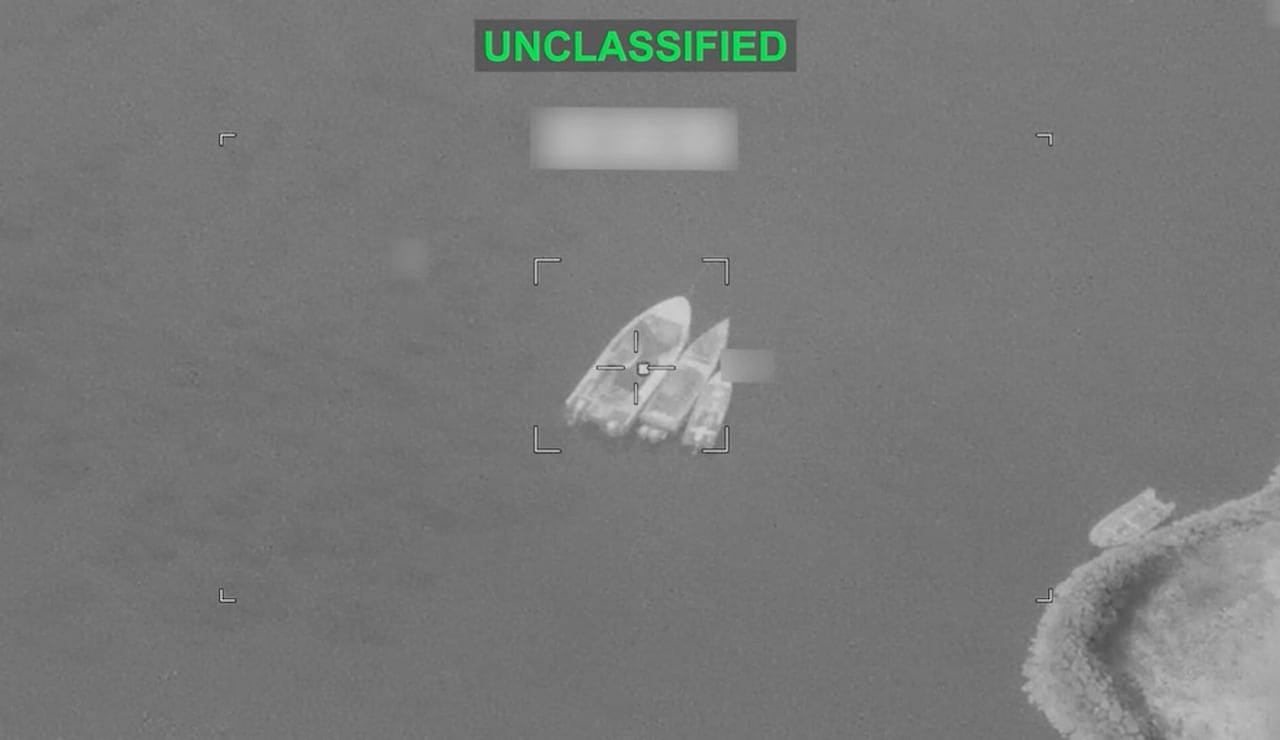 The U.S. Central Command said more than 60 small boats of the Islamic Revolutionary Guard Corps were among the targets hit during the operation. Above, vessels identified by U.S. Central Command as IRGC boats before they were struck. (U.S. Central Command/Reuters)
A source familiar with the Ankara talks said Trump did not repeat his comments about the interim deal being over when NATO leaders met, but he later warned of new strikes before a meeting with Ukrainian President Volodymyr Zelenskyy.
“I’ll give a little warning: We’re going to hit them hard tonight,” Trump told reporters.
At a news conference later, he said he didn’t think the war would restart: “Anything that happens is going to be over very quickly … and will only make it safer, including for oil.”
Shipping data showed at least four oil and gas tankers had turned back rather than try to transit the Strait of Hormuz, which is central to global energy trade.
8 Iranian service personnel killed
Iranian state media said eight Iranian service personnel had been killed in the earlier U.S. strikes on southern Iran.
Iran’s Foreign Ministry spokesperson Esmaeil Baghaei said the U.S. attacks had violated the memorandum by challenging a clause that “emphasizes the Islamic Republic of Iran’s responsibility in determining arrangements for the safe passage of ships through the Strait of Hormuz.”
It was unclear how Iran planned to retaliate in the absence of comment from the hardline Revolutionary Guard, close to Supreme Leader Ayatollah Mojtaba Khamenei and widely believed to be decisively shaping policy since the war began.
Iranian Deputy Foreign Minister Kazem Gharibabadi said that, to be understood, Iran must speak to Trump in the language of force. Iran’s Press TV cited an “informed source” as saying Iran would close the strait in the event of new U.S. attacks.
A spokesperson for the Iranian parliament’s National Security Commission said options for retaliation included withdrawing from the nuclear Non-Proliferation Treaty, changing Iran’s nuclear doctrine and closing the Bab-el-Mandeb Strait at the mouth of the Red Sea, another crucial global shipping route.
Oil jumps, bonds tumble
Trump has, at times, stepped back from threats he’s made against Iran, but oil prices jumped and global bond markets tumbled. Brent crude futures leapt seven per cent, the most in a day since late May, to $79.07 US a barrel.
While that was far below the peaks above $120 US seen at the height of fighting, it was enough to inject fresh inflation risk into the bond market, particularly since months of conflict have drawn down global oil inventories. Wall Street’s main indexes fell.
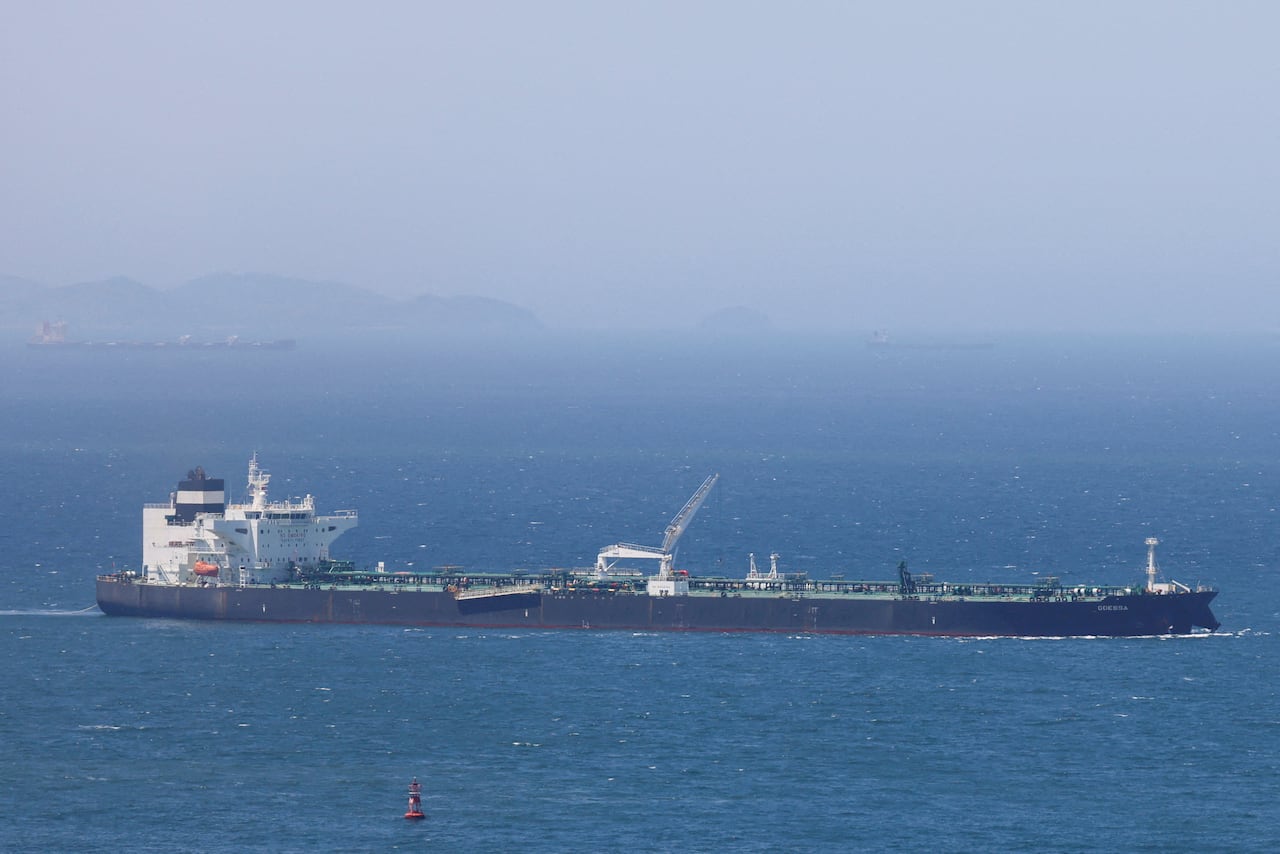 The U.S. revoked a licence allowing Iran to sell oil in response to attacks on three tankers in the Strait of Hormuz. (Kim Soo-hyeon/Reuters)
Iran’s Revolutionary Guard earlier said it had attacked U.S. military sites in Bahrain and Kuwait and had shot down a U.S. MQ-9 drone attempting to interfere in the operation.
Bahrain’s army later said it had thwarted Iranian attacks.
The U.S. had earlier launched strikes and revoked a licence allowing Iran to sell oil, in response to attacks on three tankers in the strait.
Small boats among targets
U.S. Central Command said more than 60 small boats used by the IRGC were among the targets hit during the operation — which occurred prior to the new wave of U.S. strikes on Wednesday — intended to impose a heavy cost on Iran for strikes on shipping in violation of the ceasefire.
Trump said Wednesday the U.S. had “knocked out 28 boats last night” and would probably hit more later.
He confirmed the U.S. had attacked Iran’s main oil hub of Kharg Island and, repeating a warning that U.S. forces could take over the island, said: “They may hit it again tonight.”
Iran’s top joint military command, Khatam al-Anbiya Central Headquarters, called the U.S. strikes a “blatant act of aggression.”
WATCH | Ship captain describes ‘scariest night’ during delays at sea: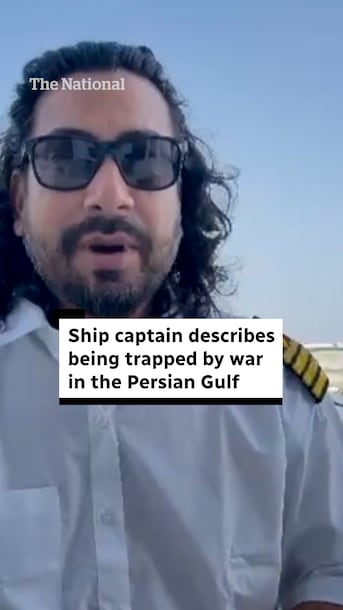
Ship captain describes being trapped by war in Persian Gulf
As the U.S. and Israel-Iran war was raging, Capt. Raman Kapoor was stuck for more than two months on an oil tanker in the Persian Gulf with 23 seafarers begging to go home.
Iranian media reported explosions on Kharg Island, on Qeshm Island and in the southern port cities of Sirik and Bandar Abbas.
A U.S. official told Reuters that strikes targeted Iranian air defence systems, coastal surveillance systems, surface-to-air missiles, anti-ship cruise missiles and drone launch sites.
No civilian deaths were reported in Iran.
Leverage through Strait of Hormuz
Control of the Strait of Hormuz, which runs between Iran and Oman, has given Tehran immense leverage as it negotiates with Washington.
Under the interim U.S.-Iran agreement, the U.S. Treasury issued a general licence to allow the sale of crude oil and petrochemical and petroleum products of Iranian origin through Aug. 21. In revoking that licence on Tuesday, it gave Iran until July 17 to wind down any transactions.
Iran’s Foreign Ministry condemned the move as a breach of the framework agreement.
WATCH | Reverence, fervor on display in Tehran at supreme leader funeral: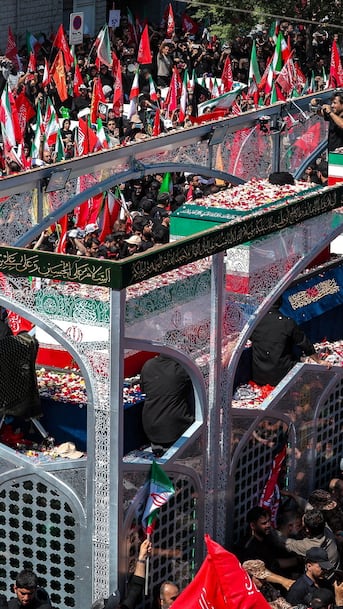
Scenes from Iran’s days-long funeral for assassinated leader
Hundreds of thousands of mourners pack the streets of Tehran to say their goodbyes to Ayatollah Ali Khamenei, Iran’s late supreme leader killed in a joint attack between the U.S. and Israel back on Feb. 28. The four-day funeral procession takes place against the backdrop of a ceasefire with the U.S. as the two countries look for a permanent end to the war, which delayed the ceremony up until now.