


Listen to this article
Estimated 4 minutes
The audio version of this article is generated by AI-based technology. Mispronunciations can occur. We are working with our partners to continually review and improve the results.
An initial round of feedback sessions has wrapped as the plan chugs along to convert two park and rides at Calgary Transit stations into housing.
The Calgary Municipal Land Corporation (CMLC) is working on master plans to build new housing at the parking lots of Dalhousie and Fish Creek-Lacombe stations, both on the Red Line.
The CMLC, which is a wholly owned subsidiary of the City of Calgary, is also analyzing a third site, Anderson Station.
Separately, ground should break this summer at a Franklin station parking lot to convert it into a park and housing units.
Public engagement on the plans for Dalhousie and Fish Creek-Lacombe wrapped at the end of June, with the goal of gathering more feedback in the fall.
Clare LePan with CMLC said so far, one of the biggest concerns they’ve heard is about parking or the lack thereof if this goes ahead. She said work is being done to figure out how commuters could still access parking at or near the station.
“We’re mindful of how we’re addressing that so it doesn’t cause disruption in future years,” said LePan.
It’s unclear at this point how many stalls would remain.
“To be honest, I think there’s enough cars here that there’s going to be a huge problem,” said Rebecca Lyon, who parks at Dalhousie and commutes to work.
“In winter, it’s almost full by 7:30 [a.m.]. Like if you’re here at 7:30, you might not get a spot, which is already the issue.”
A city count of the Dalhousie lot on June 11 showed 701 occupied spots of the total 737 available, making it 95 per cent full. The city didn’t specify what time of day that count occurred. A similar count was not done for Fish Creek-Lacombe.
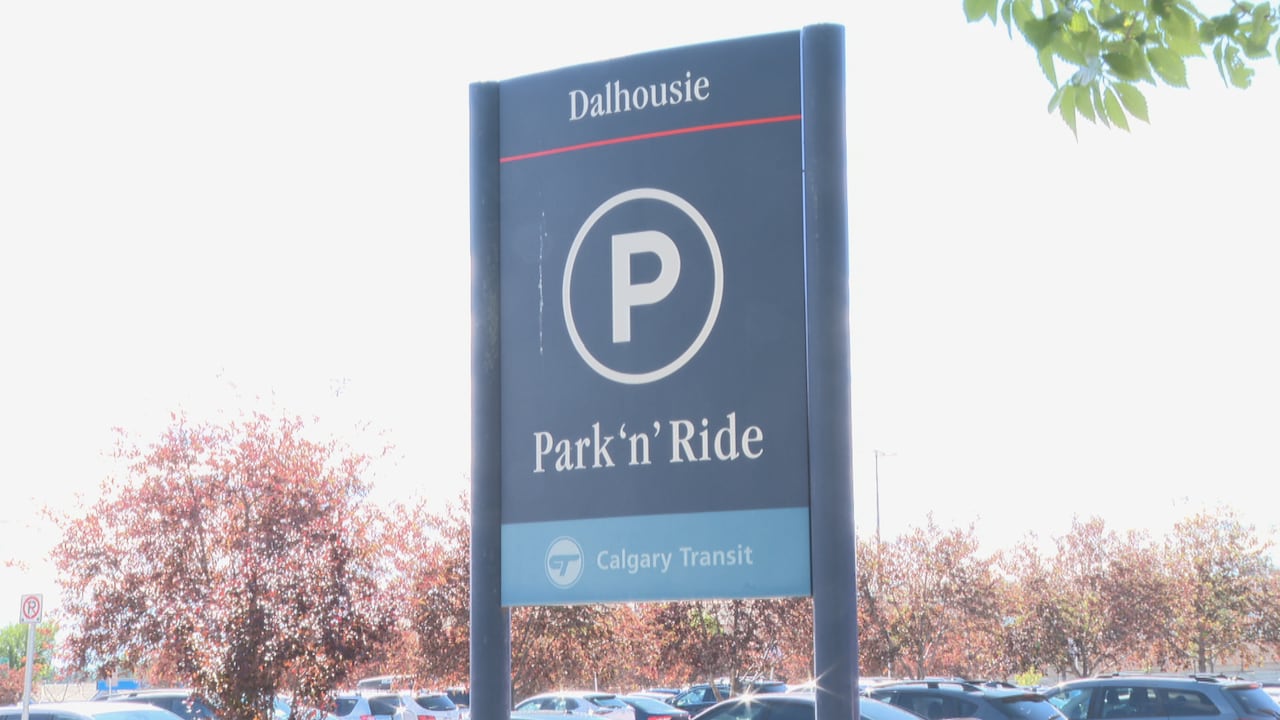 A city count conducted on June 11 showed the parking lot at Dalhousie station was 95 per cent full. (Chelsey Mutter/CBC)
The city says it looks at a number of factors when considering stations for these types of developments, and the scale of the project will vary from station to station.
“Park and Ride utilization is just one of several factors considered when evaluating redevelopment opportunities,” the city’s manager of growth and strategy Matthew Sheldrake said in a statement.
“Factors such as transit operations and access, housing need, market interest, fit within the surrounding community, available infrastructure, proximity to amenities, and alignment with the city’s priorities are also considered.”
David Cooper, principal at transportation planning firm Leading Mobility Consulting, said park and rides are popular for weekday commuters, but are underutilized on evenings and weekends.
He said “transit’s been in the parking game for a while in the suburban areas,” but there are signs that could be starting to change. He notes cities like Toronto and Vancouver have started looking at converting parking near transit hubs into housing in recent years.
“Transit agencies, their mandate is to move people on public transit. It’s not necessarily their mandate to provide parking,” said Cooper, who was also formerly a senior transit planner with Calgary Transit.
He adds it’s important the new housing units are affordable, so that people who use transit can also afford to live near it.
Alex Williams with the advocacy group Calgary Transit Riders also hopes revenue generated from the development will go toward improving transit service.
“Anybody who uses Calgary Transit knows that it’s underfunded and knows that it needs more support,” said Williams.
LePan says CMLC aims to finish up the regulatory side of things this year, and seek approval from city council early next year. Then, if approved, private developers would be able to purchase the land, with the goal of seeing shovels in the ground by late 2027.