
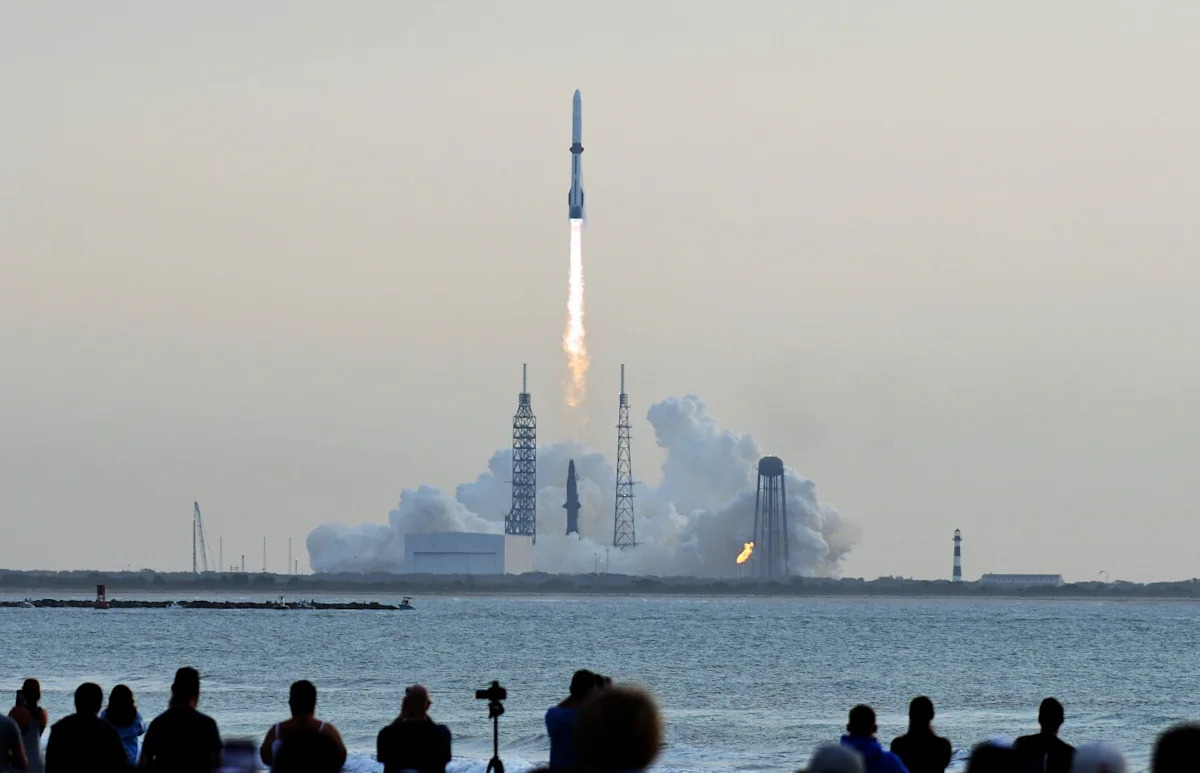
Anadolu/Getty Images
Blue Origin is tapping outside investors for the first time, reportedly looking to raise $10 billion at a $130 billion pre-money valuation, a sign that appetite for private space companies has persisted past SpaceX’s blockbuster IPO.
Blue Origin’s decision to raise outside capital coincides with a rise in investor interest in space startups, not for rocket launches but as key AI infrastructure via data centers in space. In a May CNBC interview, Jeff Bezos said space data centers would become crucial as the cost of AI computing power rises.
Blue Origin filed plans with the FCC in March for Project Sunrise, a 51,600-satellite orbital data center network. The company is also looking to deploy another 5,000 satellites to host an enterprise communications network called TeraWave, built for governments and businesses.
“This is make-or-break time for Blue Origin,” said Franco Granda, a senior analyst at PitchBook. “The $10 billion raise gives them a war chest to rebuild the destroyed pad, return New Glenn to flight and fund TeraWave, the satellite communications network Blue Origin unveiled in January and where much of the new investor interest is actually pointed.”
Sign up for The Daily Pitch newsletter Subscribe
Coatue Management is leading Blue Origin’s round with $4 billion, with Bezos said to invest an additional $2 billion of the $10 billion total, according to The New York Times. Other institutional investors are slated to fill the remainder. So far, Bezos had been personally bankrolling Blue Origin, including by selling his Amazon shares.
“This new space business is nothing about rocket launches anymore,” said Anis Uzzaman, CEO of Pegasus Tech Ventures and a SpaceX investor.
“The rocket launch industry is small…the new paradigm is AI infrastructure, so the satellite internet business is going to grow significantly.”
SpaceX, which propelled the “data centers in space” narrative earlier this year as justification for its acquisition of xAI, rode its wave to a $1.77 trillion IPO last month.
In its IPO filings, SpaceX said it controlled more than 80% of the world’s mass-to-orbit carried by rocket launches in 2025.
“Blue Origin, you can call them a competitor, but they’re still very far,” said Mike Alves, founder of VIDA Vision Fund and also a SpaceX investor. “I don’t know if they’ll ever be able to reach SpaceX.”
This article originally appeared on PitchBook News