
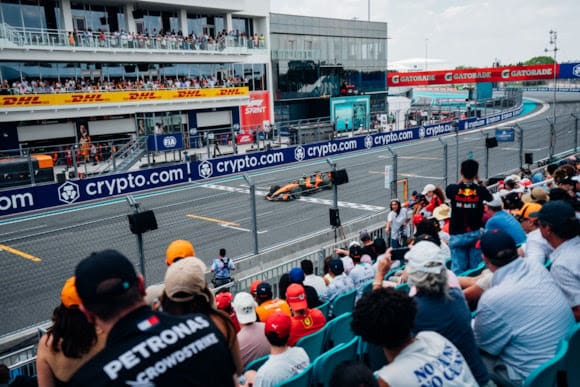
Formula 1 has long been known as the pinnacle of motorsport, where success depends on far more than driver talent alone. Behind every race-winning performance is an enormous investment in engineering, software, aerodynamics, and data analysis. Teams are constantly searching for innovative ways to gain even the smallest competitive advantage, knowing that fractions of a second can determine the outcome of a race.
As technology continues to evolve, it is reshaping every aspect of Formula 1 from car development and race strategy to driver training and performance analysis.
Data Has Become Every Team’s Greatest Asset
Modern Formula 1 cars generate an incredible amount of data during every lap. Hundreds of sensors monitor everything from tire temperatures and brake performance to fuel consumption and engine efficiency.
Engineers analyze this information in real time, allowing teams to make strategic decisions throughout a race. Whether it’s choosing the ideal pit stop window or adjusting race pace to protect tire life, data-driven decision-making has become one of the sport’s biggest competitive advantages.
The ability to process and interpret information quickly often separates championship-winning teams from the rest of the grid.
Aerodynamics Continue to Define Performance
Aerodynamics remains one of the most important areas of Formula 1 development.
Teams spend thousands of hours using computational fluid dynamics (CFD), wind tunnel testing, and simulation software to improve airflow around the car. Even a small aerodynamic improvement can increase cornering speed, reduce drag on straights, and improve overall efficiency.
Because Formula 1 regulations limit how teams can develop their cars, engineers must constantly find creative solutions within strict technical rules.
Artificial Intelligence Is Playing a Bigger Role
Artificial intelligence and machine learning are becoming increasingly valuable tools in Formula 1.
Teams use AI to analyze race simulations, predict tire degradation, evaluate weather conditions, and optimize race strategies before a car even reaches the circuit.
Machine learning models can also identify performance patterns that might be difficult for engineers to recognize manually, helping teams make faster and more informed decisions during race weekends.
Simulation Technology Is Improving Driver Preparation
Drivers spend countless hours in advanced simulators before each Grand Prix.
These simulators recreate every corner, elevation change, and braking zone with remarkable accuracy, allowing drivers to familiarize themselves with circuits before arriving at the track.
Engineers also use simulator sessions to test different car setups and race strategies without the expense of on-track testing.
This combination of virtual preparation and real-world experience helps maximize performance throughout the season.
Innovation Beyond the Racetrack
The technologies developed in Formula 1 often influence everyday driving. Advances in lightweight materials, safety systems, braking technology, and vehicle design have found their way into production cars over the years.
Attention to detail is equally important for vehicle owners. Many drivers ask whether custom fit floor mats worth it is more than just a marketing claim. High-quality custom fit floor mats offer a tailored solution because they are designed specifically for individual vehicle models rather than using a one-size-fits-all approach. 3D scanned custom floor mats are created using precise digital measurements, allowing them to match the contours of a vehicle’s interior more accurately. This helps improve coverage, keeps dirt and moisture contained, and provides a cleaner, more secure fit compared to universal mats.
Regulations Continue to Drive Innovation
Formula 1’s technical regulations are designed to encourage close competition while maintaining safety and controlling costs.
Instead of slowing innovation, these rules challenge engineers to develop smarter solutions within clearly defined limits. Every regulation change creates new opportunities for teams to discover performance gains through creative engineering.
This constant cycle of adaptation keeps Formula 1 at the forefront of automotive technology.
The Future of Formula 1 Technology
The next generation of Formula 1 is expected to rely even more heavily on advanced computing, sustainable power units, and digital engineering.
Artificial intelligence, cloud computing, predictive analytics, and improved simulation tools will continue transforming how teams design cars and prepare for races. Sustainability initiatives will also encourage manufacturers to develop more efficient technologies that could influence the future of road vehicles.
As technology advances, Formula 1 will remain one of the world’s leading laboratories for automotive innovation.
Conclusion
Technology has become the foundation of modern Formula 1. From aerodynamic development and artificial intelligence to simulation software and real-time data analysis, every innovation plays a role in shaping the competitive landscape.
While drivers remain the stars of the sport, success is increasingly determined by the engineers, analysts, and designers working behind the scenes. As Formula 1 continues to push the limits of what’s possible, the technologies developed on the racetrack will continue to inspire improvements that benefit drivers around the world.