
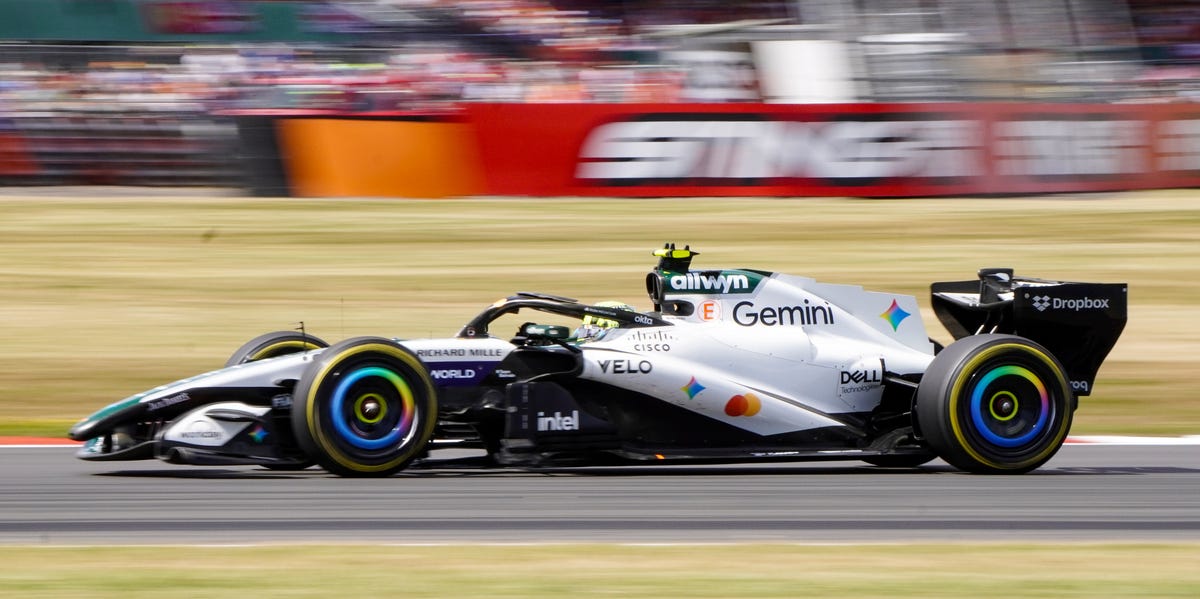
Formula 1 has long been as much about the aero development war between the teams as it is the battles between the drivers on track, and that has never been more apparent than this season. Mercedes has generally managed to stay ahead of rivals, always finding a little more pace as others threaten to catch up. Lately, however, Ferrari has led the chase—successfully enough to score two wins when things didn’t quite go to plan for Mercedes—while Red Bull and McLaren have been a step behind.
As the list of aero updates published by the FIA on the Friday of each race weekend attests, everyone is bringing updates as often as possible and at a greater rate than we’ve ever seen. (The sole exception is Aston Martin, as Adrian Newey and colleagues have put all their focus on one big package for Hungary.) It’s been impressive, given that everything has to be developed within aero testing regulations that limit wind tunnel time, then manufactured and rushed to the track with an eye on the cost cap. All of that puts an emphasis on efficient use of resources, something the top teams are best at—which is why they’re still the top teams.
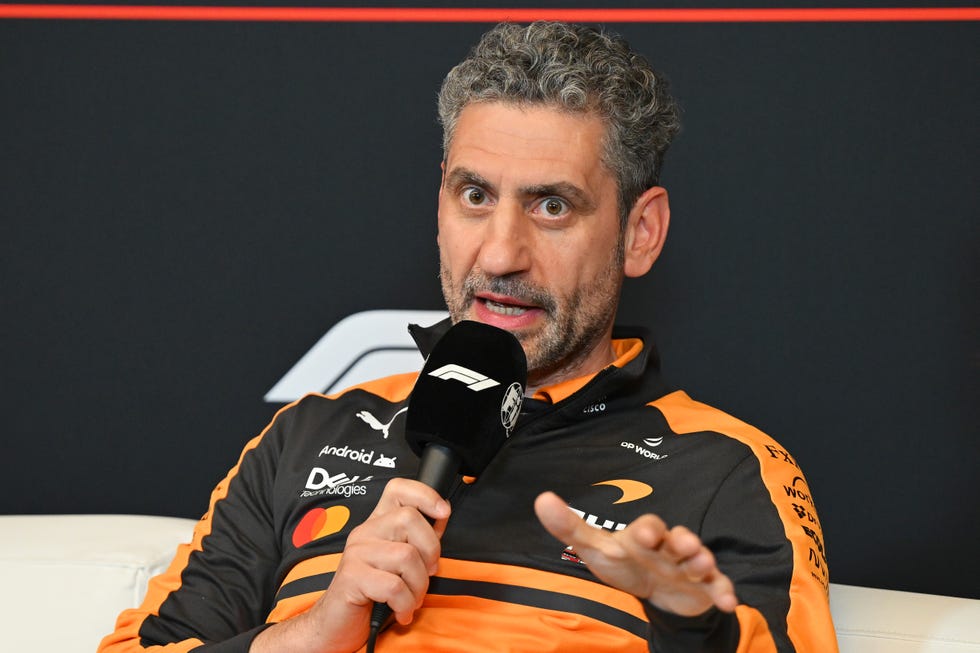
The intriguing aspect is that finding performance really is all about new bits, and not so much about exploiting setup as it was in the previous ground effect era when there was much to be gained from getting the car into the right aero window on a given weekend, especially in terms of ride heights. McLaren boss Andrea Stella did a good job at Silverstone of explaining how it’s all working out in 2026, and why his team has slipped behind its main rivals the development race.
Minas Panagiotakis//Getty Images
“Unlike the previous regulations, the pattern of competitiveness here is quite repeatable,” the Italian noted. “It’s quite consistent, pretty much independent of the track layout. You have Ferrari and Mercedes, and then Red Bull and McLaren at the current moment in time. So it’s not like there’s much sensitivity on track layout, corner type, or setup, which is the second consideration. Last year, if you found a way to run as close as possible to the ground and not have porpoising, or cope with the stiffness, then you would cash in downforce, and you [might] elevate the category of your car. I think this year [it’s] much more difficult through setup to find any sort of opportunity, because the cars are not as sensitive to ride heights as they were.”
Instead, here in 2026, it’s all about bringing as many new parts as often as possible and throwing downforce at the car. In recent years, McLaren has done a better job than most of bolting on new parts and finding performance, but this year has proved more difficult. “The battleground is, first of all, the developments themselves,” said Stella. “Every team bringing upgrades, at least looking at the top four competitiveness trace; I think everyone has delivered at least two- to three-tenths for every major upgrade that they have taken. The second key battleground is the concepts that, from an aerodynamic point of view, are not mature yet.”
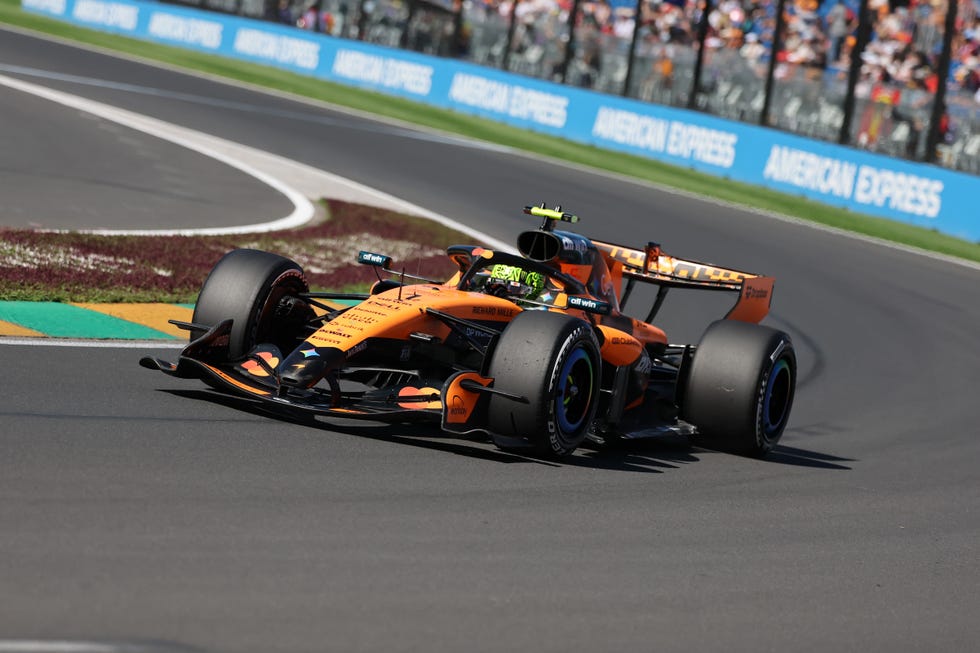
Heading into this season, teams had different ideas on what directions to take and what their main focus should be. They have all now had time to see what works and what doesn’t, both on their own cars and those of rivals, and that has in turn fed back into R&D. Stella is not too proud to admit that McLaren didn’t get it entirely right as it developed the MCL40, and is now pursuing different concepts.
NurPhoto//Getty Images
So why didn’t the team get it right first time? It didn’t help that, as constructors’ world champions throughout the research phase during 2025 (and into the first six months of 2026), McLaren was at the top of the FIA’s aero testing restrictions league table, with proportionally less wind tunnel running than everyone else. In addition, the team was embroiled in a tight title battle with Max Verstappen and Red Bull until the very last race of last year, while Mercedes and Ferrari weren’t in the fight—and thus had more freedom to focus on their new models.
“Even if we didn’t bring big upgrades, definitely, we needed to keep paying attention from a technical point of view to the MCL39,” said Stella. “We needed to ensure that we maximized our performance race-by-race, because the challenge from Verstappen was becoming more and more material. During the [MCL40] development I think we adopted some directions from a conceptual point of view, that as we learn more about the 2026 regulations, I would say that we are redirecting.”
In other words: we got it wrong, others had better ideas, and having done the calculations, we’re now taking an alternative route we expect to work more effectively. “I have to say that our technical explanation as to the fact that we are not as competitive as we would have liked is that, in some areas of the car, our directions that we took in the initial design of the car, they need revision,” Stella continued. “And after we have seen some of the cars, and after we have done some more work of studying with concepts you should pursue, we have understood that we should review the concepts in some areas. And then, there, start to iterate.”
The fruits of that research have been working their way through the design and manufacturing stages in Woking. It’s a process that takes a few months, with as noted a keen focus on the cost implications. The first updates that reflect that change are set to reach the track at the Hungaroring, the last race before the summer break. “We have now a clear direction in terms of development,” said Stella. “But it takes in some areas of the car—or it took—a couple of months to get it to be realized. So we should see in Hungary the first results of this approach, and then hopefully, more and more upgrades for the rest of the season.”
Only time will tell if those changes help to propel the Papaya cars to the front of the field—and of course, Mercedes and the rest of the teams won’t be standing still.