

Listen to this article
Estimated 4 minutes
The audio version of this article is generated by AI-based technology. Mispronunciations can occur. We are working with our partners to continually review and improve the results.
The Clearwater River Dene Nation (CRDN) in northern Saskatchewan says it will be stopping vehicles along Highway 955 running through its territory starting in August.
CRDN announced Monday the Industry Monitoring Checkpoint will be stationed with uninformed and deputized CRDN guardians on the reserve north of La Loche, about 500 kilometres north of Saskatoon.
A news release said this is to collect information from companies, contractors and other industry representatives travelling through the checkpoint, and is in response to an “unprecedented pace of uranium exploration occurring throughout the western Athabasca Basin.”
John Desjarlais, an engagement specialist for CRDN who works for Kihew Consulting and Research, said the checkpoint is not a blockade and will not restrict access to vehicles.
“It is just to understand who’s coming and going,” said Desjarlais.
Desjarlais said there have been recent incidents where CRDN members felt there was a “lack of engagement, disregard for some of the land users, their rights, and ability to use [land].”
CRDN announced a similar checkpoint in 2021 due to uranium exploration and COVID-19.
Uranium is used for fuel in nuclear power reactors. It is a naturally occurring radioactive element that is mined and milled to create uranium concentrate that is processed to create fuel for nuclear reactors.
This year the Canadian Nuclear Safety Commission approved the construction of two new uranium mines in the Athabasca Basin: the Denison Mines Corp.’s Wheeler River Project and the NexGen Energy Ltd. Rook I Project.
These are the first uranium mines to be approved for construction in Canada since 2004, according to a news release from the Saskatchewan government.
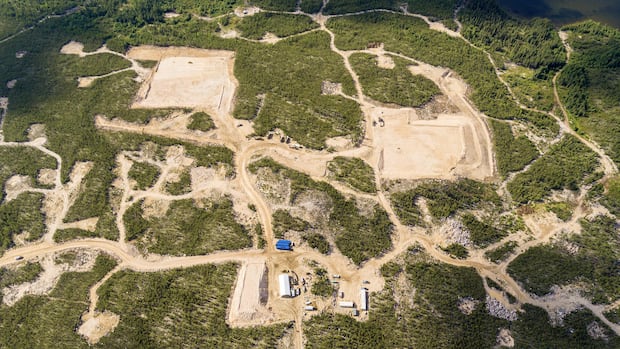
Paladin Canada Inc. is proposing to build a uranium mine and mill at Patterson Lake South, about 900 kilometres north of Saskatoon in the Athabasca Basin.
The Rook I and the Patterson Lake South projects would use Highway 955.
Dale Huffman, president of Paladin Canada, said in a statement to CBC Indigenous that the company will co-operate with CRDN’s request, and that it has established an ongoing relationship with the nation.
“We are currently conducting advanced exploration work, with approximately 50 people on site,” said the statement.
“Activity levels are relatively modest and the number of vehicles moving through the area, including La Loche, is limited.”
CBC Indigenous reached out to NexGen Energy Ltd. for comment but did not hear back by time of publishing.
Rapid expansion
It its news release, CRDN said it does not oppose responsible uranium exploration, and has a constructive working relationship with several companies operating on its territory.
However, it said the rapid expansion of uranium exploration “has created an unacceptable level of uncertainty” of who is conducting work, where exploration is occurring and the cumulative level of industrial activity.
“[CRDN] is just against development that doesn’t include them meaningfully in terms of transparency and understanding the activities,” said Desjarlais.
Desjarlais said the nation wants to ensure that the land is able to be used for ceremony and hunting purposes with little disruption.
The Saskatchewan Ministry of Highways said in a statement to CBC Indigenous that it is aware of the CRDN initiative, and that public highways are critical transportation corridors.
“The ministry remains committed to working with CRDN’s leadership to ensure industrial development occurs responsibly and transparently while keeping Highway 955 safe and accessible for all users,” said the statement.
“The ministry will continue to discuss legally compliant solutions to address the concerns raised by CRDN.”
The ministry did not say if the checkpoint is in conflict with the provincial Highway and Transportation Act or the Transportation Safety Act.