
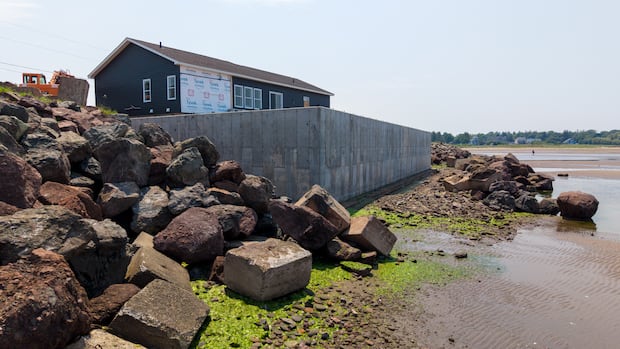
A new concrete seawall near Parlee Beach is outside the jurisdiction of both the province and the local municipality, provoking neighbours to call for better regulations when it comes to New Brunswick coastlines.
The concrete wall, about 4 metres tall, wraps around much of a small beachfront property in Cap-Brûlé. A newly built house sits on the property, close to the edge of a former sloping rock border, which is a typical method of erosion control in the area.
The wall was built along the outer edge of the rock border, displacing the rocks, and effectively extending the usable property.
Neighbour Tom Delworth said he understands the need for property owners to protect their homes with rock armour. But he worries about the potential impact a concrete wall may have and about the lack of government oversight of such a project.
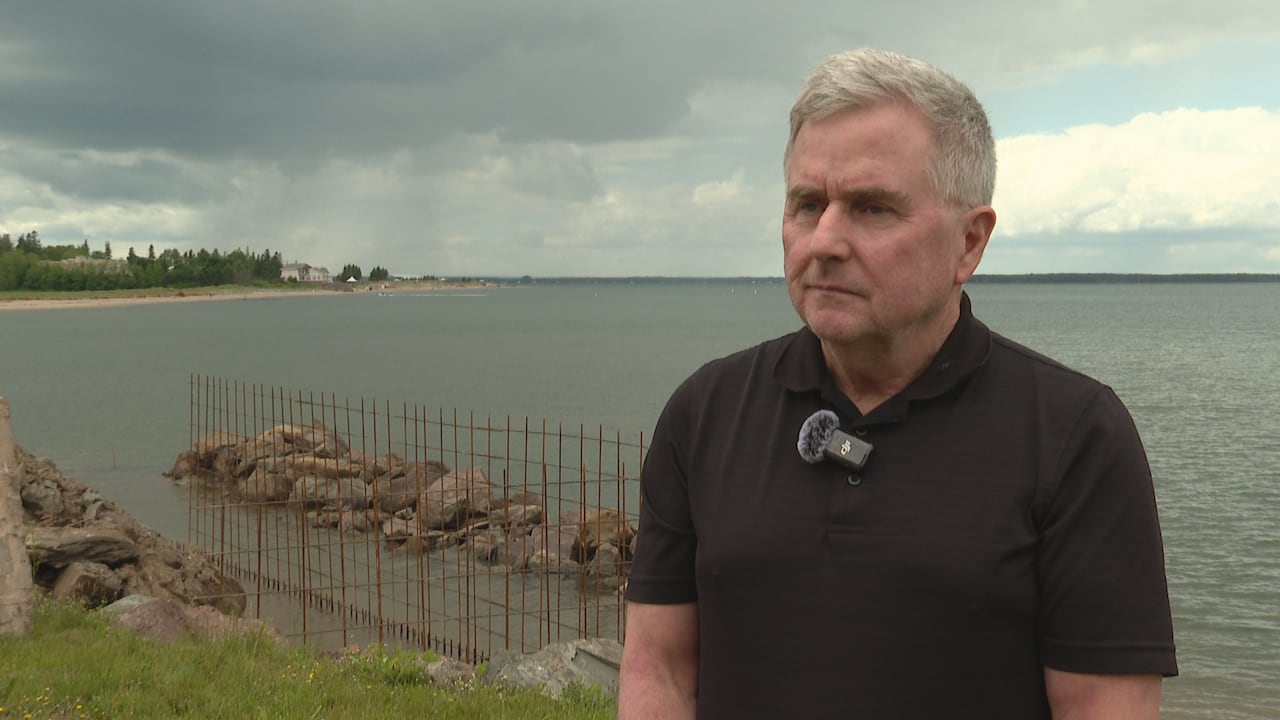 Tom Delworth, a seasonal resident of Cap-Brûlé, is concerned the seawall may contribute to erosion on the beach. (Rhythm Rathi/CBC)
“How do we put more teeth, have better regulations to preserve our coastal environment here in New Brunswick?” Delworth asked.
Coastal geomorphologist Jeff Ollerhead said when it comes to shoreline protections, “a vertical wall is about the worst thing you can do.”
The Mount Allison University professor hasn’t examined the site in person but said that in general, vertical and non-permeable structures are the least sustainable and most damaging options for those looking to keep erosion at bay.
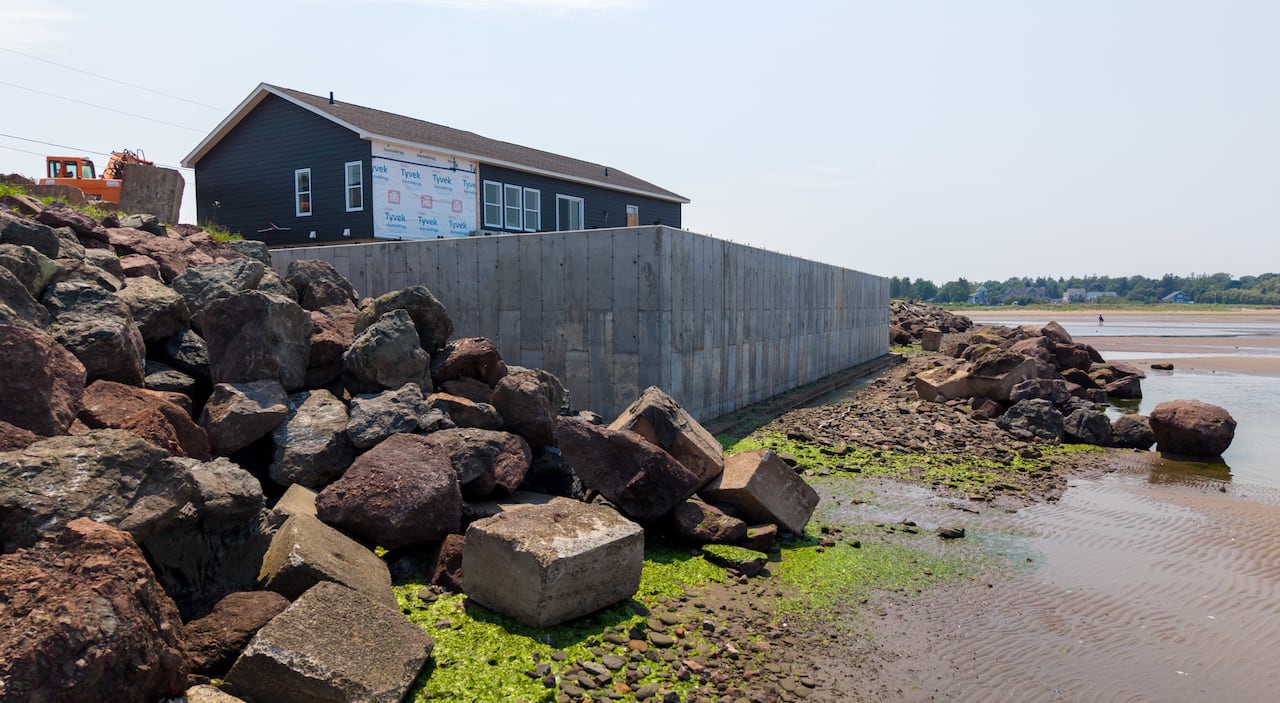 The concrete wall is built along what surveyors determined to be the ordinary high-water mark, in line with the outer edge of the existing sloped rock border. (Roger Cosman/CBC)
While sloped protections help dissipate wave energy, vertical walls often cause “scour,” meaning they reflect wave energy back and downward, increasing erosion at the base of the structure.
Hard shoreline protections can also reduce the width of beaches over decades, he said.
There are places in the world where “there is no walkable beach left anymore,” Ollerhead said, because of “structures that were built, say, 50 years ago to protect communities.”
Outside of government jurisdiction
Once resident Sara Mitton noticed construction begin on the wall in mid-June, she found it wasn’t easy to find which government department had authority over the new coastal structure.
“One person says that it’s not theirs, and, you know, go and speak to another entity,” Mitton said.
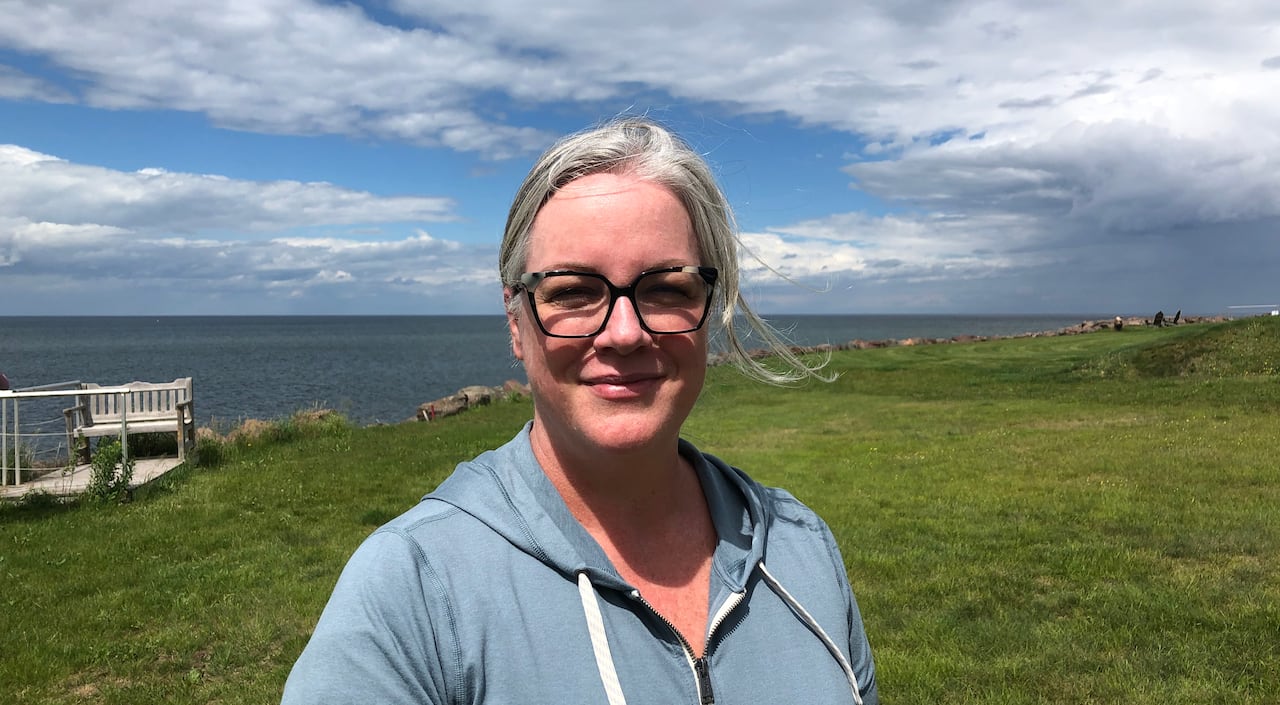 Sara Mitton, a year-round resident of Cap-Brûlé, reached out to various levels of government when she saw construction of the wall begin. (Erica Butler/CBC)
Plan 360, the regional planning and development authority, issued permits last year for the new house and garage on the property.
But spokesperson Marc André Chiasson said via email that the agency does not issue permits for coastal protection measures or structures. Chiasson said two provincial departments — Natural Resources and Environment — are “responsible for coastal protection.”
But both provincial departments said the new concrete seawall is outside their jurisdictions as well.
Vicky Lutes, spokesperson for Environment and Local Government, said the department has inspected the site and found it needed no permit, because there are no “regulated watercourses or wetlands” within 30 metres.
WATCH | ‘The regulations are not clear,’ resident says: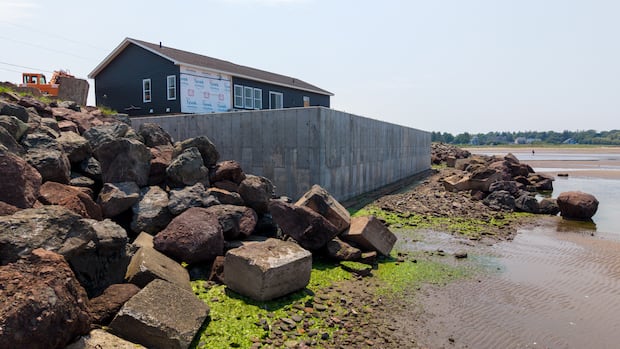
Concrete seawall has neighbours calling for stronger coastal-development rules
Neighbours are concerned a lack of clear rules has allowed construction of a beachfront seawall in the southeast New Brunswick community of Cap-Brûlé.
In 2002, the department created a coastal areas protection policy for New Brunswick that establishes a “coastal lands buffer area” and describes restrictions on what can be built within the zone.
But that policy does not stand on its own, Lutes said, and “only comes into effect when another law, permit, approval, or regulatory process is triggered.”
In this case, she said, staff found this section of the Cap-Brûlé beach did not fall under the permitting process for watercourse and wetland alteration, so the coastal areas protection policy does not apply.
Lutes said the department is reviewing its policy, and working on a state of the coast report, which will be available for public comment later this year.
Above the ordinary high-water mark
The Department of Natural Resources also says it doesn’t have jurisdiction over the seawall, because it wasn’t built on public land.
Any land below the ordinary high-water mark — the average of where high tides normally reach on shore — is Crown land.
Department officials said a licensed surveyor visited the site and confirmed findings of a previous survey commissioned by the landowner, which shows the ordinary high-water mark in line with the foot of the current rocky slope.
But that has left neighbours scratching their heads.
“From a common sense perspective, it’s a little strange,” Delworth said, noting that the base of the wall is frequently underwater.
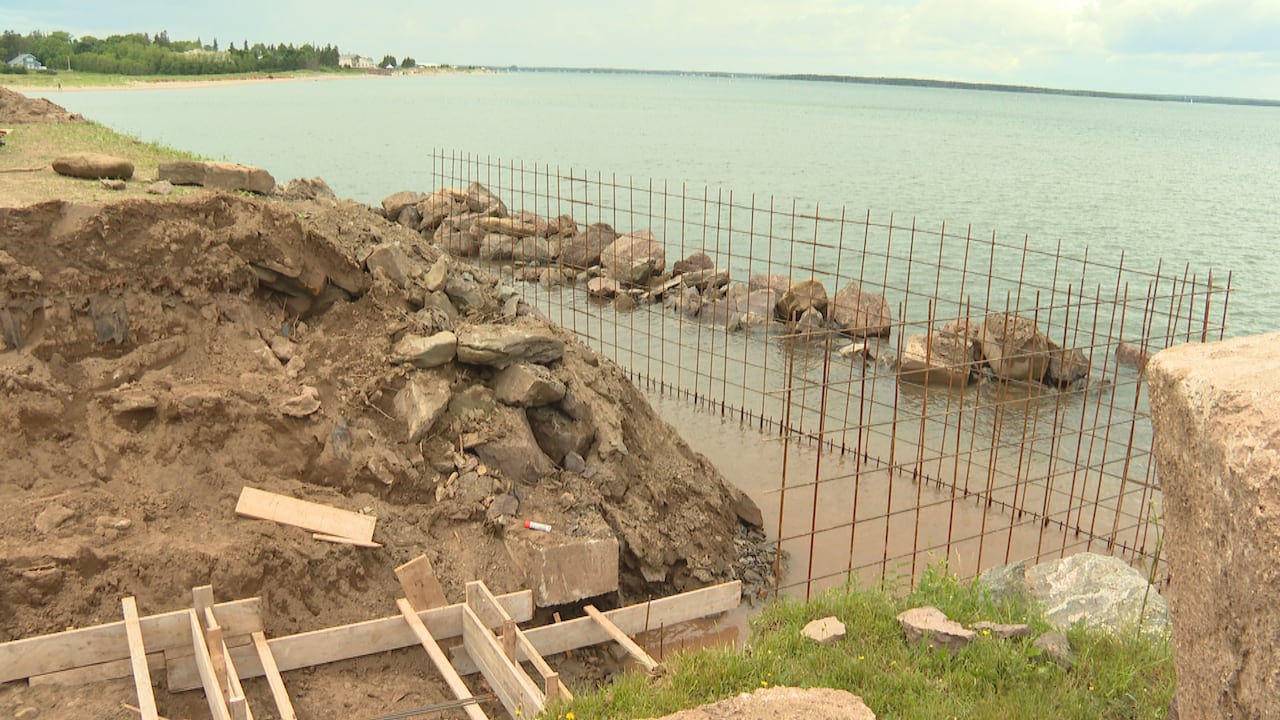 The base of the seawall under construction on June 19, 2026, with the tide on its way out. (Rhythm Rathi/CBC)
“I think there’s a little bit of a contradiction between what most of us see as the ordinary high-tide mark versus what’s been defined,” he said.
CBC News was unable to contact the property’s owner but spoke to a developer who said no permits were needed for the construction and declined to comment further.
Policies seem ‘a little inadequate’
Natural Resources Minister John Herron said that although the wall was determined to be outside his department’s jurisdiction, it “raised more than just an eyebrow,” around his office.
It also has prompted him to seek advice about how provincial policies protect beaches in the area.
“They’re treasures,” said Herron, “and actually a defining feature for [the province] as well.”
 Natural Resources Minister John Herron says the construction of the seawall didn’t break any rules but did raise eyebrows in his department. (CBC)
Natural Resources department will consult experts in coastal policies to “challenge ourselves to make sure that we understand — that we’re getting it right,” Herron said.
“It seems a little inadequate from my perspective today.
“If we have this conversation this time next year, we might have some findings about doing some things differently than we do today,” said Herron.
On the other hand, “we might learn that the regulatory regime that we have in place mirrors most jurisdictions.”
The reality of rising sea level
Ollerhead, the Mount A professor, said coastal regulations around the world reflect the values of different communities.
“Some are more fixated on private property rights, and some are more fixated on public rights,” he said.
In New Brunswick, “there’s lots of policies, there’s lots of things you can suggest to people, but there’s no regulation.”
In Ontario, he said, the government established coastal setbacks that are adjusted over time, to reflect erosion and storm damage.
“That is the reality of rising sea level,” Ollerhead said.
“Eventually you have to move up and/or move back. … Or you accept that you’re going to build concrete walls and that eventually it’ll be like a wharf, right? There will be walls and there will be water, but there will be no beach anymore.”