

Listen to this article
Estimated 4 minutes
The audio version of this article is generated by AI-based technology. Mispronunciations can occur. We are working with our partners to continually review and improve the results.
Quirks and Quarks54:00Pumas vs. penguins, and other clever carnivores
On this week’s showcase of the best of Quirks & Quarks, we bring you some of our favourite stories about predators from the past season.
Smaller tyrannosaur solves decades-long debate about the T. rex
Small tyrannosaur fossils belonging to a dinosaur about half the size and a tenth of the mass of other Tyrannosaurus rex fossils have been puzzling scientists for years. A new study, co-led by James Napoli at Stony Brook University, has finally revealed that they’re not just young T. rexes, as was previously suspected, but an entirely new species. The research was published in the journal Nature.
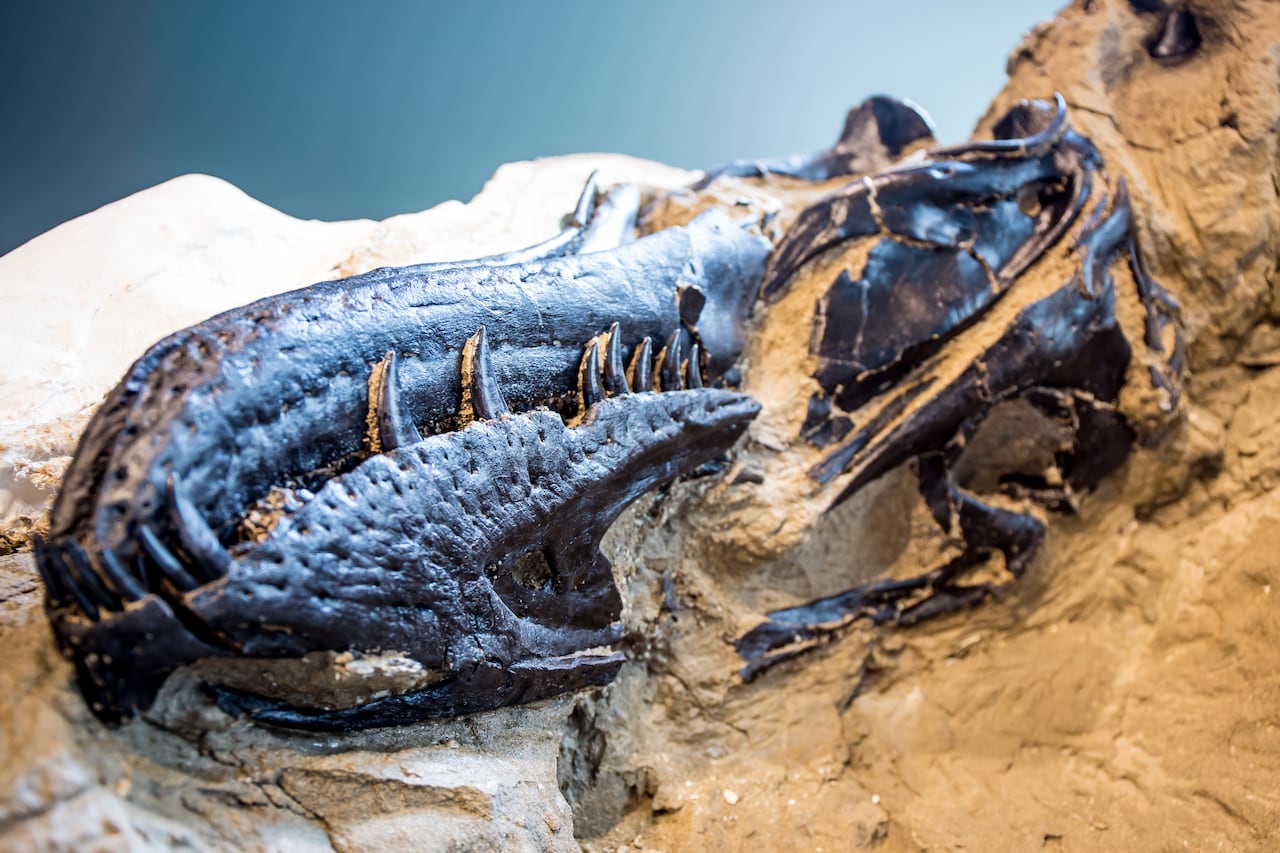 The snout of Nanotyrannus. For years paleontologists assumed this was a teenaged T. rex but new research suggests this is actually a separate smaller species. (N.C. Museum of Natural Sciences)Among Yellowstone’s top predators, wolves beat out cougars as the top dog
After years of conservation work, Yellowstone National Park is now home to two thriving apex predators: cougars and wolves. For the past nine years, researchers including PhD candidate Wesley Binder have been tracking these animals to see just how they interact with each other in an ecosystem. Their study found that, for the most part, wolves are initiating contact with cougars, mostly to steal their kills, and that cougars are changing their behaviour as a result. The results were published in the journal PNAS.
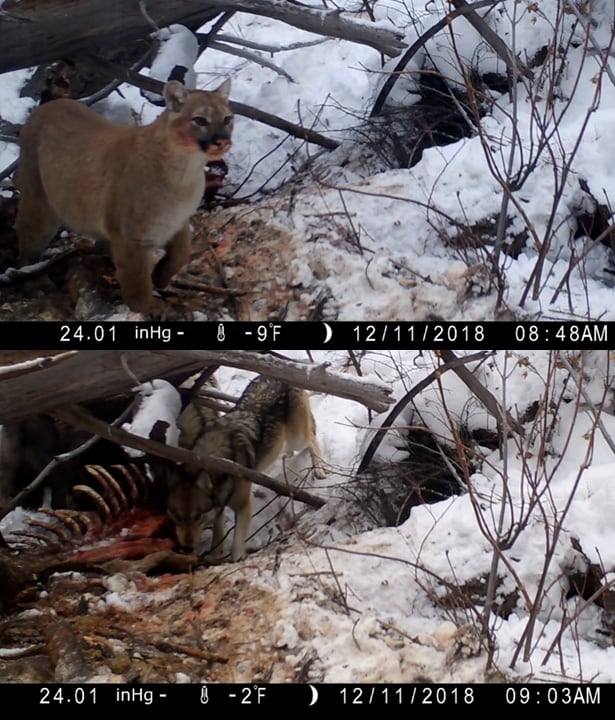 A cougar was captured on a remote camera feasting on a kill. Fifteen minutes later, a wolf was captured dining on the same kill. A new study found that wolves tend to chase cougars away from their hard-earned meals. (Wesley Binder)Bears with us. Tracking grizzlies in B.C.
Scientists and guardians from five First Nations of the Nanwakolas Council are working together to track individual grizzlies across the southern Great Bear Rainforest in B.C. Using camera traps and machine learning techniques, they’ve developed an automated system through the BearID Project to identify individual bears and track them over time and space. We spoke with conservation scientist and director of the BearID Project, Melanie Clapham, and Tashina James-Matilpi, from the Tlowitsis First Nation, the project’s guardian logistics coordinator for the Nanwakolas Council.
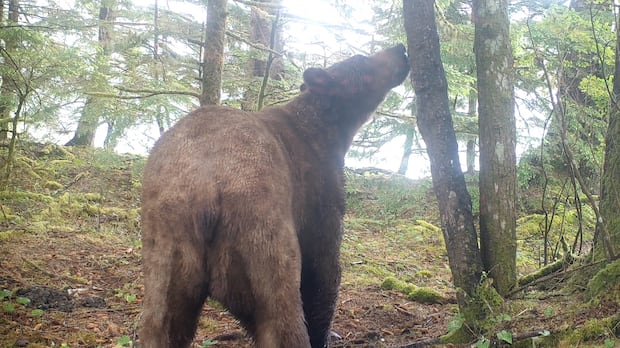
Tracking individual grizzly bears with facial recognition software
Camera traps and facial recognition software are providing a rare glimpse into individual grizzly bear behaviour in the southern B.C.’s Great Bear Rainforest. Credit: BearID Project/Nanwakolas Councilil
Cleveland’s ancient car-sized sea monster had bony fangs made out of its skull
The Dunkleosteus terrelli was a car-sized, armoured fish that lived 360 million years ago in the shallow sea covering what is now Cleveland, Ohio. Since its discovery in the 1860s, many fossils of its head have been found and put on display. Now, in a new study, a team of researchers led by Russell Engelman, a graduate student in biology at Case Western Reserve University, reveals that the Dunkleosteus was an oddball, even among other ancient armoured fish, with a head mostly made of cartilage and bony blades instead of teeth. The research was published in the journal The Anatomical Record.
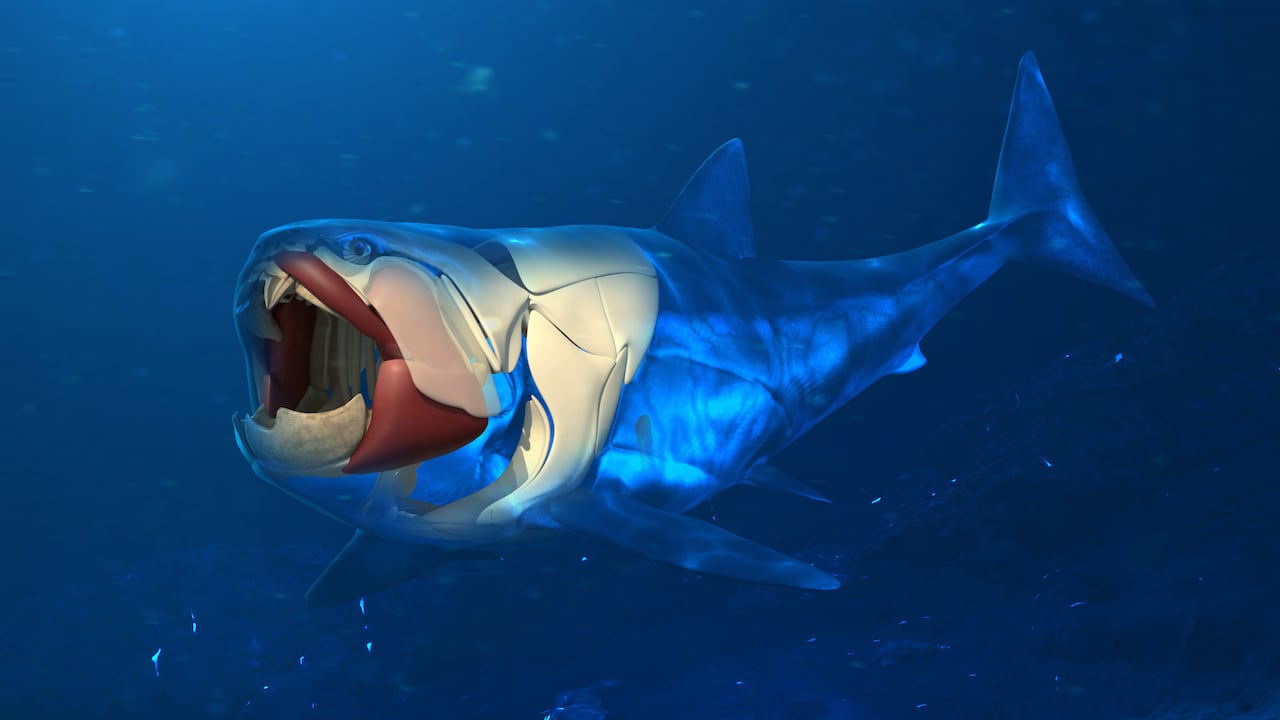 Life reconstruction of Dunkleosteus with location and position of jaw-closing muscles identified in this study (ewa wahine’oniuhinui/Russell Engelman/Case Western Reserve University)Wild wolves run for their lives when they hear Big Bad Humans nearby
Wolf encounters with humans have been on the rise, and one of the prevailing theories is that wolves were becoming fearless. To see if that was indeed the case, Western University biologist Liana Zanette deployed hidden, automated, camera-speaker systems in Poland’s Tuchola Forest, and played sounds of humans, birds and dogs whenever wolves walked by. The footage reveals that wolves are very much still afraid of humans, as is their prey. The research was published in the journal Current Biology.
WATCH | Wolves run away from human voices twice as fast as other sounds :
Why penguin-eating pumas live closer together in Patagonia
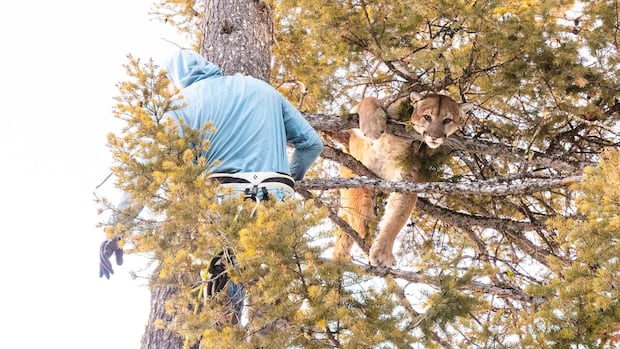
Pumas are making a comeback in Patagonia, after almost a century of being chased out by humans. Now that the big cats are coming back to an ecosystem that evolved without them, they’re feasting on penguins instead of their typical prey animals. Using trail cameras and tracking collars, ecologist Mitchell Serota, from Duke Farms in New Jersey, tracked what this change in diet could mean for the apex predators. He discovered that thanks to this new food source, the typically solitary animals are living closer to other pumas, making this region now home to the most dense puma population in the world. The research was published in the journal Proceedings of the Royal Society B.
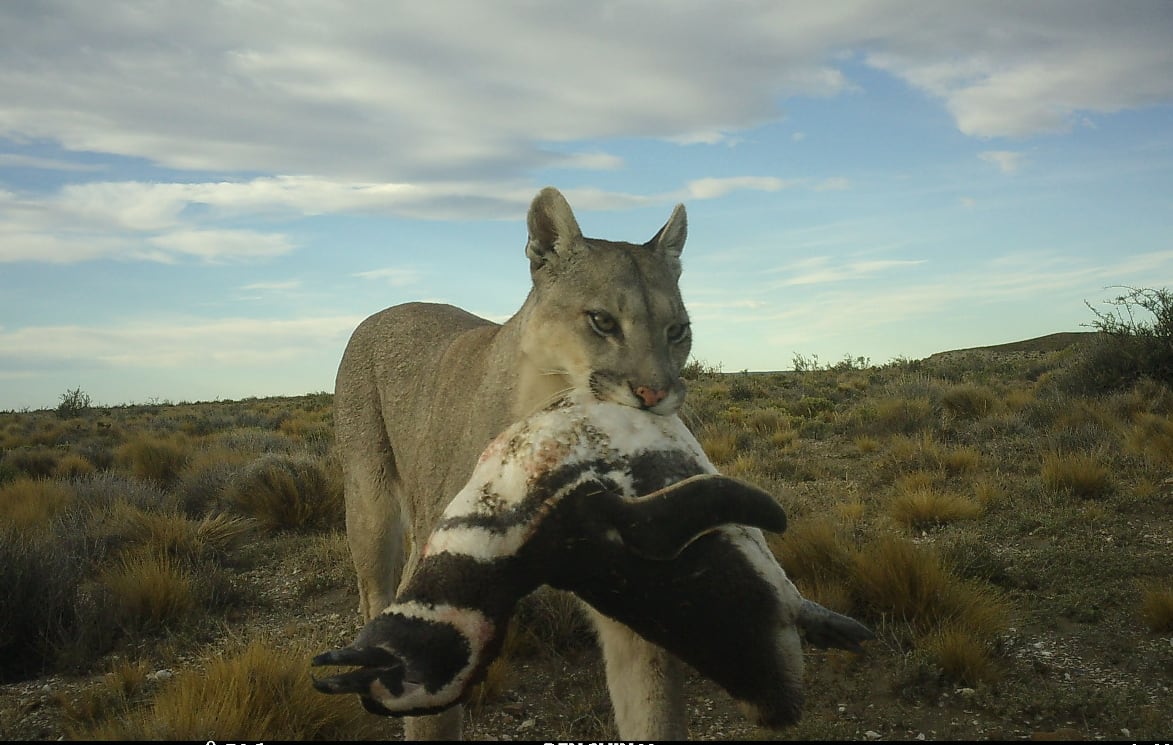 Pumas have made a comeback in Patagonia after almost a century of being chased away by humans. But researchers have found they are eating different prey animals, like penguins, which spread along the coast in the predators’ absence. (Mitchell Serota)