
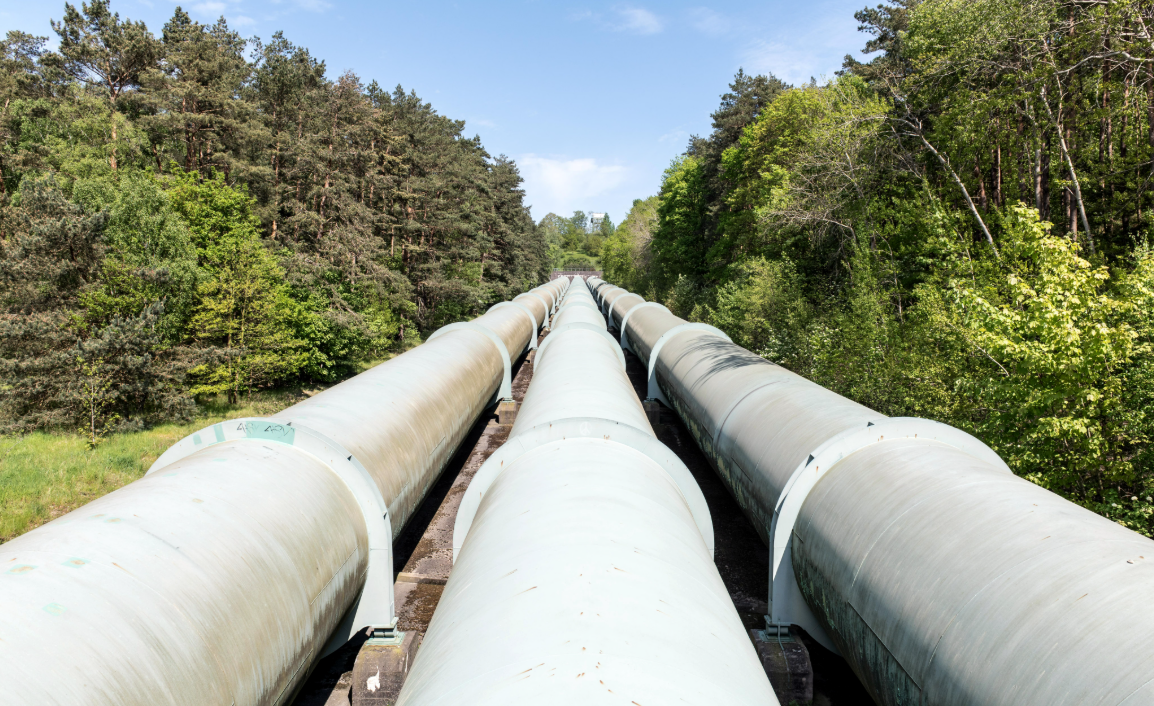
Northwatch says the Northern Shield Energy Corridor is the wrong direction for Canada in the middle of a climate crisis
Not everyone is enamoured with the prospect of a crude oil pipeline coursing through Northern Ontario.
While Northern mayors see the local economic spinoffs of a proposed 3,300-kilometre-long pipeline to move Alberta crude oil to refineries in Sarnia, environmental advocacy group Northwatch sees “all risk and no rewards” based on the uncertainties surrounding such a massive infrastructure project.
Alberta Premier Danielle Smith and Ontario Premier Doug Ford made the announcement July 6 on the Northern Shield Energy Corridor, a west-to-east pipeline corridor, and released a simplified map of the preferred route which appears to parallel existing highway and natural gas pipeline corridors across Northern Ontario.
In a news release, Brennain Lloyd, project coordinator for Northwatch, said such a project would have “huge impacts” on the environment.
“First there’s the level of disturbance – to land, water bodies, ecosystems, other land users – along the route if a new pipeline was to be constructed,” said Lloyd
“Second, a rupture or failure to the pipeline could result in a catastrophic release of crude oil, which would have serious local and potentially downstream impacts.”
Lloyd added Canadians should be concerned about an infrastructure project that’s designed around extracting hydrocarbons – the molecular building blocks of fossil fuels – and shipping them to market.
“We’re in climate crisis, and all efforts should be to phase out oil and gas, not promote and expand it.”
The group said the routing of the project is reminiscent of TC Energy’s proposed Energy East pipeline, a 4,500-kilometre project, designed to carry 1.1 billion barrels of crude from Western Canada refineries to export terminals on the East Coast. Plunging crude oil prices, fierce opposition, and a tough federal environmental regulatory regime forced TC Energy to terminate the project in 2017.
The pipeline is being promoted by the provincial governments as a nation-building and national security infrastructure that could conceivably move 500,000 barrel of oil a day with a possibly expansion to up to 800,00 barrels.
There is no approved start of construction date nor estimated price tag for the pipeline.
Under the Infrastructure Ontario flag, a feasibility study is due out by year’s end with input from a consortium of accountants, project cost estimators, engineers, builders and consultants in GHD Limited, Ernst & Young LLP (EY Canada), Mokwateh, AtkinsRéalis Group Inc., Wood PLC, and Turner & Townsend.