

The Manitoba Métis Federation is taking another big step as it expands its real estate footprint in downtown Winnipeg — and sets its eyes on yet another iconic and historic property.
The federation has bought the former National Research Council of Canada properties at Ellice Avenue and Balmoral Street, MMF President David Chartrand announced Friday.
The plan is to use them to house the Métis child and family services authority, a training program for licensed practical nursing, installing MRI units and leasing out laboratory space, he said.
The National Research Council’s former laboratory building and office tower at 435-445 Ellice Ave. were vacated after the federal agency announced in 2012 it would sell the buildings.
The federation has wanted the 230,000-square-foot set of buildings since 2019 and put up an offer in 2020, but the purchase was held up by legal wrangling and the sale that fell through.
The MMF had put an offer on the table of $14.4 million back then. Chartrand wouldn’t reveal on Friday how much the organization paid now, six years later.
“I’m happy.… That’s what matters the most,” he told CBC Manitoba Information Radio guest host Cory Funk in a Friday morning interview.
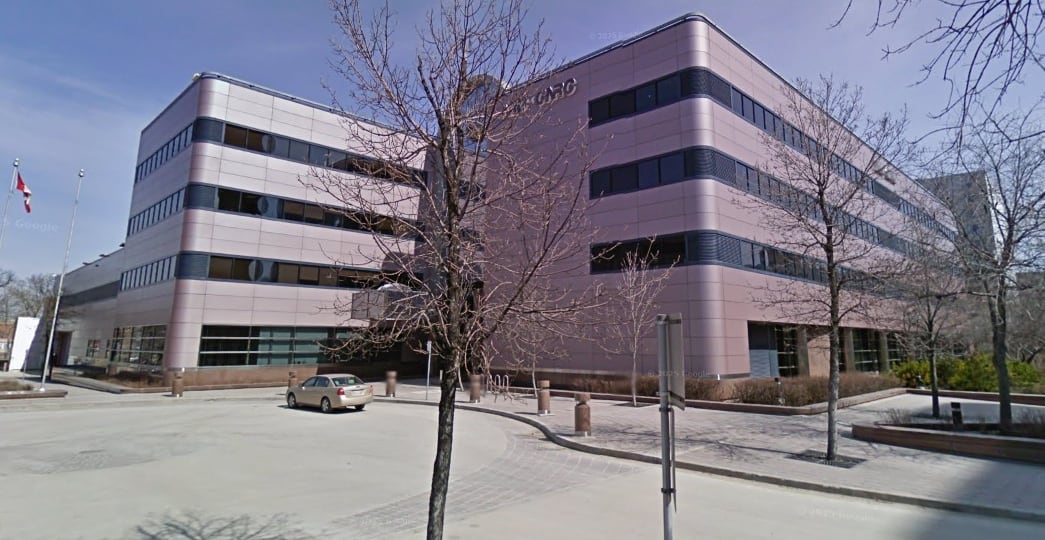 The former National Research Council of Canada buildings in Winnipeg have been bought by the Manitoba Métis Federation. (Google Street View)
Whatever the price was, there’s money still in the bank for the federation, which is now looking at Winnipeg’s Fort Garry Hotel, a 113-year-old national historic site on Broadway. It was put up for sale earlier this year, for the second time in seven years.
“We looked at it before. We’re back looking at it again, along with some other investors, and we’re looking at potentially making an offer,” Chartrand said.
“We’ll see if the numbers work out. The Fort Garry’s such a beautiful place and has such an historic significance to our city, so we’re looking at that as a potential offer.”
There is no sale price attached to the Fort Garry listing. The city has the property assessed at $9 million, but when it was put up for sale earlier this year, some real estate industry professionals suggested the market value may be in the tens of millions.
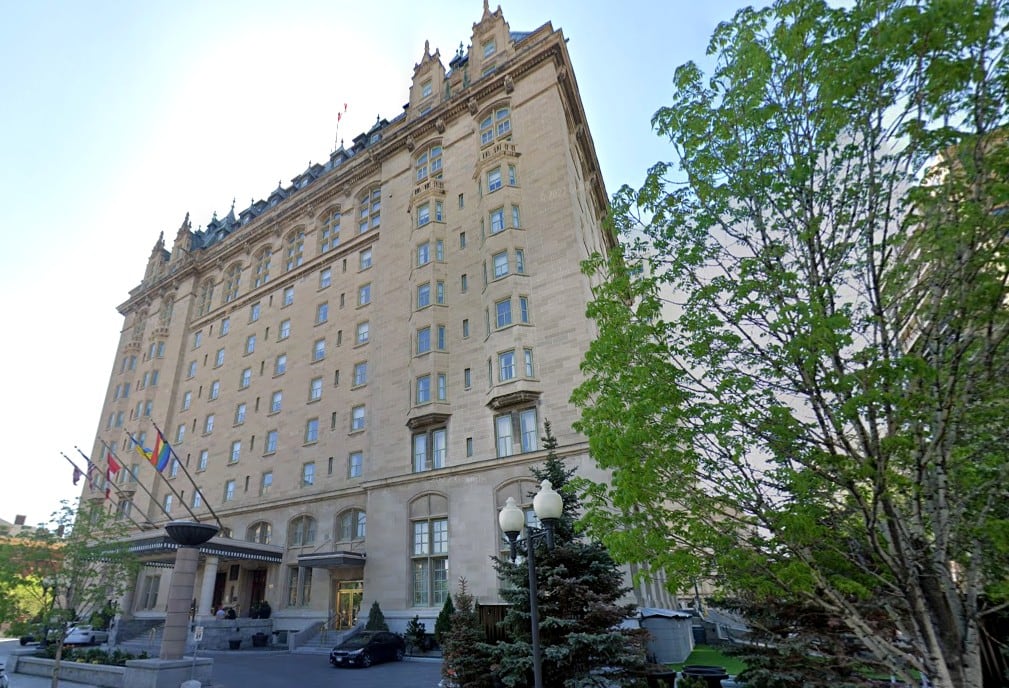 The Métis Federation is partnering with investors to consider making a bid to buy the Fort Garry Hotel in Winnipeg, says Chartrand. (Google Street View)
The MMF property portfolio already exceeds one million square feet.
It includes the former Bank of Montreal building at Portage and Main, the 36-storey former Bell MTS office tower at 333 Main St., the former Wawanesa Insurance buildings at 200 Main and 165 Fort St., office buildings and a parking lot at 191 and 179 Pioneer Ave., and the MMF home office at 150 Henry Ave.
‘Remarkable’ investment: mayor
Mayor Scott Gillingham said the scale of the Métis Federation’s investment in Winnipeg “is truly something remarkable.”
“The MMF is becoming one of the most important partners in the revitalization of our downtown,” he said at an event announcing the purchase Friday morning, and the new project has “the potential to support new research, innovation and collaboration.”
The federation’s commitment shows a confidence in downtown that is backed by statistics, Gillingham said, noting the city approved permits for more than 1,000 units of housing in the core area last year.
“Never in Winnipeg’s 151-year history have we approved 1,000 units of housing in a single year for downtown,” he said.
The mayor also pointed to the major redevelopments of the former Portage Place mall and Hudson’s Bay Company building, as well as the Railside at The Forks and the Market Lands in the Exchange District, as signs of “a real sense of momentum building.”
Chartrand said the purchase is not just a vote of confidence for downtown — it’s a necessity.
“If you don’t have downtown, you don’t have no city, I don’t care what anybody says. You have suburbia world and you’ll have no core of who you are.”
About 120 Métis Child, Family and Community Services staff will move into the former research council building, transferring from their current site at 2000 Portage Ave.
The plan is to then renovate that Portage location into an apartment block, Chartrand said.
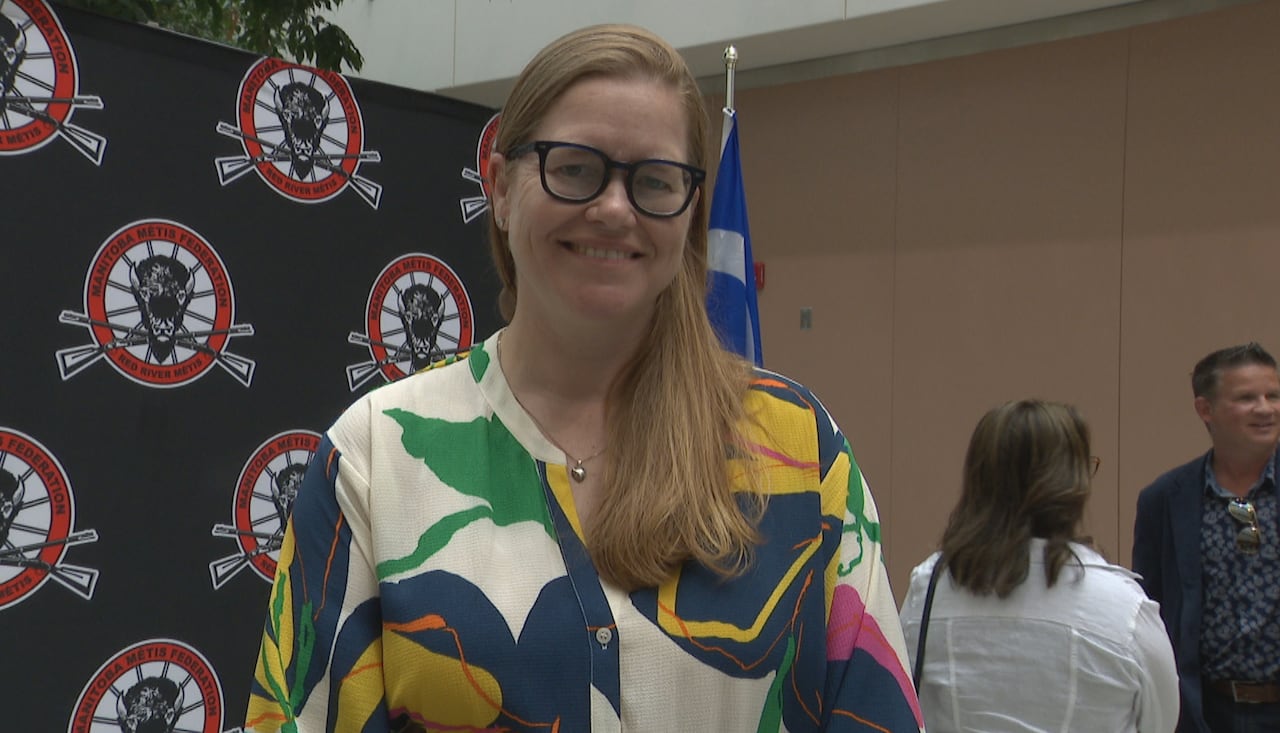 Andrea Ladouceur, president and CEO of the Bioscience Association Manitoba, says new lab spaces in the MMF building will open up opportunities for independent researchers. (Kevin Nepitabo/CBC)
Andrea Ladouceur, president and CEO of the Bioscience Association Manitoba, said the purchase is good news for science.
Winnipeg is a global research hub, she said, but less than one-third of the lab space in the province is currently open for independent research.
Research companies want to be able to come in and partner with organizations to get work done, said Ladouceur.
“The assets that are here in this building will allow those researchers to continue that work to make those discoveries, whether they are the small discovery that unlocks the next step or that quantum leap that says cancer is now curable,” she said at Friday’s announcement.
“They need these lab spaces to do that work.”
 University of Winnipeg vice-president Jitendra Paliwal said an invitation from the MMF to use space in the former research council buildings is welcome. (Kevin Nepitabo/CBC)
Jitendra Paliwal, the vice-president of research and innovation at the University of Winnipeg, applauded the federation for having the vision to use the building for its originally intended purpose, rather than gutting it for something else.
“Facilities like these are incredibly difficult and incredibly expensive to recreate today,” he said, pointing to specialized electrical systems, shielding, cooling, backup power and “countless other design features that would have been very, very difficult, if not impossible, to retrofit in another building.”
The university’s campus is kitty-corner from the site site, and Paliwal welcomed the invitation from the federation to occupy space, if needed.
Some U of W programs, such as health research, are constrained by the campus’s limited space, but no decisions have been made about moving, he said.
“We are excited to work together … [to] help ensure that this remarkable facility continues to generate ideas and discoveries,” he said.