
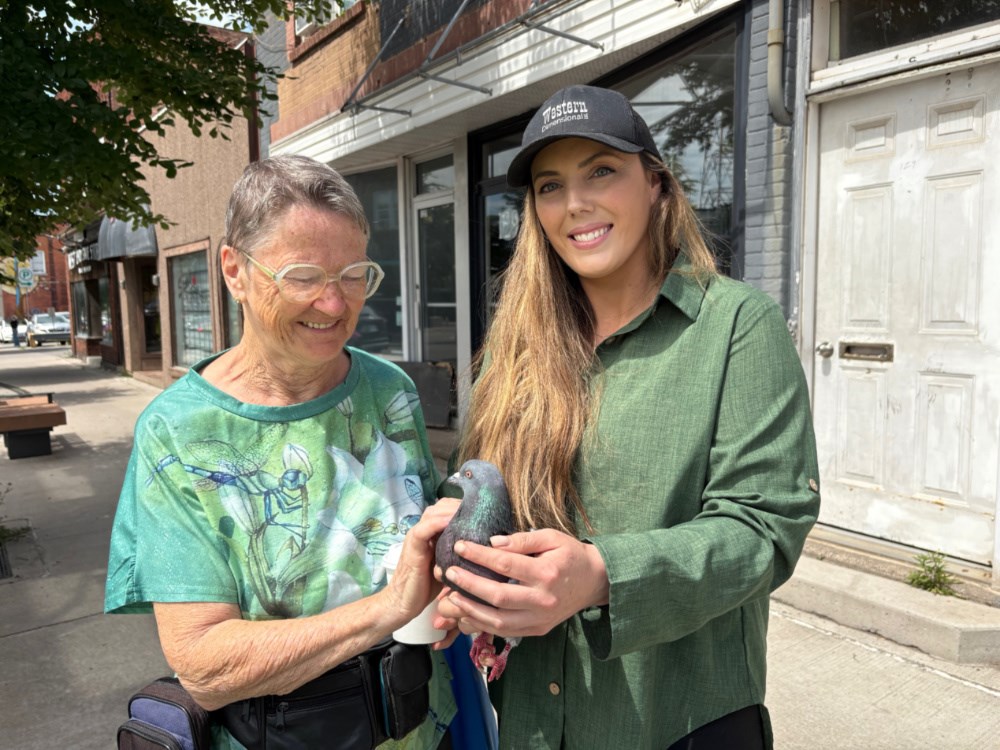
Algoma Public Health said two Algoma birds have been confirmed to have West Nile this year, but Aleigha McLean has seen 10 birds that she thinks had the disease
Algoma Public Health has confirmed two cases of West Nile virus in local birds this year, but a local falconer suspects the true total is in the double digits.
Aleigha McLean says she’s seen 10 birds exhibiting signs of the disease – all of which died quickly.
McLean regularly connects injured wildlife with rehabilitation centres around Ontario.
“This year, I’ve probably gone out for 10 crows and ravens that I assume have had it just because of the condition that they’re in,” she said.
“It mostly affects their central nervous system, so a lot of them get blindness and almost a twitching type of behaviour.”
After its discovery in Uganda in 1937, the virus made its way to Canada in 2001 – but it has only been documented in Algoma over the last couple years.
In 2024, two local birds were confirmed to carry the disease, with another four – and a horse – confirmed by the health unit in 2025.
According to Dr. Phinehas Omondi, a public health and preventive medicine resident with Algoma Public Health, birds are the primary culprit behind the disease’s spread to northern Ontario.
“Most of the cases are found in southern Ontario, but recently we’ve been seeing cases coming up towards northern Ontario as well,” he said.
“Because it’s primarily an infection of birds, it’s usually brought by birds that are migrating from different regions.”
Most people who contract the virus experience no symptoms. A unique set of circumstances needs to unfold for human transmission: a mosquito bites an infected bird and then passes the disease to a human.
“If they feed on a bird that is infected, then they’ll acquire the infection and then transmit it to people,” Omondi said.
“It doesn’t really transmit from person to person; it has to be from a bird to a person through a mosquito.”
In people who develop symptoms, they might experience body aches, fever, a headache, or mild rash – with fewer than one per cent of people going on to experience severe symptoms that can impact the central nervous system.
After trying to help local birds this spring and summer, McLean suspects she caught the disease.
From body aches to chills and other flu-like symptoms, she became ill a few days after coming into contact with a sick bird
“I think it’s pretty rare. It has to be in a perfect set of circumstances,” McLean said. “Obviously, with me responding to sick birds, I’m more likely to get it.”
The official tally for human cases of West Nile in the Algoma region is one, which Omondi said was confirmed last year.
Although the disease is in the region, Omondi said the risk to humans is low at this time. There are actions people can take to protect themselves and prevent it from spreading.
“What we ask is that people still need to take precautions against mosquito bites and also reduce mosquito breeding grounds around their homes,” he said.
In a press release earlier this week, Algoma Public Health recommended people take the following actions to protect themselves from the virus:
Wear light-coloured clothing outdoors – mosquitoes are attracted to darker colours.
Wear tightly woven but loose-fitting clothing – mosquitoes can still bite through thin clothing.
Wear long-sleeved shirts, long pants, socks, and shoes outdoors to protect exposed skin.
Apply an approved mosquito repellent and follow the manufacturer’s instructions, including age-specific directions for children.
Limit time outdoors from dusk (sunset) to dawn (sunrise), when mosquitoes are most active.
Repair or replace screens on windows and doors to help keep mosquitoes out of your home.
Remove standing water from your property where mosquitoes can breed. To reduce standing water:
Empty or dry water from old tires, buckets, flowerpots, children’s toys, wading pools and other outdoor items.
Clean eavestroughs regularly to prevent clogs that trap water.
Tip fishing boats and gear onto their sides to drain.
Change water in bird baths and outdoor pet dishes at least twice a week.
If you find a dead bird, the health unit says to avoid handling it with bare hands.
“Algoma Public Health does not accept dead birds,” the press release said.
“You can contact the Canadian Wildlife Health Cooperative to learn more about their surveillance and submission programs.”