

Listen to this article
Estimated 5 minutes
The audio version of this article is generated by AI-based technology. Mispronunciations can occur. We are working with our partners to continually review and improve the results.
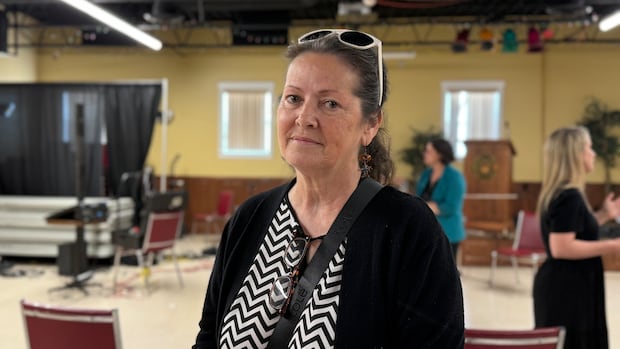
Cornwall resident Colleen McGaughey is still weighing her options as voters in District 16 prepare to head to the polls in Monday’s byelection.
Cornwall-Meadowbank was previously represented by former Progressive Conservative cabinet minister Mark McLane, who died in March.
McGaughey, who describes herself as an undecided voter, attended a roundtable discussion hosted by CBC’s Island Morning on Thursday to hear directly from the candidates.
“Health care, of course,” she said when asked about the issue that matters most to her.
That was one of several key issues discussed during the roundtable featuring Progressive Conservative candidate Caley McDonald, Liberal Leader Robert Mitchell and the Green Party’s Tayte Willows. NDP candidate Craig Nash was unable to attend due to health issues.
McGaughey said she has a family doctor, but her husband has much more limited access to care.
“We’re very fortunate because he’s a fairly healthy individual, but that’s not the case for everyone,” she said.
“We heard a lot about hiring new physicians and nurse practitioners. It’s great to hire someone, but if they’re not treated with the respect that they deserve, they’re not going to stay, and that’s been shown over and over.”
LISTEN | District 16 byelection roundtable:
Island Morning50:42District 16 byelection roundtable
We invited all candidates running in the District 16 byelection to take part in a roundtable discussion. While NDP candidate Craig Nash was unable to attend, Liberal candidate Robert Mitchell, Green candidate Tayte Willows and PC candidate Caley McDonald joined us to discuss leadership, seniors’ housing, health care and other key issues.Candidates differ on health-care solutions
Each of the candidates named health care as a top concern, but they differed in their fixes.
Willows, who works for Health P.E.I., said the first step is to “take the politics out of health care,” pointing to concerns about how the province’s health-care system is being undermined by political interference.
“We need to take that approach out of it so that professionals who know what they’re doing can be engaged and can create a long-term plan for our province.”
But Mitchell said what some call “political interference” is often just an MLA doing their job.
“It’s not political interference when you’re helping your constituents fight through a system that has been deteriorating for many, many years,” he said.
Mitchell said the bigger issue is a lack of accountability and transparency in the system, adding that he pushed for legislative changes to improve that when he was health minister with the then-Liberal government in 2019.
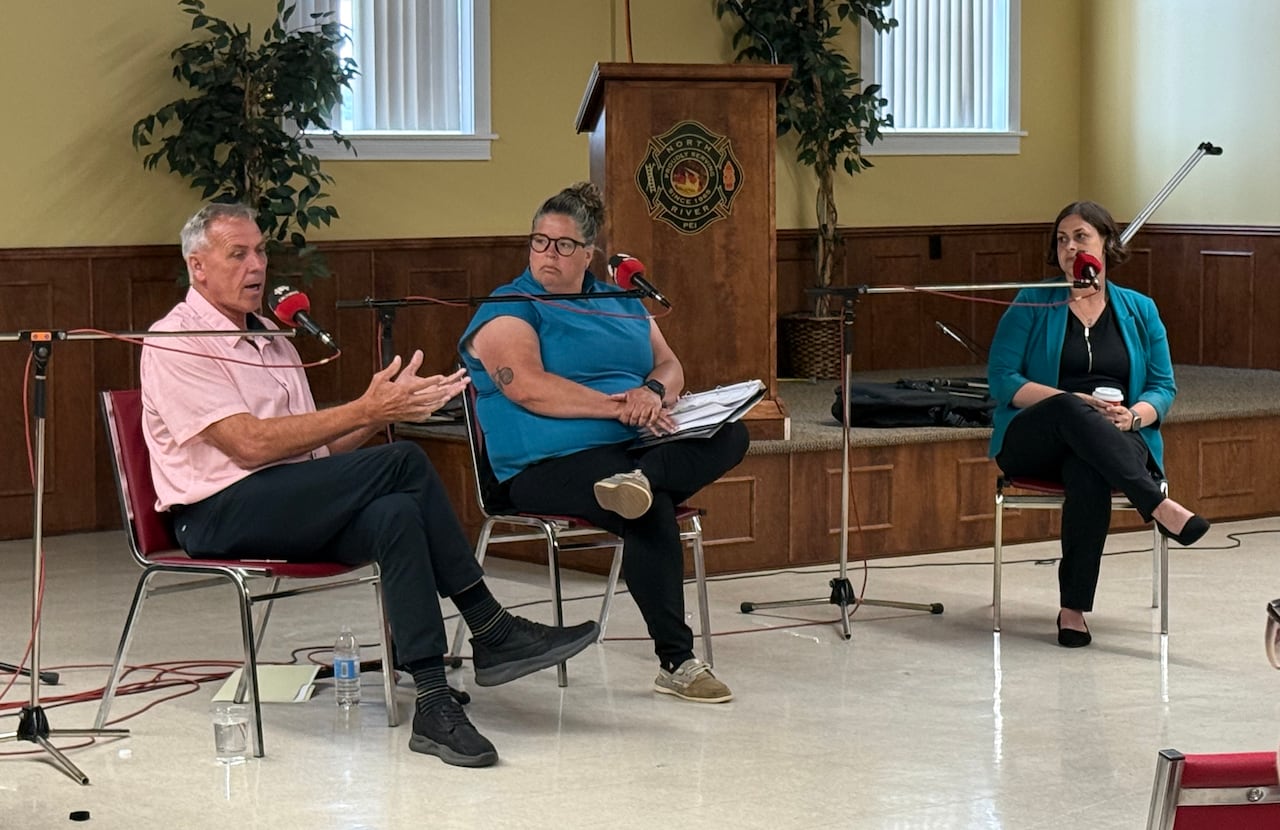 From left, Liberal Leader Robert Mitchell, Progressive Conservative candidate Caley McDonald and Green Party candidate Tayte Willows debate during a roundtable discussion hosted by CBC’s Island Morning on Thursday. (Thinh Nguyen/CBC)
McDonald, a registered massage therapist, said the province has made progress, but more work is needed on both recruitment and retention.
“We’re training Islanders right here at home now through the UPEI medical school, which is a huge bonus,” she said. “Those graduates are going to have the opportunity to stay at home and do their residencies here.”
She added that expanding patient medical homes, where Islanders can access different types of care providers in one location, will be an important part of improving access.
District’s growth brings infrastructure worries
McGaughey said she’s also concerned Cornwall’s rapid growth is outpacing the services available.
“There’s a lot of talk about growing and people coming to the community, and I think it’s time for everybody to take a step back and make sure we have the infrastructure for the people that are already here,” she said.
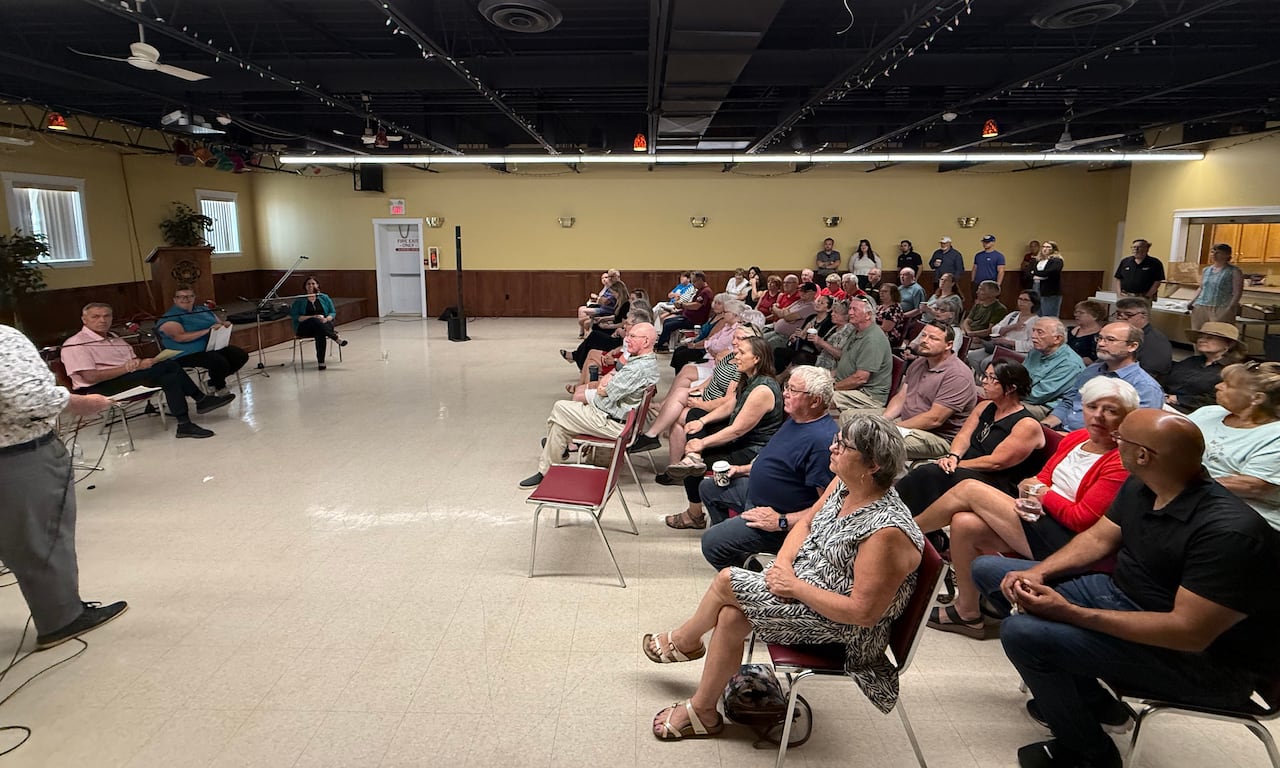 Community members gather at the Ember Room of the North River Fire Department in Cornwall on Thursday for an all-candidate roundtable hosted by CBC’s Island Morning. (Thinh Nguyen/CBC)
All three candidates agreed that Cornwall, one of P.E.I.’s fastest-growing communities, needs more investment in infrastructure.
They also said they would advocate for the expansion of the town’s APM Centre.
Care for seniors another a key concern
Seniors’ care also came up during the discussion after an audience member asked about long-term care in the growing community.
McDonald highlighted the PC government’s recent announcement that construction will soon begin on Cornwall’s first long-term care facility with 80 new beds, which is expected to open in 2029. The Mount Continuing Care Community has been awarded the contract to build the home.
“Most people that I’ve talked to are very excited about them, because … we can move our young family to Cornwall, and now we can see ourselves through all of our senior years and still live in Cornwall,” McDonald said.
Mitchell said residents support more long-term care, but he has heard concerns about the ownership model.
“They would like a provincial, not a private entity, but a public service in the town,” he said. “They want to know that it’s protected within government and within the confines of how government works.”
WATCH | Cost of living, health care among major issues in P.E.I. byelection: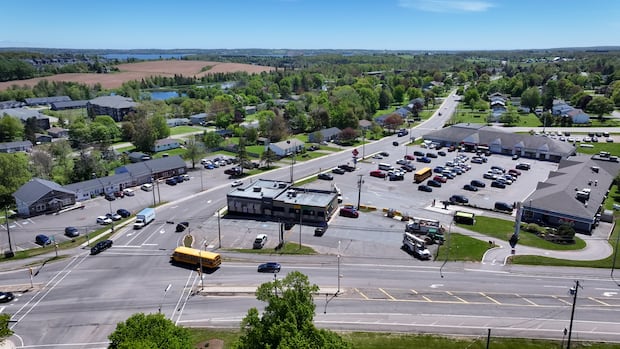
Cost of living, health care among major issues in P.E.I. byelection
The four candidates in the Cornwall-Meadowbank byelection are in the final days of their campaigning, and what they hear at the doors is similar to what Islanders have heard in previous elections. But, as CBC’s Cody MacKay explains, this time those concerns might just be getting louder.
Willows said the conversation should extend beyond building more long-term care beds.
“What’s the plan to keep people in their homes as long as they possibly can? If they can’t stay in the home where they’ve been … are there other options other than a nursing home in Cornwall?” she said.
“We do have a number of really wonderful units that are built to be accessible. They’re built to be in seniors’ community, and I think those are the things we need to be looking at.”
She pointed to the need for well‑built, accessible seniors units, proper year‑round conditions like heating and air conditioning, and strong wraparound supports to help seniors age in place.