
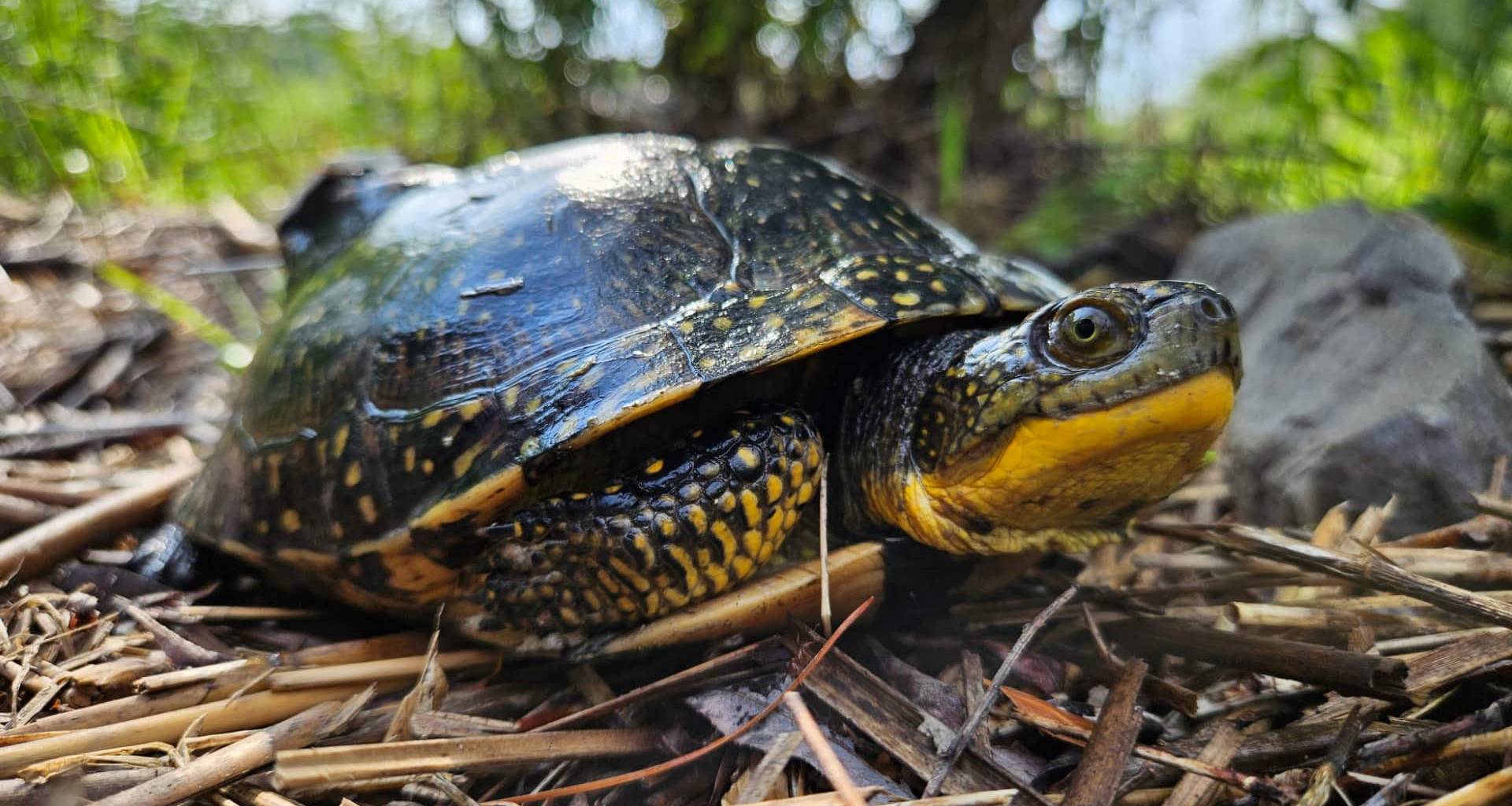
7 turtles were found in Ontario’s Rouge National Park in 2012
Blanding’s turtles, yellow-breasted turtles native to Ontario, have been listed as endangered since 2016 and as a species at risk since 2004.
But thankfully, a recent sighting could mean good news for the dwindling reptiles.
When reintroduction efforts began in 2012, there were fewer than 10 in Ontario’s Rouge wetlands, according to Parks Canada.
On June 19, a 13-year-old turtle named Juniper — which was released back into the wild in 2015 by Parks Canada and the Toronto Zoo — was found to be carrying eight eggs.
“It is the proof and first evidence that we’ve seen of these turtles reproducing on their own,” Toby Thorne, who leads the field conservation team at the Toronto Zoo, told CBC Kids News. Field conservation science reintroduces wildlife into their natural habitats.
According to experts, reproduction success stories like these highlight the importance of conservation and how it requires time and patience.
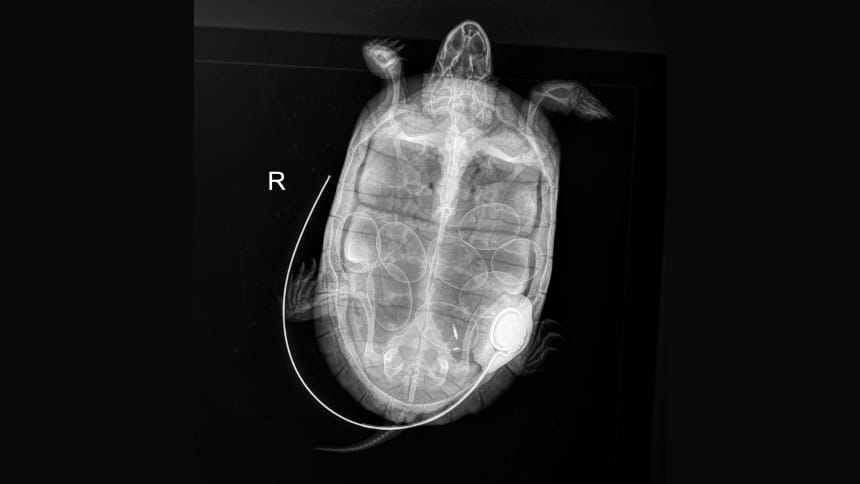
Mother Juniper was recently X-rayed and found to have eight eggs. The global positioning system (GPS) biologger that is on her gives scientists vital information on her nesting activity and location in the wetlands. (Image credit: Toronto Zoo)
Blanding’s turtles and threats to their population
These turtles generally take between 14 and 20 years to reach sexual maturity and breed.
Thorne said the slow breeding cycle of Blanding’s turtles means that conservation work takes patience sometimes.
“It’s a long-term thing, and we took that risk.”
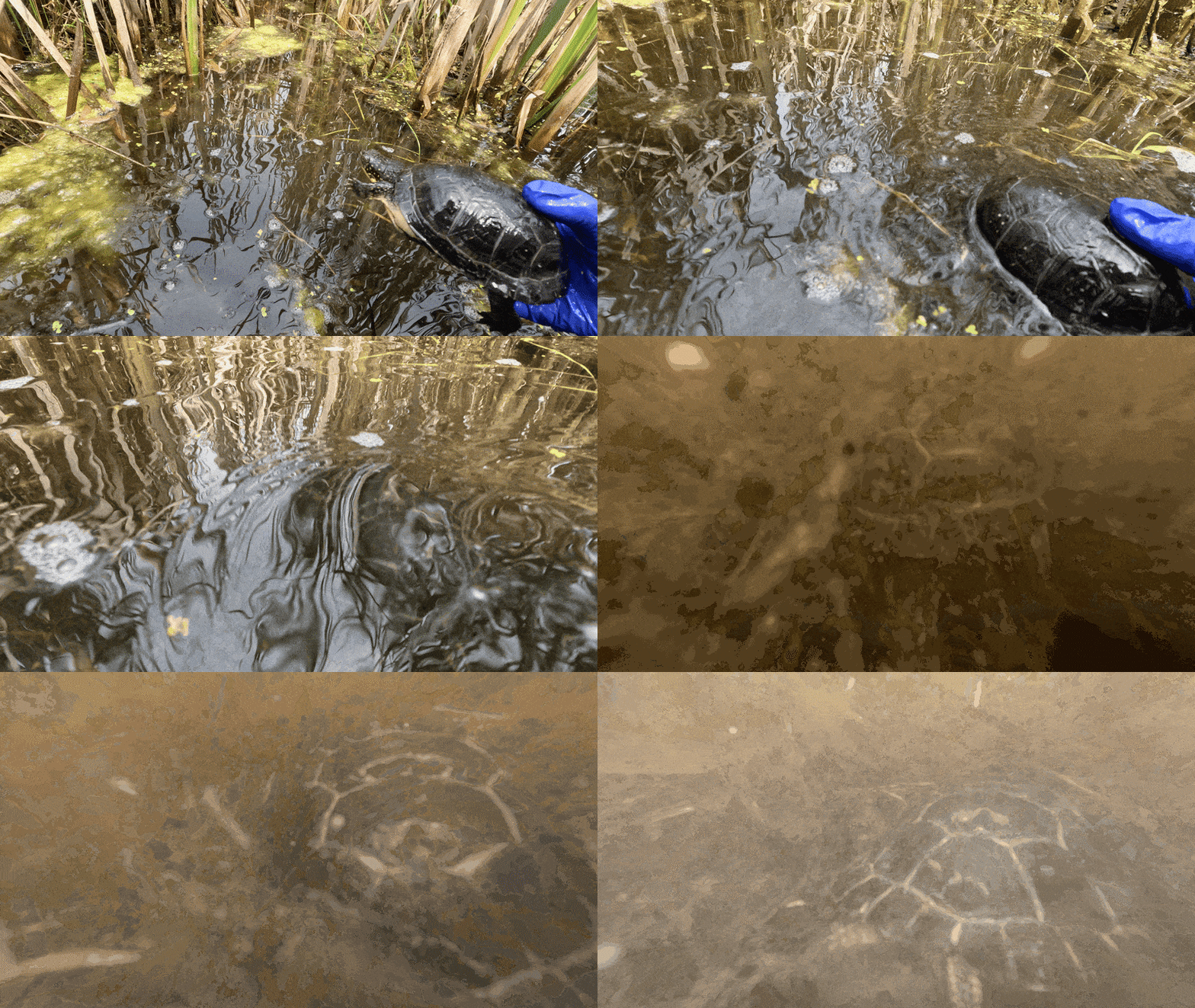
Easily distinguishable by the turtle’s bright yellow throat and chin, the Blanding’s turtle can survive in the wild for more than 75 years. (Video submitted by Toronto Zoo)
Habitat loss and fragmentation threaten the species the most, according to the Government of Ontario.
This happens when humans change the land, such as building roads, and when turtles are harmed by vehicle accidents and poaching.
Blanding’s turtles travel further than almost any other Ontario turtle when they nest, and roads have infringed on their habitats.
8 eggs spotted
Because Blanding’s turtles reproduce so slowly, the fact that Juniper was found with eggs is a positive sign.
That said, whether they’ll hatch isn’t a guarantee.
“With nature, nothing is for sure,” Thorne said. “We don’t know for sure if the eggs are fertilized, so it would be an advantage if we can collect them.”
That’s why the zoo is planning on doing exactly that — it will try to locate Juniper’s nest and collect the eggs so they can be safely incubated.
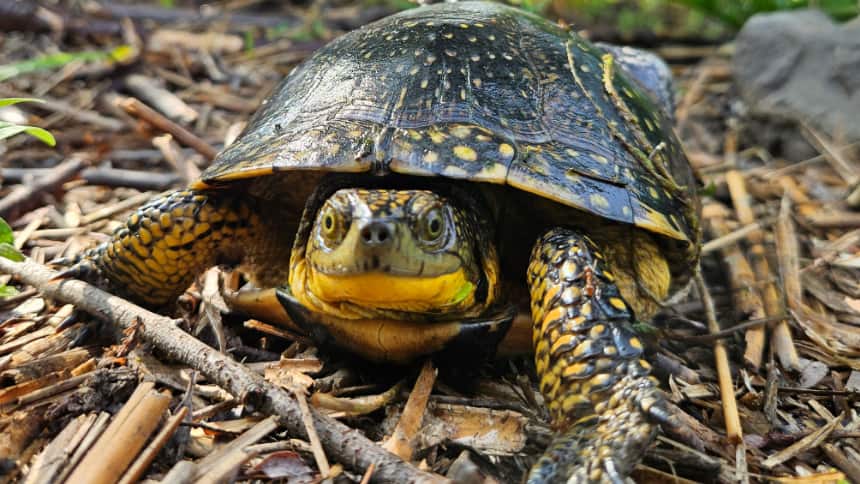
The Toronto Zoo releases a group of turtles into the Rouge wetlands each year, and it takes place in different locations that are not shared with the public. Juniper’s nesting location is not disclosed in an attempt to decrease the threat of poaching. (Image credit: Toronto Zoo)
To locate and monitor her, the zoo staff have attached a radio transmitter and GPS biologger to her shell.
Field technicians will keep a close eye on Juniper in the evenings as she prepares to lay the eggs.
“Even if we don’t see her nest we will have the information about where she tries to nest,” Thorne said.
What this says about conservation
Conservation protects the animals we know and love.
According to Thorne, the rehabilitation of Blanding’s turtles and the preservation of urban-dwelling species ensures that local biodiversity and the greater ecosystem remain healthy.
.png)
Blanding’s turtles are born the size of a toonie, approximately four centimetres long. (Image credit: Toronto Zoo)
Protecting lands where wildlife thrive is important for humans, too, said Aerin Jacob, the director of science and research, and the Weston family senior scientist at the Nature Conservancy of Canada.
“Our lives, our families, our jobs, our health all depend on nature being healthy,” she said.
“These are places that help filter our water to keep our water clean. We need protected areas because those are the places where nature is able to provide the benefits that people need.”
Kids can start thinking about conservation by simply observing nature in their own backyard or composting at home and participating in cleanups at local beaches.
Have more questions? Want to tell us how we’re doing? Use the “send us feedback” link below. ⬇️⬇️⬇️